Kablow!

An Inspector Calls: themes, language and structure

边玩边学

回答这些题目来赚取能量,然后钓鱼探索。无需账号。

给教育者: 面向 An Inspector Calls: themes, language and structure(English Literature,Modern Text)的即用型课程幻灯片, 复习笔记——用在你的课堂上,或将该知识点作为学习者可实时游玩的互动课堂活动来运行。

课程笔记

Key themes

  • Social responsibility: "We are members of one body. We are responsible for each other." Priestley argues that individuals must care for society.
  • Class and capitalism: Mr Birling believes "a man has to mind his own business and look after himself and his own", showing selfish capitalism. Eva Smith is exploited by wealthy characters.
  • Gender: employment, sexual power and reputation constrain Eva’s reported experiences. Sheila gains a critical voice; Mrs Birling reinforces inequalities rather than standing outside them.
  • Generations: Sheila and Eric accept responsibility while their parents resist. Gerald’s response complicates an absolute young/old division. Learning depends on choices as well as age.
  • Guilt and conscience: Sheila and Eric feel guilt; Birling and Sybil deny it.

Compare responses to exposure

Compare responses to exposureResponseAnalytical questionArthur and Sybilresist blameHow is reputation protected?Sheila and Ericaccept blameWhat changes in their language?Gerald seeksreassuranceHow does he complicate the agedivide?Goole demandsresponsibilityHow is individual conductconnected to society?

Language and dramatic devices

  • Dramatic irony: Birling's overconfident predictions ("The Titanic ... unsinkable") are contradicted by history.
  • Stage directions and lighting: "pink and intimate" becomes "brighter and harder" when the Inspector arrives, signalling exposure. Sound effects such as the doorbell and telephone mark turns.
  • Goole’s dialogue combines controlled questioning with longer moral argument. Repetition, collective pronouns, imperatives and violent imagery can connect individual actions with wider consequences; do not label the entire speech simply short and direct.

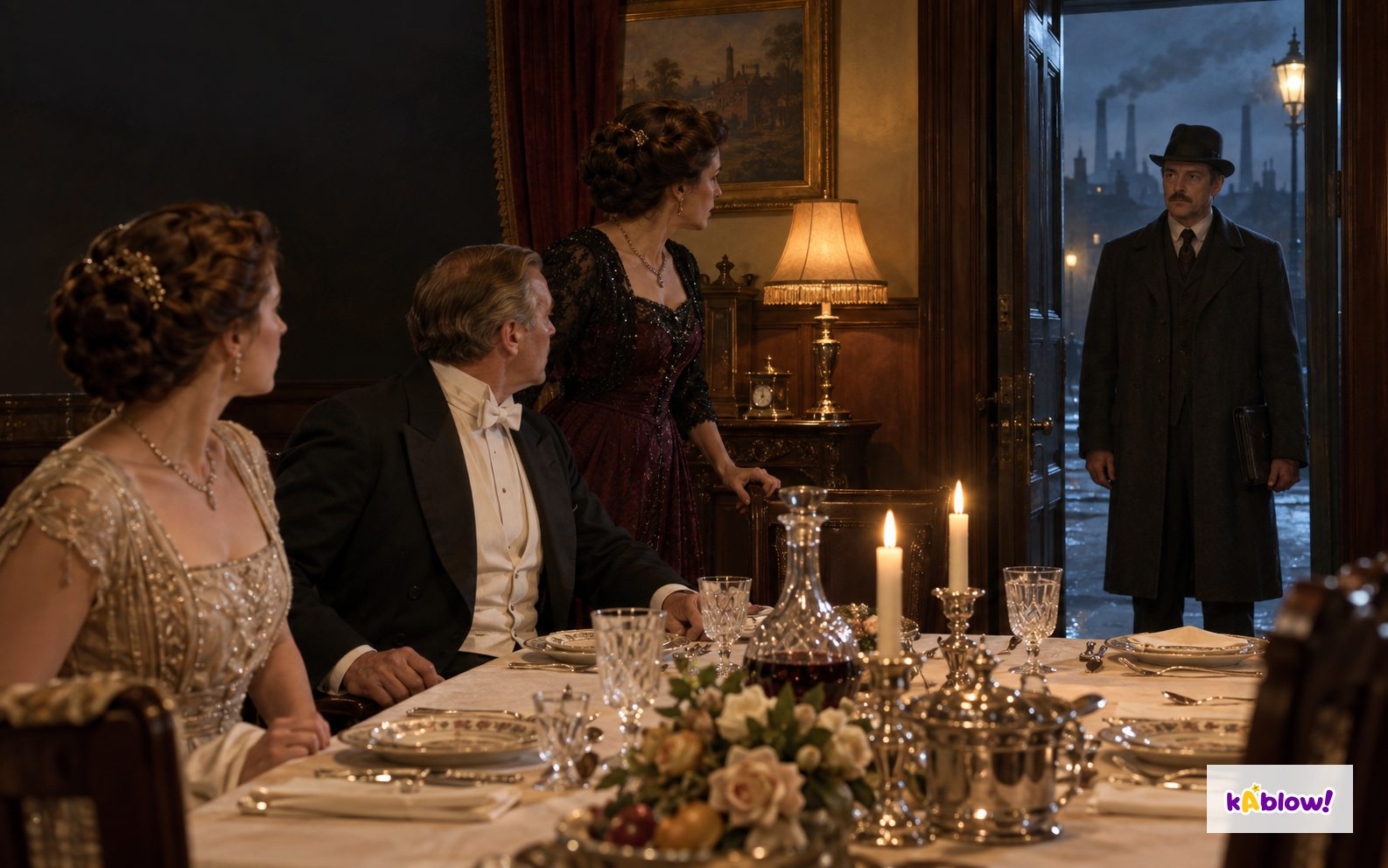
Comfort interrupted

Comfort interrupted

Structure

  • Three acts and successive disclosures concentrate pressure within one dining room. The opening is an engagement celebration: the doorbell interrupts Birling’s later speech, rather than beginning the play. The final telephone call renews an impending investigation after apparent escape. This can be read as circular pressure without claiming the opening and ending events are identical. Goole’s identity remains unresolved.

Relief interrupted again

Relief interrupted again

幻灯片

Sign up free to view the lesson slides

Step through every slide for this topic — plus flashcards and revision notes — with a free account.

练习题

免费预览——32 题中的 8 题。注册即可查看全部。
  1. 1.What is a stage direction?

    Easy
    • Ainstruction in the script for staging
    • Ba spoken line
    • Ca poem
    • Da plot summary
  2. 2.What is dramatic irony?

    Easy
    • Aa joke
    • Ba repeated line
    • Ca rhyme
    • Dthe audience knows more than the characters
  3. 3.What does 'brighter and harder' lighting suggest?

    Easy
    • Asleep
    • Bcheerfulness
    • Charsh truth is being exposed
    • Dcomfort
  4. 4.Which theme is linked to Birling's capitalism?

    Easy
    • Ascience
    • Bselfishness and class
    • Ckindness
    • Dlove
  5. 5.What does 'a man has to mind his own business' show?

    Easy
    • ABirling's selfish individualism
    • Bhis kindness
    • Chis fear
    • Dhis humour
  6. 6.What does 'We are members of one body' imply?

    Easy
    • Awe are alone
    • Bthe family is rich
    • Conly the poor matter
    • Dsociety is interconnected
  7. 7.What is the effect of the cliffhanger at the end of Act 1?

    Easy
    • Ait is a joke
    • Bit is a flashback
    • Cthe audience wants to see what happens next
    • Dit ends the play
  8. 8.What does the single setting create?

    Easy
    • Aa travelogue
    • Btension and claustrophobia
    • Chumour
    • Da wide view

Unlock all 32 questions & more

创建免费账号,即可查看该知识点的每一道题、幻灯片、闪卡和复习笔记。

历年真题

该知识点的历年真题练习即将推出。
即将推出