RAM (random access memory): volatile (loses data when power is off), holds programs and data currently in use; read and write.
ROM (read-only memory): non-volatile, holds the boot-up instructions (BIOS/firmware); cannot normally be changed.
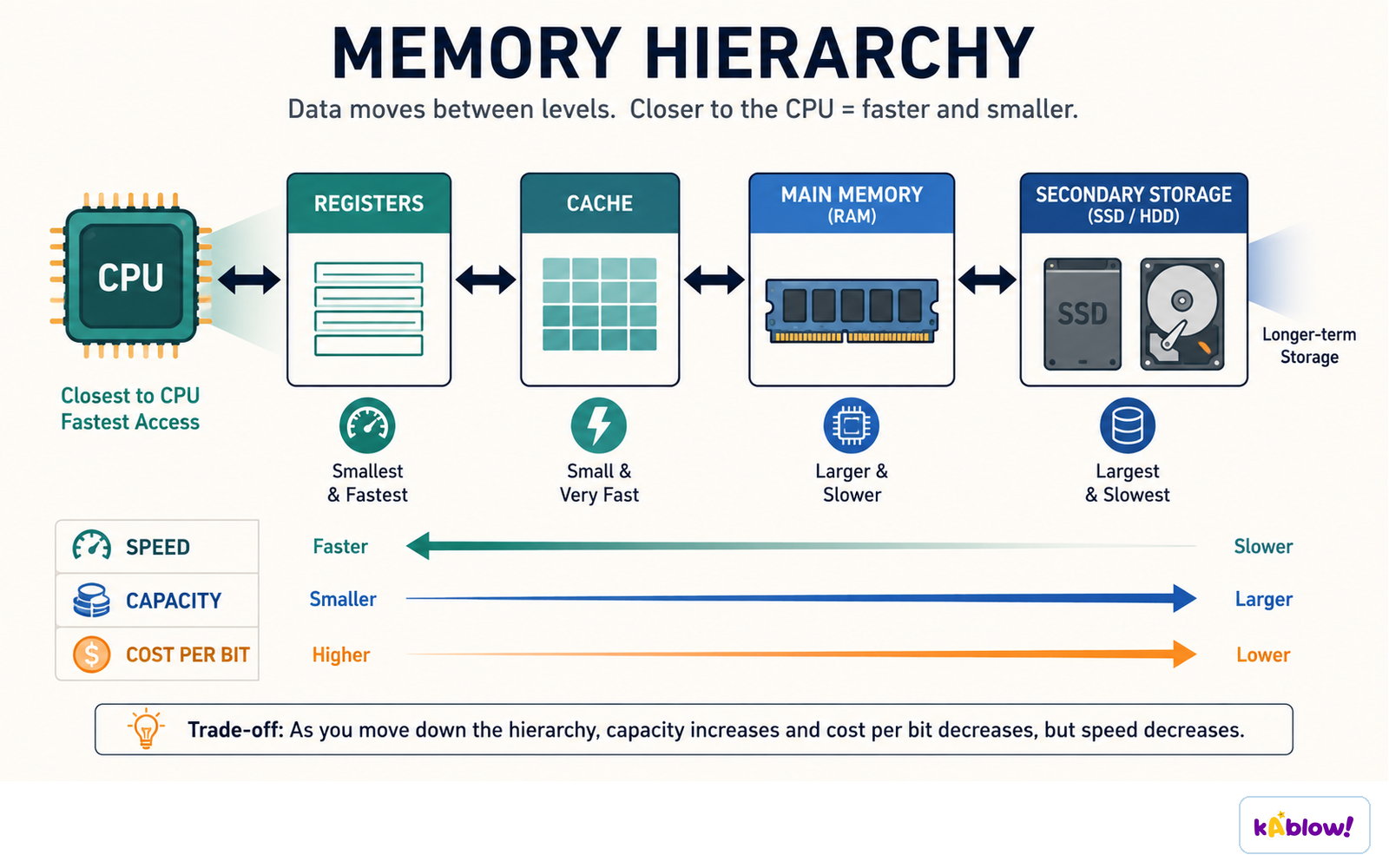
Cache: small, very fast memory in or near the CPU.
Virtual memory: secondary storage (an SSD or HDD) used to hold memory pages when they cannot all remain in RAM; accessing it is slower than RAM.
Memory hierarchy
Secondary storage
Secondary storage retains saved files without continuous power, but devices can fail or wear out; non-volatile does not mean permanent.
Magnetic (hard disk drive, HDD): large capacity, cheap, slower, moving parts, can be damaged.
Solid-state (SSD, USB flash): no moving parts, fast, durable, quiet, more expensive per GB.
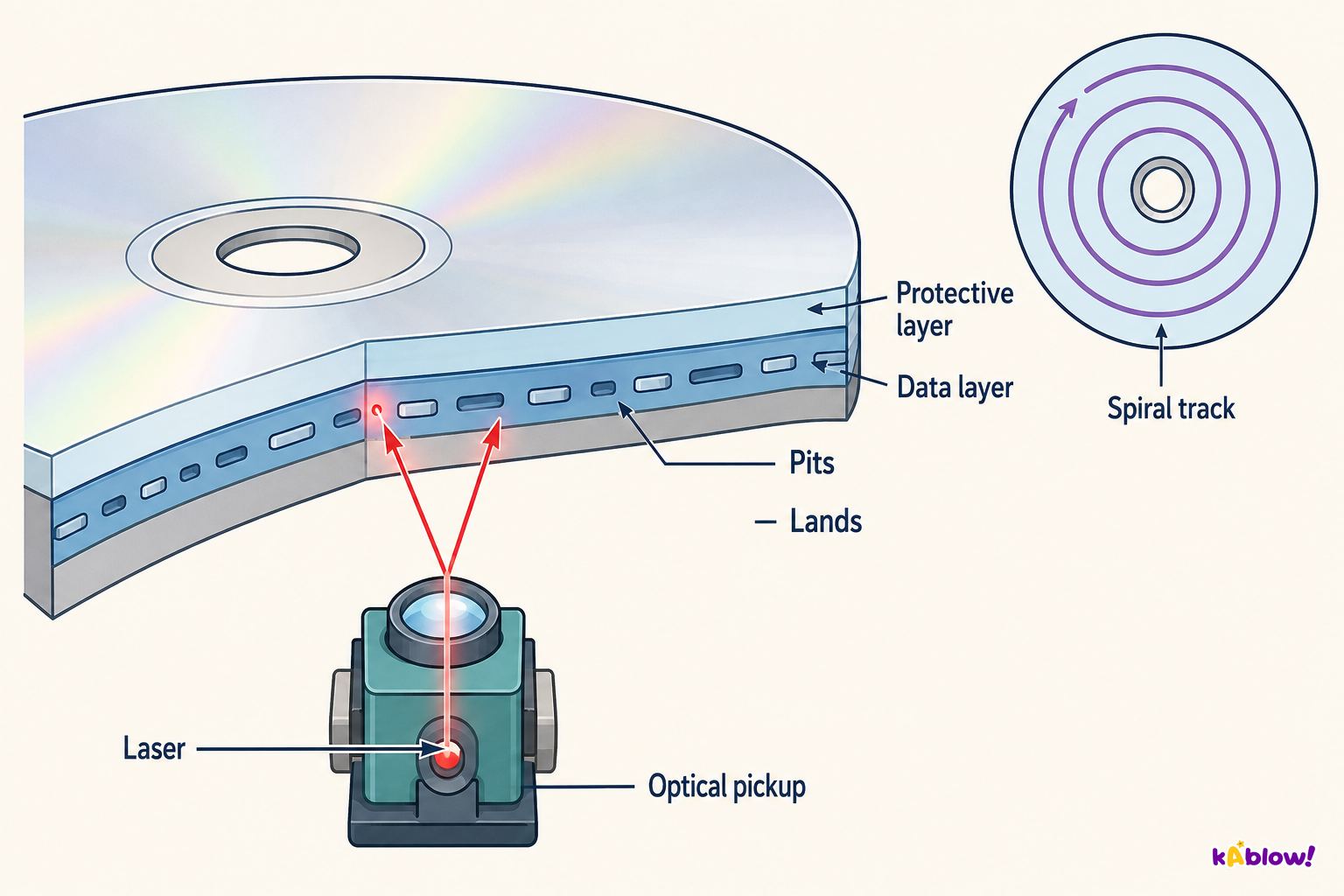
Optical (CD, DVD, Blu-ray): portable, low capacity, can scratch; used for media.
Optical storage
Comparing storage
Consider capacity, speed, portability, durability, reliability and cost.
Cloud storage
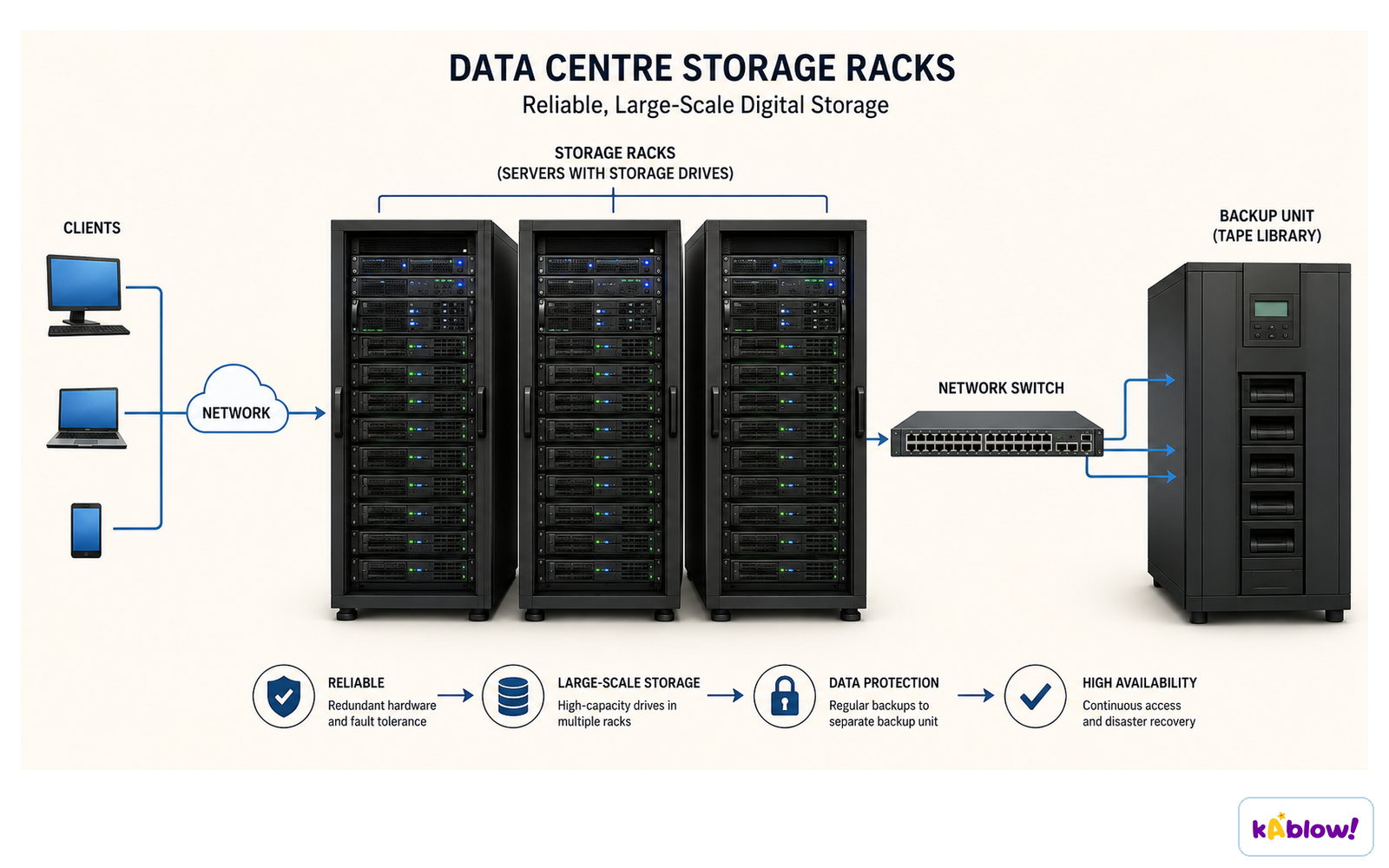
Cloud storage uses remote systems reached through a network, typically the Internet. Compatible devices and authorised access are required.
Synchronised local copies may remain usable offline. Synchronisation is not automatically a separate backup: deletions or corruption may propagate, so check version history and recovery arrangements.
Remote storage in a data centre
Units
Capacity in bytes: KB, MB, GB, TB.
投影片
Sign up free to view the lesson slides
Step through every slide for this topic — plus flashcards and revision notes — with a free account.