
Computational thinking: decomposition, abstraction and algorithms
Apprends en jouant
Réponds à ces questions pour gagner de l'énergie, puis pêche et explore. Sans compte.
Pour les enseignants : diapos de leçon, notes de révision prêts à l'emploi pour Computational thinking: decomposition, abstraction and algorithms (Computer Science, Algorithms) — utilise-les en cours, ou lance le thème en activité de classe interactive que tes apprenants jouent en direct.
Notes de leçon
Computational thinking
- Computational thinking is a way of solving problems so that a computer can help. Its main parts are decomposition, abstraction, pattern recognition and algorithmic thinking.
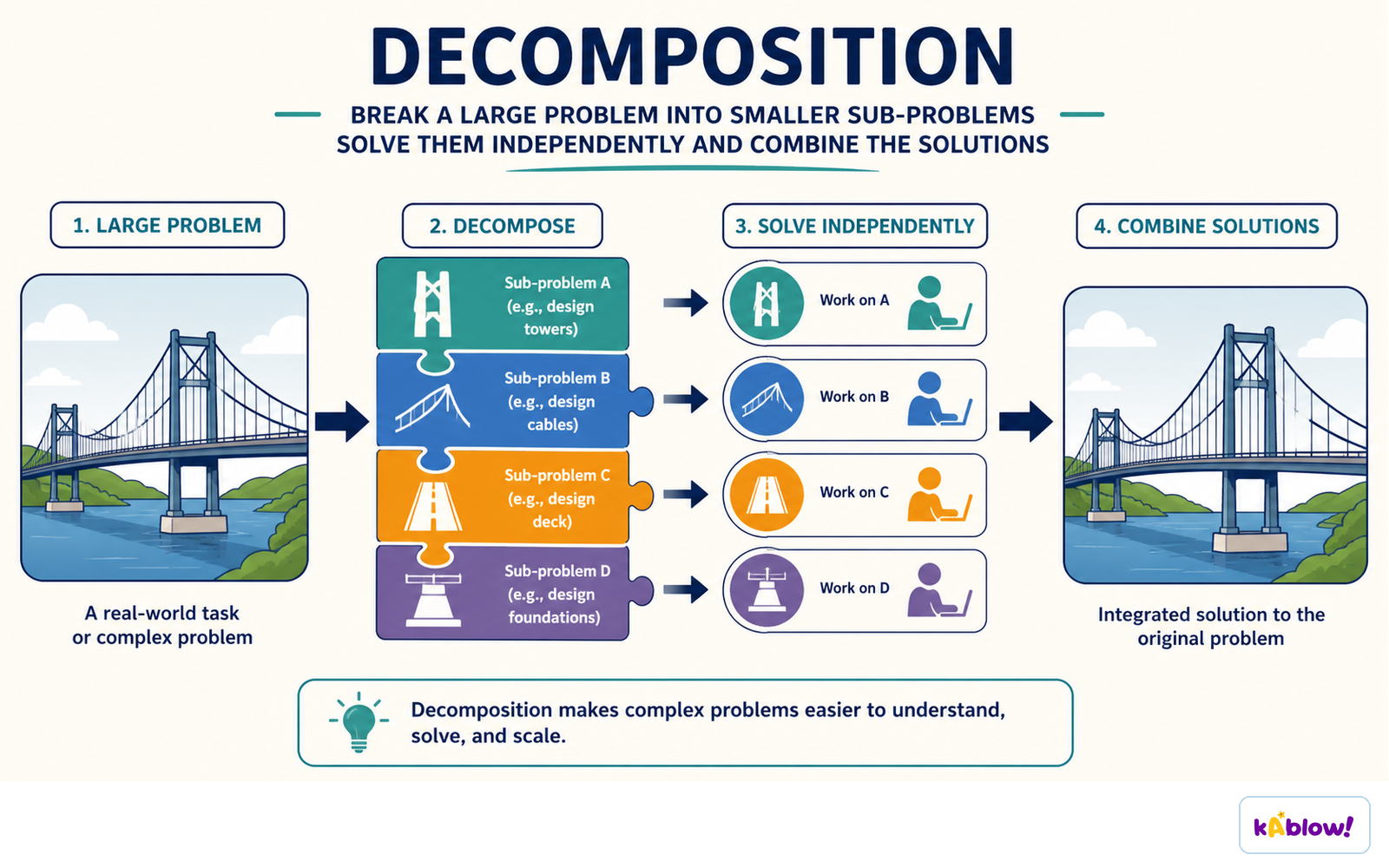
- Decomposition: breaking a big problem into smaller, more manageable parts. Planning a school timetable can be split into rooms, teachers, classes and times.
- Abstraction: removing unnecessary detail to focus on what matters. A map of the Tube shows stations and lines, not every street.
- Pattern recognition: spotting similarities, so a solution can be reused.
Decomposition
Algorithms
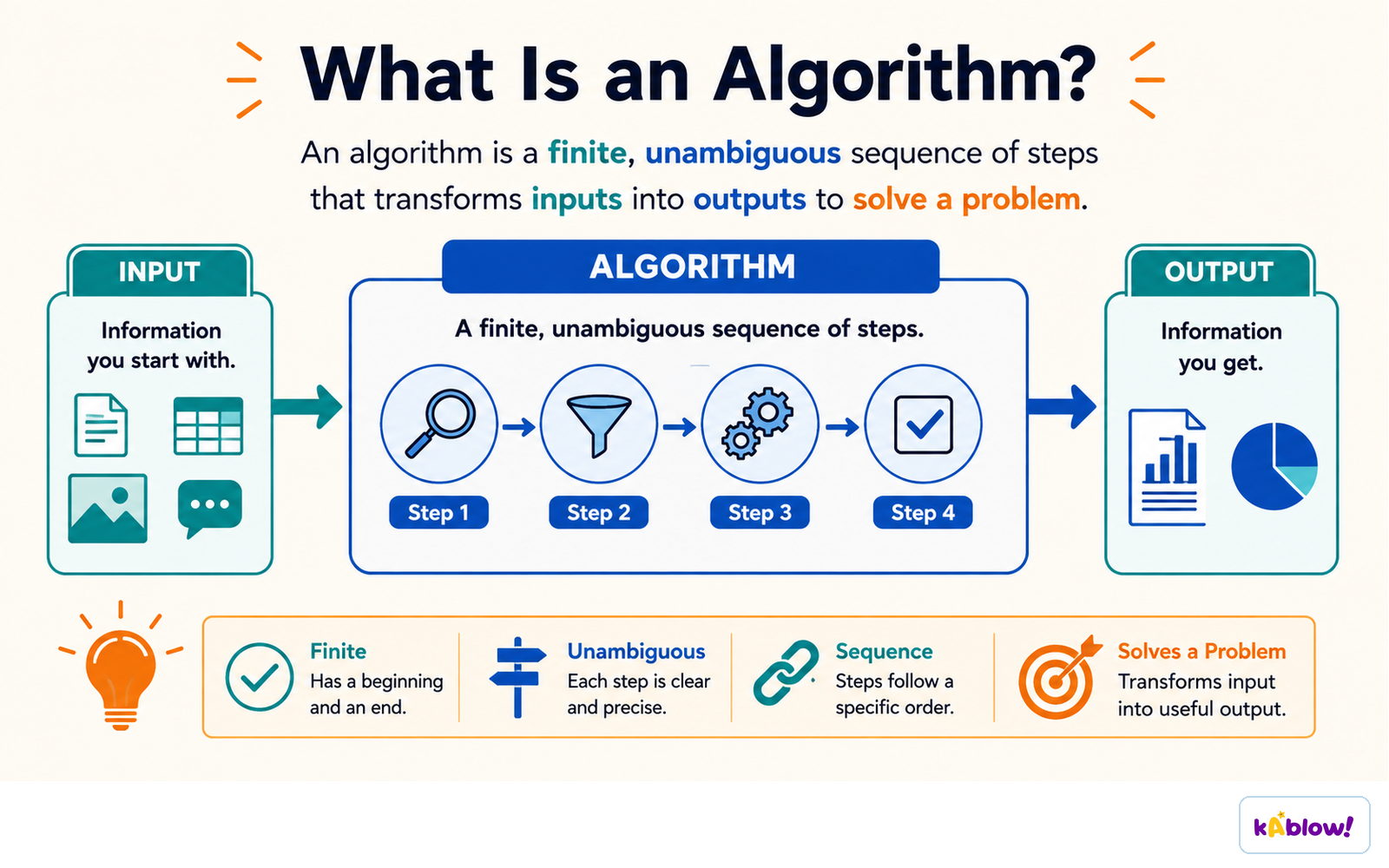
- An algorithm is a finite, ordered set of unambiguous steps for a task. It terminates for each valid input in the model used here, but different inputs may take different numbers of steps. Algorithms may process stored input and need not request new user input.
- Algorithms can be shown in plain English, flowcharts or pseudocode.
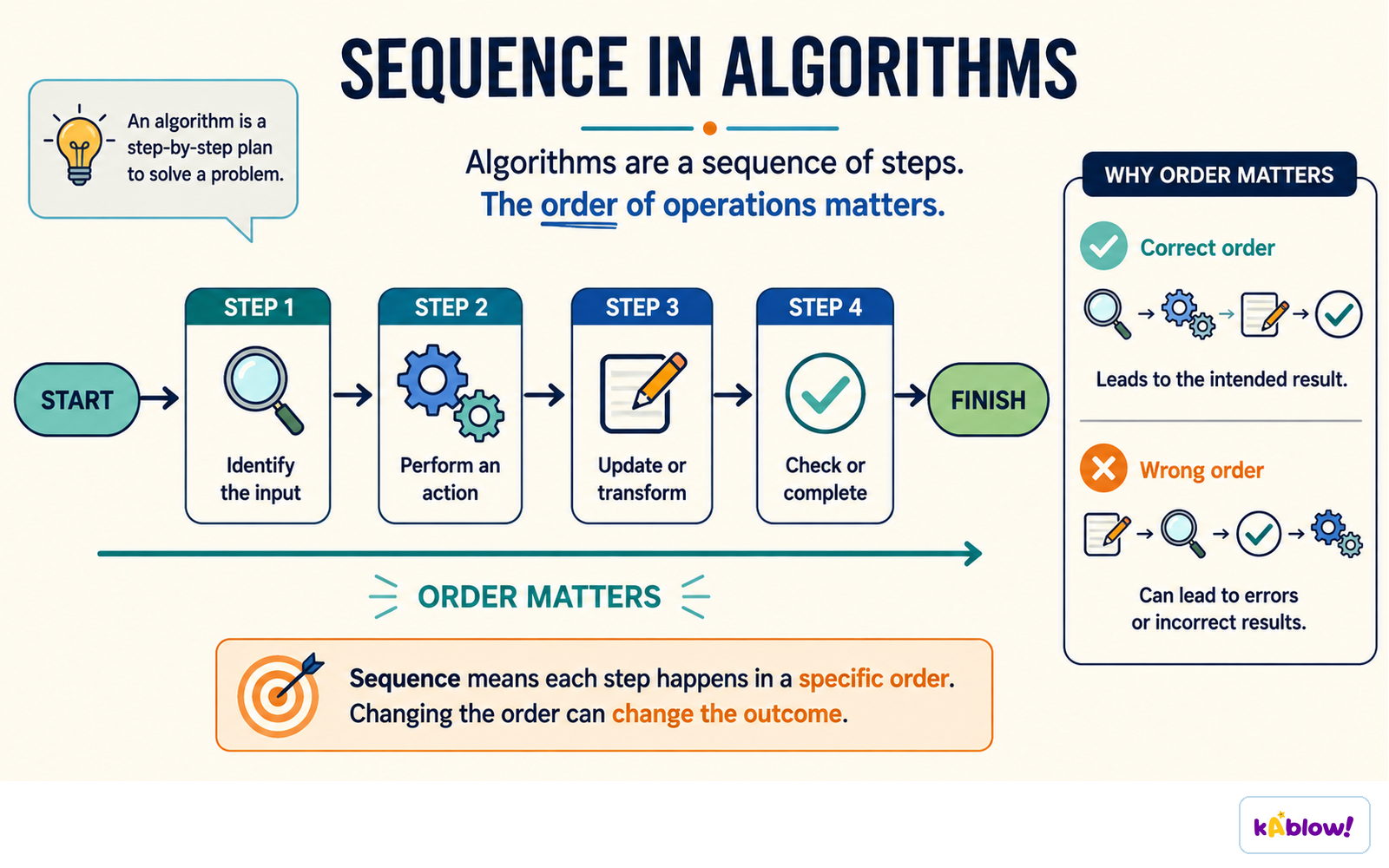
- Structure: sequence (steps in order), selection (decisions: IF), iteration (repeating: loops).
What is an algorithm?
Example
- Algorithm to find the larger of two numbers: input A, input B; if A is greater than B then output A, otherwise output B.
Why it matters
- Computational thinking helps design programs that are efficient and easy to test and change.
Control structures
- Sequence follows instructions in order; selection chooses a branch; iteration repeats a body.
- Example: input a mark, use IF to choose pass/fail, and repeat for each student.
- Choose relevant details: omit button styling when designing scoring logic, but retain it when designing the interface.
Sequence in algorithms
Diapos
Sign up free to view the lesson slides
Step through every slide for this topic — plus flashcards and revision notes — with a free account.
Questions d'entraînement
Aperçu gratuit — 8 sur 34 questions. Inscris-toi pour toutes les voir.
1.What is an algorithm?
Easy- Aa set of step-by-step instructions to solve a problem
- Ba type of computer
- Ca programming language
- Da hardware part
2.What is decomposition?
Easy- Abreaking a problem into smaller parts
- Bhiding details
- Crepeating steps
- Dfixing errors
3.What is abstraction?
Easy- Afocusing on important details and ignoring the rest
- Bbreaking into parts
- Crepeating
- Dtesting
4.What is pattern recognition?
Easy- Aspotting similarities or trends
- Bremoving detail
- Clooping
- Ddeleting
5.Which structure repeats instructions?
Easy- Aiteration
- Bselection
- Csequence
- Dinput
6.Which structure makes a decision?
Easy- Aselection
- Biteration
- Csequence
- Doutput
7.Which is an example of abstraction?
Easy- Aa Tube map showing stations but not streets
- Ba list of all streets
- Ca photograph
- Da full city plan
8.Which is an example of decomposition?
Easy- Asplitting a game into graphics, sound, scoring and controls
- Bwriting one long program
- Cignoring parts
- Ddeleting code
Unlock all 34 questions & more
Crée un compte gratuit pour voir toutes les questions, les diapos, les cartes mémo et les notes de révision de ce thème.
Annales
Les annales d'entraînement pour ce thème arrivent bientôt.
Bientôt disponible