Sorting algorithms: bubble, insertion and merge sort
Apprends en jouant
Réponds à ces questions pour gagner de l'énergie, puis pêche et explore. Sans compte.
Pour les enseignants : diapos de leçon, notes de révision prêts à l'emploi pour Sorting algorithms: bubble, insertion and merge sort (Computer Science, Algorithms) — utilise-les en cours, ou lance le thème en activité de classe interactive que tes apprenants jouent en direct.
Sorted data is easier to search (binary search) and to display. Sorting algorithms put items in order (ascending or descending).
Bubble sort
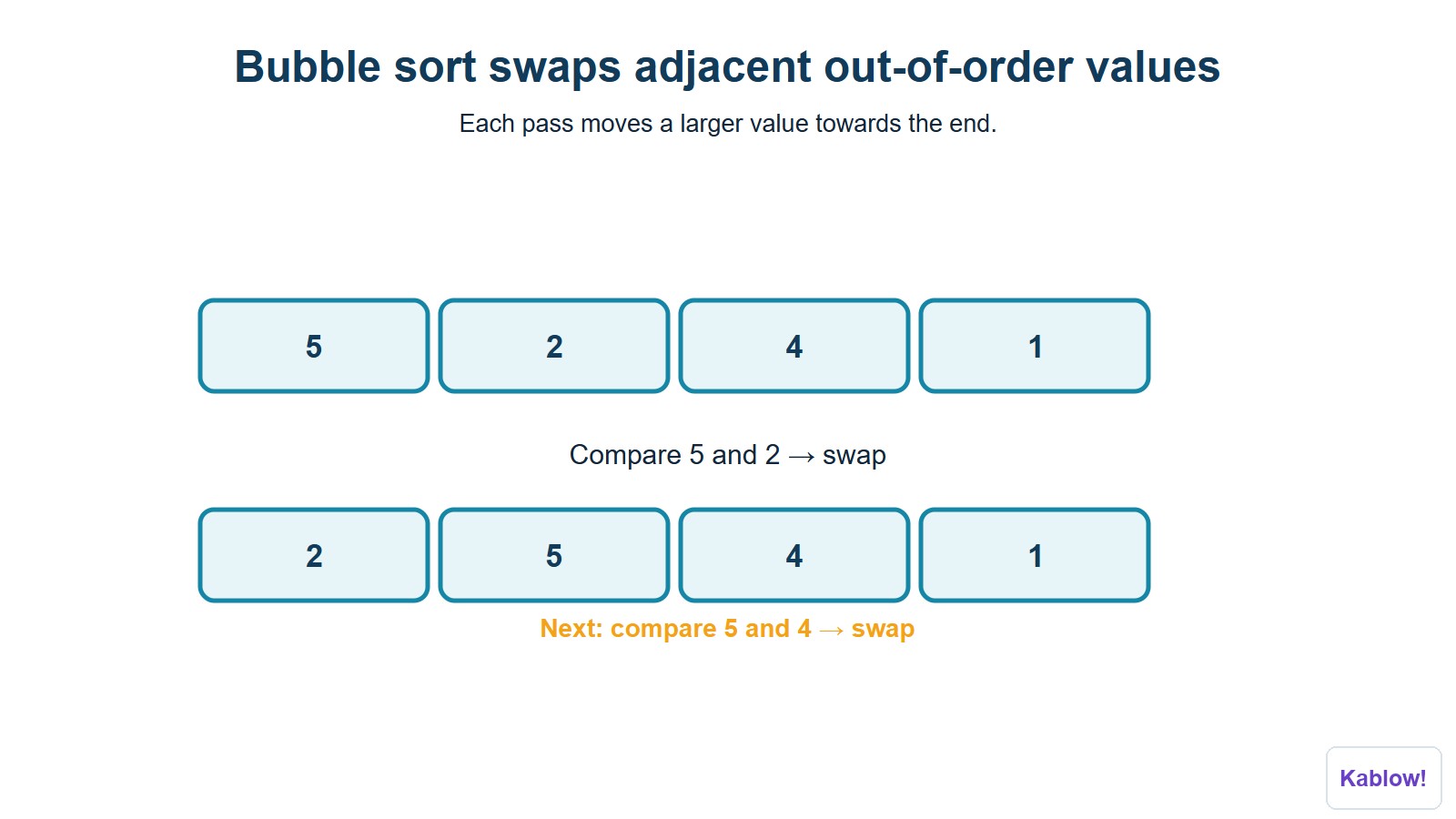
Repeatedly compare adjacent pairs and swap them if they are in the wrong order. After each pass the largest unsorted item "bubbles" to the end. Stop when a complete pass makes no swaps.
Example: 5, 2, 4 → compare 5 and 2, swap: 2, 5, 4 → compare 5 and 4, swap: 2, 4, 5. A further pass has no swaps, so it stops.
Simple but slow for large lists.
Bubble sort
Insertion sort
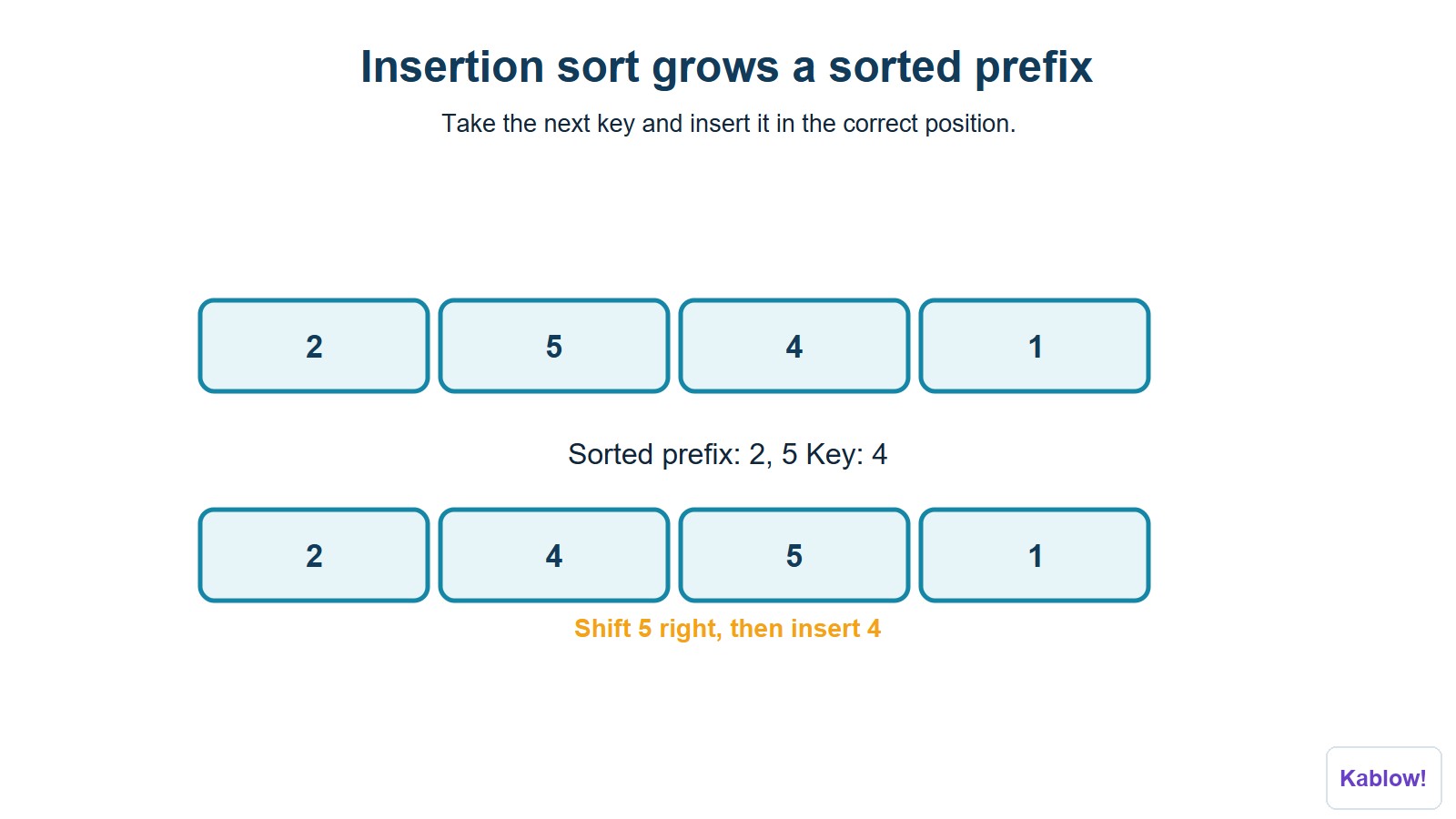
Treat the first item as sorted. Take the next item and insert it into the correct position among the sorted items by shifting larger items right. Repeat until all items are sorted.
Efficient for small or nearly sorted lists.
Insertion sort
Merge sort
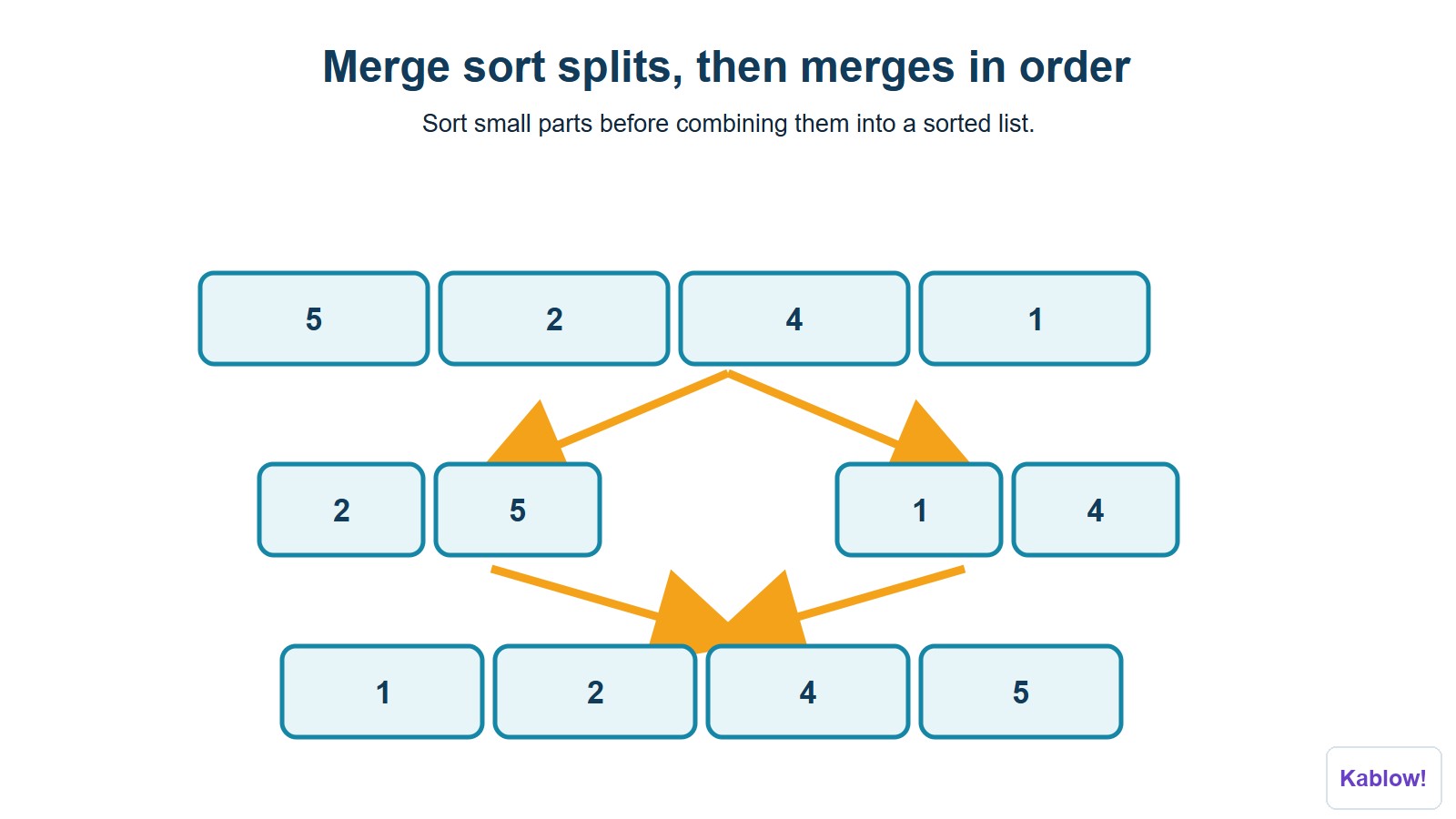
A divide and conquer algorithm: split the list into halves repeatedly until each part has one item, then merge the parts back together in order.
Much faster for large lists but uses more memory, and it is more complex.
Merge sort
Comparing
Bubble: simple, slow. Insertion: good for small lists. Merge: fast, memory-hungry.
Diapos
Sign up free to view the lesson slides
Step through every slide for this topic — plus flashcards and revision notes — with a free account.