
Network security and cyber threats
Apprends en jouant
Réponds à ces questions pour gagner de l'énergie, puis pêche et explore. Sans compte.
Pour les enseignants : diapos de leçon, notes de révision prêts à l'emploi pour Network security and cyber threats (Computer Science, Networks and Security) — utilise-les en cours, ou lance le thème en activité de classe interactive que tes apprenants jouent en direct.
Notes de leçon
Threats
- Malware: malicious software including viruses, worms, trojans, ransomware and spyware.
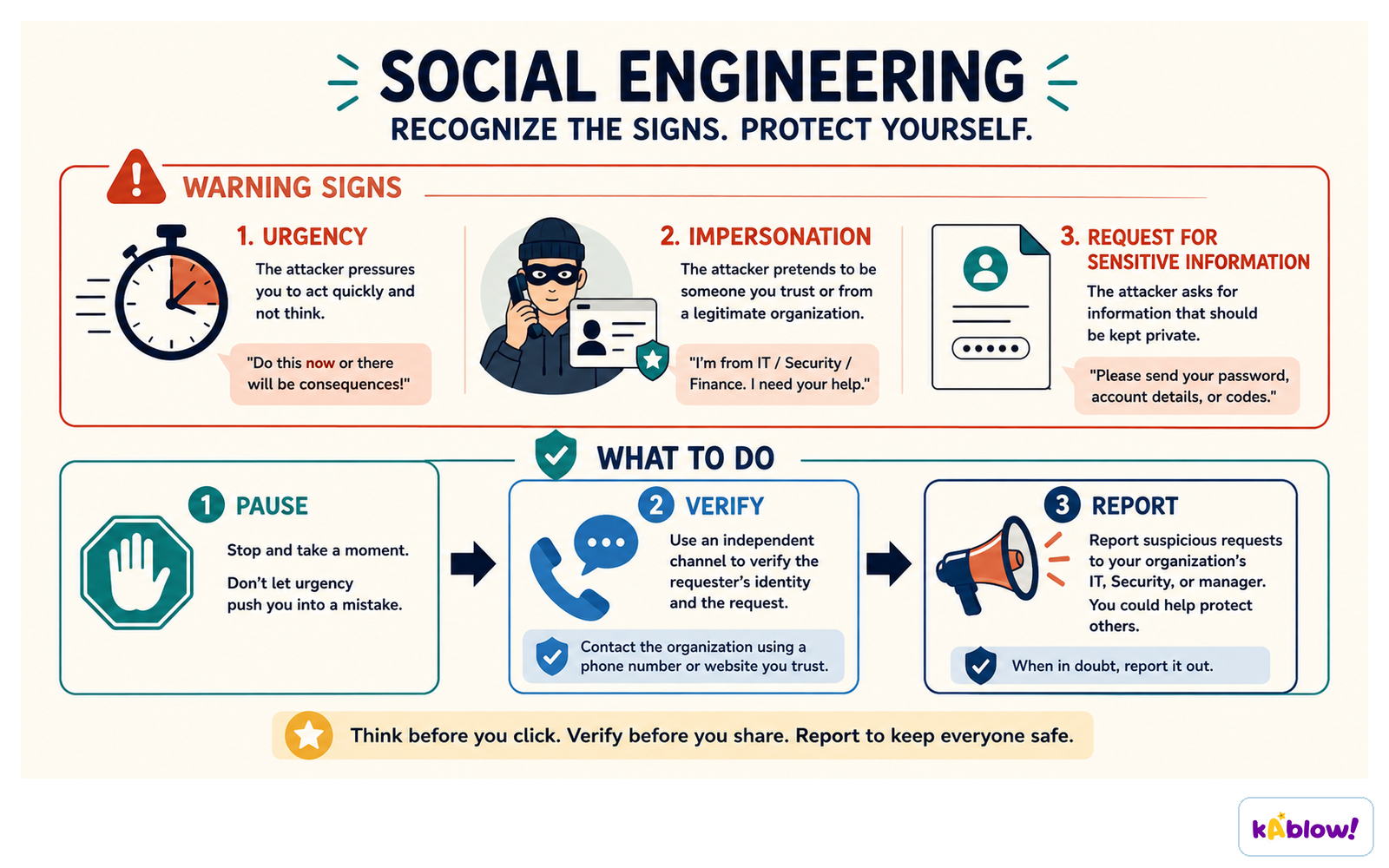
- Phishing: fake emails or websites to trick people into giving personal details. Social engineering (blagging, pretexting) tricks people rather than systems.
- Brute-force attack: trying many passwords until one works. Denial of service (DoS/DDoS): flooding a server so it cannot respond. SQL injection: inserting code into forms to access databases. Data interception and eavesdropping; insider threat; weak passwords; unpatched software.
Recognising social engineering
Defences
- Firewalls filter network traffic. Anti-malware software. Encryption scrambles data so only authorised users can read it. Strong passwords and authentication (two-factor). Access levels limit what users can do. Penetration testing (ethical hacking). Regular updates (patches). Backups. User education.
Encryption
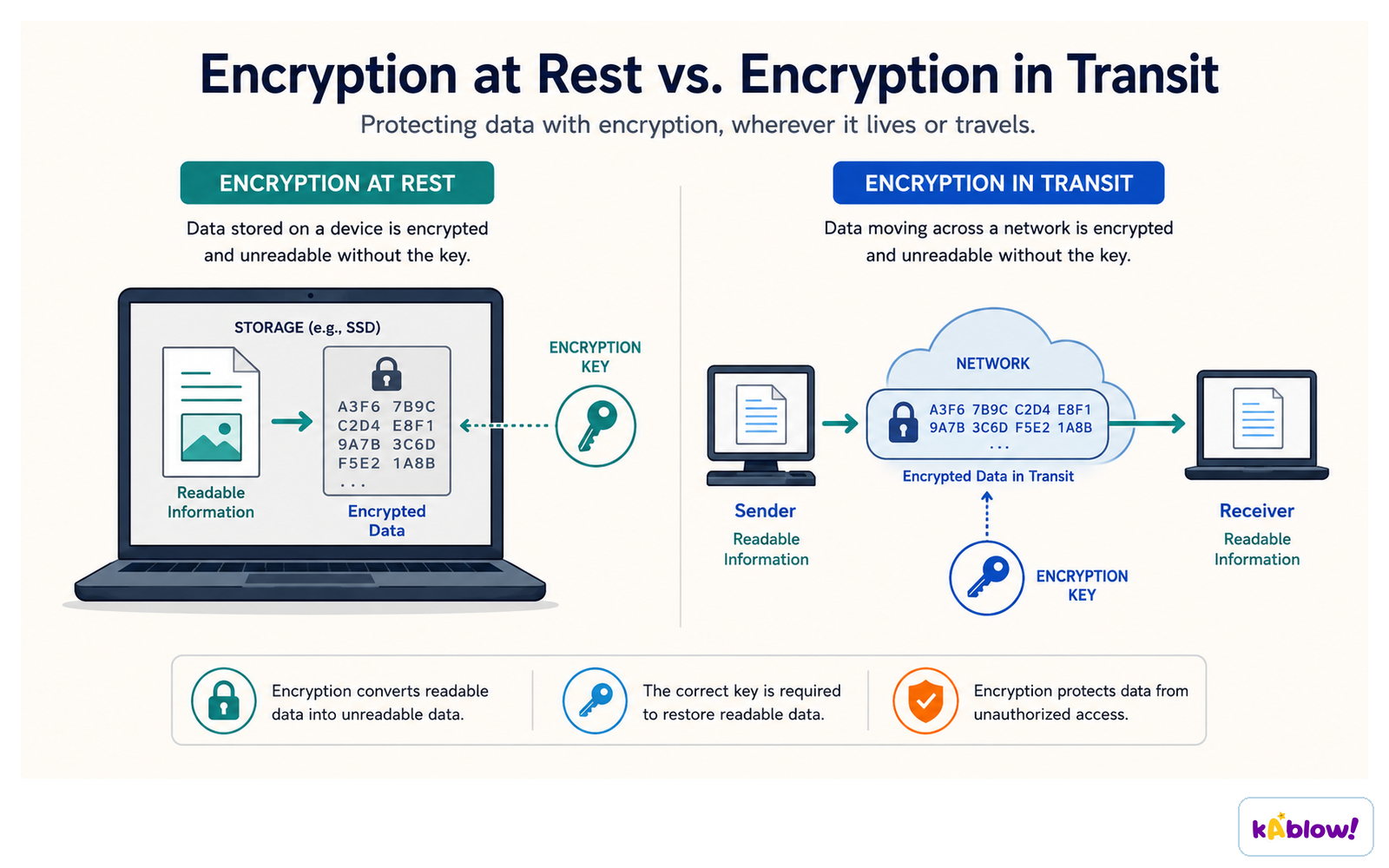
- Encryption transforms plaintext into ciphertext using a cryptographic algorithm and key. The appropriate decryption key recovers plaintext; symmetric and asymmetric schemes handle keys differently.
- HTTPS uses TLS to protect communication in transit and authenticate the server. Encryption alone does not prevent deletion, denial of service or a deceptive website.
Encryption at rest and in transit
Why security matters
- Protects personal data, finances and systems; legal duties (data protection law).
Diapos
Sign up free to view the lesson slides
Step through every slide for this topic — plus flashcards and revision notes — with a free account.
Questions d'entraînement
Aperçu gratuit — 8 sur 34 questions. Inscris-toi pour toutes les voir.
1.What is malware?
Easy- Amalicious software
- Ba type of hardware
- Ca protocol
- Da language
2.What is a virus?
Easy- Amalware that attaches to files and spreads
- Ba firewall
- Ca router
- Da cable
3.What is phishing?
Easy- Atricking people into revealing information
- Bflooding a server
- Cguessing passwords
- Dcopying files
4.What is a firewall?
Easy- Aa system that filters network traffic using rules
- Ba device that detects fires
- Ca program that only sorts files
- Da cable carrying network signals
5.What does anti-malware do?
Easy- Adetects and removes malicious software
- Bcreates malware deliberately
- Cincreases monitor resolution
- Dreplaces every network password
6.What is a brute-force attack?
Easy- Atrying many passwords until one works
- Bsending fake emails
- Cflooding a server
- Dstealing a router
7.What is a DDoS attack?
Easy- Amany computers flood a server with requests
- Ba password guess
- Ca fake email
- Da database trick
8.What is SQL injection?
Easy- Auntrusted input changes a database command
- Ba program replicates by attaching to files
- Ca router forwards a packet
- Da password is changed by its owner
Unlock all 34 questions & more
Crée un compte gratuit pour voir toutes les questions, les diapos, les cartes mémo et les notes de révision de ce thème.
Annales
Les annales d'entraînement pour ce thème arrivent bientôt.
Bientôt disponible