Adapting writing for form: letters, articles and speeches
Apprends en jouant
Réponds à ces questions pour gagner de l'énergie, puis pêche et explore. Sans compte.
Pour les enseignants : diapos de leçon, notes de révision prêts à l'emploi pour Adapting writing for form: letters, articles and speeches (English Language, Writing) — utilise-les en cours, ou lance le thème en activité de classe interactive que tes apprenants jouent en direct.
The form of a text is its type. Each has conventions that readers expect, and marks are given for matching form to purpose and audience.
Always identify the form, the audience and the purpose in the task before you start.
Formal and informal letters
A full formal letter commonly includes addresses, a date, greeting, clear purpose, paragraphs and a suitable sign-off. Top-right sender address is one traditional layout; left-aligned block layouts are also used. Common British sign-offs pair “Dear Sir or Madam” with “Yours faithfully” and a named greeting with “Yours sincerely”. Follow any task instructions.
Informal letter: friendly greeting, chatty tone, contractions, and a casual sign-off ("Best wishes", "Love").
Common British formal sign-offs
Articles
An article usually has a relevant headline, focused opening and organised paragraphs, sometimes with a by-line or subheading. A news report, opinion column and magazine feature have different purposes and styles; the publication type alone does not determine the tone.
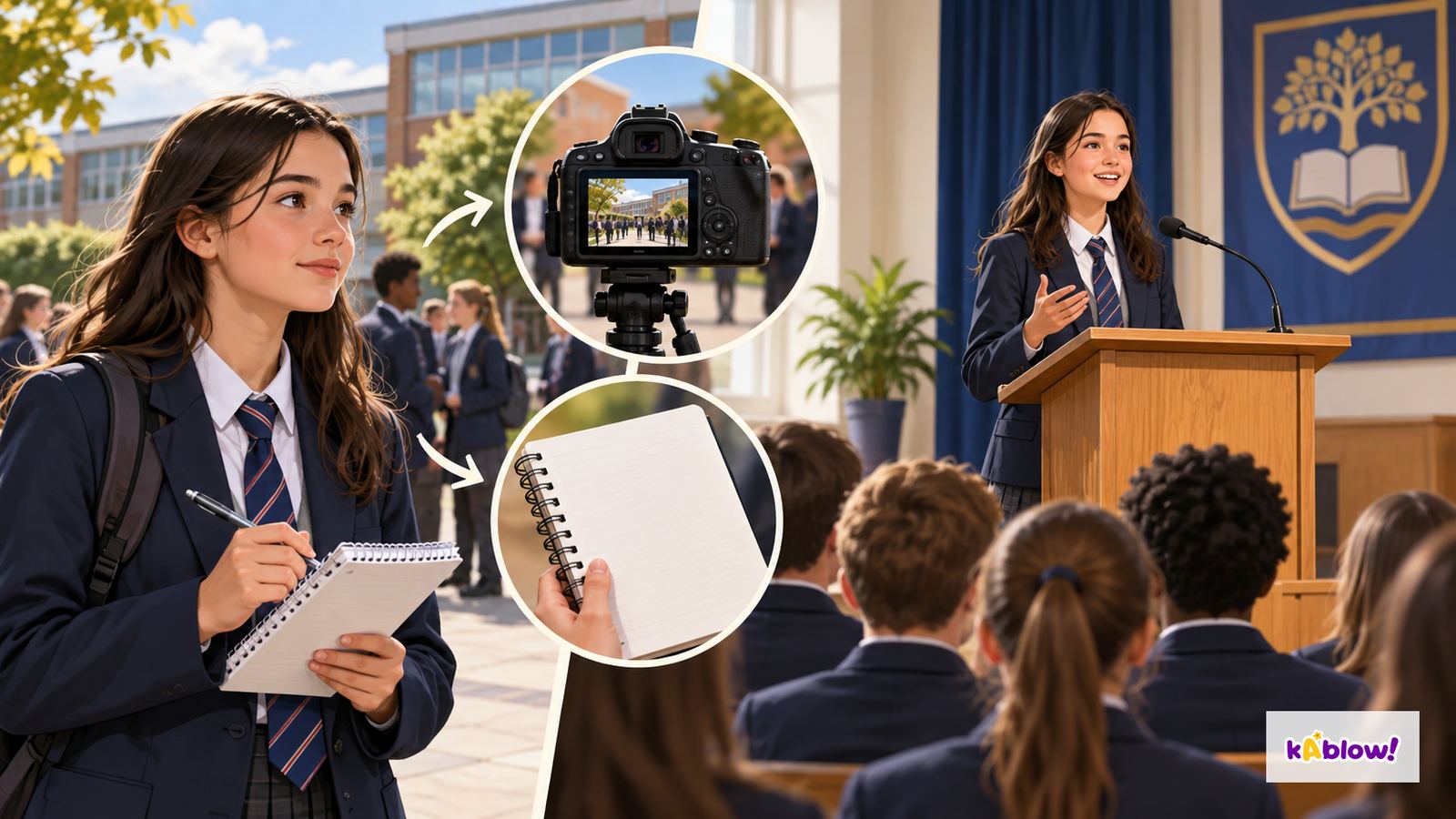
One event, different forms
Speeches
Address listeners appropriately, develop a clear message and close purposefully. Direct address, rhetorical questions, triplets and repetition can help where relevant; none is compulsory in every speech.
Other forms
Reviews develop judgements with evidence; blogs can be informal, formal or specialist; leaflets often use headings, short sections and bullet points to help readers find information.
Register
Choose register for the specific relationship, situation and purpose. Do not assume that writing to peers or young readers must always be informal.
Situation shapes register
Diapos
Sign up free to view the lesson slides
Step through every slide for this topic — plus flashcards and revision notes — with a free account.