
Medicine in medieval England c1250-c1500
खेलकर सीखें
इन सवालों के जवाब देकर एनर्जी कमाएं, फिर मछली पकड़ें और घूमें। कोई अकाउंट नहीं चाहिए।
शिक्षकों के लिए: Medicine in medieval England c1250-c1500 (History, Thematic Study: Medicine in Britain) के लिए इस्तेमाल के लिए तैयार लेसन स्लाइड्स, रिवीज़न नोट्स — इन्हें अपने लेसन में इस्तेमाल करें, या टॉपिक को एक इंटरैक्टिव क्लास एक्टिविटी की तरह चलाएं जिसे आपके शिक्षार्थी लाइव गेम की तरह खेलें।
लेसन नोट्स
Ideas about the causes of disease
- Humoral medicine explained illness through an imbalance of blood, phlegm, yellow bile and black bile. Ideas in the Hippocratic tradition were elaborated by Galen and transmitted through Greek, Arabic and Latin scholarship.
- Miasmatic accounts associated illness with corrupted air. Astrology linked health with celestial influences, while religious explanations could connect suffering with divine judgement. These ideas could coexist rather than form mutually exclusive systems.
- Religious institutions influenced learning and care, but did not exercise one uniform control over every practitioner. Medieval Europe did use human dissection in some legal, medical and teaching settings; a universal Church ban is a misconception.
Historical explanations are not modern causes
Treatments and care
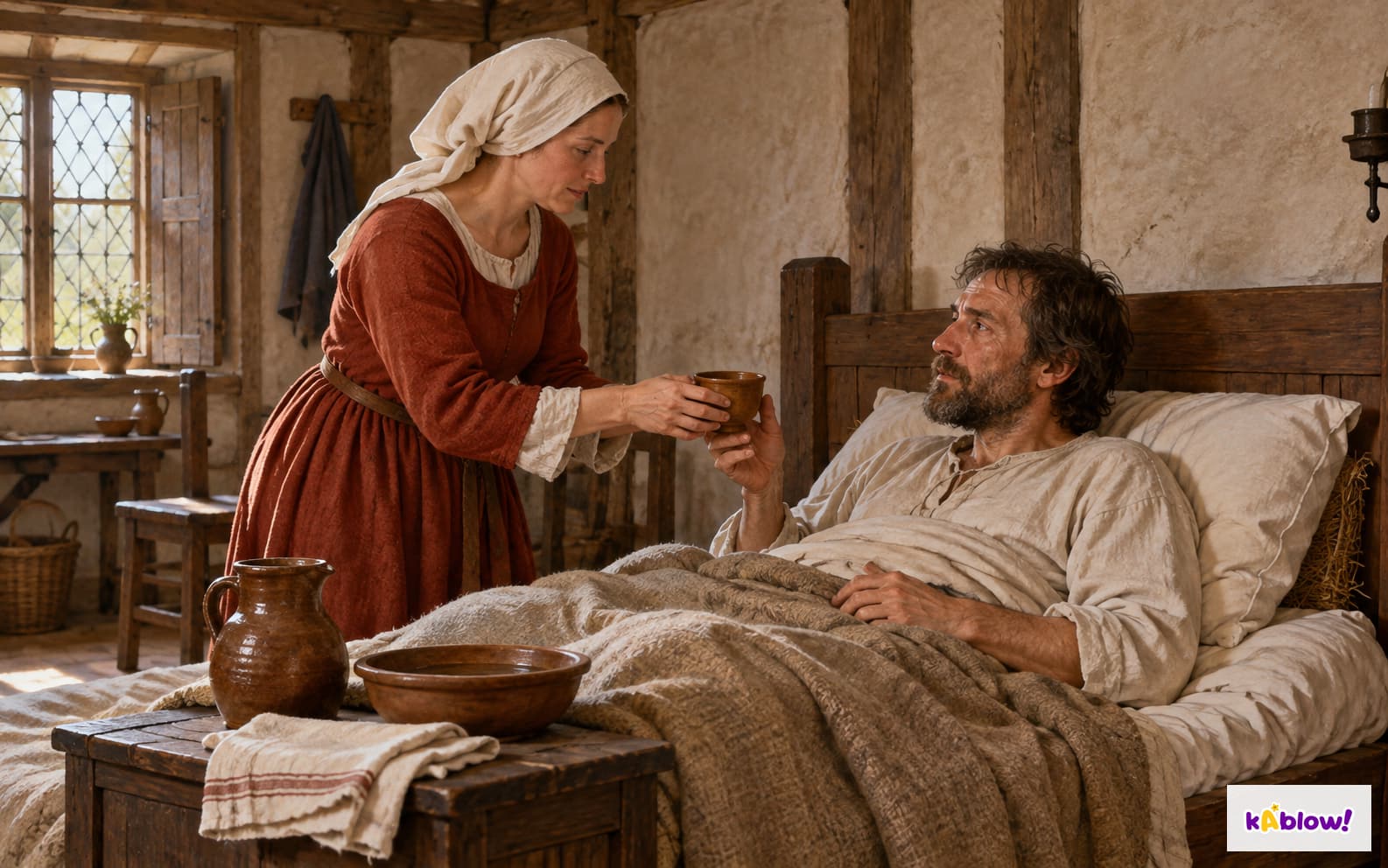
- Bleeding and purging were used within humoral reasoning; remedies, diet, rest and practical nursing also mattered. Describe what people believed without presenting a remedy as a proven cure for plague.
- University-trained physicians, surgeons, apothecaries and local practitioners provided overlapping services. Many ordinary people relied on households and accessible healers, including women; wise women is not a single regulated professional category.
- Religious and charitable hospitals offered varied forms of care. St Bartholomew’s Hospital was founded with its priory in 1123, but medieval hospitals were not all identical institutions or modern curative wards.
Care could happen at home
The Black Death 1348-49
- The Black Death reached England in 1348 and returned in later outbreaks. Yersinia pestis is the identified bacterial cause; infected fleas and respiratory transmission in pneumonic disease complicate an exclusive rats-only account. Exact historical transmission patterns and population loss should not be presented as perfectly measured.
- Responses combined religious practice, attempts to improve air, remedies, avoidance and care. Flagellant movements occurred in Europe but should not be described as a universal English response in 1348. Do not import later formal quarantine systems into every community’s first response.
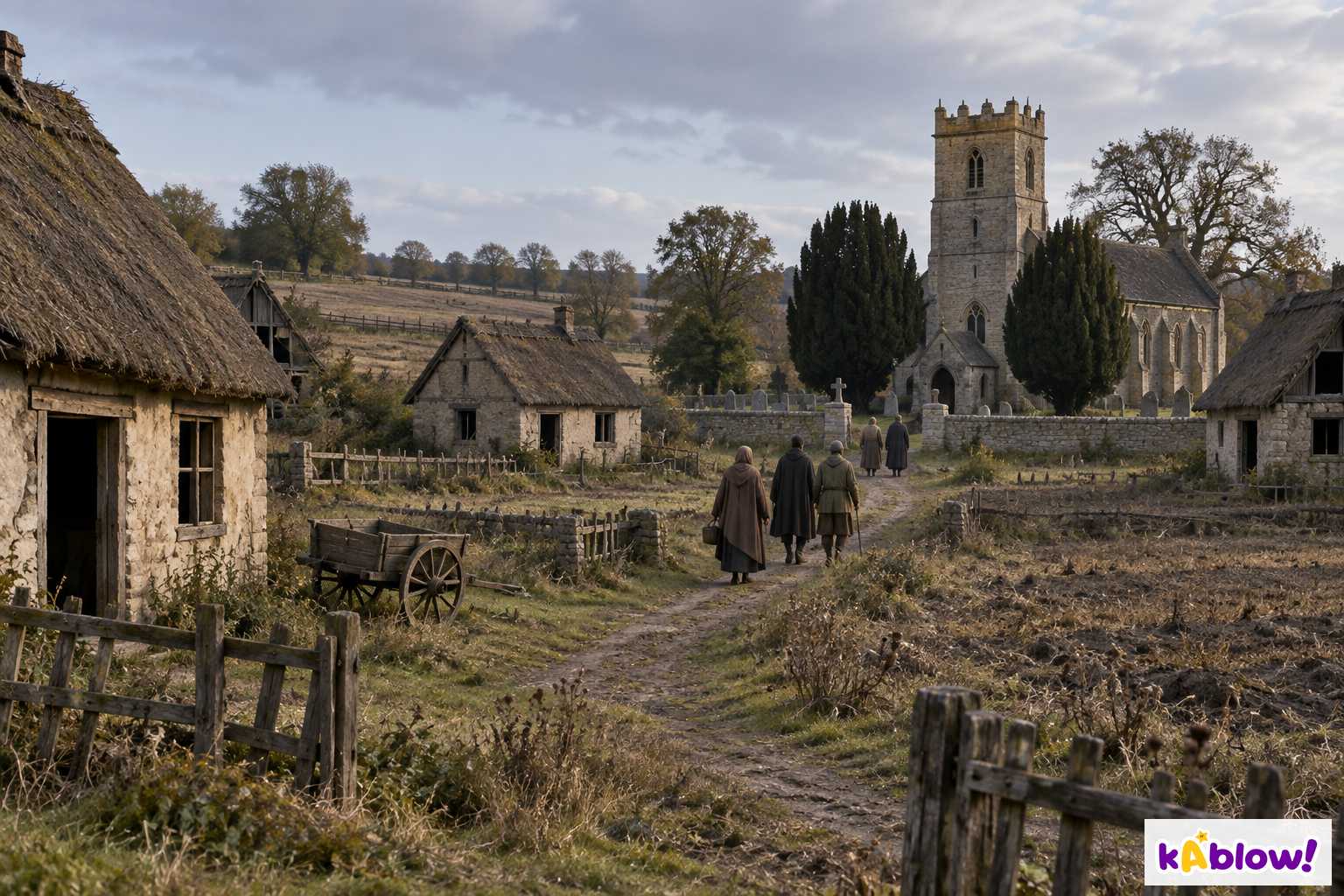
- Severe mortality disrupted communities and labour markets. Labourers could gain bargaining power, while legislation tried to restrain wages and movement. Effects varied by group and locality.
Mortality changes a community
Public health
- Medieval towns did not ignore health or cleanliness. Local rules addressed waste, water and street cleaning, though resources and enforcement varied. Classical medical traditions also survived through texts, so neither public health nor Roman-influenced learning simply disappeared. Such measures could have practical value without modern germ theory.
स्लाइड्स
Sign up free to view the lesson slides
Step through every slide for this topic — plus flashcards and revision notes — with a free account.
प्रैक्टिस सवाल
फ्री प्रीव्यू — 33 में से 8 सवाल। सभी देखने के लिए साइन अप करें।
1.What was the 'miasma' theory?
Easy- Adisease was caused by bad air
- Bdisease was caused by germs
- Cdisease was caused by blood
- Ddisease was a punishment from doctors
2.Who were barber-surgeons?
Easy- Apriests
- Buniversity doctors
- Cnurses
- Dmen who cut hair and did simple surgery
3.What are the Four Humours?
Easy- Aheart, brain, lungs and liver
- Bvitamins
- Cblood, phlegm, yellow bile and black bile
- Dair, fire, water and earth
4.Who developed the idea of the Four Humours?
Easy- AFleming
- BHippocrates and Galen
- CPasteur and Koch
- DJenner and Lister
5.Which institution had major influence over education and charitable care in medieval England?
Easy- Athe Church
- Bthe Army
- Cthe Navy
- Dthe Parliament
6.What was a physician?
Easy- Aa nurse
- Ba baker
- Ca monk
- Da university-trained doctor
7.What was an apothecary?
Easy- Aa priest
- Ba nurse
- Csomeone who made and sold herbal medicines
- Da surgeon
8.What treatments did doctors use to rebalance the humours?
Easy- AX-rays
- Bbleeding and purging
- Cantibiotics
- Dvaccination
Unlock all 33 questions & more
इस टॉपिक के हर सवाल, स्लाइड्स, फ्लैशकार्ड और रिवीज़न नोट्स देखने के लिए फ्री अकाउंट बनाएं।
पास्ट पेपर
इस टॉपिक के लिए पास्ट-पेपर प्रैक्टिस जल्द आ रही है।
जल्द आ रहा है