
Festivals, customs and traditions
खेलकर सीखें
इन सवालों के जवाब देकर एनर्जी कमाएं, फिर मछली पकड़ें और घूमें। कोई अकाउंट नहीं चाहिए।
शिक्षकों के लिए: Festivals, customs and traditions (Spanish, Identity and Culture) के लिए इस्तेमाल के लिए तैयार लेसन स्लाइड्स, रिवीज़न नोट्स — इन्हें अपने लेसन में इस्तेमाल करें, या टॉपिक को एक इंटरैक्टिव क्लास एक्टिविटी की तरह चलाएं जिसे आपके शिक्षार्थी लाइव गेम की तरह खेलें।
लेसन नोट्स
Named traditions are examples, not universal habits
- Navidad is Christmas, Nochebuena Christmas Eve on 24 December and Nochevieja New Year’s Eve on 31 December. A widely known Spanish New Year custom uses twelve grapes at midnight as a wish for luck; not everyone observes it.
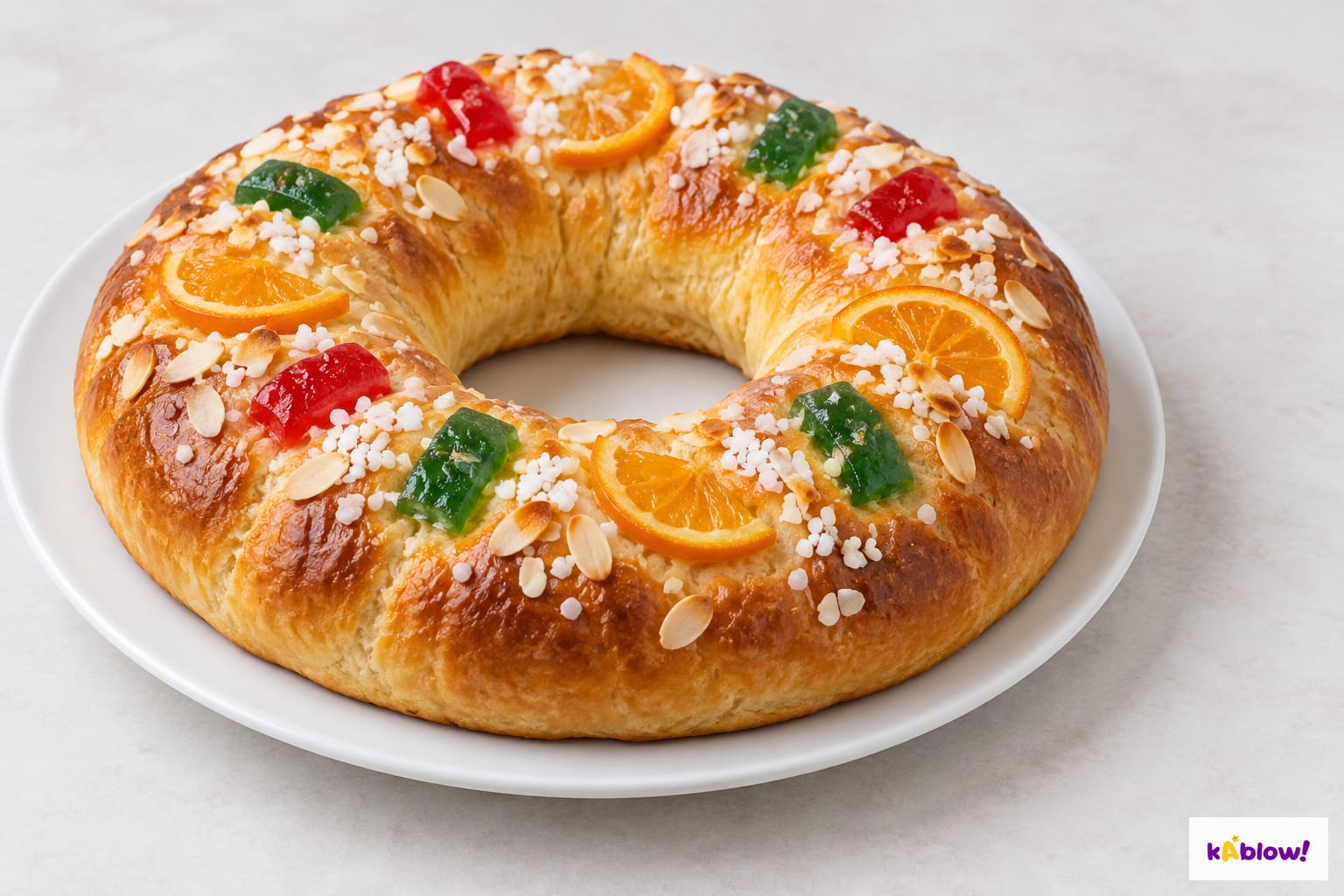
- Reyes celebrations are associated with 6 January in the Christian calendar. A roscón de Reyes is a ring-shaped sweet bread often enjoyed around this period; the original food illustration shows one example, not every recipe or family’s practice.
An illustrative roscón de Reyes
Celebration vocabulary identifies the event
- Cumpleaños is birthday, boda wedding, bautizo baptism, desfile parade and fuegos artificiales fireworks. Learn the whole phrase rather than translate fireworks as separate artificial fires.
- A quinceañera can be a fifteen-year-old girl in a person description; related celebration expressions refer to a fifteenth birthday. Practices vary by community and family, and no particular ceremony is universal.
Celebration words in context
Past viewpoint changes the story
- Fuimos a la fiesta, comí and vimos los fuegos artificiales report completed events in a supplied account. Useful forms include fui/fuimos, comí and vi/vimos; keep the person ending and written accents accurate.
- Hacía sol and había mucha gente can give background. Era divertido describes from within a past scene, while fue divertido can evaluate a completed event; both are possible with different viewpoints.
Past forms and viewpoint
Local festivals in Spain have distinct features
- Las Fallas in Valencia features large sculptural monuments created by artists and communities, with many burned at the close. La Tomatina in Buñol is known for tomato throwing; these are distinct local examples.
- Los Sanfermines in Pamplona includes bull runs and other activities such as music, processions and giants-and-bigheads parades. Semana Santa includes processions in some communities, and the Feria de Abril is associated with Seville; these names do not describe every person in Spain.
Distinct local examples
Mexican and Andean examples need their context
- UNESCO’s Mexican Indigenous-festivity example describes remembrance of deceased relatives and loved ones at the end of October and beginning of November. Día de Muertos practices differ among communities, with 1–2 November prominent in many accounts; related observances also occur elsewhere.
- The staged Inti Raymi celebration in Cusco, Peru, takes place on 24 June and evokes Inca traditions honouring the Sun; the modern public enactment dates from 1944. Carnival occurs across different countries and languages, so Latin America is not a synonym for Spanish-speaking everywhere.
Scope the cultural example
Compare evidence without national stereotypes
- In an invented comparison, en la fiesta A hay música; en la fiesta B también hay música states a shared feature. To state a difference, name a supplied detail and use pero or es diferente rather than invent a national habit.
- Customs can vary within one place, between families and over time. A person may describe an event without personally observing it; an open response can use an invented secular celebration.
Compare only the details given
Opinions need a reason, not a compulsory celebration
- Mi fiesta favorita es… porque… identifies one speaker’s preference. En mi opinión and me parece que can introduce a view; other speakers may value different events or none of the named festivals.
- El año pasado fuimos a una fiesta del barrio. Había mucha gente y vimos un desfile. Fue divertido. The invented account supplies a completed visit, background, activity and opinion without claiming a private experience.
Read an invented community event
स्लाइड्स
Sign up free to view the lesson slides
Step through every slide for this topic — plus flashcards and revision notes — with a free account.
प्रैक्टिस सवाल
फ्री प्रीव्यू — 38 में से 8 सवाल। सभी देखने के लिए साइन अप करें।
1.What does "la Navidad" mean?
Easy- AChristmas
- BEaster
- CNew Year
- Dbirthday
2.What does "el cumpleaños" mean?
Easy- Awedding
- Bholiday
- Cparty hat
- Dbirthday
3.What does "los regalos" mean?
Easy- Acakes
- Bcandles
- Cpresents
- Dcards
4.What does "el árbol de Navidad" mean?
Easy- Athe Christmas meal
- Bthe Christmas tree
- Cthe Christmas card
- Dthe Christmas star
5.What does "la boda" mean?
Easy- Awedding
- Bball
- Cbirthday
- Dbaptism
6.What does "la Semana Santa" mean?
Easy- Aa birthday
- BChristmas
- CNew Year
- DHoly Week
7.What does "la Nochevieja" mean?
Easy- Aold night only
- BEpiphany
- CNew Year's Eve
- DChristmas Eve
8.What does "la Nochebuena" mean?
Easy- AEaster
- BChristmas Eve
- CNew Year's Eve
- DGood Friday
Unlock all 38 questions & more
इस टॉपिक के हर सवाल, स्लाइड्स, फ्लैशकार्ड और रिवीज़न नोट्स देखने के लिए फ्री अकाउंट बनाएं।
पास्ट पेपर
इस टॉपिक के लिए पास्ट-पेपर प्रैक्टिस जल्द आ रही है।
जल्द आ रहा है