Biodiversity and ecosystem services
Learn it by playing
Answer these questions to earn energy, then fish and explore. No account needed.
Lesson notes
What Ecosystems Do For Us
- Ecosystems naturally recycle materials such as water, carbon dioxide, and the remains of dead organisms — but only if they are left largely undisturbed.
- The benefits humans and other organisms get from a healthy ecosystem are called ecosystem services: clean air and water, fertile soil, food, and recreation are all examples.
- Biodiversity is the variety of species, habitats, and genes in an ecosystem, and it is what keeps these services running reliably.
- When human activity interferes with an ecosystem, the ecosystem cannot recycle materials or provide its services as effectively.
Human Activities That Threaten Biodiversity
- Habitat destruction, such as deforestation and burning, removes the places species need to live.
- Pollution contributes to climate change and can damage air, soil and water quality.
- Alien invasive species — plants or animals introduced from outside an ecosystem — can take over habitat and resources that native species depend on.
- Hunting and poaching, including illegal wildlife trade, can drive a species toward extinction.
- Because every part of an ecosystem is connected, harming one part can have a ripple effect that damages the rest of the system.
Case Study: An Invasive Predator in Yellowstone Lake
- Nonnative lake trout were illegally introduced into Yellowstone Lake, threatening the native Yellowstone cutthroat trout.
- Young lake trout compete with cutthroat trout for food, and adult lake trout prey on cutthroat trout directly; a mature lake trout can eat about 41 cutthroat trout a year.
- Lake trout live in deeper water and grow larger than cutthroat trout, so most of the cutthroat trout's natural predators cannot reach them there.
- The cutthroat trout population in the lake fell to about 10% or less of its historic highs.
- Grizzly bears, otters and bald eagles all depend on cutthroat trout for food, so the decline threatens them too, along with over a century of recreational cutthroat trout fishing.
How One Invasive Species Reshapes a Food Web
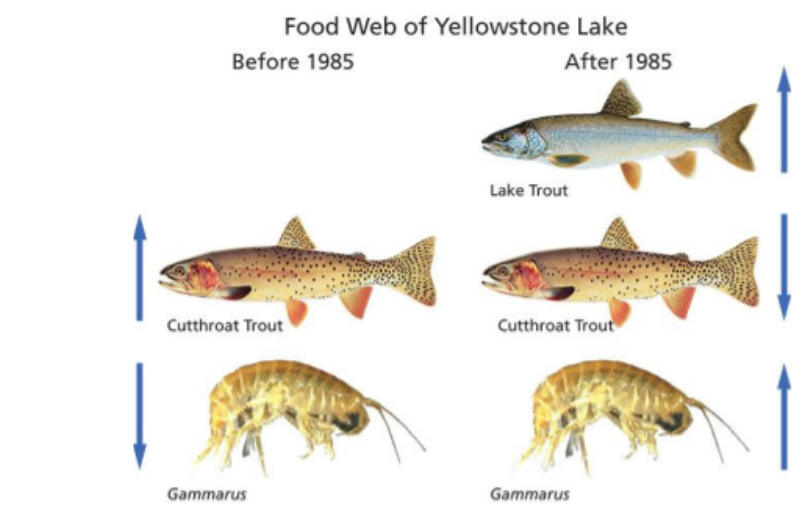
- The diagram compares Yellowstone Lake's food web before 1985 (when lake trout were rare) with the food web after 1985 (once lake trout became established).
- After 1985, the diagram shows the lake trout population increasing while the cutthroat trout population decreases.
- Gammarus, a small shrimp-like animal that cutthroat trout eat, is shown increasing after 1985 — an indirect result of there being fewer cutthroat trout left to eat it.
- A change to one population that changes others further along the food web like this is called a trophic cascade.
Food web of Yellowstone Lake before and after 1985, showing lake trout, cutthroat trout and Gammarus
Evaluating Design Solutions: The Yellowstone Dilemma
- Park managers considered four solutions: eliminate every fish in the lake and restock cutthroat trout (estimated cost $32–181 million), gillnet some (not all) lake trout, leave the lake trout alone, or recruit large numbers of anglers to catch them.
- A good design solution is judged by how well it maintains stability in the ecosystem, not just by how completely it removes the invasive species.
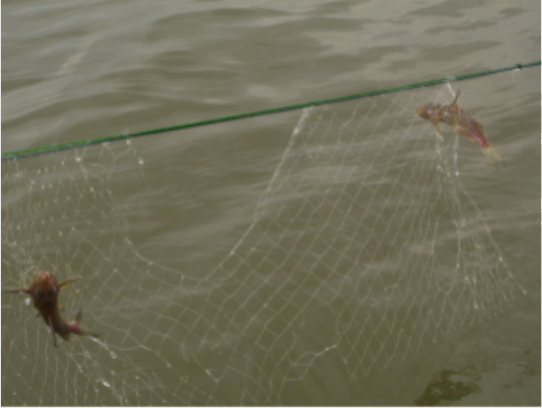
- Since 1994, gillnetting has removed more than 3.14 million lake trout, and population models show a 70% decline in older lake trout since 2012.
- Recent monitoring shows Yellowstone cutthroat trout beginning to recover while the lake trout population declines — evidence that gillnetting is working.
Lake trout caught in a gillnet on Yellowstone Lake
Types of Ecosystem Services
- Provisioning services are direct products people get from an ecosystem, such as fish, timber, or clean drinking water.
- Regulating services are natural processes that keep conditions stable, such as a predator controlling a prey population's size, or an ecosystem maintaining air and water quality.
- Cultural services are non-material benefits, such as the recreational cutthroat trout fishing that Yellowstone Lake has supported for over a century.
- Conservation policy can name specific ecosystem resources worth protecting, such as air quality, water quality, and prevention of soil erosion.
Why Individuals and Policy Both Matter
- Ecosystems can only recover if the pressures on them — pollution, poaching, habitat loss — are reduced or reversed.
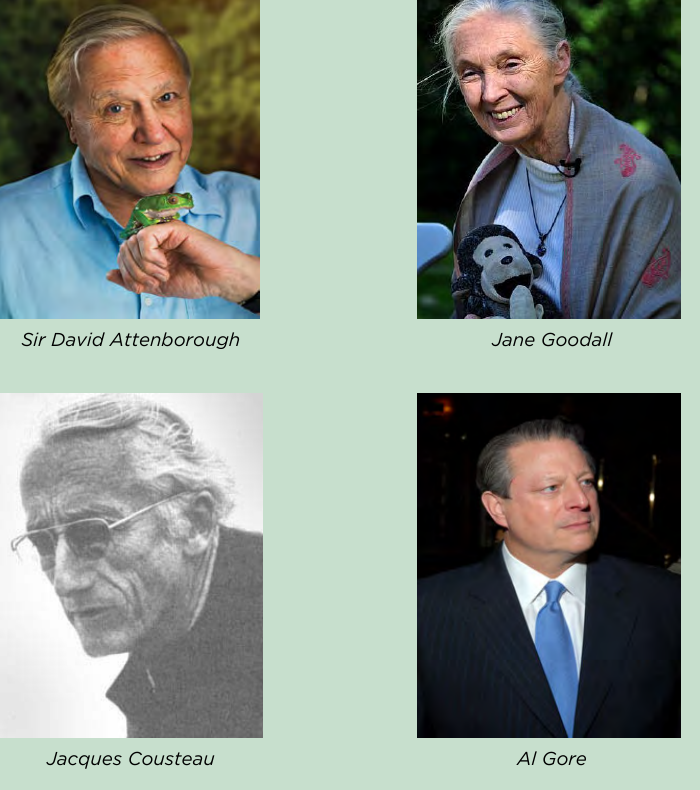
- Organisations such as Greenpeace campaign for environmental conservation, and individual conservationists such as Sir David Attenborough and Jane Goodall have raised public awareness of biodiversity loss.
- Everyday actions, such as reducing waste, avoiding pollution, and supporting conservation policy, add up because ecosystems are interconnected.
- Even where a species still seems common, losing it can trigger a ripple effect through the food web, so conservation works best before a population collapses.
Sir David Attenborough, Jane Goodall, Jacques Cousteau and Al Gore
Restoring Habitat: Giraffe Conservation in Africa
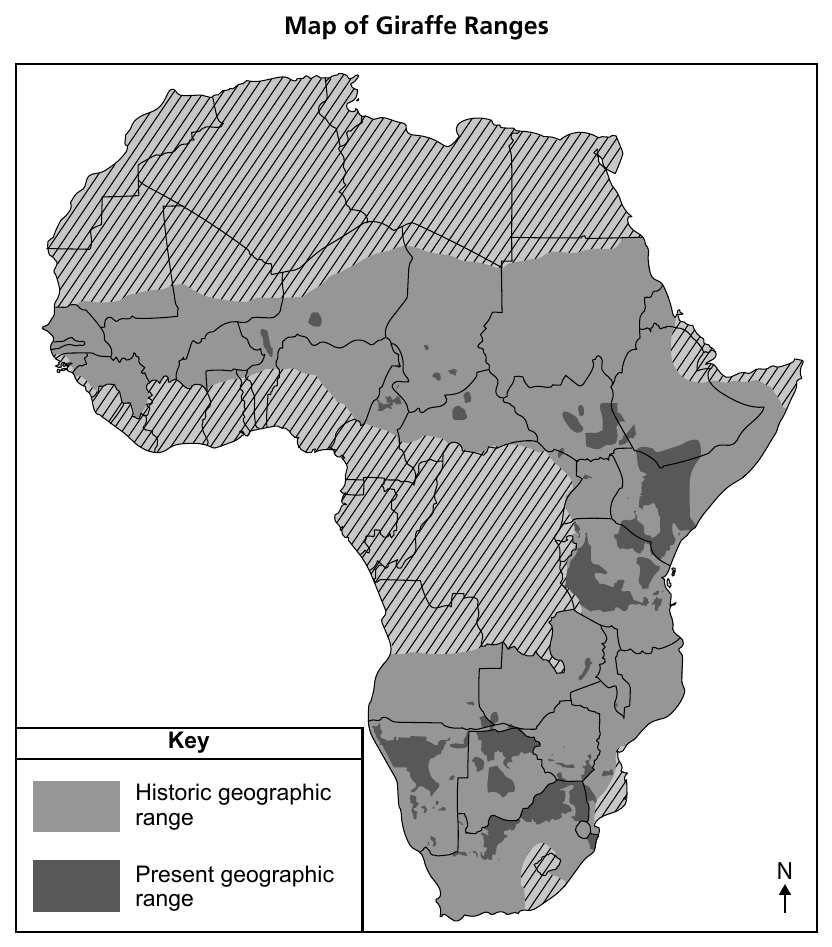
- Giraffe populations across Africa have shrunk due to habitat loss, hunting, disease and climate change; the map compares their historic range with their present range.
- One conservation strategy is reforestation — replanting Acacia trees, a key giraffe food source, in areas where giraffes historically lived, to restore lost habitat.
- Restoring habitat is a design solution like the Yellowstone case: it must be evaluated by how well it maintains stability for the species and the wider ecosystem, not just by whether it protects giraffes alone.
Map of giraffe ranges in Africa: historic range compared with present range
Slides
Sign up free to view the lesson slides
Step through every slide for this topic — plus flashcards and revision notes — with a free account.
Practice questions
Free preview — 8 of 36 questions. Sign up to see them all.
1.What is biodiversity?
Easy- AThe variety of life in a particular habitat or ecosystem
- BThe total number of organisms in an ecosystem
- CThe amount of biomass in a trophic level
- DThe number of individuals of a single species
2.Complete the sentence: the variety of life in a habitat is called ___.
EasyThe variety of life in a habitat is called ____.
3.Biodiversity refers to the variety of life in a habitat.
EasyTrue or false?
4.A healthy, undisturbed ecosystem can naturally recycle materials such as water and carbon dioxide.
EasyTrue or false?
5.An ecosystem can recycle materials just as effectively when humans heavily interfere with it.
EasyTrue or false?
6.Which of the following is an example of a service an ecosystem provides to people?
Easy- APollination of crops by bees
- BPhotosynthesis in plants
- CPredation of herbivores
- DCompetition between species
7.A national park lists air quality, water quality, and prevention of soil erosion as resources worth protecting. These are all examples of what?
Easy- AEcosystem services that come from a healthy, stable ecosystem
- BGenetic diversity within a single species
- CTrophic levels in a food chain
- DSpecies that are invasive to the region
8.Match the ecosystem service to its category.
Easy- Provisioning
- Regulating
- Cultural
- Food
- Climate regulation
- Recreation
Unlock all 36 questions, flashcards & more
Create a free account to see every question, the slides, flashcards and revision notes for this topic.