Humans and artificial selection
Learn it by playing
Answer these questions to earn energy, then fish and explore. No account needed.
Lesson notes
Artificial Selection
- Artificial selection occurs when humans select which plants or animals to breed to pass on specific traits to the next generation.
- Two organisms with desirable traits are crossed to produce offspring with those same traits.
- By selecting and crossing individuals with desired traits for several generations, scientists increase the chance that offspring will have those traits.
- Artificial selection is used in farming and ranching, such as breeding cows that produce the most milk to increase milk quality and quantity.
- Plants are also selectively bred to increase size, flavor, and production; almost every fruit or vegetable has been improved by artificial breeding.
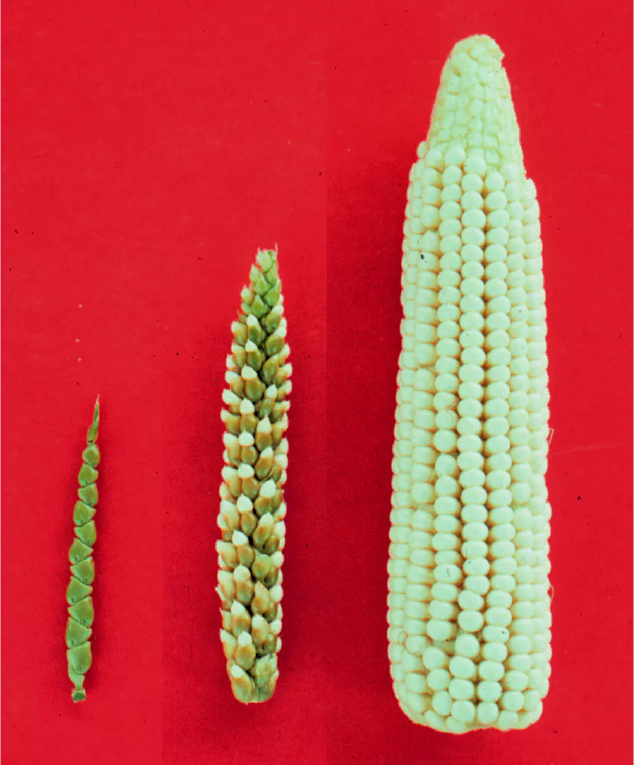
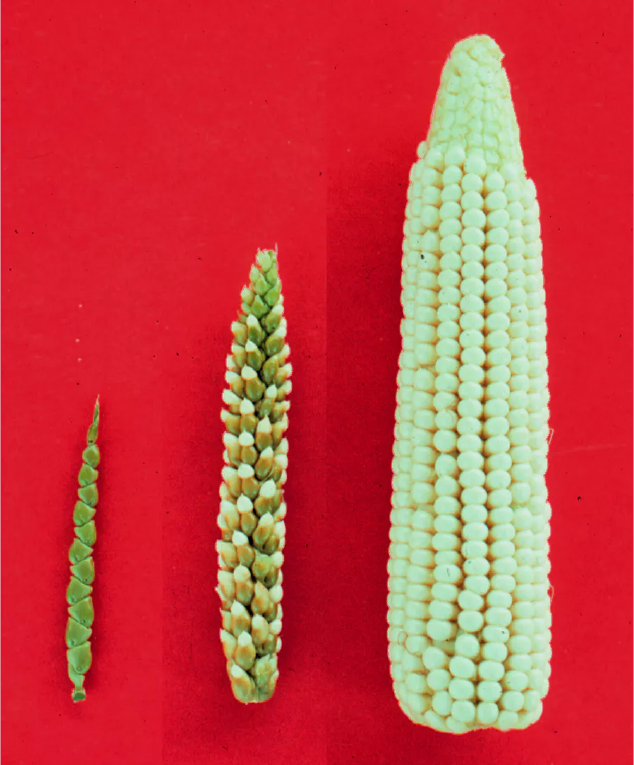
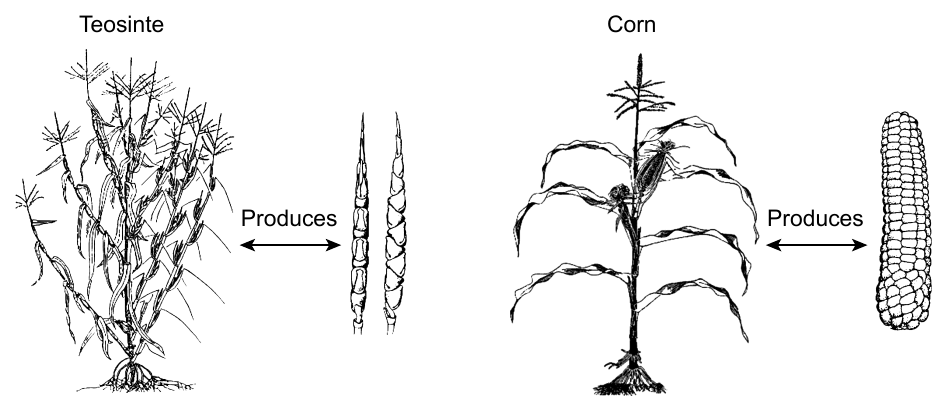
- Example: generations of farmers have harvested corn with the largest kernels to produce today's corn.
Ears of teosinte (left), a teosinte-maize F1 hybrid (center), and modern corn (right) on the same scale, showing how generations of selective breeding for larger, more exposed kernels turned wild teosinte into today's corn.
Genetic Modification
- Genetic engineering is a research field that aims to change the genetics of living organisms to have more desirable traits.
- This technology has led to less crop damage and increased farm production, allowing farmers to produce more food on less land.
- Crops have been engineered to produce better tasting food with a longer shelf life.
- Genetic engineering also benefits medicine; for example, scientists have engineered bacteria to produce human insulin.
- The human insulin gene is inserted into bacteria, which then produce human insulin as they reproduce, helping people with diabetes.
Cloning
- A clone is an exact genetic duplicate of a living organism, like an identical twin but born at different times.
- Cloning involves inserting DNA from one organism into an empty egg cell from another, tricking it to grow as if fertilized.
- Clones must grow, develop, and learn like any other living thing; they cannot be produced instantly by a machine.
- Even though clones have identical DNA, trait expression is subject to environmental influences.
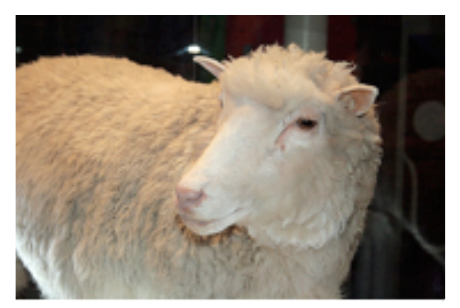
Dolly the sheep, born in 1996 — the first mammal cloned from an adult body cell.
Gene Therapy
- Gene therapy is the insertion of genes into a person's cells to cure a genetic disorder.
- It only works for disorders caused by faulty genes, not diseases caused by viruses like AIDS.
- Gene therapy uses a vector (carrier molecule), often modified viral DNA with viral genes removed, to incorporate the desired gene into patient's DNA.
- The virus used in gene therapy is deactivated and not harmful to the human body.
- Gene therapy is still experimental for diseases like hemophilia and cystic fibrosis, but may become common in the future.
Engineering Design
- This standard involves engineering design to solve problems related to inheritance of desired traits.
- The goal is to obtain, evaluate, and communicate information about technologies that change how humans affect inheritance.
- Examples include artificial selection, genetic modification, animal husbandry, and gene therapy.
- Analyze data from tests or simulations to determine the best solution for cultivating selected desired traits in organisms.
Inherited Differences and Benefits
- Inherited differences among individuals in a population give some individuals a benefit.
- Artificial selection takes advantage of these differences by selecting individuals with beneficial traits for breeding.
- This process can lead to populations with enhanced traits over generations.
- Understanding these differences is key to successful selective breeding and genetic modification.
Slides
Sign up free to view the lesson slides
Step through every slide for this topic — plus flashcards and revision notes — with a free account.
Practice questions
Free preview — 8 of 36 questions. Sign up to see them all.
1.What is artificial selection?
Easy- AThe process by which humans select which plants or animals to breed in order to pass on specific traits to the next generation
- BThe process by which nature selects which organisms survive and reproduce
- CThe process of cloning an organism to produce an exact genetic duplicate
- DThe process of inserting genes into a person's cells to cure a genetic disorder
2.Which of the following is an example of artificial selection?
Easy
- ABreeding cows that produce the most milk
- BA cheetah being faster due to natural selection
- CA plant growing towards sunlight
- DA person developing immunity after a vaccine
3.Which of the following are examples of technologies that have changed the way humans affect the inheritance of desired traits in organisms? (select all that apply)
Easy- AArtificial selection
- BGenetic modification
- CNatural selection
- DAnimal husbandry
- EGene therapy
4.Match each term with its correct definition.
Medium- Artificial selection
- Genetic modification
- Cloning
- Gene therapy
- Humans select which organisms to breed for desired traits
- Changing the genetics of an organism to have more desirable traits
- Producing an exact genetic duplicate of an organism
- Inserting genes into a person's cells to cure a genetic disorder
5.Artificial selection and natural selection are the same process.
EasyTrue or false?
6.Put the steps of artificial selection in the correct order.
Medium- Select individuals with the desired traits
- Breed the selected individuals
- Repeat for several generations
- Identify the desired traits
7.Gene therapy can be used to cure diseases caused by viruses, such as AIDS.
MediumTrue or false?
8.Clones have identical DNA, so their traits are completely unaffected by the environment.
MediumTrue or false?
Unlock all 36 questions, flashcards & more
Create a free account to see every question, the slides, flashcards and revision notes for this topic.