Natural selection and adaptation
Learn it by playing
Answer these questions to earn energy, then fish and explore. No account needed.
Lesson notes
Key Concepts
- Variation refers to differences in traits among individuals of the same species, often due to genetic differences.
- Inherited traits are passed from parents to offspring through genes.
- Adaptations are traits that help organisms survive and reproduce in their environment.
- Natural selection is the process where individuals with traits best suited to their environment are more likely to survive and reproduce, passing on those traits.
- Mutations are natural changes in DNA that can introduce new variations; they can be harmful, neutral, or beneficial.
- Survival of the fittest means the organism most fit for its environment, not necessarily the strongest or fastest.
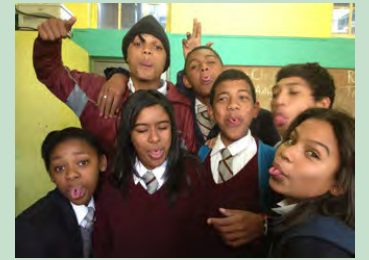
Students demonstrating tongue rolling, an inherited trait.
Mutations and Variation
- Most organisms of the same species have some physical differences because their genes differ.
- Variations in traits, like hair color, come from mutations that occurred in the past.
- Mutations are natural changes to DNA; some are harmful, many are neutral, and some are beneficial.
- Harmful mutations may reduce survival or reproduction; beneficial mutations may increase survival and reproduction.
- Genetic mutation is central to the creation of biological diversity.
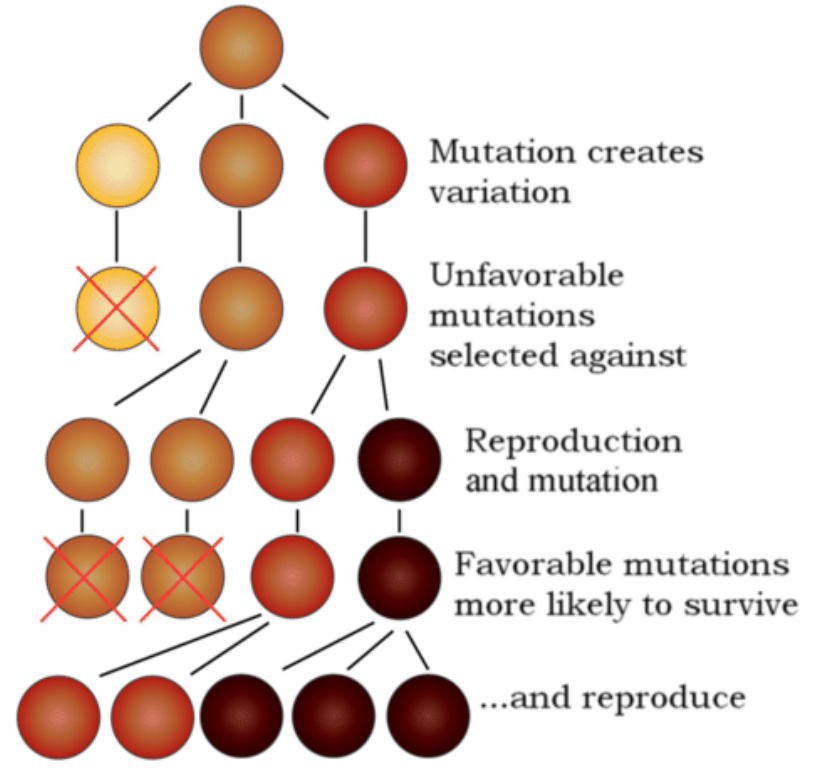
Mutation creates variation; unfavourable mutations are selected against and favourable ones are passed on.
Adaptations
- Adaptations are traits that help organisms survive and reproduce.
- Many adaptations protect organisms from the external environment.
- Adaptations beneficial in one environment may not be beneficial in another.
- Examples include camouflage, body shape, speed, agility, and drought tolerance.
- Adaptations can be structural (physical features), functional (life processes), or behavioral (instinctive or learned behaviors).
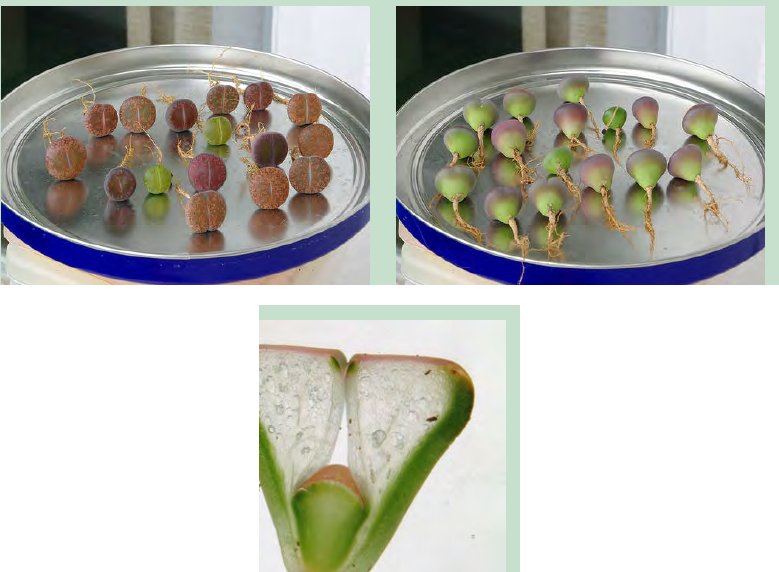
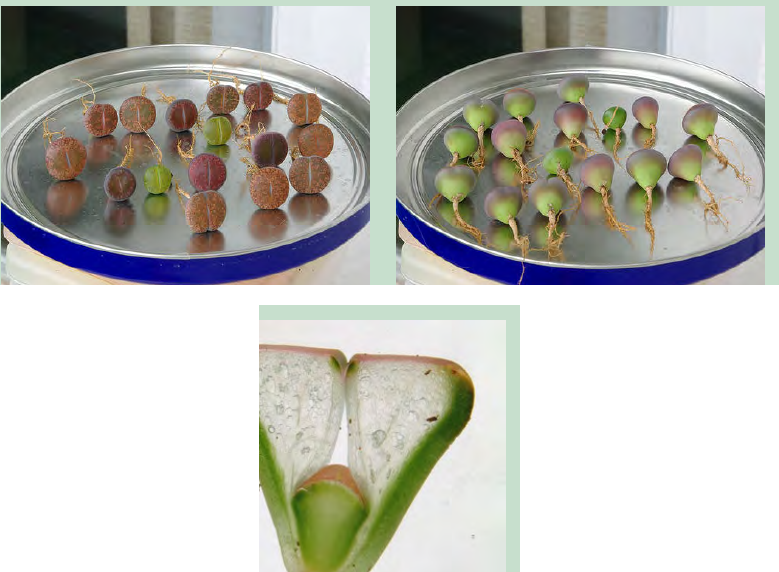
Lithops plants, also known as stone plants, showing their upper and underneath surfaces, and a cross-section of a Lithops plant.
How Adaptations Develop
- In a population, individuals with mutations that help them survive in a changing environment are more likely to survive and reproduce.
- Their offspring may inherit the favorable mutation, so over time the trait becomes more common in the population.
- Traits that hinder survival eventually disappear.
- Example: Oak trees with a mutation for fungus resistance survive and pass on the trait, changing the population.
- Other examples: reindeer hooves for snow, deep-sea fish small size, plant toxins, skunk odor.
Charles Darwin and the Galápagos
- Charles Darwin published 'The Origin of Species' based on 20 years of research, including a voyage on the HMS Beagle.
- On the Galápagos Islands, he observed that similar animals differed between islands, such as iguanas and finches.
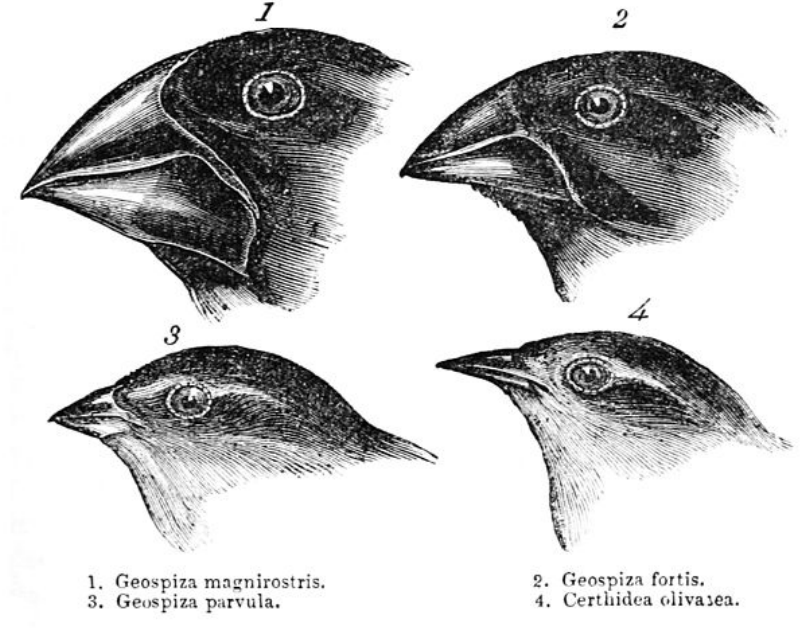
- Darwin's finches had different beak shapes adapted to different food sources on different islands.
- Each finch beak was well-matched to the seeds available on its island.
- Darwin concluded that organisms are well-suited to their particular environments.
Four Galápagos finch species with differently shaped beaks, adapted to different food sources.
Natural Selection
- Natural selection occurs when: (1) there is variation in inherited traits, (2) some traits give individuals an advantage in surviving and reproducing, and (3) those individuals have more offspring, passing on the beneficial trait.
- It increases the presence of beneficial traits in a species over time.
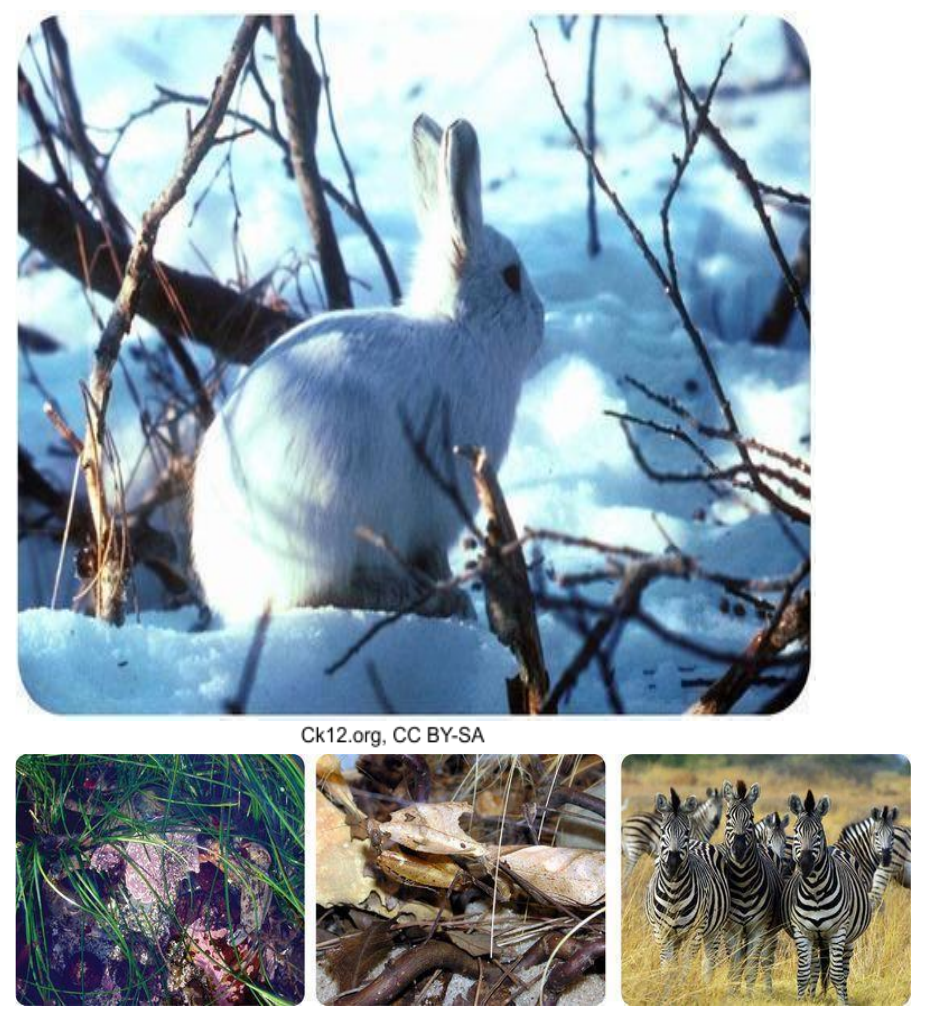
- Camouflage is a common adaptation in both predators and prey.
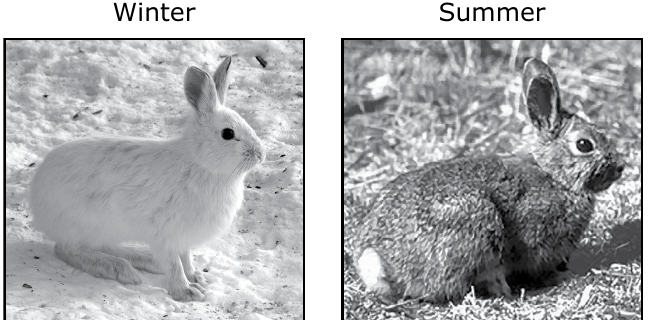
- Example: In snowy environments, white fur in rabbits is beneficial, so over time dark fur becomes uncommon.
- Natural selection works over very long periods.
Camouflage in predator and prey species: a snowshoe hare in snow, and camouflaged crab, gecko and zebras.
Examples of Natural Selection
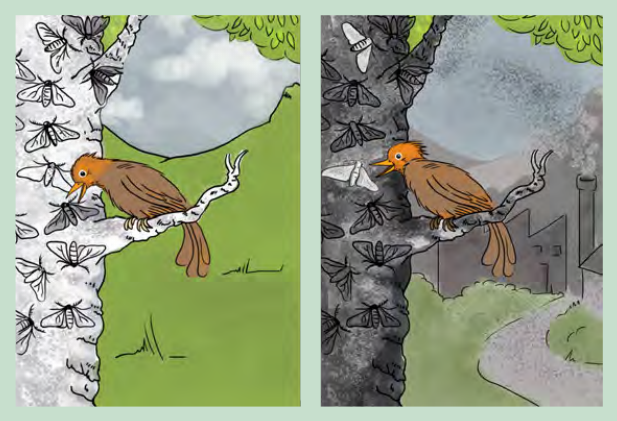
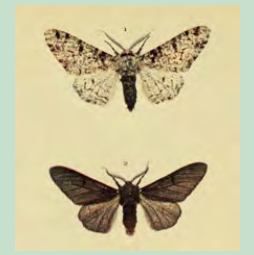
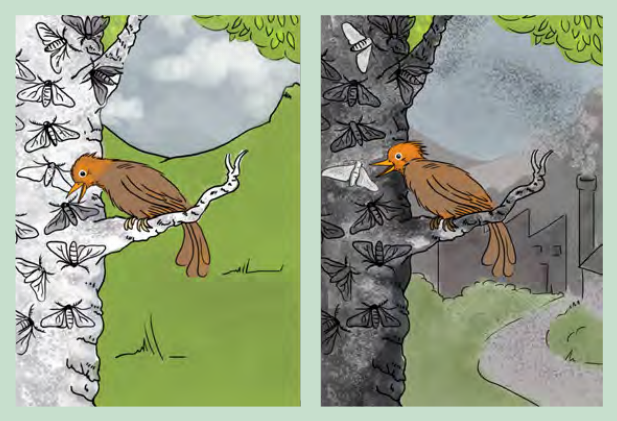
- Peppered moth: Before the Industrial Revolution, light-colored moths were camouflaged on lichen-covered trees; dark moths were rare.
- During the Industrial Revolution, soot killed lichen and darkened trees, making dark moths better camouflaged; they survived and reproduced more, so dark moths became common.
- After pollution controls, light-colored moths increased again as trees became lighter.
- Tawny Owls in Finland: As temperatures rose, brown-feathered owls became more common over 30 years because they were better suited to the changing environment.
- Arctic hares: Their fur turns white in winter for camouflage against snow.
Peppered moths on trees before and during the Industrial Revolution
Adaptations in Animals and Plants
- Animals have structural, functional, and behavioral adaptations to survive in their habitats.
- Examples: Aardvark's long tongue and claws for digging; desert beetles collect mist on their backs; gemsbok conserve water and avoid heat; ostriches run fast and use strong claws; stick insects use mimicry.
- Migration is a behavioral adaptation to move to areas with better resources.
- Hibernation is an inactive state to survive winter or dry periods.
- Plants have adaptations like deep roots, water storage, and reflective bark.
- Lithops ('living stones') look like pebbles to avoid being eaten and store water in fleshy leaves.
Wildebeest migration and sardine run as examples of animal adaptations.
Slides
Sign up free to view the lesson slides
Step through every slide for this topic — plus flashcards and revision notes — with a free account.
Practice questions
Free preview — 8 of 49 questions. Sign up to see them all.
1.A mutation is always harmful to an organism.
EasyTrue or false?
2.Adaptations that are beneficial in one environment are always beneficial in another.
EasyTrue or false?
3.Natural selection can cause traits that help organisms survive to become more common in a population over time.
EasyTrue or false?
4.The term 'survival of the fittest' refers to the fastest, strongest, or biggest organism.
EasyTrue or false?
5.Inherited traits are characteristics that are passed down from parent organisms to their offspring.
Easy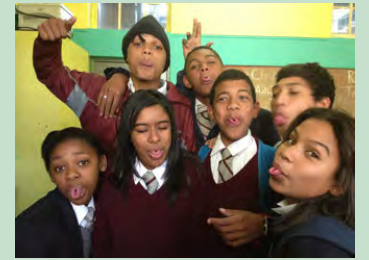
True or false?
6.Natural selection requires that there is no variation in inherited traits within a species.
EasyTrue or false?
7.An organism that blends with its background is more likely to avoid predators and pass on this beneficial trait to its offspring.
EasyTrue or false?
8.Which of the following is an example of a behavioural adaptation?
Easy- AA camel storing fat in its hump
- BA bird building a nest
- CA fish having gills
- DA plant having thick leaves
Unlock all 49 questions, flashcards & more
Create a free account to see every question, the slides, flashcards and revision notes for this topic.