Resources and ecosystem interactions
Learn it by playing
Answer these questions to earn energy, then fish and explore. No account needed.
Lesson notes
Ecosystem Basics
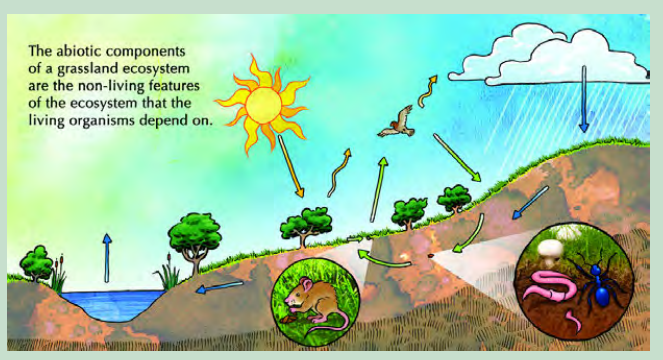
- An ecosystem consists of abiotic (non-living) and biotic (living) components interacting in a habitat.
- Biotic factors include all living organisms: plants, animals, fungi, and microorganisms.
- Abiotic factors include sunlight, soil, water, temperature, and air.
- The biosphere is the sum of all ecosystems on Earth.
- Ecosystem size is defined by interactions, not area; it can be as small as a river bank or as large as a national park.
Levels of Ecological Organization
- Organism: an individual living thing.
- Population: all individuals of the same species in an area.
- Community: all populations of different species in an area.
- Ecosystem: the community plus its abiotic environment.
- Biosphere: the global sum of all ecosystems.
Abiotic and Biotic Interactions
- Abiotic factors like temperature, water, and soil affect which organisms can live in an ecosystem.
- Water cycle: movement of water through evaporation, condensation, and precipitation.
- Photosynthesis uses carbon dioxide and water to produce glucose and oxygen; respiration breaks down glucose to release energy, carbon dioxide, and water.
- These processes cycle carbon dioxide and oxygen between biotic and abiotic parts of an ecosystem.
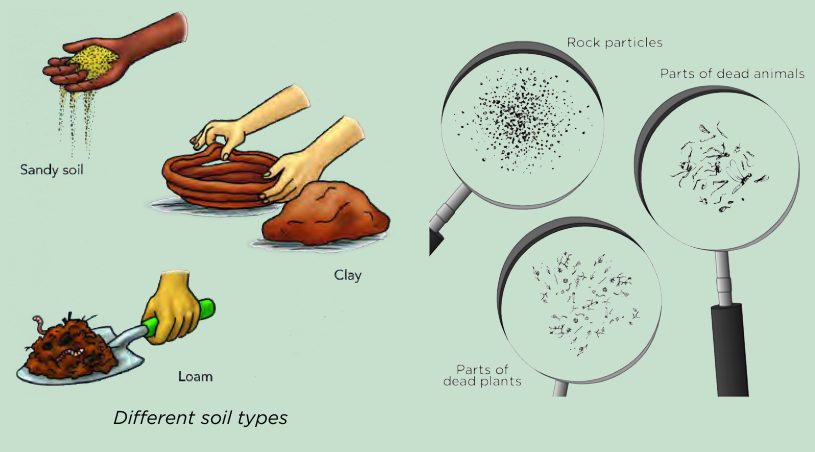
- Soil type (sand, loam, clay) affects water retention and nutrient availability.
Different soil types (sandy, clay, loam) and magnified views of rock particles and dead plant/animal remains.
Types of Interactions
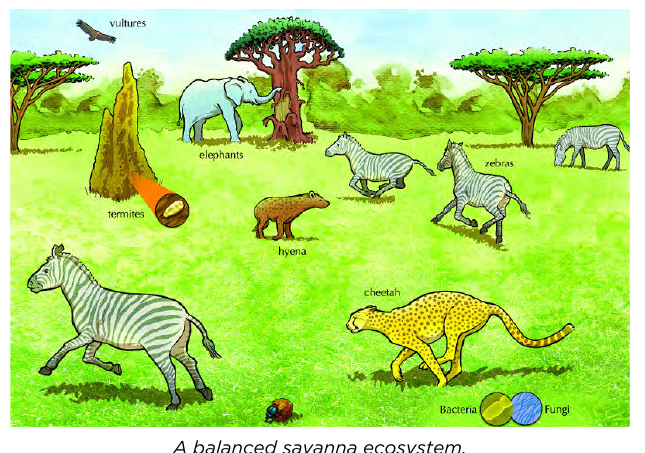
- Competition: two species use the same limited resource, e.g., hyenas and vultures competing for food.
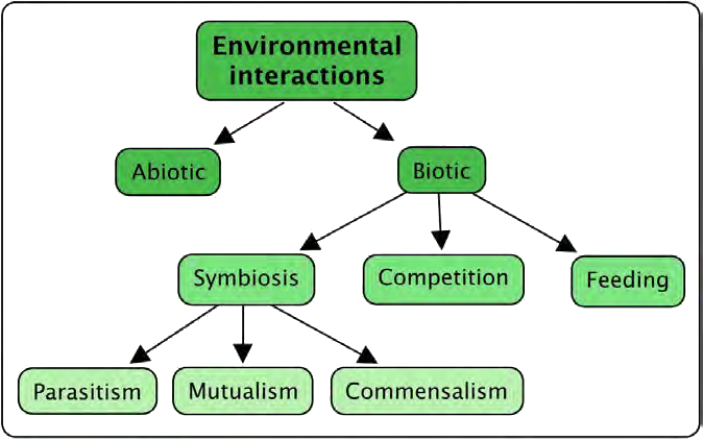
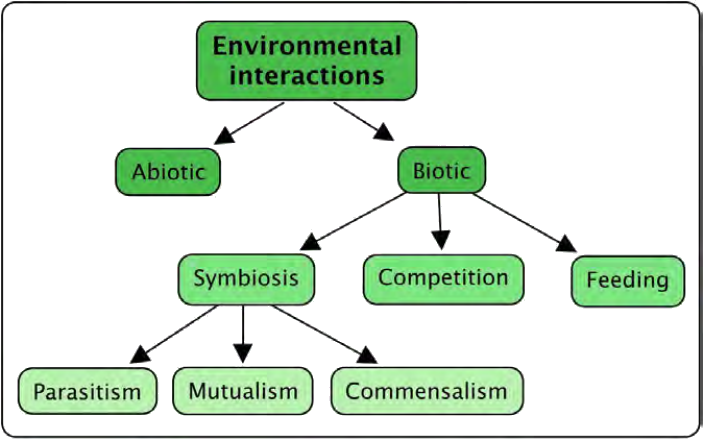
- Symbiosis: long-term interaction between two species, including parasitism, mutualism, and commensalism.
- Parasitism: one species benefits, the other is harmed (e.g., ticks on dogs).
- Mutualism: both species benefit (e.g., bees pollinating flowers).
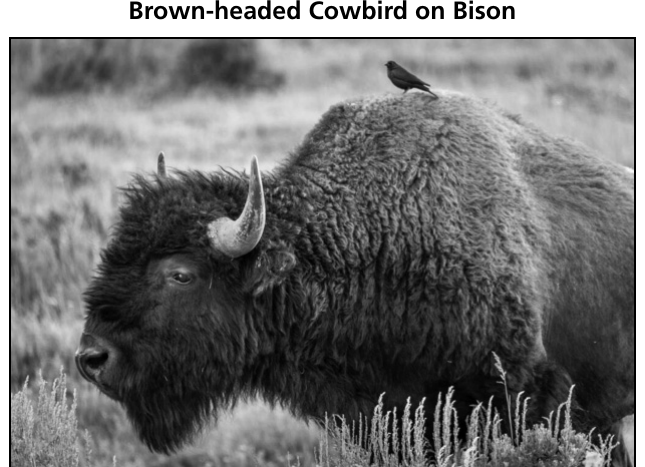
- Commensalism: one species benefits, the other is unaffected (e.g., remora fish on whale shark).
- Predator-prey: one organism (predator) hunts and eats another (prey), e.g., lions and zebras.
Flowchart of environmental interactions, including abiotic and biotic factors, and types of biotic interactions like symbiosis, competition, and feeding.
Feeding Relationships
- Producers (autotrophs) make their own food via photosynthesis, e.g., plants.
- Consumers (heterotrophs) obtain energy by eating other organisms.
- Herbivores eat only plants.
- Carnivores eat other animals; predators hunt live prey, scavengers eat dead animals.
- Omnivores eat both plants and animals.
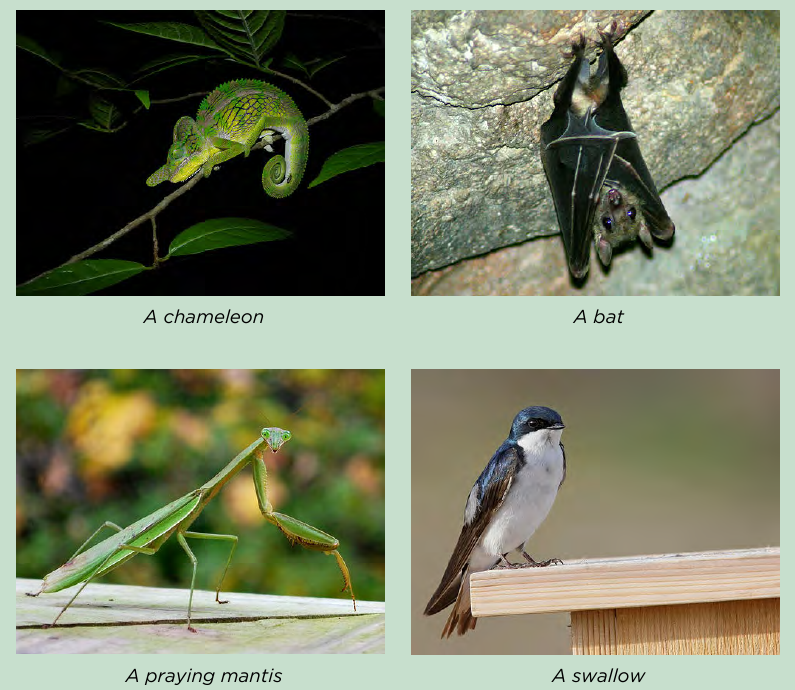
- Insectivores are carnivores that eat insects.
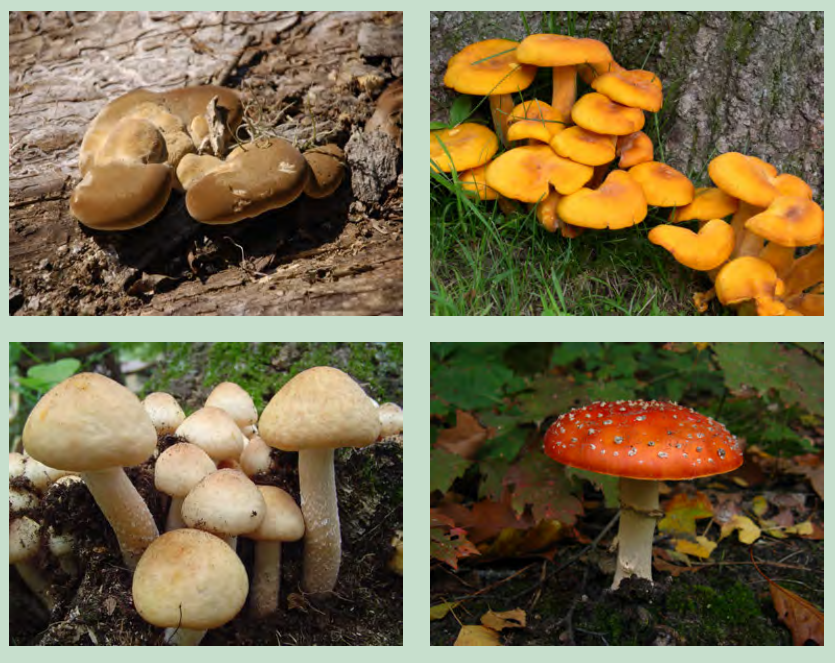
- Decomposers break down dead organisms, e.g., fungi and bacteria.
Photos of a chameleon, a bat, a praying mantis, and a swallow -- all insect-eating carnivores.
Ecosystem Balance and Limiting Factors
- Balance in an ecosystem refers to the number of animals it can support over time.
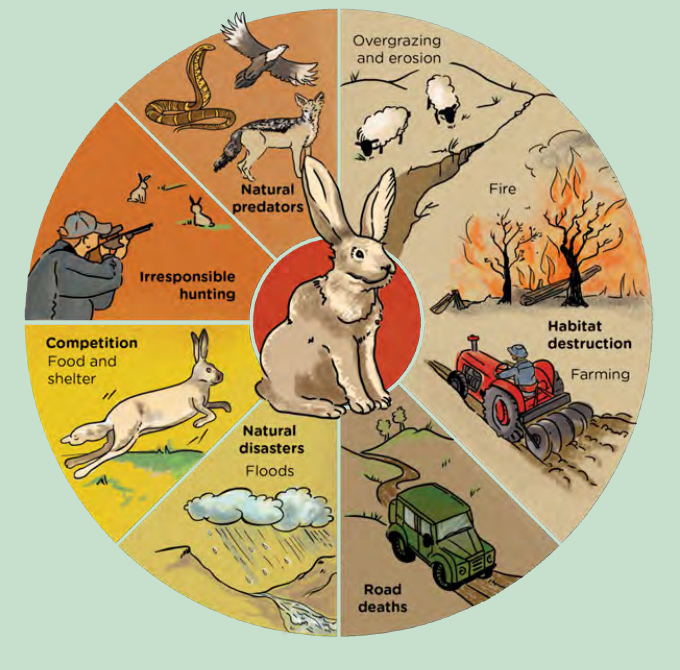
- Limiting factors restrict population growth, such as food, water, space, and disease.
- Natural factors like droughts, floods, and climate change can disrupt balance.
- Human factors like pollution, poaching, and habitat destruction also disrupt ecosystems.
- If a population changes, it can affect the whole ecosystem; e.g., if zebras die, cheetahs may starve.
A wheel diagram of threats to the Riverine Rabbit: natural predators, irresponsible hunting, competition, natural disasters, habitat destruction, overgrazing and erosion, fire, and road deaths.
Resource Availability and Population Effects
- Changes in resource availability (food, water, space) affect organism populations, because any area can only support a limited number of animals.
- Example: fertilizer runoff increases algae, blocking sunlight and limiting growth of bottom-dwelling organisms.
- Droughts reduce water availability, impacting plants and animals.
- In the Ogden pond example, if food is halved, populations may decline; if pH changes drastically, organisms may die; if sunlight increases, algae may overgrow; if water is removed, habitat shrinks.
A balanced savanna ecosystem: termites, elephants, zebras, a hyena, a cheetah, vultures, and bacteria/fungi all depending on the same limited resources.
Patterns of Interactions Across Ecosystems
- All ecosystems have similar interaction patterns: competition, predation, and mutualism.
- Different species fill similar roles in different ecosystems (e.g., algae in oceans, plants on land).
- Competition can lead to adaptation or displacement.
- Predator-prey relationships help maintain balance.
- Mutualism benefits both species, e.g., deer and gut bacteria.
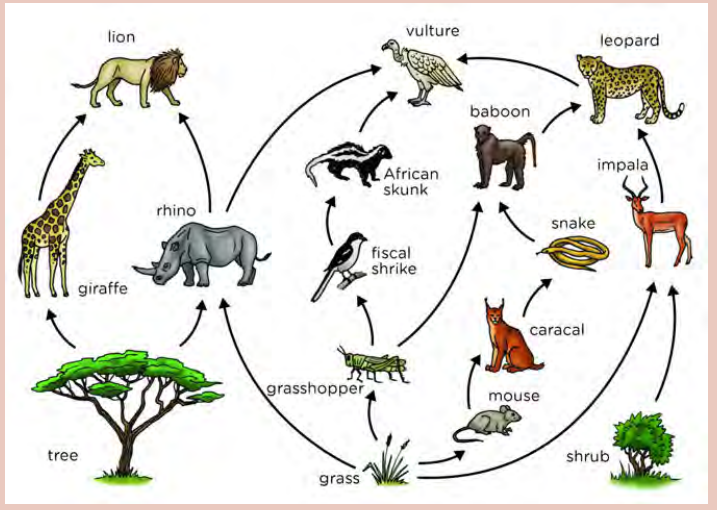
- A food web shows how many feeding relationships overlap in one ecosystem: each organism can have more than one food source and more than one predator.
A savanna food web showing feeding relationships among producers (tree, grass, shrub) and consumers up to top predators (lion, leopard).
Slides
Sign up free to view the lesson slides
Step through every slide for this topic — plus flashcards and revision notes — with a free account.
Practice questions
Free preview — 8 of 46 questions. Sign up to see them all.
1.An ecosystem consists of the abiotic (non-living) environment and the biotic (living) organisms.
EasyTrue or false?
2.Producers are organisms that cannot make their own food and must eat other organisms.
EasyTrue or false?
3.A predator is an animal that is hunted and eaten by another animal.
EasyTrue or false?
4.Mutualism is a type of symbiosis where both species benefit from the interaction.
EasyTrue or false?
5.In commensalism, one species benefits while the other is harmed.
EasyTrue or false?
6.Competition occurs when two species need to share a valuable and often limited resource such as food or water.
EasyTrue or false?
7.A scavenger is a carnivore that eats dead animals.
EasyTrue or false?
8.An insectivore is a carnivore that eats mainly insects and other small invertebrates.
EasyTrue or false?
Unlock all 46 questions, flashcards & more
Create a free account to see every question, the slides, flashcards and revision notes for this topic.