Chemical reactions and conservation of mass
Learn it by playing
Answer these questions to earn energy, then fish and explore. No account needed.
Lesson notes
Chemical Reactions: Basics
- A chemical reaction occurs when matter changes chemically into an entirely different substance with different properties.
- During a chemical reaction, reactants (starting substances) are used to make products (new substances).
- Chemical reactions involve a rearrangement of atoms: bonds in reactants break, and new bonds form to create products.
- The only way to be positive a chemical reaction occurred is to detect a new substance formed.
- Chemical reactions cannot be undone by simple physical means (e.g., you can't unbake a cake).
Signs of a Chemical Reaction
- New substance forming – the most reliable sign; e.g., plants turn carbon dioxide into oxygen.
- Change in energy – heat, light, sound, or coldness (e.g., fireworks, vinegar+baking soda gets cold).
- Bubbles of a new gas released (e.g., baking soda and vinegar produce carbon dioxide bubbles).
- Color change not due to mixing colors (e.g., leaves changing color, cooked egg white turning white).
- New odor produced (e.g., burning logs produce a smoky smell).
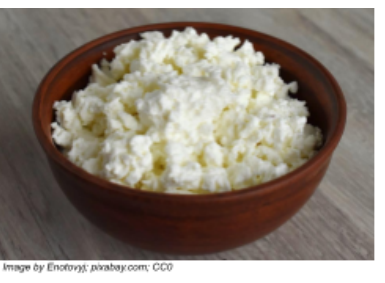
- Formation of a precipitate – a solid comes out of a solution (e.g., acid added to milk makes cottage cheese).
- Extreme or unusual property changes – e.g., density, flammability, or tarnishing of metals.
A solid comes out of solution when acid is added to milk, forming cottage cheese.
Reactants and Products
- Reactants are the substances present before a chemical reaction; they are used up to make products.
- Products are the new substances formed during the reaction.
- In the eggshell experiment, reactants are calcium carbonate (eggshell) and acetic acid (vinegar); products are calcium acetate, carbon dioxide, and water.
- In fermentation, glucose is the reactant; alcohol and carbon dioxide are products.
- In respiration, reactants are glucose and oxygen; products are carbon dioxide, water, and energy.
- In photosynthesis, reactants are carbon dioxide and water; products are glucose and oxygen.
Representing Chemical Reactions
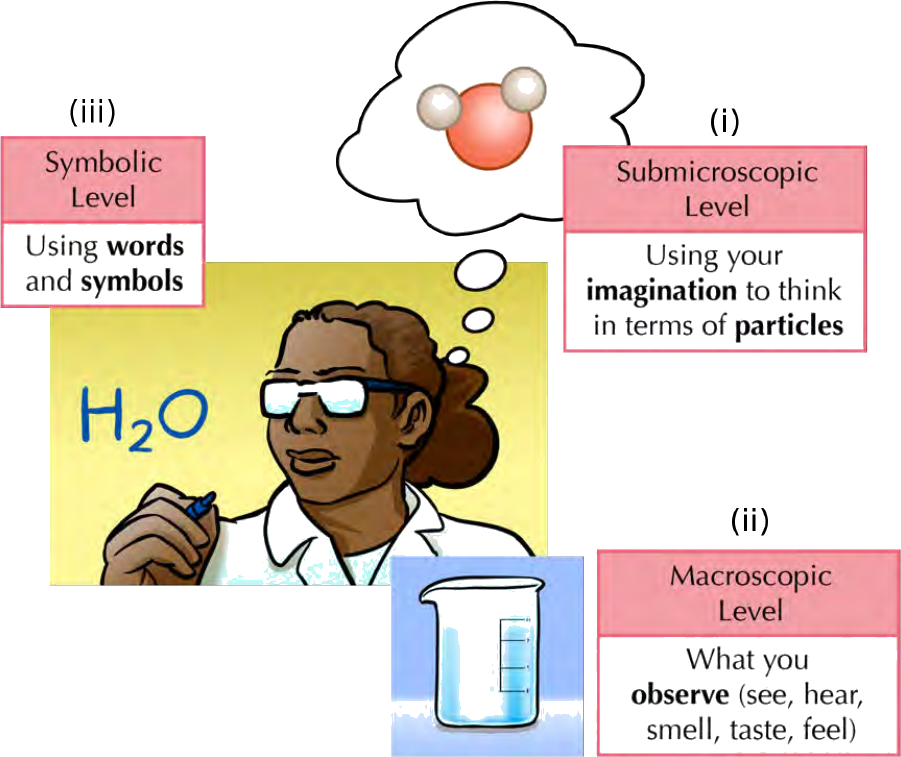
- Chemical reactions can be represented in three ways: macroscopic (observable), submicroscopic (particle diagrams), and symbolic (chemical equations).
- A word equation uses names: e.g., magnesium + oxygen → magnesium oxide.
- A chemical equation uses symbols and formulae: e.g., 2 Mg + O₂ → 2 MgO.
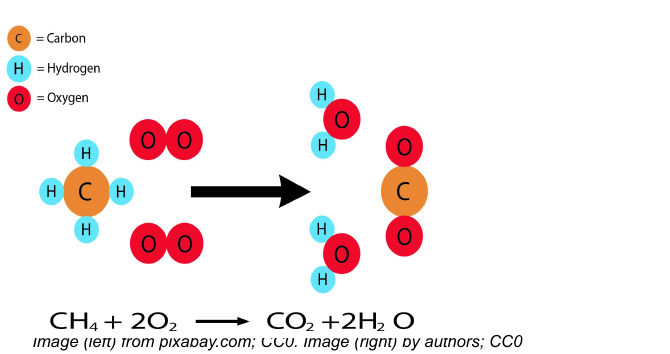
- A picture equation uses colored circles to represent atoms and shows the rearrangement.
- The arrow (→) separates reactants (left) from products (right).
The three levels of representing chemical reactions: symbolic, submicroscopic, and macroscopic.
Balanced Chemical Equations
- A balanced equation has equal numbers of each type of atom on both sides.
- Coefficients (numbers in front of formulae) indicate the number of molecules or atoms involved.
- Subscripts (numbers inside formulae) indicate the number of atoms of an element in one molecule.
- When balancing, you may only add coefficients; you may not change subscripts or add/remove reactants/products.
- Example: 2 H₂ + O₂ → 2 H₂O is balanced because there are 4 H and 2 O atoms on each side.
Methane and oxygen react to form carbon dioxide and water: CH4 + 2O2 -> CO2 + 2H2O.
Conservation of Matter
- The law of conservation of matter states that matter cannot be created or destroyed.
- In a chemical reaction, atoms are rearranged, but the total number of atoms remains the same.
- The total mass of products equals the total mass of reactants.
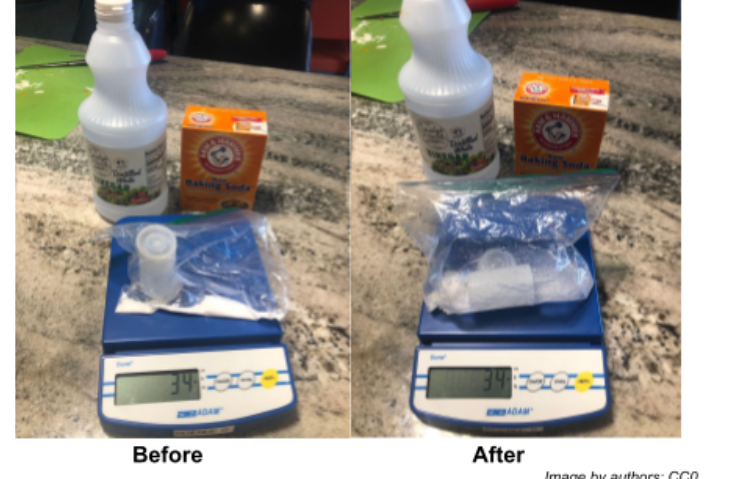
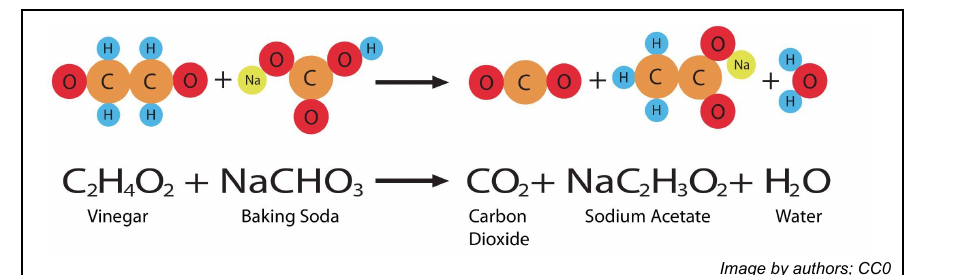
- Example: Vinegar and baking soda in a sealed bag had mass 34 g before and after the reaction, even though new substances formed.
- Counting atoms in reactants and products shows the same number of each element, proving conservation.
A sealed bag of vinegar and baking soda has a mass of 34g before and after the reaction.
Examples of Chemical Reactions
- Burning coal: carbon + oxygen → carbon dioxide.
- Rusting: iron + oxygen → iron oxide (rust).
- Tarnishing: copper + oxygen → copper oxide.
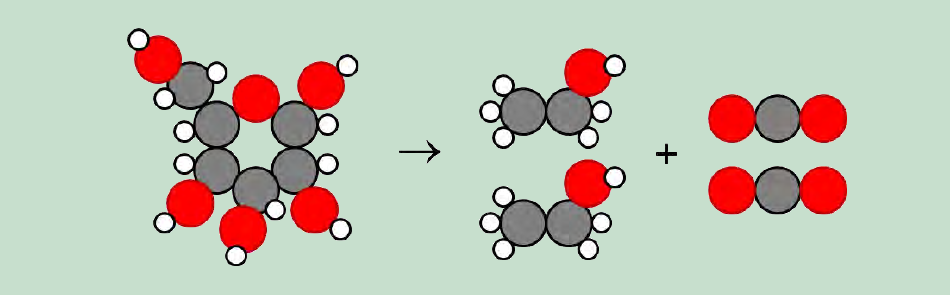
- Fermentation: glucose → alcohol + carbon dioxide (used in brewing and making ginger beer).
- Ammonium dichromate volcano: ammonium dichromate + oxygen → nitrogen gas + water + chromium oxide.
- Limewater test: carbon dioxide + calcium hydroxide → calcium carbonate (white precipitate) + water.
A diagram showing the fermentation of glucose into alcohol and carbon dioxide.
Detecting Substances via Reactions
- Some reactions produce unique and characteristic results, allowing detection of substances.
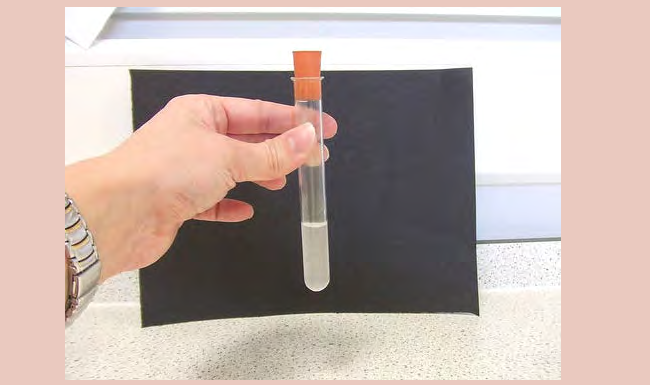
- Limewater turns milky when carbon dioxide is bubbled through it, indicating the presence of CO₂.
- Ammonium dichromate burning produces bright orange sparks and a dark-green product, used as a spectacular demonstration.
- These unique reactions help chemists identify unknown substances.
Limewater that has turned milky in a test tube.
Careers in Chemistry
- Chemistry is used in many careers: agricultural chemistry, biochemistry, biotechnology, chemical education, forensic science, food science, medicine, pharmaceuticals, and more.
- Chemists find ways to rearrange atoms to create new compounds with desired properties.
- Marie Curie was a famous chemist and physicist, first woman to win a Nobel Prize, and only person to win in two sciences.
- Studying chemistry can lead to careers in research, industry, environmental science, and space exploration.
Slides
Sign up free to view the lesson slides
Step through every slide for this topic — plus flashcards and revision notes — with a free account.
Practice questions
Free preview — 8 of 40 questions. Sign up to see them all.
1.What are the substances that are present before a chemical reaction takes place called?
Easy- AReactants
- BProducts
- CCoefficients
- DSubscripts
2.What are the substances that are produced during a chemical reaction called?
Easy- AReactants
- BProducts
- CCatalysts
- DEnzymes
3.During a chemical reaction, atoms are rearranged to form new substances.
EasyTrue or false?
4.In a balanced chemical equation, the total number of atoms of each element is the same on both sides of the equation.
EasyTrue or false?
5.Which of the following is a sign that a chemical reaction has taken place?
Easy- AFormation of a new substance
- BChange in state (e.g., melting)
- CDissolving sugar in water
- DCutting a piece of paper
6.Propane gas burns in oxygen to produce carbon dioxide and water. Which statement explains why this reaction shows conservation of mass?
Medium- AEnergy is produced during the reaction
- BWater is produced during the reaction
- CThe mass of the water and carbon dioxide equals the mass of the propane and oxygen
- DThe volume of the water and carbon dioxide equals the volume of the propane and oxygen
7.In the eggshell experiment, what are the reactants?
Easy- ACalcium carbonate and acetic acid
- BCalcium acetate, carbon dioxide, and water
- CEggshell and vinegar
- DCalcium carbonate and vinegar
8.What is the product in the reaction between hydrogen and oxygen to form water?
Easy- AHydrogen
- BOxygen
- CWater
- DHydrogen peroxide
Unlock all 40 questions, flashcards & more
Create a free account to see every question, the slides, flashcards and revision notes for this topic.