Earth's natural resources
Learn it by playing
Answer these questions to earn energy, then fish and explore. No account needed.
Lesson notes
Where Do Natural Resources Come From?
- Natural resources are materials Earth provides that people use, such as coal, copper, oil, and water.
- Resources are not spread evenly: some places have plenty of a resource and other places have almost none.
- The reason is Earth's geologic past — the rock-forming processes that happened in a place millions of years ago decide what resources can be found there today.
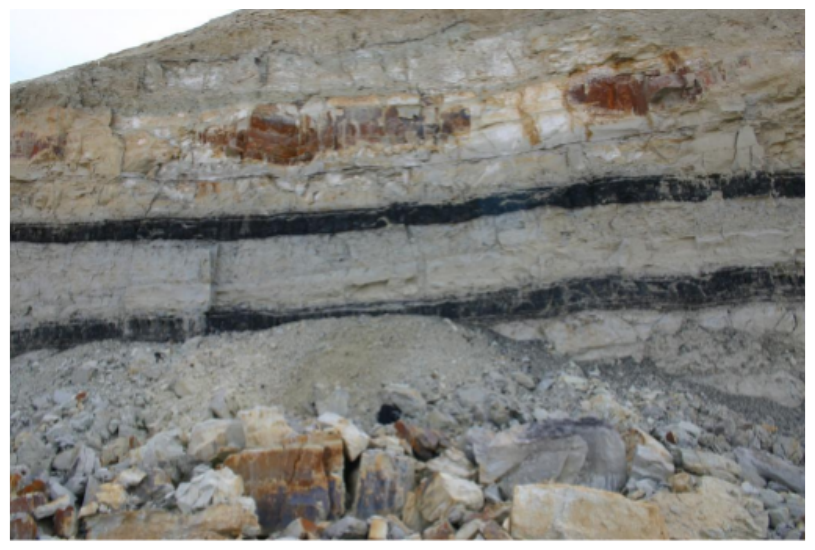
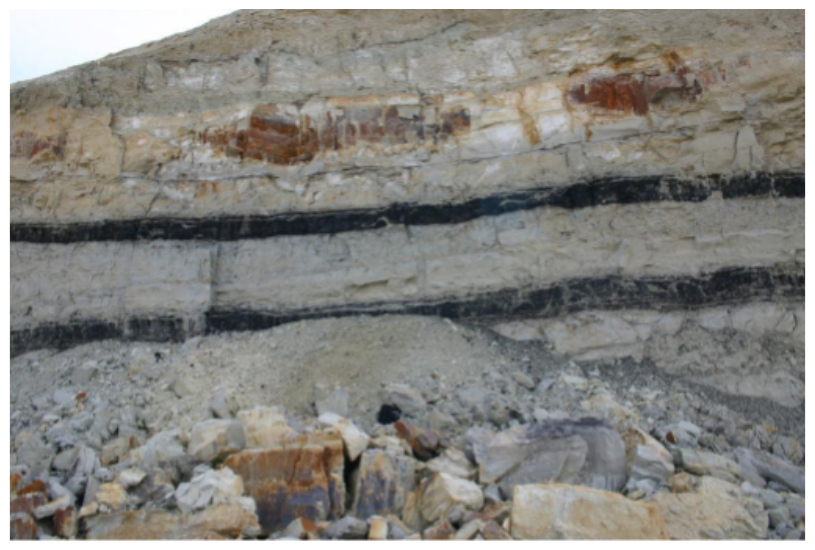
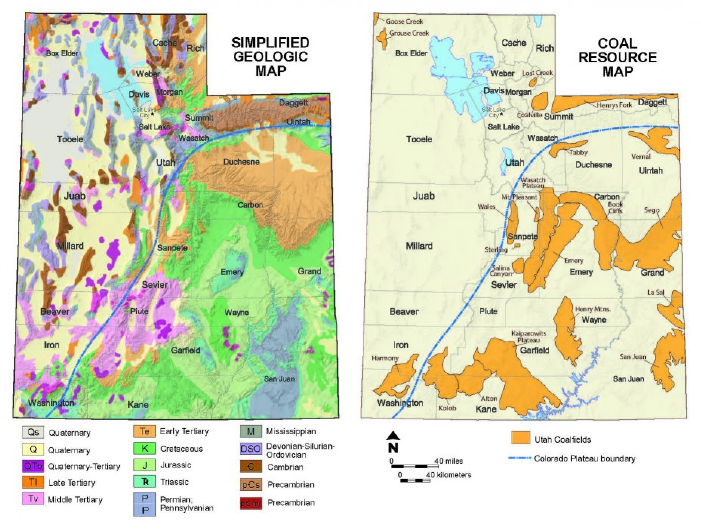
- Utah has large coal deposits because ancient swamp plants there were buried and altered into coal; a place with no such swamp history has little or no coal.
Coal seams in layered sedimentary rock
Renewable and Non-renewable Resources
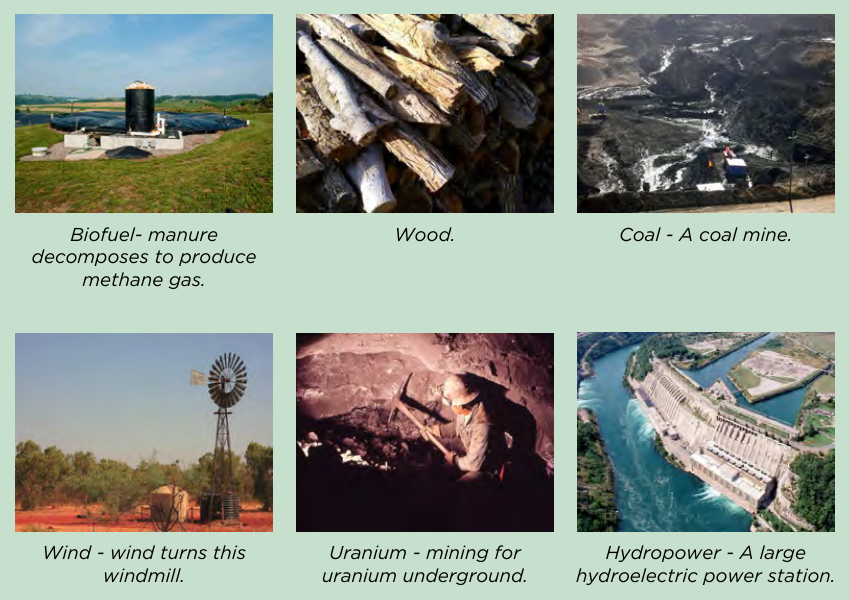
- Renewable resources, such as sunlight, wind, and moving water, are replaced fast enough that using them does not use them up.
- Non-renewable resources, such as coal, oil, natural gas, and uranium, form so slowly — over millions of years — that a used-up deposit will not be replaced on a human timescale.
- A biofuel made from decomposing plant or animal waste (for example, manure producing methane gas) can be renewable, because the waste supply keeps being produced.
- Uranium is non-renewable: it is a fixed element mined from rock, not something Earth keeps producing.
Six sources of energy: biofuel, wood, coal, wind, uranium, and hydropower
Mineral and Fossil Fuel Resources Form in Specific Environments
- Mineral and fossil fuel resources fall into four main groups: metals (iron, copper, gold, silver...), fossil fuels (coal, oil, natural gas), other minerals (salt, gypsum, gemstones), and building materials (stone, gravel, sand).
- Each group forms in a specific kind of geologic setting: metals occur near volcanic, fault, or metamorphic rock, while fossil fuels and evaporite minerals like salt form in sedimentary rock.
- Groundwater is not a mineral, but it still depends on geology: it only collects in porous rock — an aquifer — that has spaces between particles for water to fill.
Where Utah's resources form
How Fossil Fuels Form
- Coal, oil, and natural gas are called fossil fuels because they form from the buried remains of ancient living things.
- Coal forms when plant material in a swamp dies and is buried before it can fully decay, then is compacted and altered by heat and pressure over millions of years.
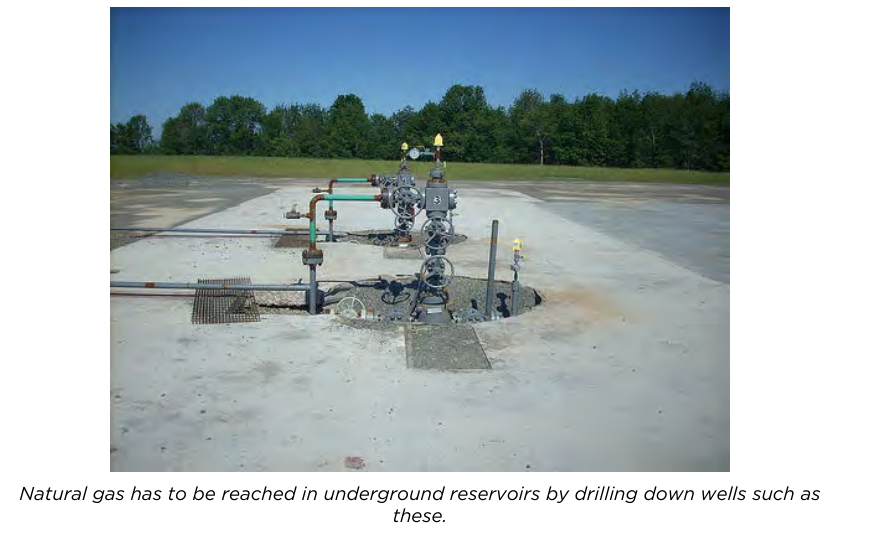
- Oil and natural gas form in a similar way from buried marine organisms, and collect in porous rock deep underground.
- Because formation takes millions of years, a fossil fuel deposit that is used up will not be replaced within a human lifetime — this is why fossil fuels are non-renewable.
A natural gas well reaching an underground reservoir
Utah's Geologic Past Explains Its Resources
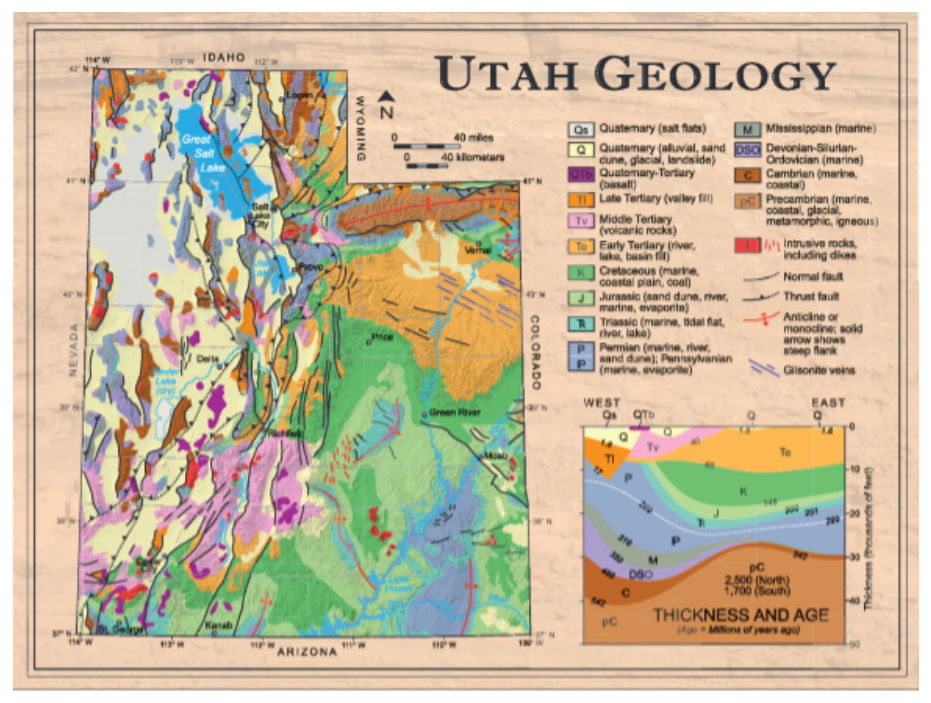
- Utah has a very varied geologic history: volcanic mountains, sedimentary rock laid down in ancient lakes and seas, faults and earthquakes, and metamorphosed rock.
- On Utah's geology map, most volcanic (igneous) rock lies in the western half of the state — the same area where Utah's copper and other metal deposits are found.
- Most of Utah's sedimentary rock lies in the eastern half of the state — the same area that holds most of Utah's coal and oil, formed where swamps and seas once existed.
Map of Utah's geology, showing rock type and age across the state
Metal Deposits Form Near Volcanic Activity
- Utah has long been a major producer of copper and other metals that are associated with volcanic rock.
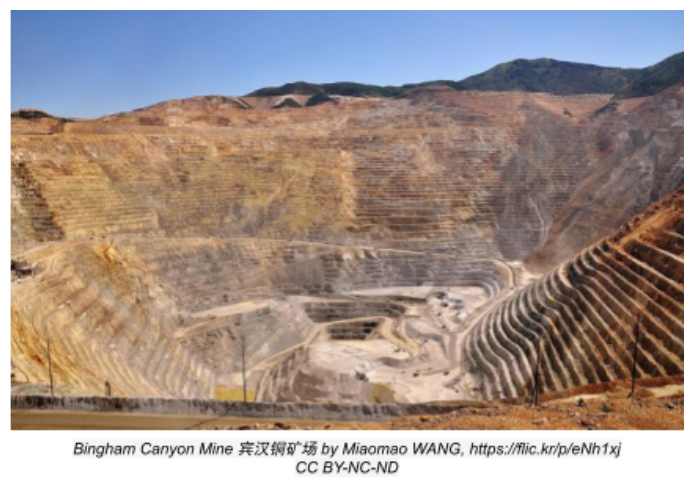
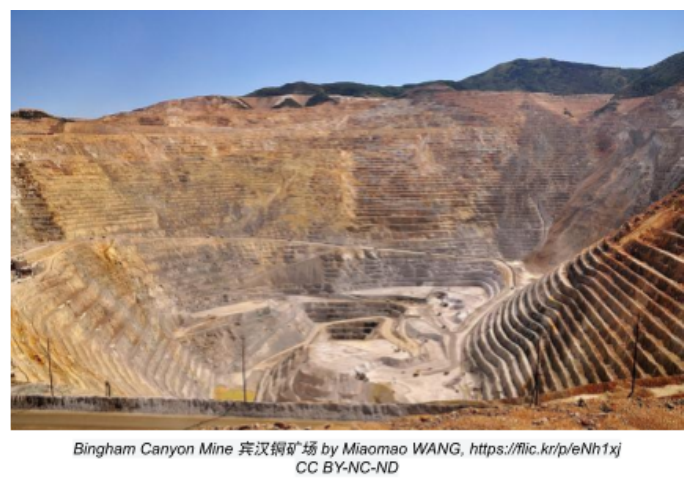
- The Bingham Canyon copper mine sits above rock that cooled from magma deep underground, which concentrated copper as it solidified.
- The same pattern appears elsewhere: at Phalaborwa in South Africa, copper and other minerals are mined from the pipe of a volcano that was active about 2 000 million years ago.
- Some minerals, such as diamonds, form even deeper — inside a narrow, carrot-shaped body of igneous rock called a kimberlite pipe, under extreme heat and pressure.
Bingham Canyon copper mine, Utah
Groundwater Depends on Geology Too
- Water is not a mineral resource, but where it can be found underground still depends on the local geology.
- Water only collects in and flows through certain porous rock — rock with tiny connected spaces between its particles.
- This kind of water-holding rock layer is called an aquifer; a region without porous rock in its geologic history may have very little accessible groundwater, even if nearby regions have plenty.
Uneven Distribution Around the World
- The same pattern that explains Utah's resources repeats worldwide: some countries have many resources available to them, and others have very few.
- Large countries tend to have more variety of resources, because more land area usually means more variety in geologic history and rock types.
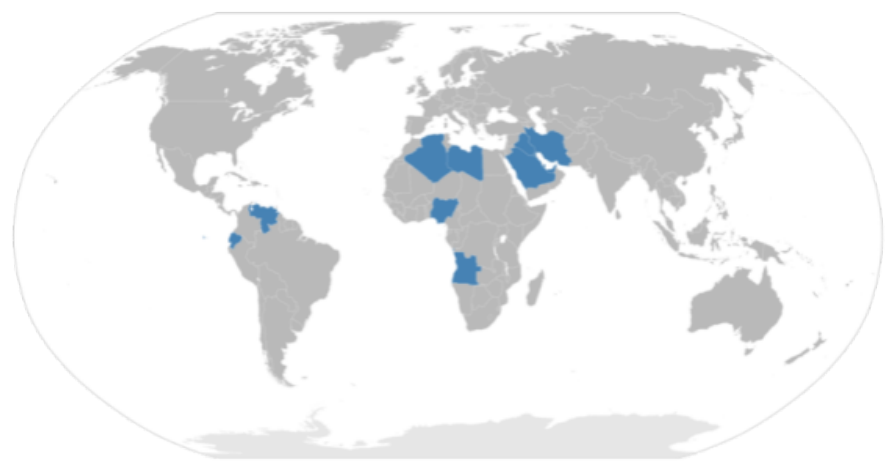
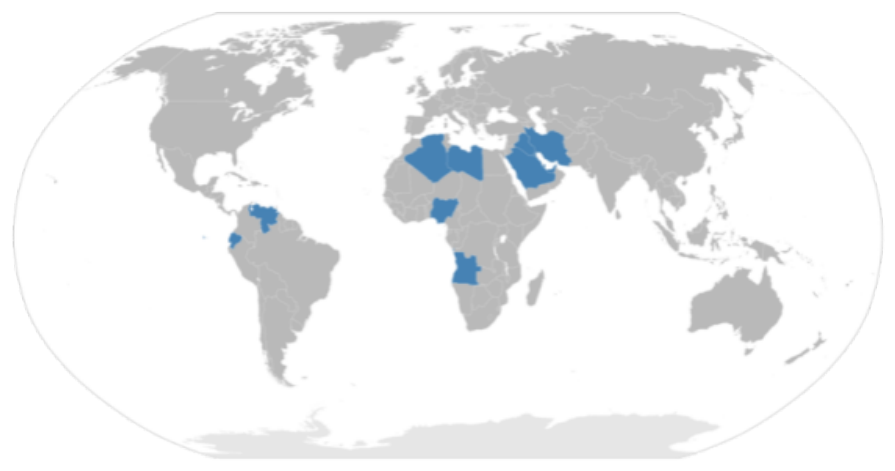
- Oil and natural gas reserves are concentrated in the countries whose rock includes ancient shallow-sea sediments — the source material oil and gas form from — while countries without that geologic history have little or none.
Some of the world's top oil-producing countries
Slides
Sign up free to view the lesson slides
Step through every slide for this topic — plus flashcards and revision notes — with a free account.
Practice questions
Free preview — 8 of 40 questions. Sign up to see them all.
1.Which of the following is a renewable resource?
Easy- ACoal
- BSunlight
- CNatural gas
- DCrude oil
2.A resource that takes millions of years to form, such as coal, can be replaced within a human lifetime.
EasyTrue or false?
3.Which renewable resource uses moving air to generate electricity?
Easy- ASolar energy
- BWind energy
- CHydroelectric energy
- DGeothermal energy
4.Fossil fuels are non-renewable because they take millions of years to form from buried remains.
EasyTrue or false?
5.Which of these are renewable resources? (Select all that apply)
Easy- ACoal
- BWind
- CNatural gas
- DSunlight
- ECrude oil
6.Which of these are non-renewable resources? (Select all that apply)
Easy- ACoal
- BWind
- CNatural gas
- DSunlight
- EUranium
7.Match each energy source with its renewable or non-renewable classification.
Easy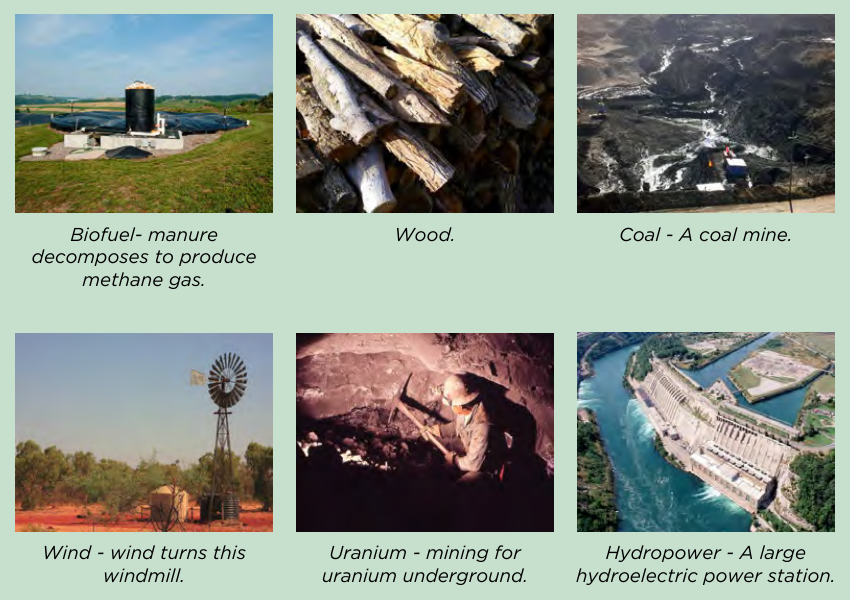
- Wind
- Coal
- Uranium
- Sunshine
- Renewable
- Non-renewable
8.Uranium is renewable because used fuel rods can be recycled.
EasyTrue or false?
Unlock all 40 questions, flashcards & more
Create a free account to see every question, the slides, flashcards and revision notes for this topic.