Geoscience processes shaping Earth's surface
Learn it by playing
Answer these questions to earn energy, then fish and explore. No account needed.
Lesson notes
Fast vs. Slow, Small vs. Large: How Earth's Surface Changes
- Earth's surface changes at varying time scales: some events happen quickly (seconds to days), others slowly (thousands to millions of years).
- Fast processes include landslides and volcanic eruptions; they can dramatically alter a landscape in moments.
- Slow processes include erosion by streams, mountain building, and soil formation; they take long periods to show visible change.
- Changes also vary in spatial scale: some affect small areas (a single landslide), others affect large areas (the uplift of an entire mountain range).
Landslides
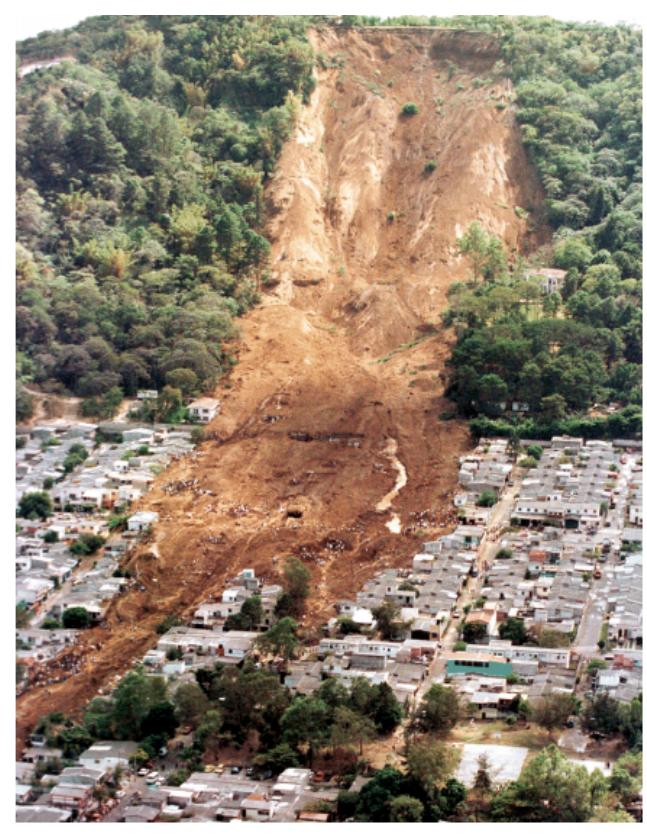
- A landslide is the sudden downslope movement of soil and rock, caused mainly by gravity acting on a slope that has been weakened by water, an earthquake, or removal of vegetation.
- Landslides can be very destructive, burying or carrying away buildings and roads in seconds or minutes.
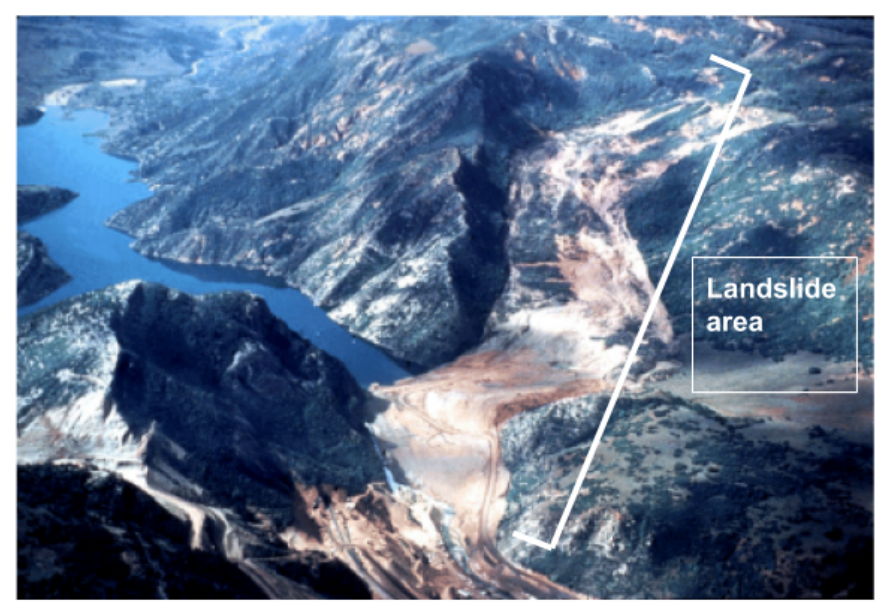
- Example: the 1983 Thistle Landslide in Utah was about 1828 m long and 304 m wide. It plugged the Spanish Fork River, created a lake within days, destroyed roads and railroad tracks, and forced the town of Thistle to be abandoned.
The 1983 Thistle Landslide, Utah
Volcanic Eruptions
- A volcano is a vent where magma from deep inside the Earth escapes as lava, ash, and gases. Eruptions can come from volcanic cones, fractured domes, or vents in the ground.
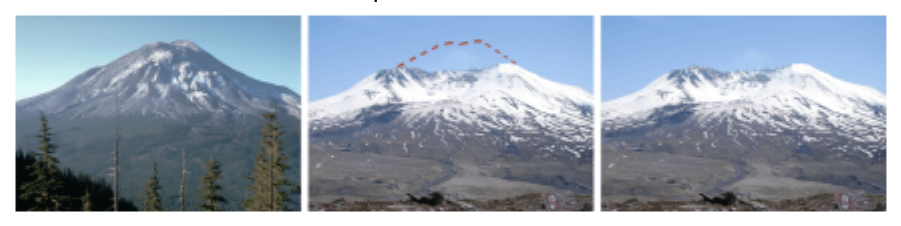
- A volcano can change Earth's surface in seconds. In 1980, Mt. St. Helens erupted, blasting a cloud of ash 8 to 10 miles into the sky, killing 57 people, destroying over $1 billion in property, and permanently changing the shape of the mountain.
- The three photos below show the same mountain before the eruption, during the collapse of its north side, and after — evidence of how much a single fast event can reshape a landscape.
Mt. St. Helens before, during, and after its 1980 eruption
Weathering: Breaking Rocks Apart
- Weathering breaks rock into smaller pieces where it sits — it does not move the pieces anywhere.
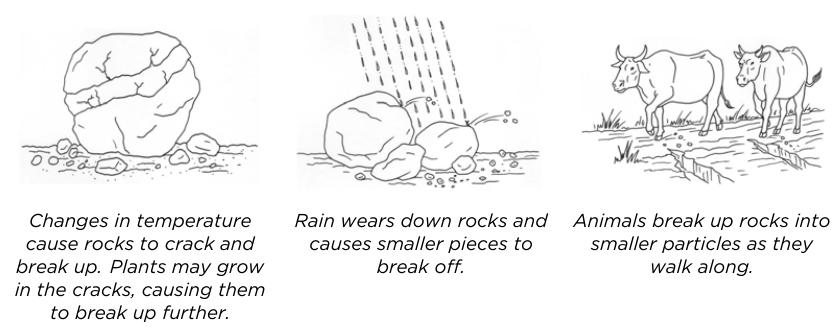
- Changes in temperature make rock expand and contract until it cracks; roots growing into the cracks can widen them further.
- Rain and running water wear down exposed rock and knock smaller pieces loose.
- Living things weather rock too — animal hooves and burrowing, and plant roots, all help break rock into smaller particles.
- Weathering is the first step that makes rock small enough for erosion to carry away.
Three agents of weathering
Erosion: Moving Sediment from Place to Place
- Erosion picks up the loose sediment that weathering has produced and transports it somewhere else. The main agents of erosion are flowing water, wind, ice (glaciers), and gravity.
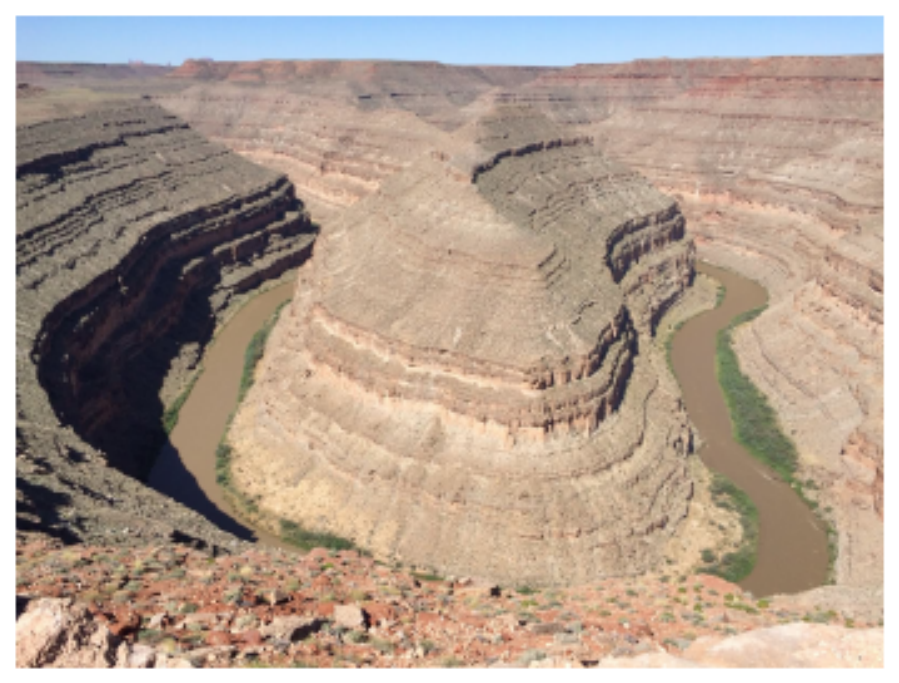
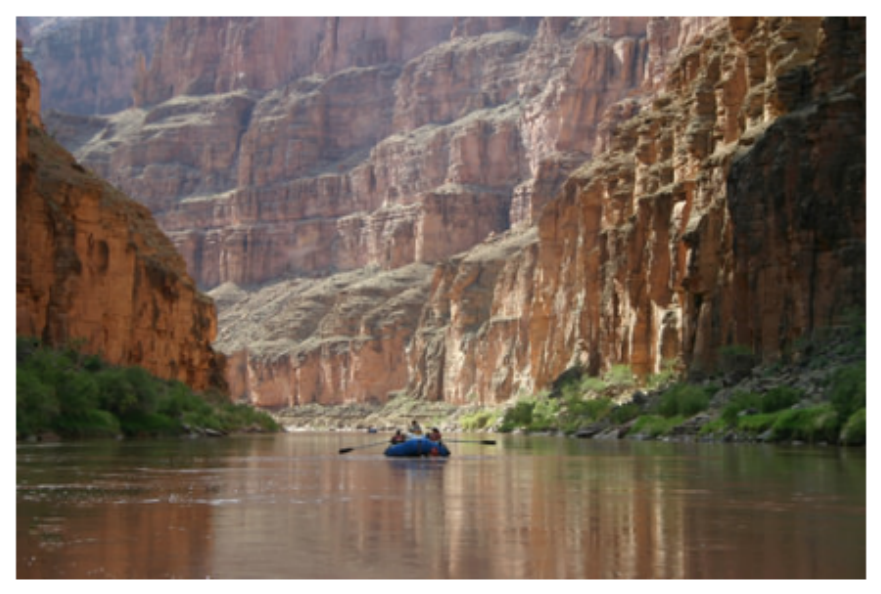
- As a stream flows, it erodes rock from its banks and carries the sediment downstream, carving the landscape over millions of years.
- The San Juan River in southeastern Utah has cut roughly 1,000 feet into the crust, carving deep, winding canyons called meanders as water, wind, frost, and gravity slowly wore the rock away.
- Because it takes so long, stream erosion is a slow process — but the canyons it carves can cover a very large area.
The San Juan River at Goosenecks State Park, Utah
Mountain Building by Plate Collision
- Earth's crust is broken into tectonic plates that move, collide, slide past each other, or pull apart.
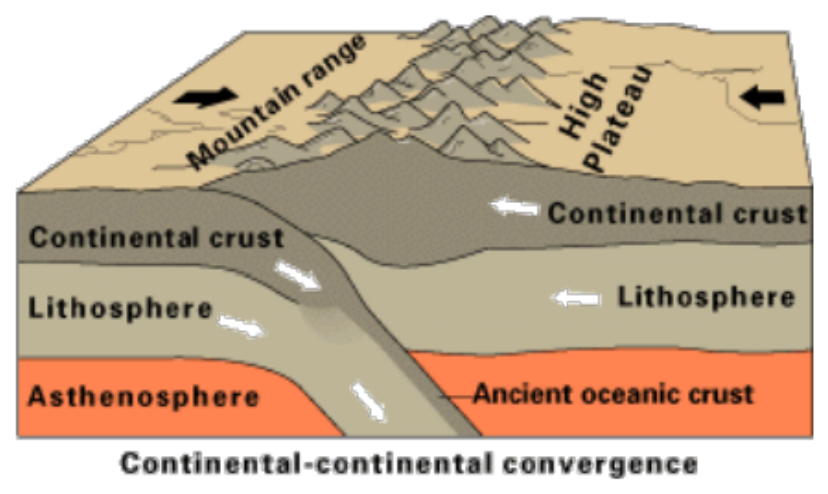
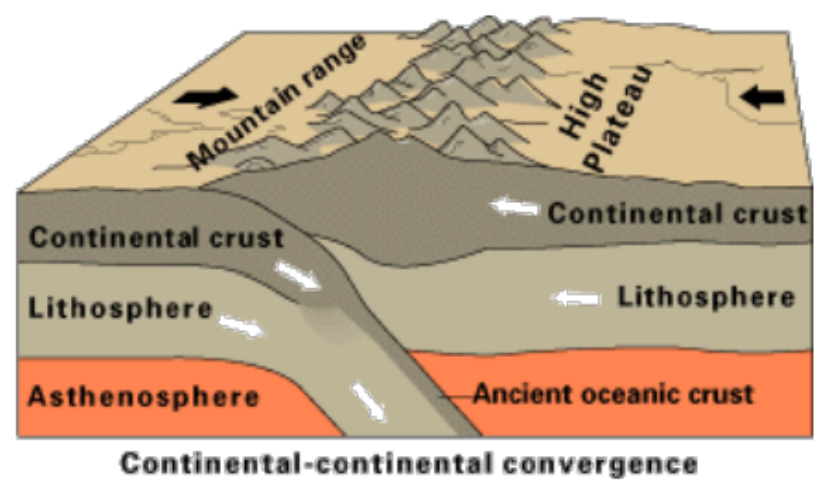
- When two plates carrying continents collide, neither can sink easily, so the crust between them crumples and pushes upward, building a mountain range.
- The Himalayas formed this way and are still growing today as the plates continue to push together.
- Mountain building by collision is both slow (millions of years) and large-scale (it can raise an entire mountain range).
Continental-continental plate convergence
Mountain Building by Faulting
- Mountains can also form where plates pull apart rather than collide.
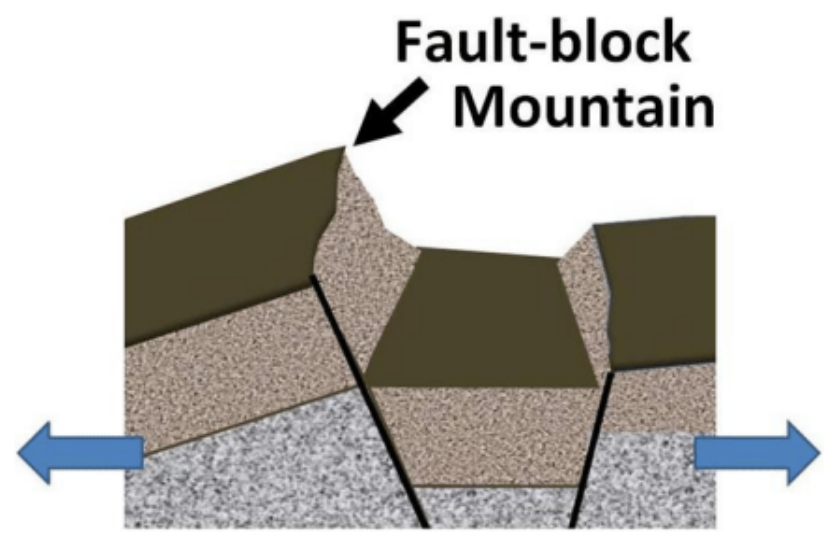
- As the crust stretches, it breaks along faults (cracks in the rock). Blocks of crust between the faults can be pushed up or dropped down relative to their neighbors, forming a fault-block mountain.
- The Sierra Nevada range in California formed this way.
- Like collision mountain-building, faulting reshapes the surface slowly, over millions of years.
Formation of a fault-block mountain
Deposition and Soil Formation
- Deposition happens when wind or water slows down and drops the sediment it has been carrying.
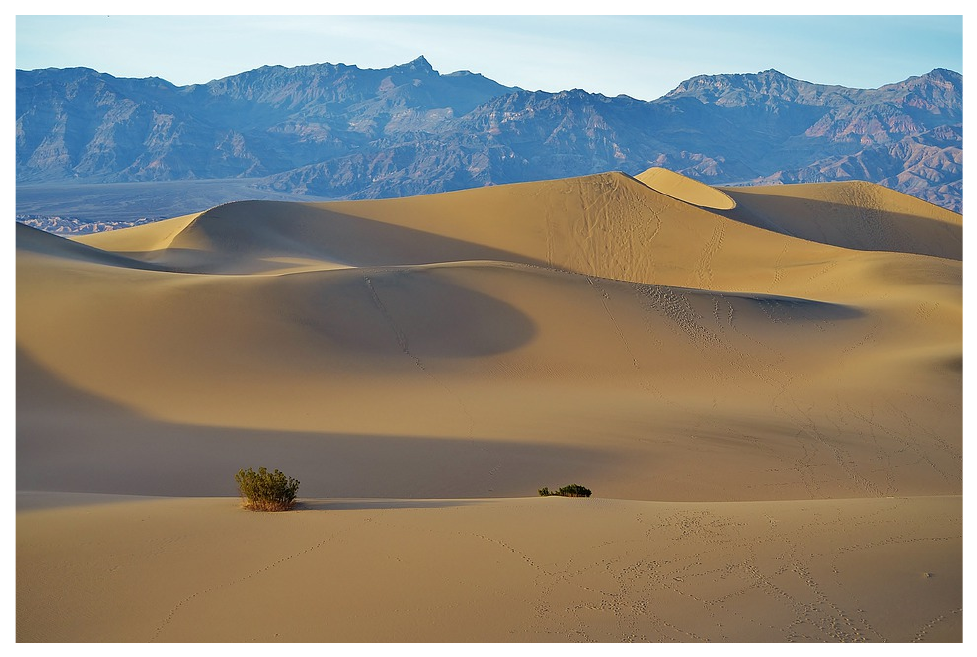
- Wind deposits sand into small hills called sand dunes, common in deserts and on beaches, wherever there is plenty of loose sand and steady wind.
- Some deposited sediment eventually becomes sedimentary rock; some becomes the rich soil that supports plant life.
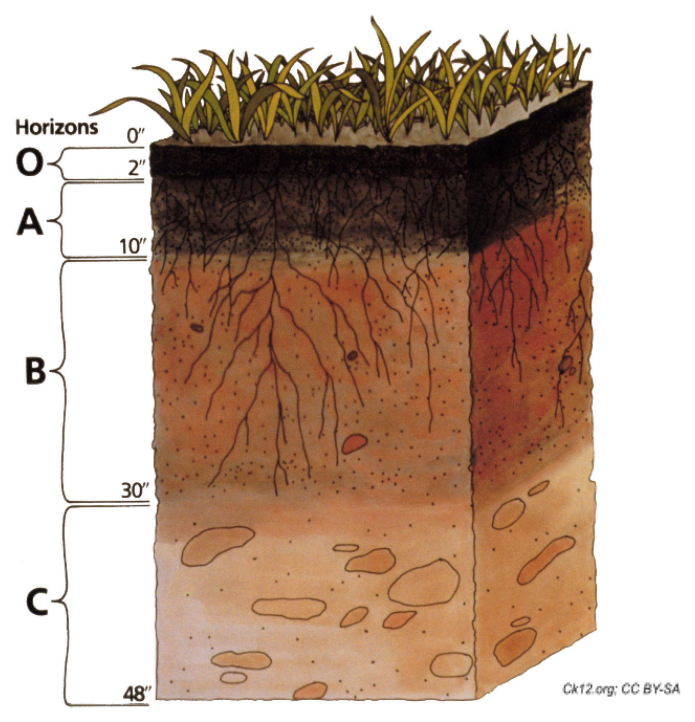
- Soil forms in layers called horizons. From the surface down: O (decaying plant litter), A (dark topsoil full of roots), B (subsoil with less organic matter), and C (weathered fragments of the parent rock).
- Soil formation is extremely slow — in the best conditions it forms at only about 1 mm per year; in poor conditions it can take thousands of years to build a fertile layer.
A soil profile showing horizons O, A, B, and C
Erosion Rate, Human Impact, and Reducing Erosion
- Erosion does not happen at the same rate everywhere. It speeds up on steeper slopes, on bare soil with no roots to hold it, and during heavy rain or strong wind.
- Vegetation slows erosion: plant roots bind soil in place and leaves soften the impact of raindrops.
- Human activity can speed up erosion — clearing forests, overgrazing livestock, and disturbing soil for farming or construction all leave ground more exposed.
- People can also slow erosion down: planting ground cover, building terraces on slopes, planting windbreaks, and plowing along the contours of a hillside instead of straight up and down all reduce how fast soil is carried away.
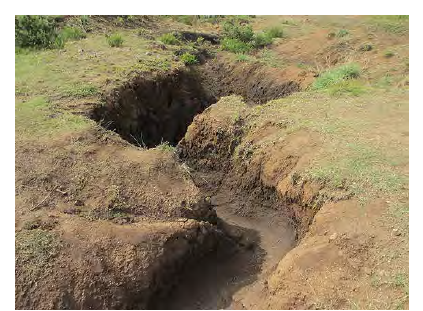
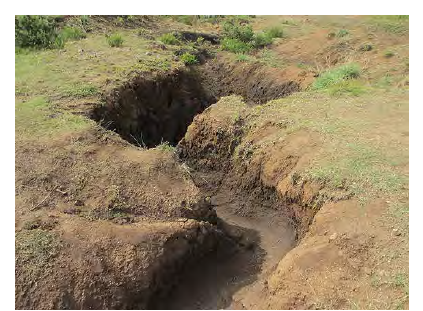
- The photograph below shows a gully — a channel cut into a field by flowing rainwater after vegetation was lost, a visible sign of erosion speeding up.
Gully erosion cut by flowing water
Slides
Sign up free to view the lesson slides
Step through every slide for this topic — plus flashcards and revision notes — with a free account.
Practice questions
Free preview — 8 of 39 questions. Sign up to see them all.
1.What is the term for the process by which rocks are broken down into smaller pieces by wind, water, heat, and cold?
Easy- AWeathering
- BErosion
- CDeposition
- DCompaction
2.What is the name for the process by which rocks are broken down into smaller pieces by wind, water, heat, and cold?
Medium3.What is the name for the process whereby sediment is dropped or laid down in a new location?
Easy- AWeathering
- BErosion
- CDeposition
- DCementation
4.What is the name for the process by which sediment is dropped or laid down in a new location?
Medium5.Match each geological process with its description.
Easy- Weathering
- Erosion
- Deposition
- Breaking rock into smaller pieces where it sits
- Transporting loose sediment by wind, water, or ice
- Settling and building up sediment in a new location
6.Rain and changing temperatures slowly crack a boulder into smaller chunks over many years, but the chunks stay piled at the base of the same boulder. Which single process does this describe?
Easy- AWeathering only
- BErosion
- CDeposition
- DMountain building
7.Which of the following are examples of deposition? (Select all that apply)
Easy- AWind dropping sand to build a dune
- BA river carving a deeper canyon
- CWind wearing the surface off a rock
- DWater leaving a layer of silt on a floodplain after a flood
8.Which of the following are agents of erosion? (Select all that apply)
Easy- AWind
- BWater
- CPlate tectonics
- DIce (glaciers)
- EGravity
Unlock all 39 questions, flashcards & more
Create a free account to see every question, the slides, flashcards and revision notes for this topic.