Plate tectonics and continental evidence
Learn it by playing
Answer these questions to earn energy, then fish and explore. No account needed.
Lesson notes
Alfred Wegener's Continental Drift Theory
- Alfred Wegener proposed the theory of continental drift in the early 1900s, suggesting that continents moved from previous locations to their current ones.
- He proposed that all continents were once connected in a single large land mass, which he called Urkontinent (German for 'first continent').
- Today, this supercontinent is known as Pangaea (Greek for 'all lands').
- Wegener's theory was based on evidence from fossils, geological features, and rock strata found on continents that are now separated.
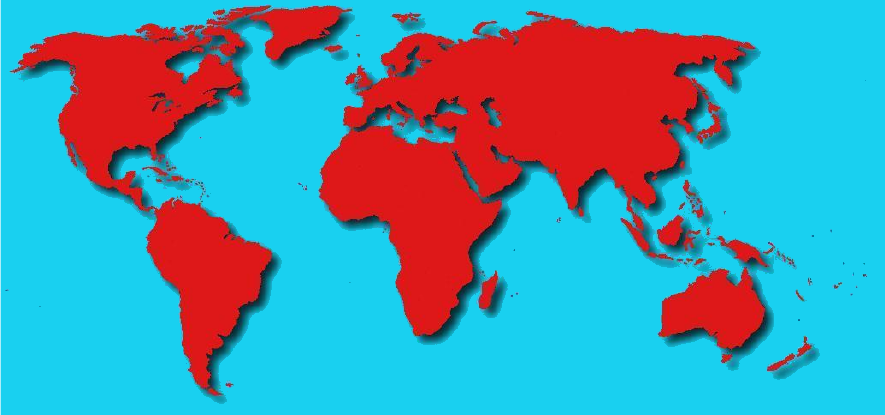
- He noticed that Africa and South America fit like puzzle pieces and found identical plants and animals on opposite sides of the Atlantic.
- At the time, scientists thought his theory was wrong, but modern scientists have built on it to develop the theory of plate tectonics.
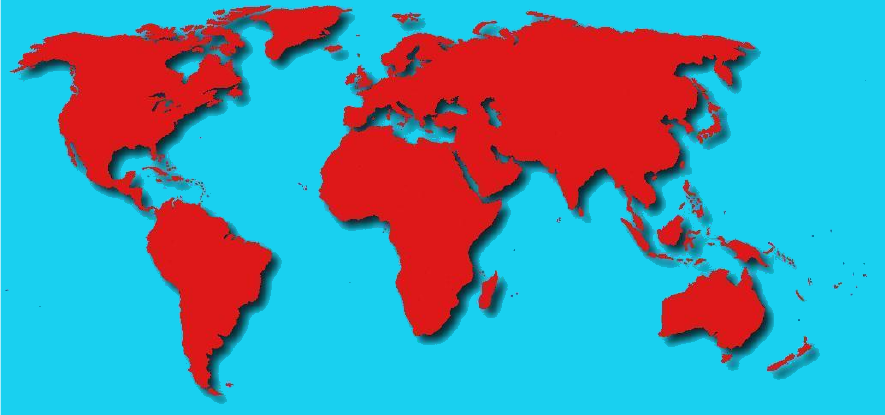
A world map showing the continents in their current locations.
Earth's Plates and Plate Boundaries
- The Earth's crust is split into several large chunks called plates, which sit on the mantle and can move.
- Where two plates interact is called a plate boundary; there are three types based on plate motion.
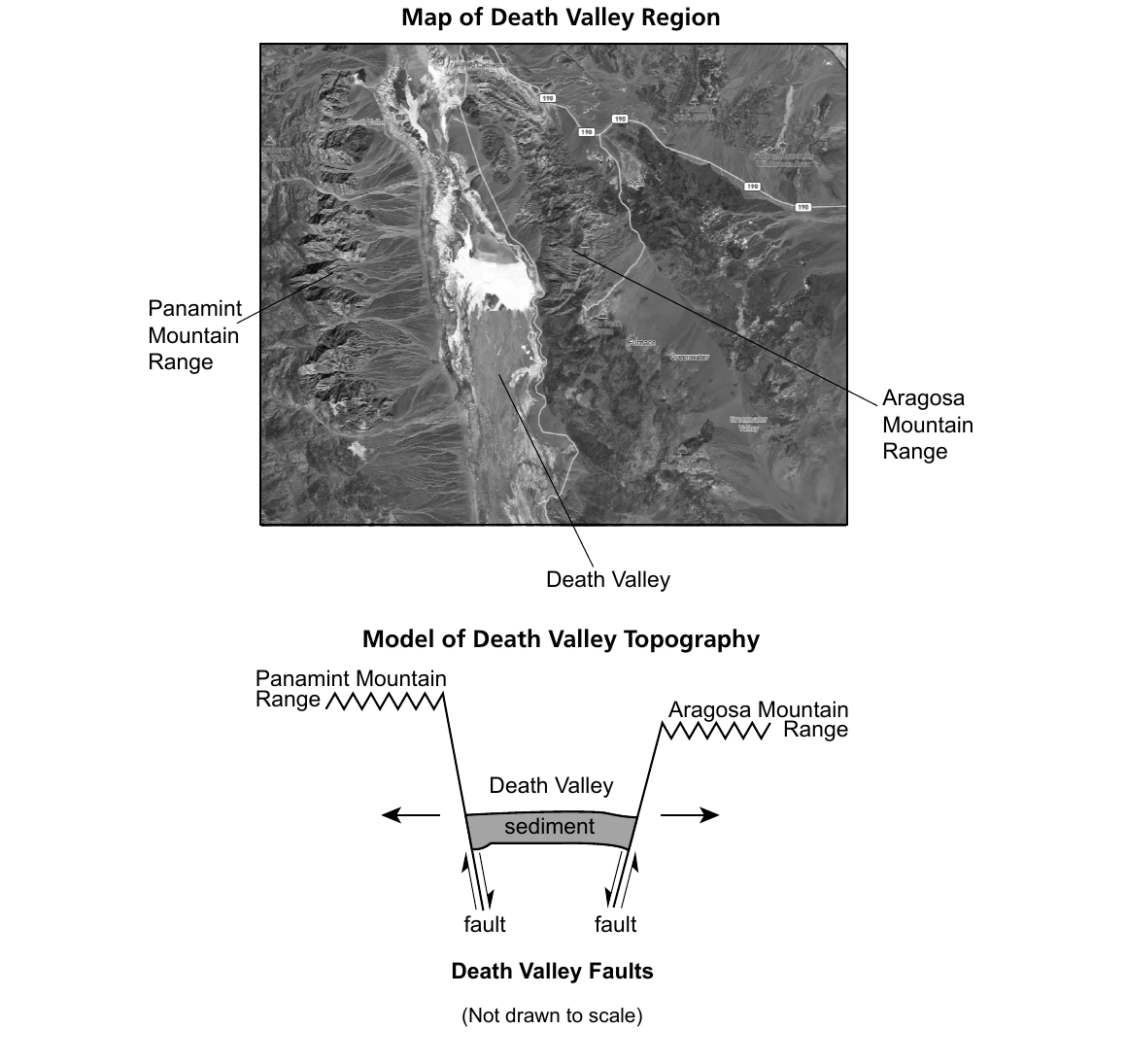
- At a divergent boundary, plates move away from each other.
- At a convergent boundary, plates move toward each other.
- At a transform boundary, plates slide past each other.
- Most geological activity (volcanoes, earthquakes, mountain building) occurs at plate boundaries due to plate interactions.
- The features at a boundary depend on the direction of plate motion and the type of crust (oceanic or continental).
Volcanoes and the Pacific Rim
- Volcanoes at plate boundaries are found in several locations, including all along the Pacific Ocean basin at the edges of the Pacific, Cocos, and Nazca plates.
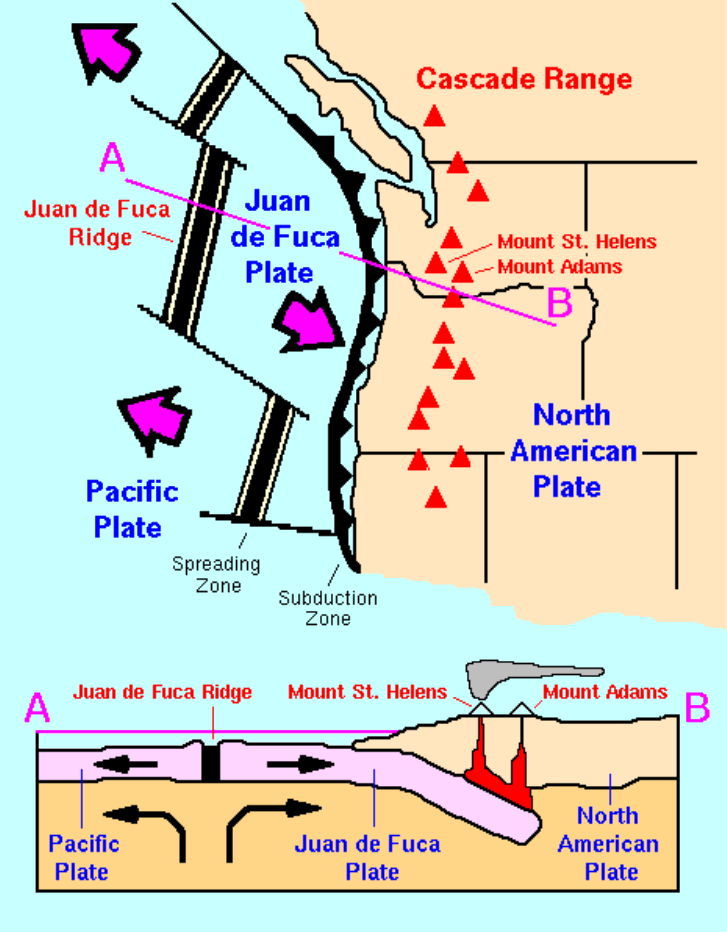
- The Cascade Mountains on the west coast of North America are a chain of volcanoes at a convergent boundary where oceanic crust moves beneath continental crust.
- This subduction occurs because oceanic crust is more dense than continental crust.
- The Cascades have been active for 27 million years, but the current peaks are no more than 2 million years old.
- Many Cascade volcanoes are covered by glaciers because they are in a region with common storms.
Map and cross-section of the Juan de Fuca Plate, Pacific Plate, and North American Plate, showing the Cascade Range volcanoes.
Earthquake Zones
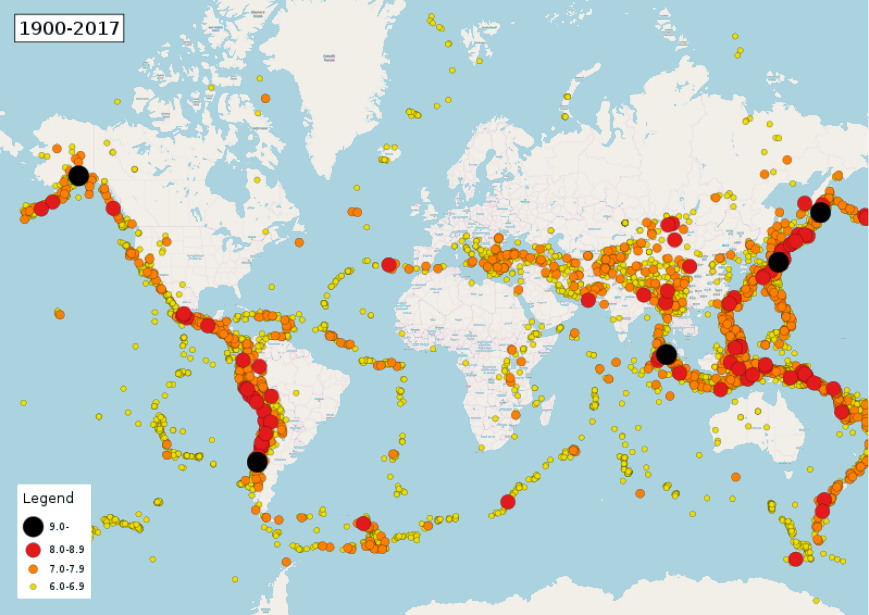
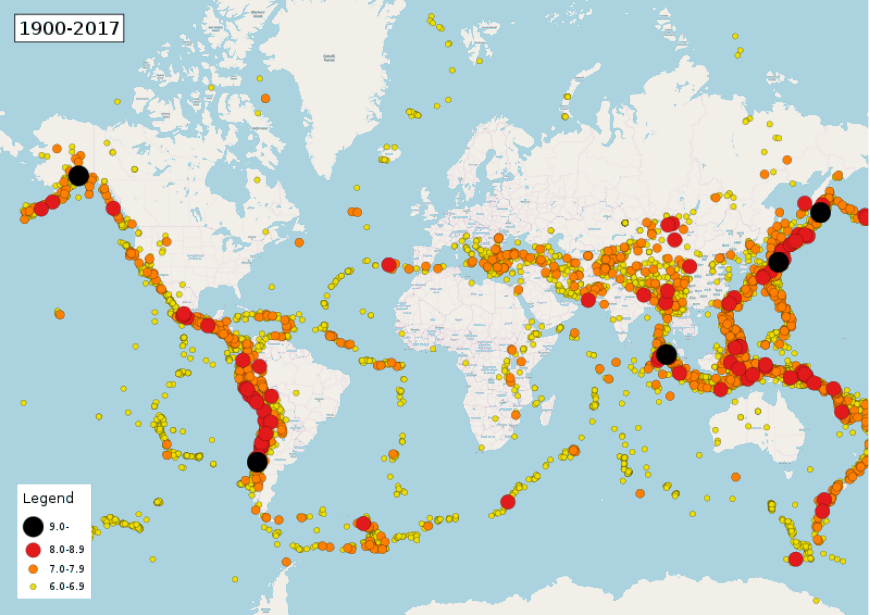
- Nearly 95% of all earthquakes occur along plate boundaries.
- About 80% of earthquakes strike around the Pacific Ocean basin because it is lined with convergent and transform boundaries.
- About 15% occur in the Mediterranean-Asiatic Belt, where the Indian Plate collides with the Eurasian Plate at a convergent boundary.
- The remaining 5% are scattered around other boundaries or are intraplate (not at boundaries).
World map showing earthquake zones from 1900-2017, with different magnitudes indicated by color and size.
Continental Plate Collisions
- When two continental plates collide, they smash upward to create gigantic mountain ranges, because both plates are made of buoyant continental crust and neither one sinks beneath the other.
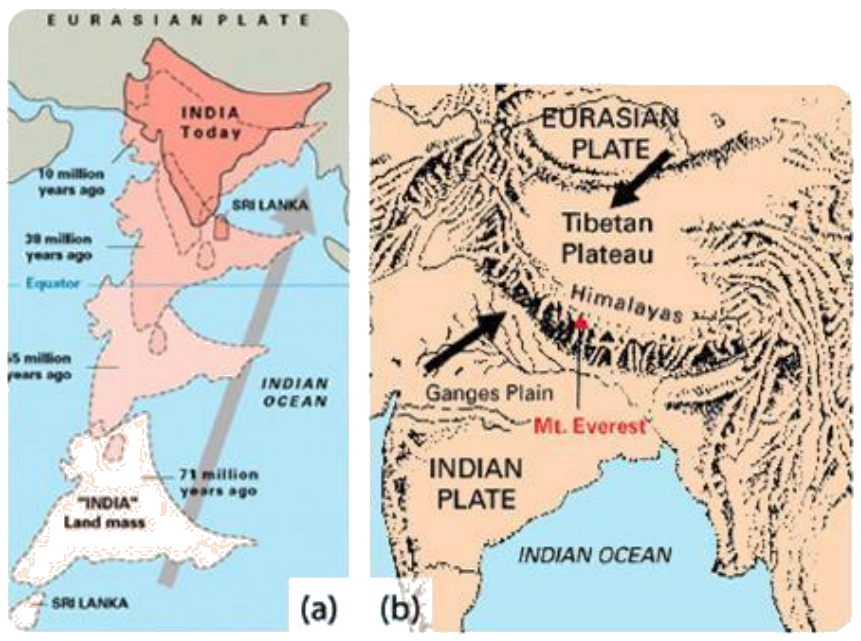
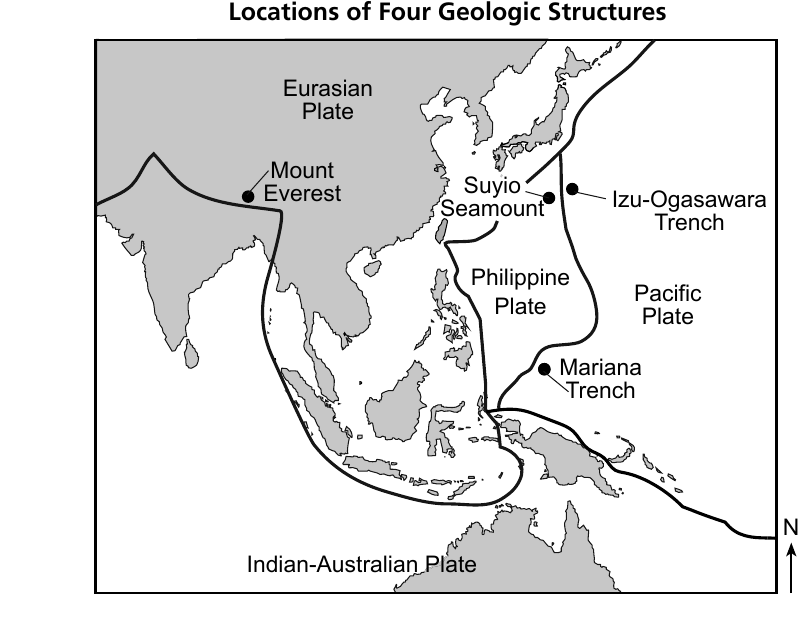
- The Himalayas are the clearest present-day example: they are still growing from the ongoing collision between the Indian Plate and the Eurasian Plate.
- This is a convergent boundary, like the Cascades, but here both plates are continental crust, so the crust crumples upward instead of subducting.
The movement of the Indian plate over millions of years and its collision with the Eurasian plate, forming the Himalayas.
Divergent Boundaries and Seafloor Spreading
- At a divergent boundary, plates move apart and hot mantle rock rises into the gap; as it convects upward, lava erupts through long cracks called fissures.
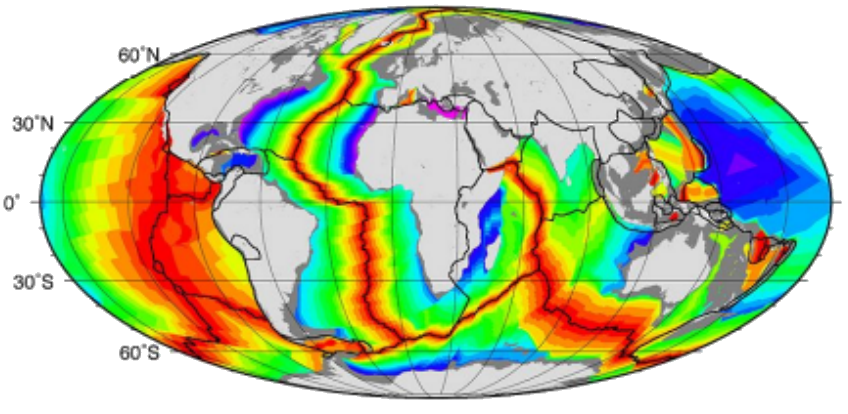
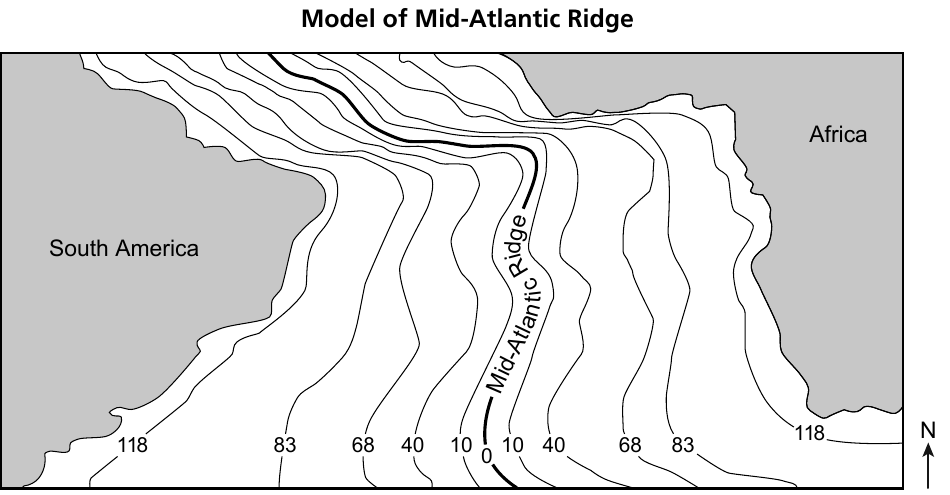
- This process, called seafloor spreading, constantly creates new ocean floor at boundaries such as the Mid-Atlantic Ridge.
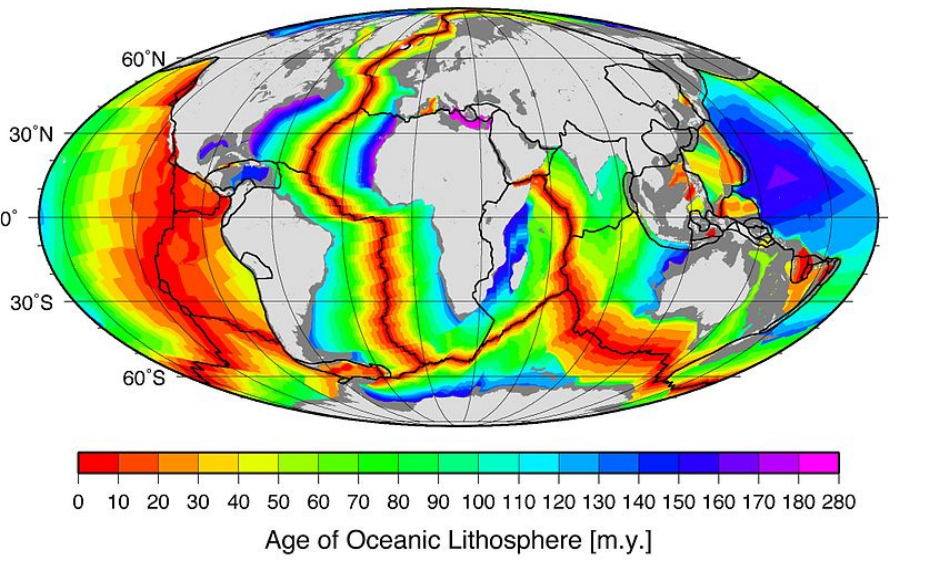
- Ocean floor maps show a clear pattern: the youngest seafloor rock is found right where the plates split at the ridge, and the oldest seafloor rock is found farther away, near the continents.
Age of the seafloor around the world
Fossil Evidence for Plate Movement
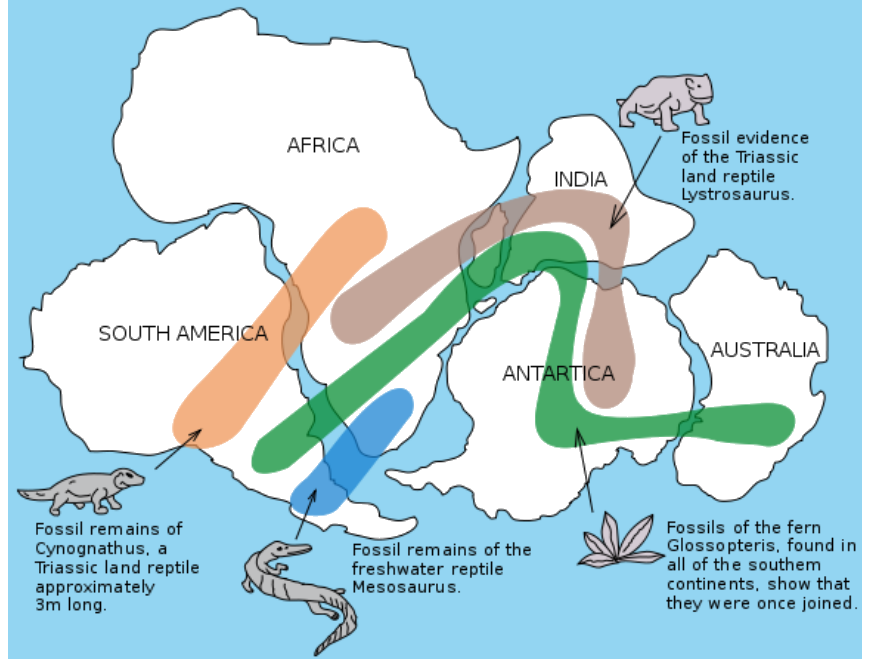
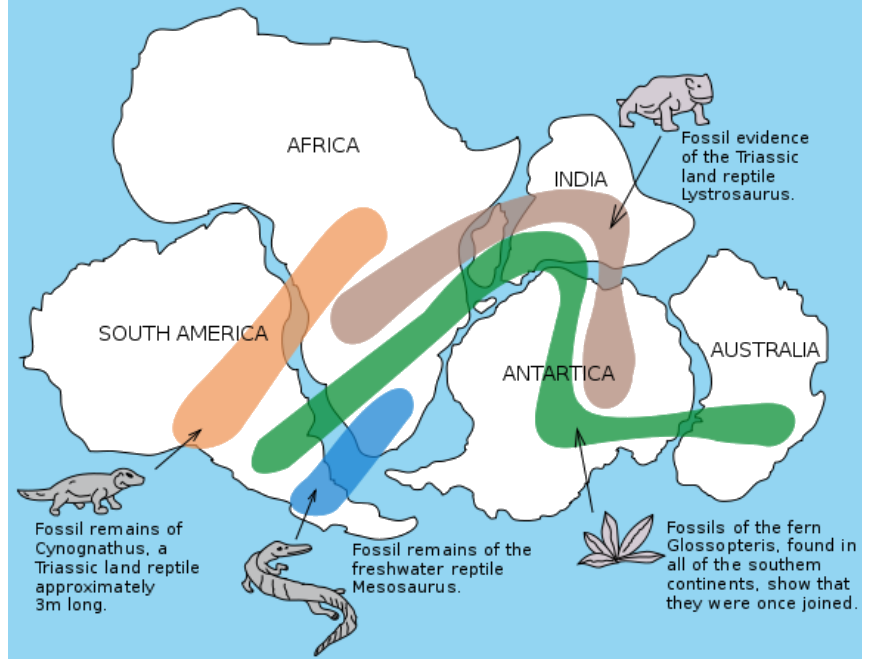
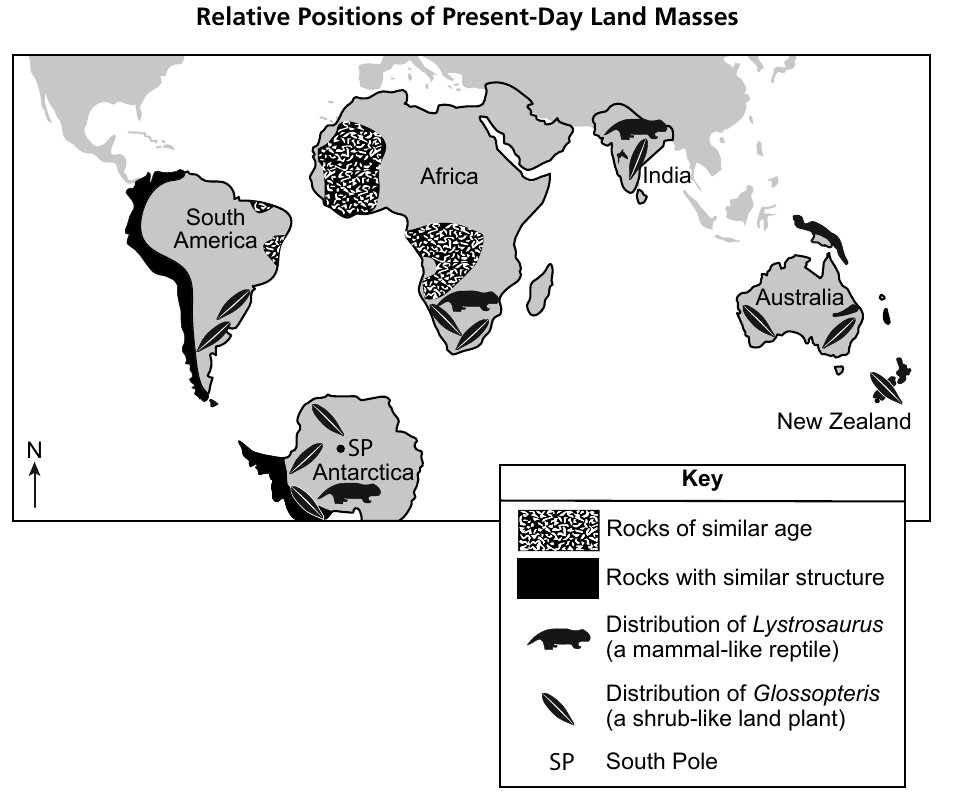
- Fossils of the therapsid Lystrosaurus have been found in South Africa, India, and Antarctica, along with Glossopteris flora.
- The freshwater reptile Mesosaurus has been found only in localized regions of the coasts of Brazil and West Africa.
- These distributions suggest the continents were once connected, as these species could not have crossed oceans.
- Similar rock types and ages are found on the eastern coast of South America and the western coast of Africa.
- Glacial deposits of the same age and structure, along with grooves in rocks, are found on separate continents that would have been together in Pangaea.
Fossil evidence for continental drift, showing the distribution of Lystrosaurus, Mesosaurus, Cynognathus, and Glossopteris across continents.
Putting It Together
- Wegener's theory of continental drift was based on evidence from fossils, geological features, and rock strata.
- Modern scientists have used these observations to develop the theory of plate tectonics, which explains how plates move and interact.
- Analyzing patterns on Earth today helps explain past events and make predictions about the future.
- Patterns such as the fit of continents, distribution of fossils, and locations of earthquakes and volcanoes support the idea that continents have moved.
Slides
Sign up free to view the lesson slides
Step through every slide for this topic — plus flashcards and revision notes — with a free account.
Practice questions
Free preview — 8 of 39 questions. Sign up to see them all.
1.What is the name of the supercontinent that Alfred Wegener proposed once existed?
Easy- APangaea
- BGondwana
- CLaurasia
- DRodinia
2.Alfred Wegener proposed the theory of continental drift in the early 1900s.
EasyTrue or false?
3.Which type of plate boundary occurs where plates move away from each other?
Easy- ADivergent
- BConvergent
- CTransform
- DSubduction
4.What percentage of all earthquakes take place along plate boundaries?
Easy- A95%
- B80%
- C15%
- D5%
5.Match each type of plate boundary with its description.
Easy- Divergent
- Convergent
- Transform
- Plates move away from each other
- Plates move toward each other
- Plates slide past each other
6.Which of the following is NOT a piece of evidence Wegener used to support continental drift?
Easy- ASimilar fossils on different continents
- BThe fit of continents like puzzle pieces
- CMatching rock types across continents
- DThe presence of mid-ocean ridges
7.At a convergent plate boundary where oceanic crust moves beneath continental crust, what happens?
Medium- AThe oceanic crust subducts because it is more dense.
- BThe continental crust subducts because it is more dense.
- CBoth crusts crumple upward to form mountains.
- DThe plates slide past each other causing earthquakes.
8.What is the name of the boundary where two plates slide past each other?
Easy- ATransform
- BDivergent
- CConvergent
- DCollision
Unlock all 39 questions, flashcards & more
Create a free account to see every question, the slides, flashcards and revision notes for this topic.