Optimising a design solution
Learn it by playing
Answer these questions to earn energy, then fish and explore. No account needed.
Lesson notes
What Is an Optimal Design?
- Engineers rarely get a working design on the first attempt. The goal isn't a single 'perfect' answer -- it's an optimal design: the best solution available once every criterion and constraint has been weighed.
- The design process is a repeating cycle, not a straight line: build or choose a possible solution, test it, collect data, compare the results to the criteria and constraints, then modify the design and test again.
- Each trip around this cycle is called an iteration. A design usually needs several iterations before it is good enough to use.
- Testing a model -- a prototype, a scaled build, or even a computer simulation -- is what generates the data engineers need to decide what to change next.
The Iterate-Test-Refine Cycle
Criteria, Constraints, and Trade-offs
- Criteria are the outcomes a good solution should achieve -- what it needs to DO. Constraints are the limits it must work within, such as cost, time, available materials, or safety rules.
- Every proposed solution gets checked against both: does it meet the criteria, and does it stay inside the constraints?
- Improving a design on one criterion often costs something on another. This is a trade-off -- a stronger structure usually needs more material, which raises both cost and weight.
- Because trade-offs are unavoidable, engineers often score competing designs against several weighted criteria and compare the totals, rather than judging on a single measure. In the table below, Design A wins overall even though Design B is stronger, because strength counts for only half the decision and Design B costs more and weighs more.
Comparing Two Bridge Designs
Case Study: Responding to the Deepwater Horizon Oil Spill
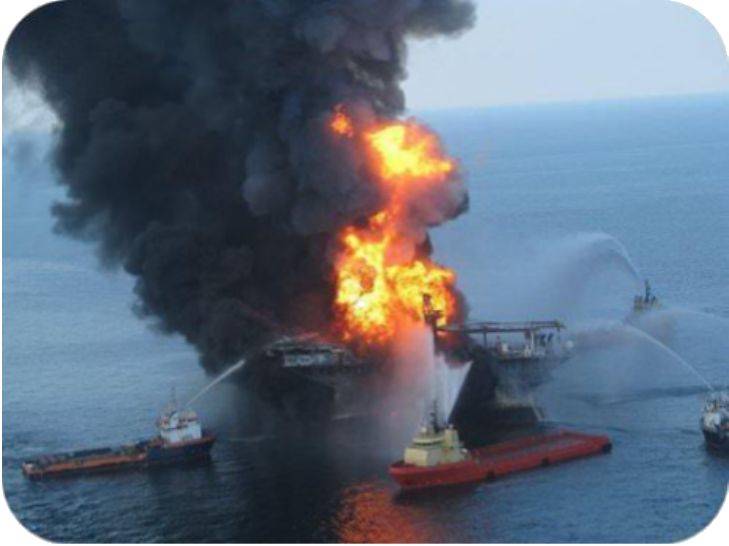
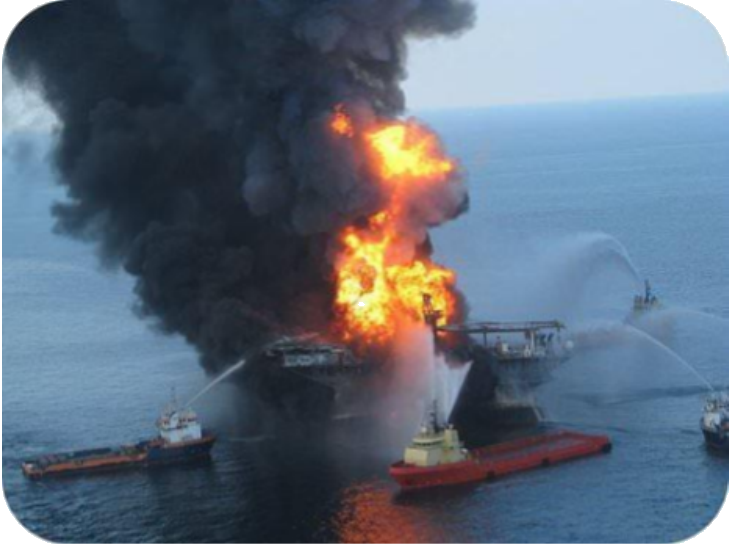
- On April 20, 2010, an explosion on the Deepwater Horizon drilling rig in the Gulf of Mexico killed 11 workers and left oil leaking from a well almost a mile below the surface.
- Initial attempts to cap or contain the leak directly at the wellhead all failed to stop the flow. Engineers needed a solution that would remove the spilled oil from the water -- quickly, and without unlimited money to spend.
- This is a real example of an engineering problem defined by criteria (remove the oil, protect the coastline) and constraints (speed, cost, and the tools that could actually reach a leak that deep).
The Deepwater Horizon oil rig on fire after the explosion.
Comparing Competing Solutions
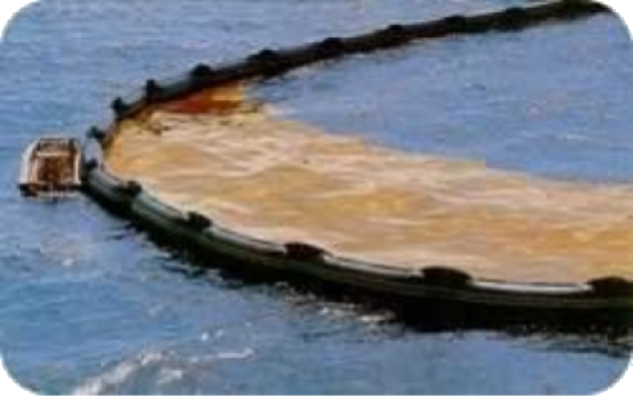
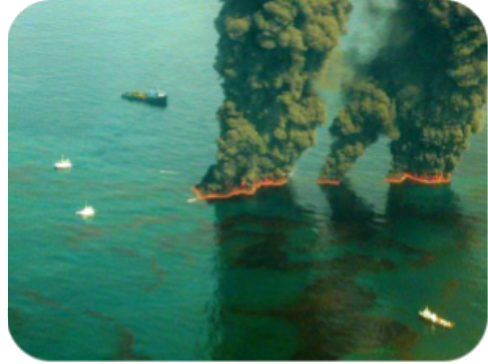
- Four different methods were proposed for dealing with the oil already in the water: burning it off, containing it with floating booms, breaking it up with chemical dispersants, and letting naturally occurring bacteria consume it.
- None of the four methods met every criterion perfectly -- each carried its own trade-off between how well it worked and what it cost, how fast it worked, or what other risks it created.
- Comparing solutions this way -- applying the same criteria and constraints to every option -- is what lets engineers pick the best available design rather than just the first one someone thought of.
Comparing Four Oil-Spill Cleanup Methods
When the First Design Fails: Redesigning the Approach
- Stopping the leaking well took months, not days. Every initial attempt to cap or contain the flow directly at the wellhead failed to meet the criterion of stopping the leak.
- Rather than repeating the same approach with small tweaks, engineers changed their design completely: they drilled two new relief wells that intersected the original well far below the seafloor, then pumped specialized fluids through them to stop the flow.
- The well was declared sealed months after the explosion -- an example of iteration at a large scale. When test data shows a design isn't meeting its criteria, sometimes the best modification is a different approach altogether, not a small change to the original one.
Trade-offs in Monitoring and Testing
- Testing isn't limited to a finished design. Monitoring systems -- like sensors placed near a drill site -- can catch a developing problem early, before it grows into a much larger one.
- Different sensor designs trade off against each other: a more sensitive sensor can catch smaller leaks sooner, but it usually costs more to build, install, and maintain than a simpler one.
- Monitoring data feeds back into the design cycle. If a warning system keeps missing real problems, that's test data too -- a signal to modify the monitoring design itself, not just to respond faster next time.
Knowing When to Stop Iterating
- Iteration could continue indefinitely, but at some point engineers have to stop testing and settle on a design. Knowing when to stop is as much a part of the design process as knowing what to change.
- A design is ready when it meets its criteria well enough within its constraints -- not when it is flawless. A change that only improves the result slightly, but costs far more time or money than it's worth, usually isn't worth another round of testing.
- The 'optimal' design is a decision, not a fixed target: it depends on which criteria matter most for that problem, and how much of each constraint -- time, money, materials -- is actually available.
Slides
Sign up free to view the lesson slides
Step through every slide for this topic — plus flashcards and revision notes — with a free account.
Practice questions
Free preview — 8 of 27 questions. Sign up to see them all.
1.Which of the following best describes a CRITERION for an engineering design solution?
Easy- AA desired outcome the solution should achieve
- BA material the solution is not allowed to use
- CThe maximum time or money available
- DA rule imposed by a testing lab
2.Which of the following best describes a CONSTRAINT on an engineering design solution?
Easy- AA goal the solution should reach
- BA limitation the solution must work within, such as cost or time
- CA test result that proves the design works
- DThe number of prototypes built
3.A design that meets every criterion but breaks an important constraint (for example, costing far more than what's available) can still be considered a workable solution.
EasyTrue or false?
4.What is the best description of 'iteration' in the engineering design process?
Easy- ATesting a design exactly once
- BRepeating a cycle of building, testing, and modifying a design using data from each test
- CChoosing the cheapest available material
- DSkipping testing to finish faster
5.Complete the sentence.
EasyEngineers build a ____ -- a prototype, scaled version, or simulation -- in order to collect data through testing before finalizing a design.
6.Select ALL of the following that are examples of a 'model' engineers might test during the design process. (Select all that apply)
Medium- AA small-scale physical prototype
- BA computer simulation of the design
- CA drawing with no working parts that is never tested
- DA working scaled-down version of the final product
7.A design team tests two versions of a bridge. Version A scores higher on cost and weight but lower on strength than Version B. What does this best illustrate?
Medium- AA trade-off between competing criteria
- BA constraint that neither version can meet
- CProof that Version B has no weaknesses
- DAn error in the testing process
- 8.Medium
A team scores two bridge designs against three weighted criteria:
Criterion (weight) Design A Design B Strength (0.5) 4 5 Cost (0.3) 3 2 Low bridge weight (0.2) 5 3 Design A's weighted total is 3.9. Design B's weighted total is 3.7. Based on this scoring, which design should the team move forward with?
- ADesign B, because it scores highest on strength alone
- BDesign A, because its weighted total across all three criteria is higher
- CNeither, because a tie must be broken by cost alone
- DDesign B, because strength is the only criterion that matters
Unlock all 27 questions, flashcards & more
Create a free account to see every question, the slides, flashcards and revision notes for this topic.