Digital signals and information
Learn it by playing
Answer these questions to earn energy, then fish and explore. No account needed.
Lesson notes
Signals and Codes
- Signals are used to transmit information, and codes have been used throughout history to keep messages secret.
- Example: George Washington used codes to send secret messages during the American Revolutionary War.
- Fireflies communicate using patterns of light signals—each blinking pattern is a unique signal.
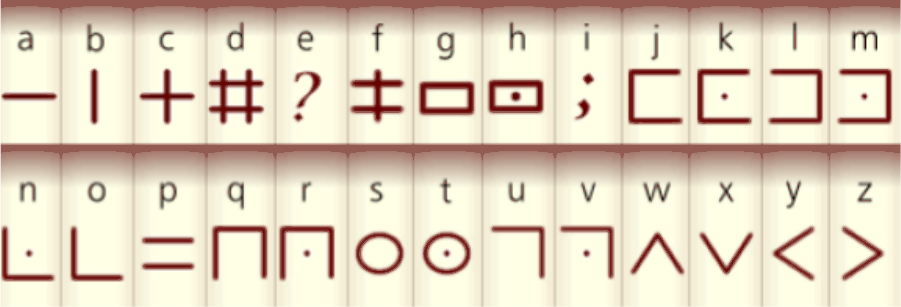
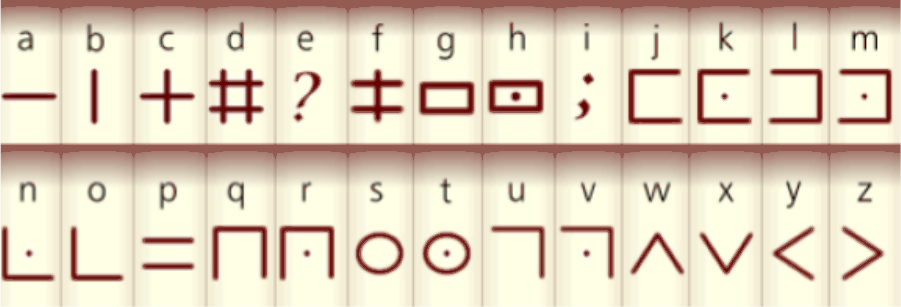
A coded alphabet where each letter is represented by a unique symbol.
Analog Signals
- Analog signals are representations of actual images, sounds, or words, often using waves to transfer information.
- Analog signals do not use mathematical codes.
- Examples: conversations (sound waves), film cameras (light waves), vinyl records (grooves in plastic).
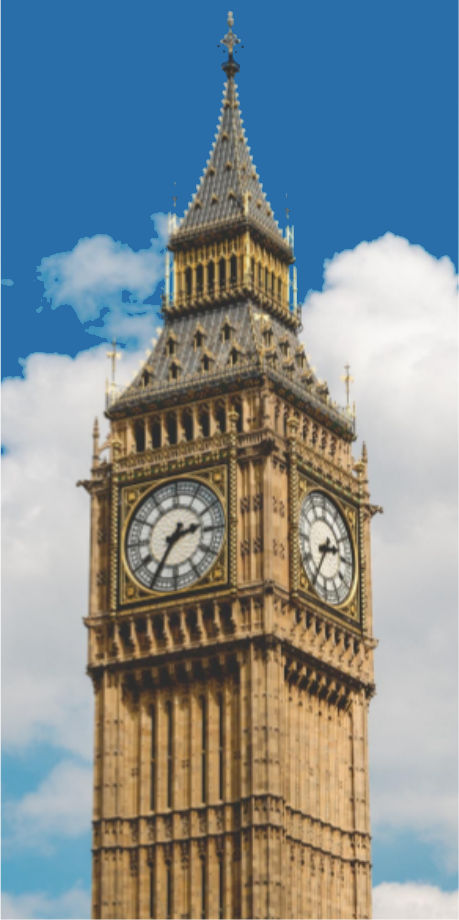
- Analog instruments like alcohol thermometers and grandfather clocks measure continuously.
A clock tower (Big Ben), an example of an analog instrument.
Digital Signals
- Digital signals are sent as mathematically coded waves and can travel long distances.
- They are decoded back into understandable information at the receiving end.
- Examples: computers, smartphones, digital cameras, digital thermometers, video game systems.
Analog vs. Digital Recording
- Analog recording captures every part of the sound wave, including background noise, making it complex and prone to errors.
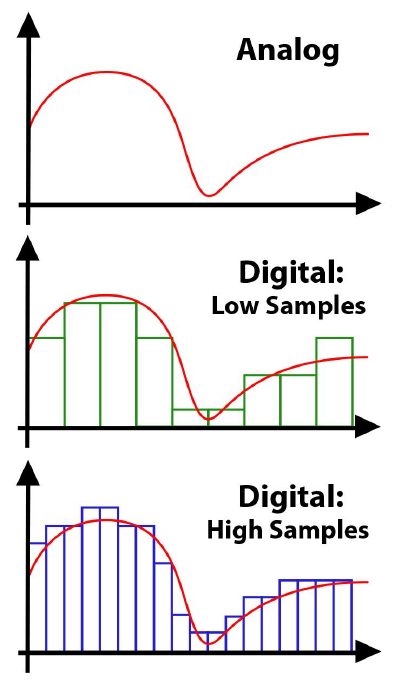
- Digital recording takes samples of the wave at set intervals, not the whole wave.
- The diagram below shows the difference: the analog wave is smooth and continuous, while the digital wave is stepped because it only records samples.
- Digital waves are simpler and easier to copy or transmit without mistakes because they are not affected by outside sources.
A diagram comparing an analog wave to digital waves sampled at low and high rates.
Sampling and Storage
- Low sampling records less often; high sampling records more often; analog records constantly.
- Digital stores only a smaller number of values compared to analog's infinite values, making it easier to remember/copy accurately.
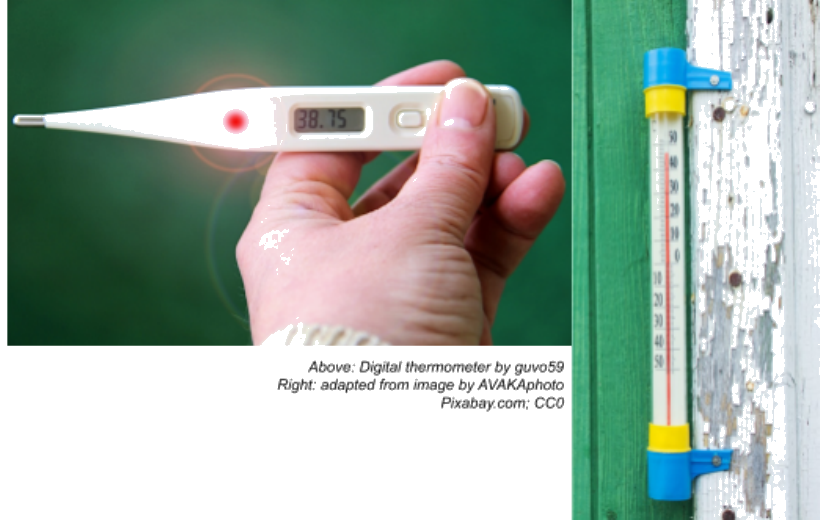
- Example: Digital thermometers show set values (98.6 to 98.7) while alcohol thermometers show every tiny change.
- Analog requires more storage space and is more likely to store flaws; digital takes less space and filters out interference.
A digital thermometer and an analog thermometer
Reliability and Examples
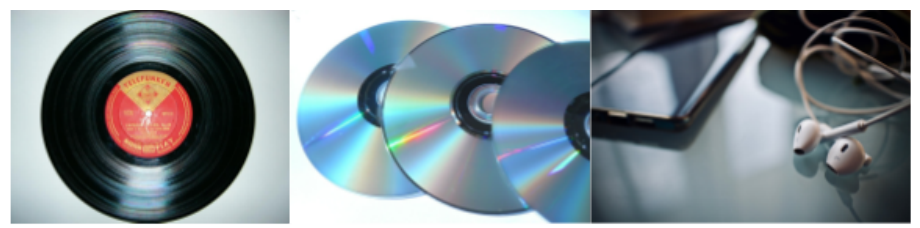
- Vinyl records (analog) hold about 44 minutes of music; CDs (digital) hold 75-80 minutes.
- Digital files on devices can hold 100-150 songs on a CD, or about 14,000 songs on 64 GB storage.
- Digital signals are more reliable for storing and transmitting information because they are less affected by damage or interference.
- However, digital signals must be converted back to analog for humans to hear or see.
A vinyl record, CDs, and a smartphone with earbuds.
Conclusion
- The structure of digital signals (sampled, coded) makes them more reliable than analog signals for storage and transmission.
- Digital technology reduces issues like static and physical damage, as seen in electronic music devices vs. vinyl records.
Slides
Sign up free to view the lesson slides
Step through every slide for this topic — plus flashcards and revision notes — with a free account.
Practice questions
Free preview — 8 of 37 questions. Sign up to see them all.
1.Analog signals use mathematical codes to transfer information.
EasyTrue or false?
2.Which of the following is an example of an analog signal?
Easy- AVinyl record
- BDigital song file
- CSmartphone text message
- DMP3 player
3.Which of the following are advantages of digital signals compared to analog signals? (Select all that apply)
Medium- AThey are easier to copy without mistakes.
- BThey are unaffected by outside sources.
- CThey store every tiny piece of information.
- DThey take up less storage space.
- EThey are more reliable for storing information.
4.Digital signals record every part of the sound wave.
EasyTrue or false?
5.Why is a digital signal more reliable for storing information than an analog signal?
Medium- AIt records every part of the wave.
- BIt is simpler, so it is easier to copy without mistakes.
- CIt uses more storage space.
- DIt is affected by background noise.
6.Which of the following are examples of digital signals? (Select all that apply)
Medium- AA digital camera storing a photo
- BA vinyl record playing music
- CA smartphone receiving a text
- DA film camera imprinting an image on film
- EA video game system sending data to a controller
7.An alcohol thermometer is an example of a digital signal.
Easy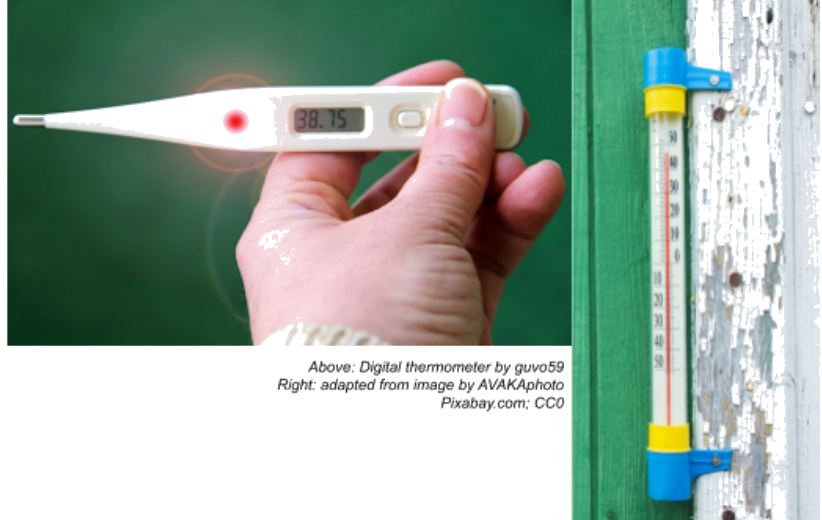
True or false?
8.A digital thermometer shows temperatures in whole degrees. Which of the following readings would NOT be possible on this thermometer?
Medium- A24 °C
- B24.5 °C
- C25 °C
- D26 °C
Unlock all 37 questions, flashcards & more
Create a free account to see every question, the slides, flashcards and revision notes for this topic.