Energy transfer and conservation
Learn it by playing
Answer these questions to earn energy, then fish and explore. No account needed.
Lesson notes
Potential and Kinetic Energy
- Potential energy is the energy an object has because of its position or shape in a system.
- Examples: a brick lifted above the ground, a stretched elastic band, water at the top of a dam.
- Kinetic energy is the energy of movement.
- Examples: a moving car, water flowing down a waterfall, a running refrigerator motor.
- An object can have both potential and kinetic energy at the same time, e.g., a high jumper at the peak of the jump has potential energy and some kinetic energy.
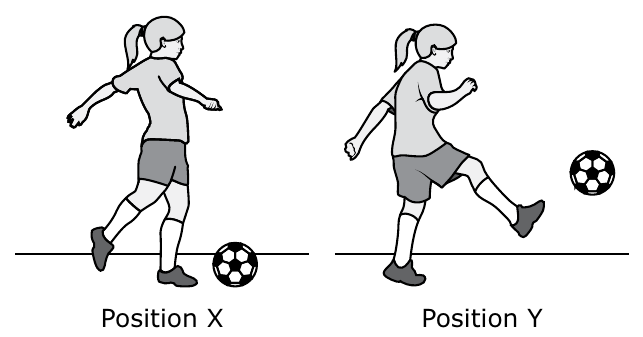
A girl kicking a ball, shown pulling her leg back and following through
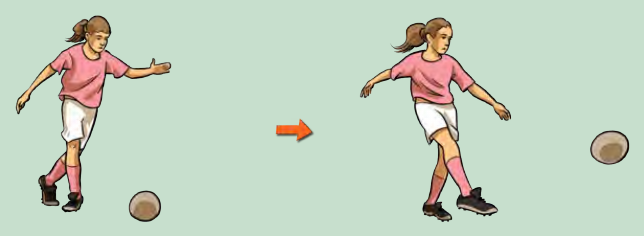
Law of Conservation of Energy
- The Law of Conservation of Energy states that energy cannot be created or destroyed, only transferred or transformed.
- Energy is transferred from one part of a system to another, or transformed from one form to another.
- In the elastic band and matchbox example, the potential energy of the stretched band is transferred to the matchbox as kinetic energy.
- The total energy in a closed system remains constant.
Energy Transfers in Systems
- A system is made up of different parts that work together or affect each other.
- Systems have an input energy and an output energy.
- Energy can be transferred within mechanical, thermal, electrical, and biological systems.
- In a mechanical system like a swing, potential energy at the top of the arc becomes kinetic energy as it swings down.
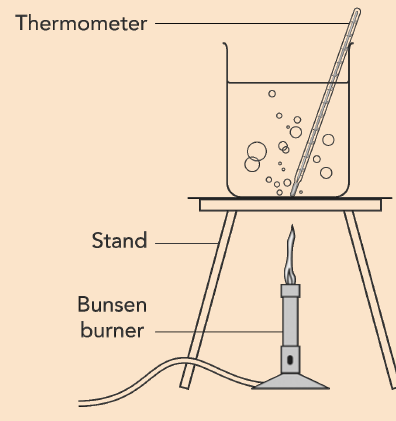
- In a thermal system like boiling water, chemical potential energy in gas is transferred to kinetic energy of water particles.
- In an electrical system like a fan, electrical energy is transferred to kinetic energy of the fan blades.
- In a biological system, radiant energy from the Sun is stored as potential energy in plants, then transferred to animals that eat them.
A lady using an electric drill to make a hole in an aeroplane part
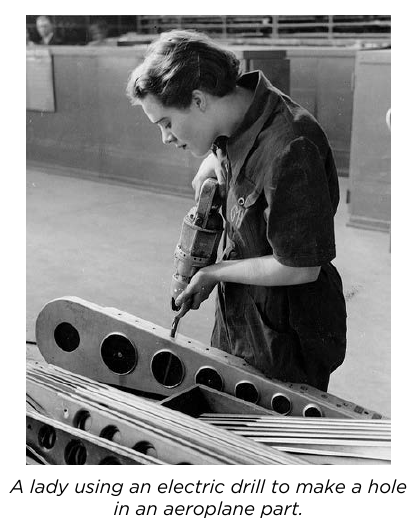
Useful and Wasted Energy
- Systems often produce useful energy output (e.g., light from a bulb, movement from a fan) and wasted energy (e.g., heat, sound).
- Wasted energy is transferred to the surroundings and is not useful for the intended purpose.
- An efficient system has a useful output energy only slightly smaller than the input energy.
- An inefficient system has a large amount of wasted energy compared to useful output.
- For example, a filament light bulb wastes most energy as heat, while a fluorescent bulb wastes less and produces more light.
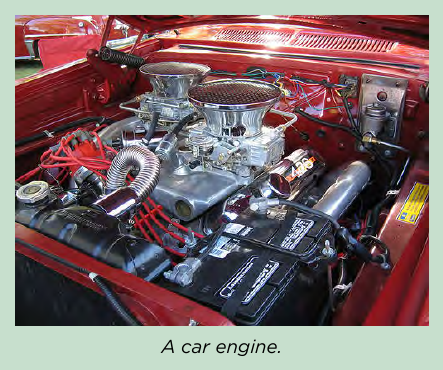
A car engine
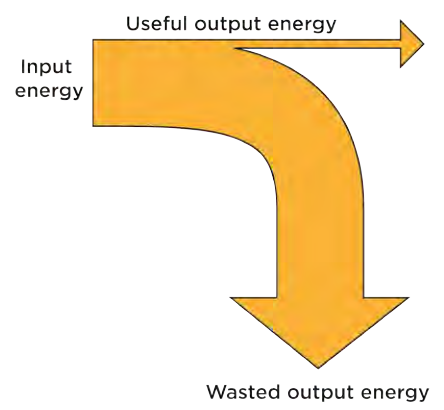
Sankey Diagrams
- A Sankey diagram shows the input energy and how it splits into useful and wasted energy outputs.
- The width of the arrows represents the amount of energy.
- The width of the useful and wasted arrows together equals the width of the input arrow, because energy is conserved.
- Sankey diagrams are drawn to scale to visually compare efficiency.
- Example: An electric torch with 100 J input, 10 J light (useful) and 90 J heat (wasted).
A Sankey diagram showing input energy split into useful output energy and wasted output energy
Energy Transformations
- Kinetic energy can be transformed into potential energy and vice versa.
- When you throw a ball upward, kinetic energy from your hand is transferred to the ball, then as it rises, kinetic energy becomes potential energy.
- At the top of its path, the ball has maximum potential energy and minimum kinetic energy.
- As it falls, potential energy is transformed back into kinetic energy.
- Friction can transform kinetic energy into heat energy, e.g., rubbing hands together makes them warm.
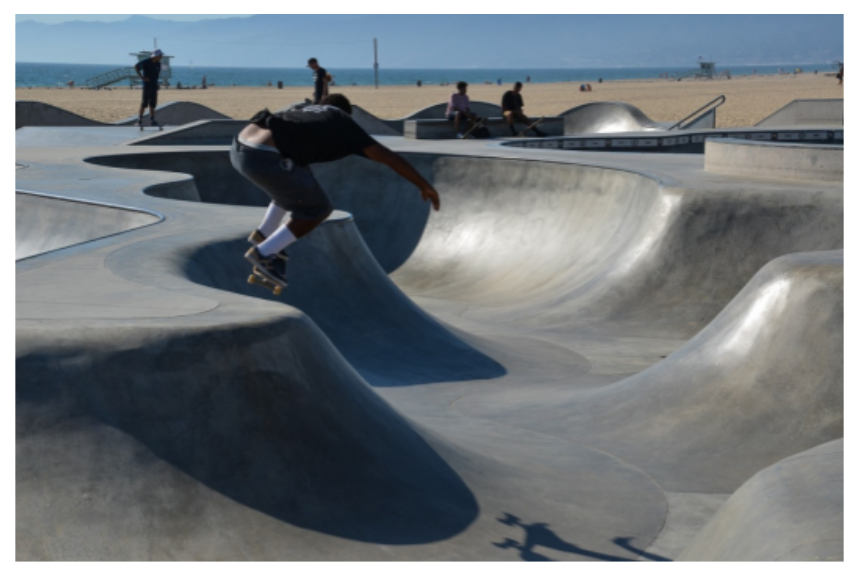
A skateboarder speeding up and slowing down on the ramps of a skate park
Examples of Energy Transfers
- High jumper: At the peak of the jump, she has maximum potential energy; just before landing, she has maximum kinetic energy.
- Skateboarder: Going down a ramp, potential energy becomes kinetic energy, making them speed up; going up, kinetic energy becomes potential energy, slowing them down.
- Water slide: At the top, the slider has potential energy; as they slide down, it changes to kinetic energy.
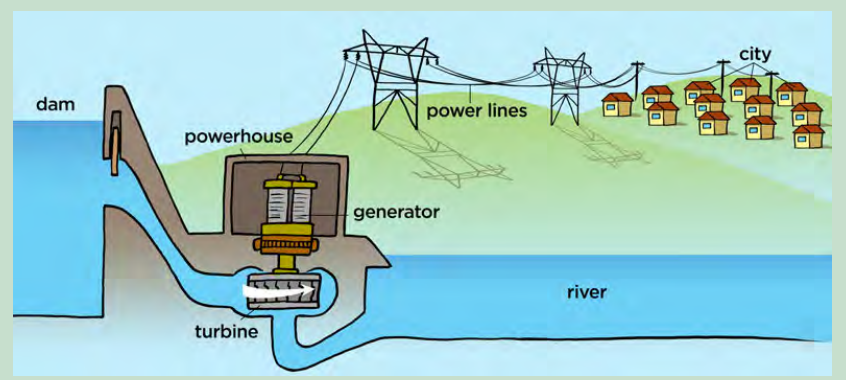
- Hydropower plant: Water high in a dam has potential energy; as it flows down, it becomes kinetic energy, turning turbines to generate electricity.
A hydropower plant: dam, powerhouse, turbine, generator, power lines and city
Energy in Food Chains
- Plants use radiant energy from the Sun to make food via photosynthesis, storing it as potential energy (starch).
- When animals eat plants, they obtain that stored potential energy.
- During respiration, animals release the energy to power movement and life processes, transforming potential energy to kinetic energy.
- Energy is transferred from the Sun to plants to animals, and is conserved throughout the biological system.
An impala grazing; it stores energy from food and releases it as kinetic energy when it runs

Slides
Sign up free to view the lesson slides
Step through every slide for this topic — plus flashcards and revision notes — with a free account.
Practice questions
Free preview — 8 of 48 questions. Sign up to see them all.
1.Which of the following is the correct statement of the Law of Conservation of Energy?
Easy- AEnergy can be created but not destroyed.
- BEnergy can be destroyed but not created.
- CEnergy cannot be created or destroyed, only transferred or transformed.
- DEnergy can be created and destroyed in equal amounts.
2.Which of the following is an example of potential energy?
Easy- AA moving car
- BA stretched rubber band
- CA spinning fan
- DA flying bird
3.Which of the following is an example of kinetic energy?
Easy- AA book on a shelf
- BA charged battery
- CA ball rolling down a hill
- DA compressed spring
4.In a closed system, energy can be created or destroyed.
EasyTrue or false?
5.Thermal energy in a substance is related to the total kinetic energy of its particles.
EasyTrue or false?
6.A ball is thrown upwards. At the highest point of its motion, what type of energy does it have?
Easy- AKinetic energy only
- BPotential energy only
- CBoth kinetic and potential energy
- DNo energy
7.In a pendulum, at which position does the bob have the most kinetic energy?
Easy- AAt the highest point on the left
- BAt the highest point on the right
- CAt the lowest point of the swing
- DMidway between the highest and lowest points
8.When you rub your hands together, what energy transformation occurs?
Easy- AKinetic energy to thermal energy
- BThermal energy to kinetic energy
- CPotential energy to kinetic energy
- DChemical energy to potential energy
Unlock all 48 questions, flashcards & more
Create a free account to see every question, the slides, flashcards and revision notes for this topic.