Wave interactions with matter
Learn it by playing
Answer these questions to earn energy, then fish and explore. No account needed.
Lesson notes
Types of Waves
- Light waves (electromagnetic) transmit energy and do not require a medium.
- Mechanical waves (e.g., sound, water) transfer energy by moving particles and require a medium.
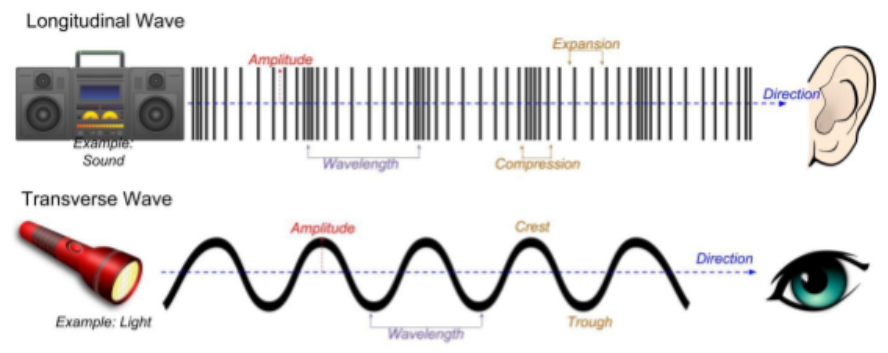
- Light waves are transverse; mechanical waves can be transverse or longitudinal.
- Waves can be transmitted, reflected, absorbed, or refracted through materials.
Longitudinal and transverse waves.
Light Waves and Vision
- We see objects when light reflects off them and enters our eyes.
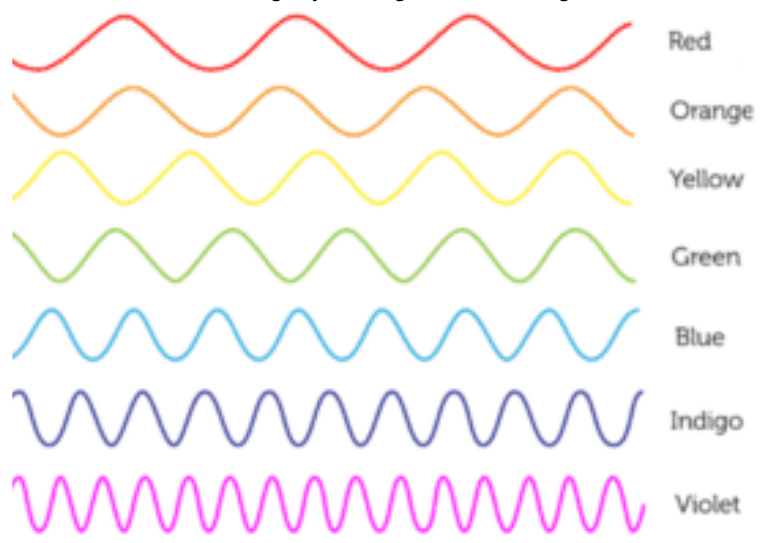
- Brightness is controlled by wave amplitude; color is determined by wavelength.
- Longest visible wavelength appears red; shortest appears violet; the visible spectrum is in rainbow order.
- In darkness, no light waves reflect off objects, so we cannot see them.
The visible spectrum, ordered by wavelength.
Sound Waves
- Sound is energy transfer from vibrating objects through matter.
- Sound waves are mechanical and require a medium.
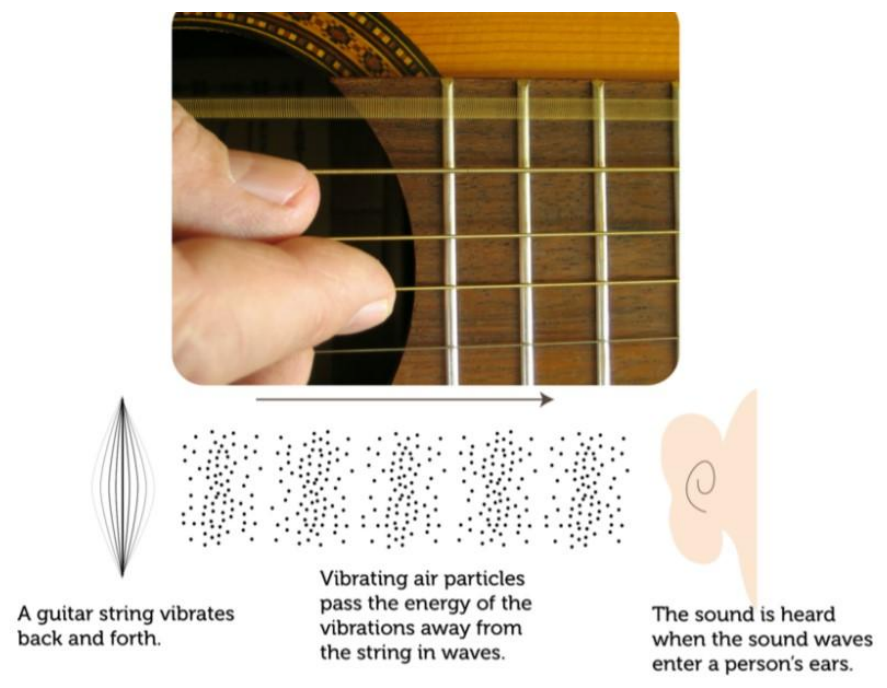
- A vibrating guitar string pushes air particles, creating sound waves that travel to the ear.
- Sound waves vibrate the eardrum; the brain interprets these vibrations as sound.
A vibrating guitar string produces a sound wave that reaches the ear.
Reflection of Waves
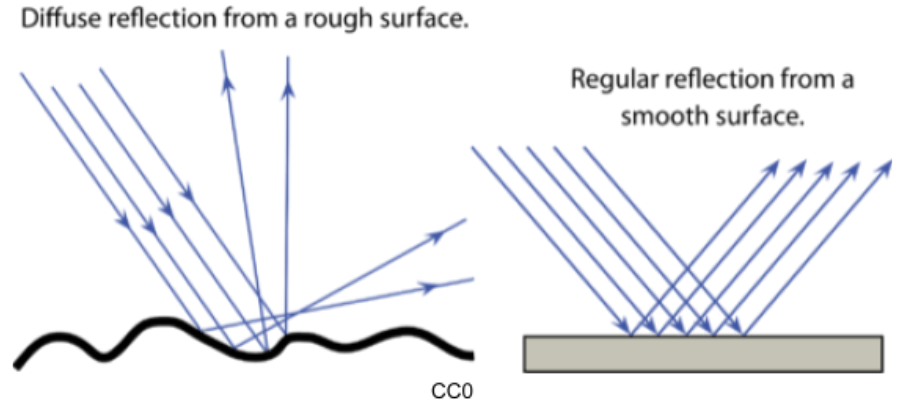
- Reflection occurs when a wave bounces off a surface (e.g., light off a mirror, sound causing echoes).
- Even reflection from smooth surfaces produces clear images (mirrors).
- Uneven reflection from rough surfaces scatters light, making objects look dull.
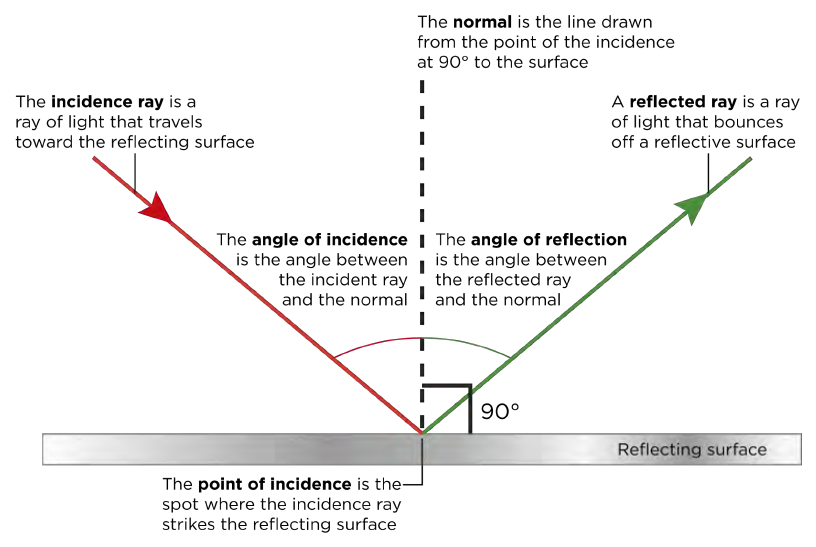
- For reflection, the angle of incidence equals the angle of reflection.
Angle of incidence, angle of reflection, and the normal at a reflecting surface.
Transmission and Refraction
- Transmission is when a wave travels through a medium (e.g., sound through air, light through glass).
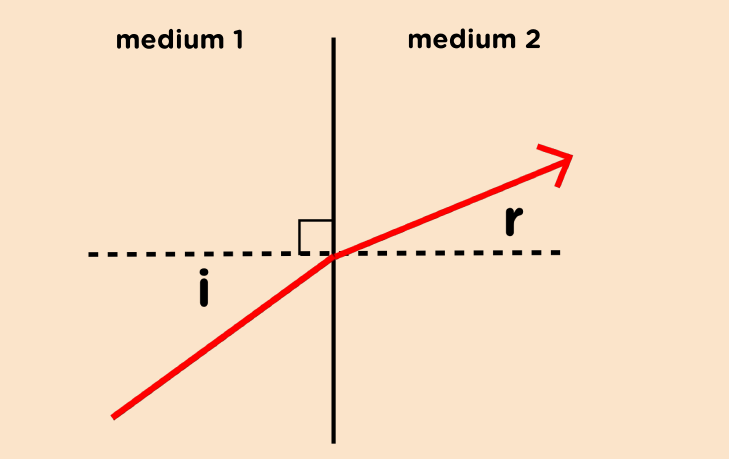
- Refraction is the bending of light due to a change in speed when moving between media.
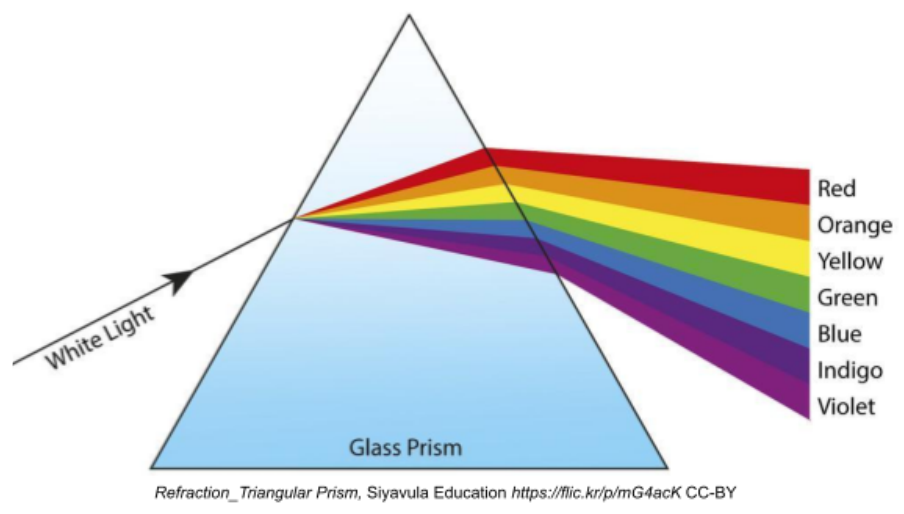
- A prism refracts white light, separating it into colors because different wavelengths bend at different angles.
- Refraction is used in lenses (glasses, microscopes) to focus light for clearer images.
White light entering a glass prism and separating into the colours of the spectrum.
Absorption of Waves
- Absorption occurs when a wave is stopped and its energy is converted to heat.
- Soundproof walls absorb sound energy, making rooms quieter.
- Black pavement absorbs light waves, becoming hotter than lighter surfaces.
- Black objects absorb all colors of light; white objects reflect all colors.
Transparent, Translucent, and Opaque Materials
- Transparent materials transmit most light (e.g., clear glass).
- Translucent materials allow some light through but scatter it (e.g., plastic shopping bag).
- Opaque materials absorb or reflect all light, casting shadows (e.g., cardboard).
- Shadows form because light travels in straight lines and cannot pass through opaque objects.
Color and Absorption
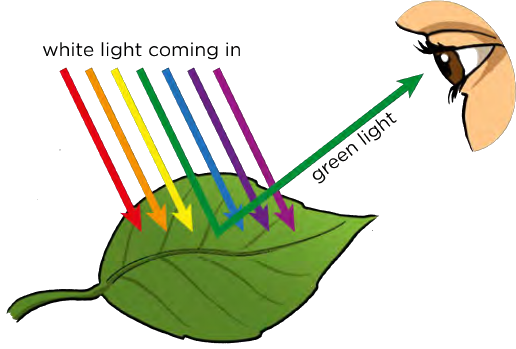
- We see an object's color from the light it reflects; other colors are absorbed.
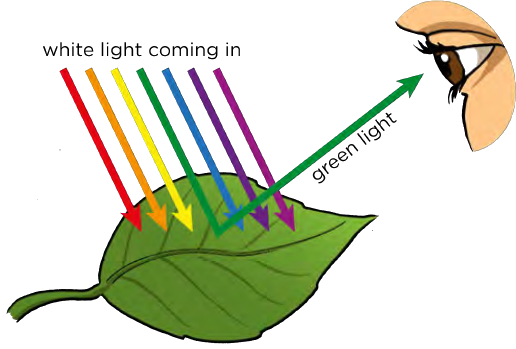
- A red ladybird reflects red light and absorbs all other colors.
- Green leaves reflect green light and absorb other colors.
- Black spots absorb all colors, reflecting none; black is not a color of light but absence of reflection.
How a green leaf reflects green light and absorbs other colors
How We See Light and Color
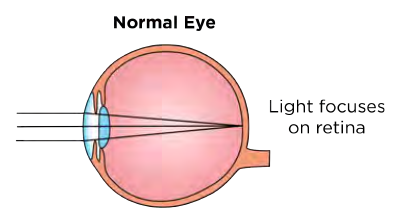
- Light enters the eye through the pupil, is focused by the cornea and lens.
- The retina contains light-sensitive cells that convert light into electrical impulses.
- These impulses travel via the optic nerve to the brain, which interprets them as sight.
- We see color because different wavelengths are reflected and stimulate cone cells in the retina.
A normal eye focusing light onto the retina.
Speed of Sound in Different Mediums
- Sound travels at different speeds depending on the medium: air (346 m/s), water (1498 m/s), steel (5200 m/s).
- Sound travels fastest in solids, slower in liquids, and slowest in gases.
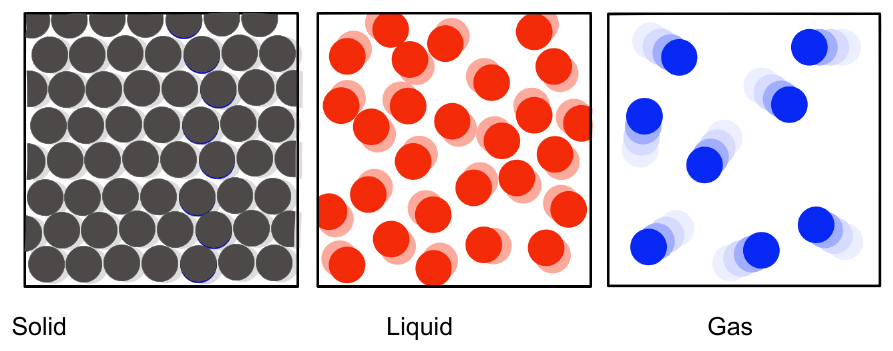
- This is because particles are closer together in solids, allowing vibrations to transfer more quickly.
- In gases, particles are farther apart, so sound energy transfers more slowly.
Particle spacing in solids, liquids and gases.
Slides
Sign up free to view the lesson slides
Step through every slide for this topic — plus flashcards and revision notes — with a free account.
Practice questions
Free preview — 8 of 57 questions. Sign up to see them all.
1.Light waves are mechanical waves that require a medium to travel through.
EasyTrue or false?
2.Which of the following is an example of a mechanical wave?
Easy- ALight wave
- BSound wave
- CRadio wave
- DX-ray
3.Sound waves travel faster through gases than through solids.
EasyTrue or false?
4.Which of the following materials is the best transmitter of sound?
Easy- AAir
- BWater
- CSteel
- DFoam rubber
5.What happens to the energy of a wave when it is absorbed by a material?
Easy- AIt is converted to heat energy.
- BIt is reflected back.
- CIt is transmitted through.
- DIt is converted to light energy.
6.A student shines a light ray at a mirror. The angle of incidence is 30°. What is the angle of reflection?
Easy- A15°
- B30°
- C60°
- D90°
7.Which of the following correctly describes the speed of light in different media?
Easy- ALight travels faster in glass than in air.
- BLight travels faster in water than in air.
- CLight travels faster in air than in glass.
- DLight travels at the same speed in all media.
8.When light passes from air into glass at an angle, it bends away from the normal.
EasyTrue or false?


Unlock all 57 questions, flashcards & more
Create a free account to see every question, the slides, flashcards and revision notes for this topic.