From cells to organ systems
Lerne es beim Spielen
Beantworte diese Fragen für Energie, dann angle und erkunde. Kein Konto nötig.
Lektionsnotizen
Big idea: one body, many jobs
- Big idea: the key concept is Systems, the related concept is Form (how something's shape suits its job) and the global context is Identities and relationships: what makes up a living body.
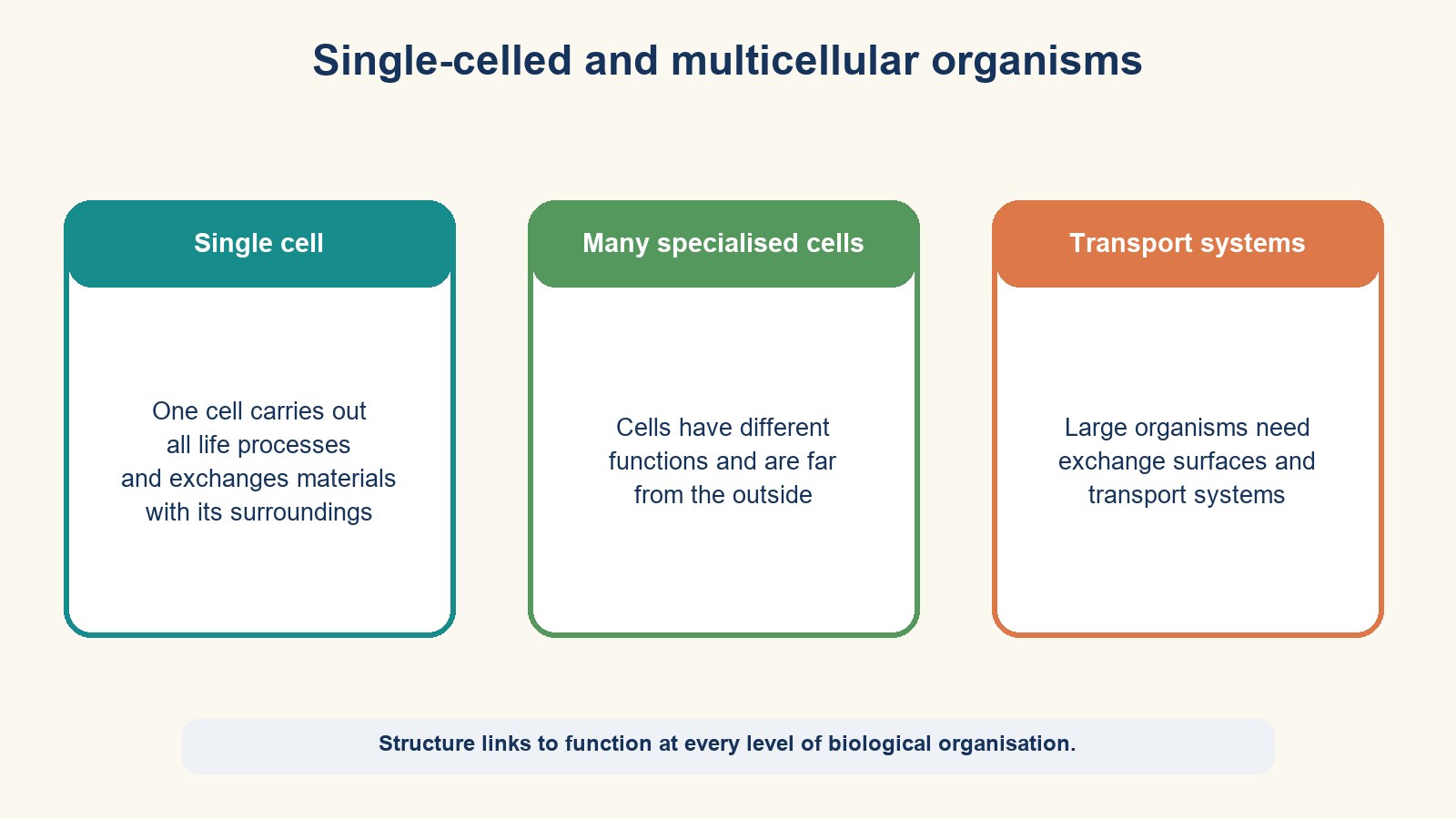
- A unicellular organism is a single cell that does every life process for itself.
- Your body has trillions of cells. They cannot all do everything, so they share the work: this is called division of labour.
- Cells that have a shape and parts that suit one job are specialised cells.
- Cells are grouped into tissues, then organs, then organ systems, all working together as one organism.
Single-celled and multicellular organisms
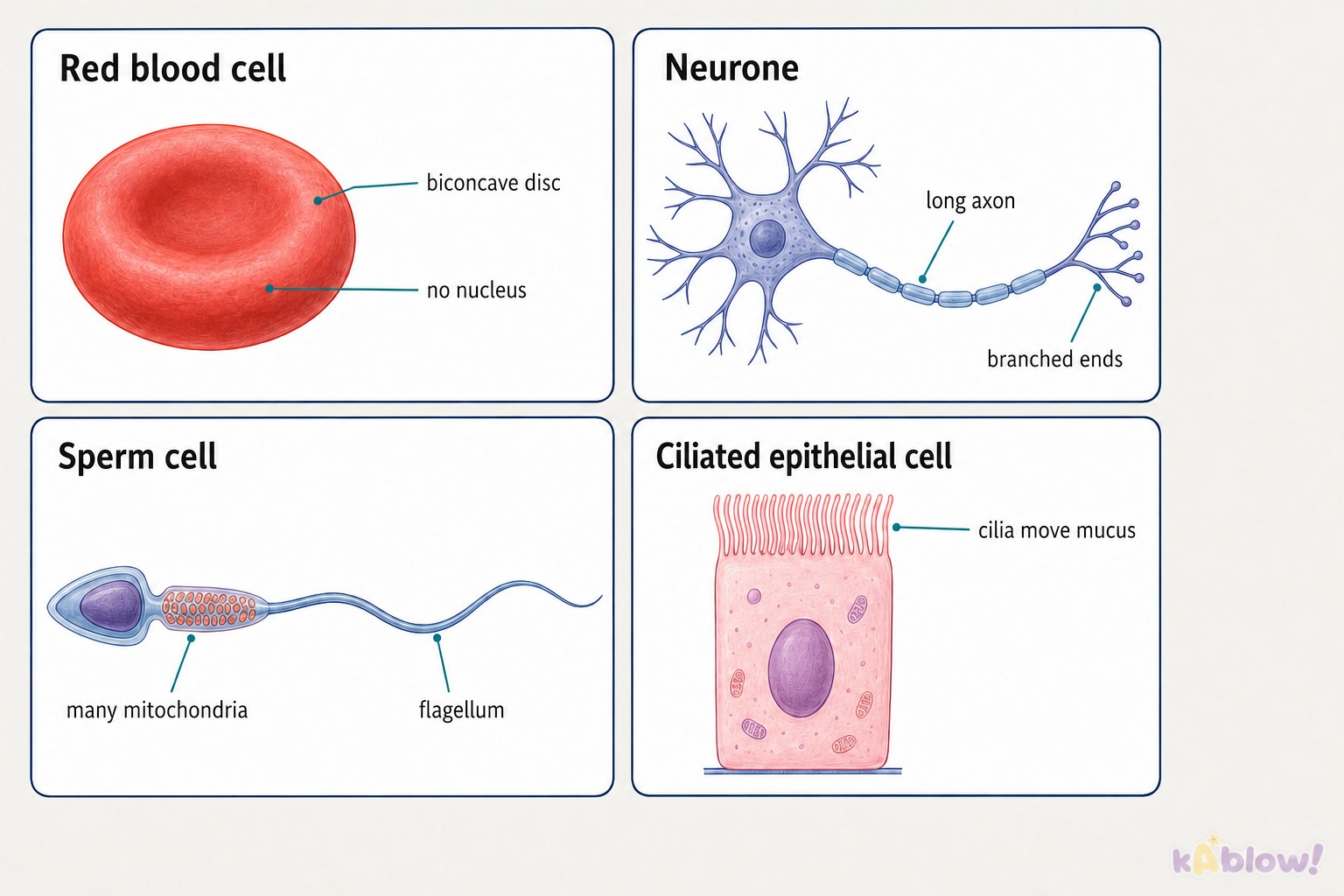
Specialised animal cells
- A red blood cell is a flattened biconcave disc with no nucleus. The shape gives a large surface area, and the space is filled with haemoglobin, which carries oxygen.
- A nerve cell (neurone) is very long, with a long axon and branched ends. It carries electrical impulses from one part of the body to another.
- A sperm cell has a tail (flagellum) for swimming, a streamlined head, and many mitochondria to release the energy for the tail to beat.
- A ciliated cell has tiny hairs called cilia that sweep mucus along, for example in the windpipe.
- The pattern is always the same: a feature that helps with the job. Scientists call a helpful feature an adaptation.
Four specialised human cells
Specialised plant cells
- A root hair cell has a long, thin projection that pushes between soil particles. It gives a large surface area to absorb water and dissolved minerals.
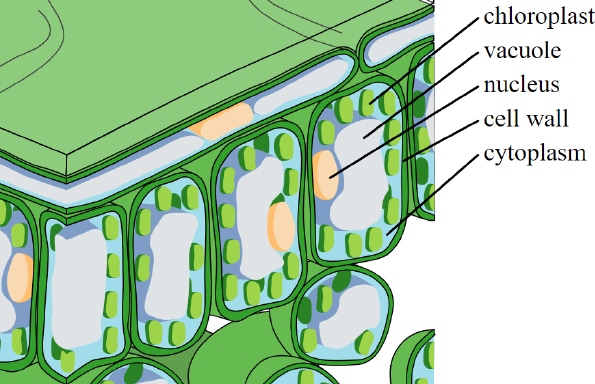
- A palisade cell is packed with chloroplasts, which contain chlorophyll to capture light for photosynthesis.
- Palisade cells are tall and closely packed near the top of the leaf, where they get the most light.
- Root hair cells have no chloroplasts because they are underground, where there is no light for photosynthesis.
- Plant cells also have a cell wall and a nucleus. Their specialised features are added to the basic plant cell.
Palisade cells in leaf tissue, with organelles labelled
Tissues and organs
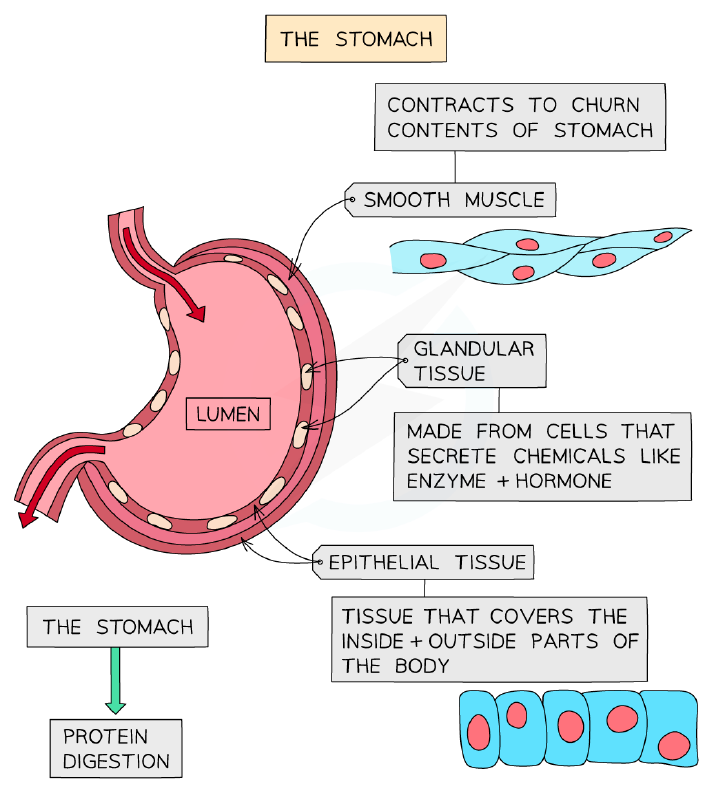
- A tissue is a group of similar cells that work together to do the same job. Muscular tissue contracts, glandular tissue makes juices and epithelial tissue covers surfaces.
- An organ is a group of different tissues that work together to do a particular job.
- The stomach is an organ: muscular tissue churns the food, glandular tissue makes digestive juices and epithelial tissue covers the inside and outside.
- Plants have organs too. A leaf contains palisade tissue, epidermis and xylem, all working together for photosynthesis.
- Other examples of organs are the heart, the lungs, the brain and the kidneys.
Tissues of the stomach
Organ systems and the whole organism
- An organ system is a group of organs that work together to do a major job.
- The digestive system breaks down food. The circulatory system moves blood around the body. The nervous system sends messages. The respiratory system takes in oxygen.
- The systems depend on each other. The digestive system passes nutrients into the blood, and the circulatory system delivers them to every cell.
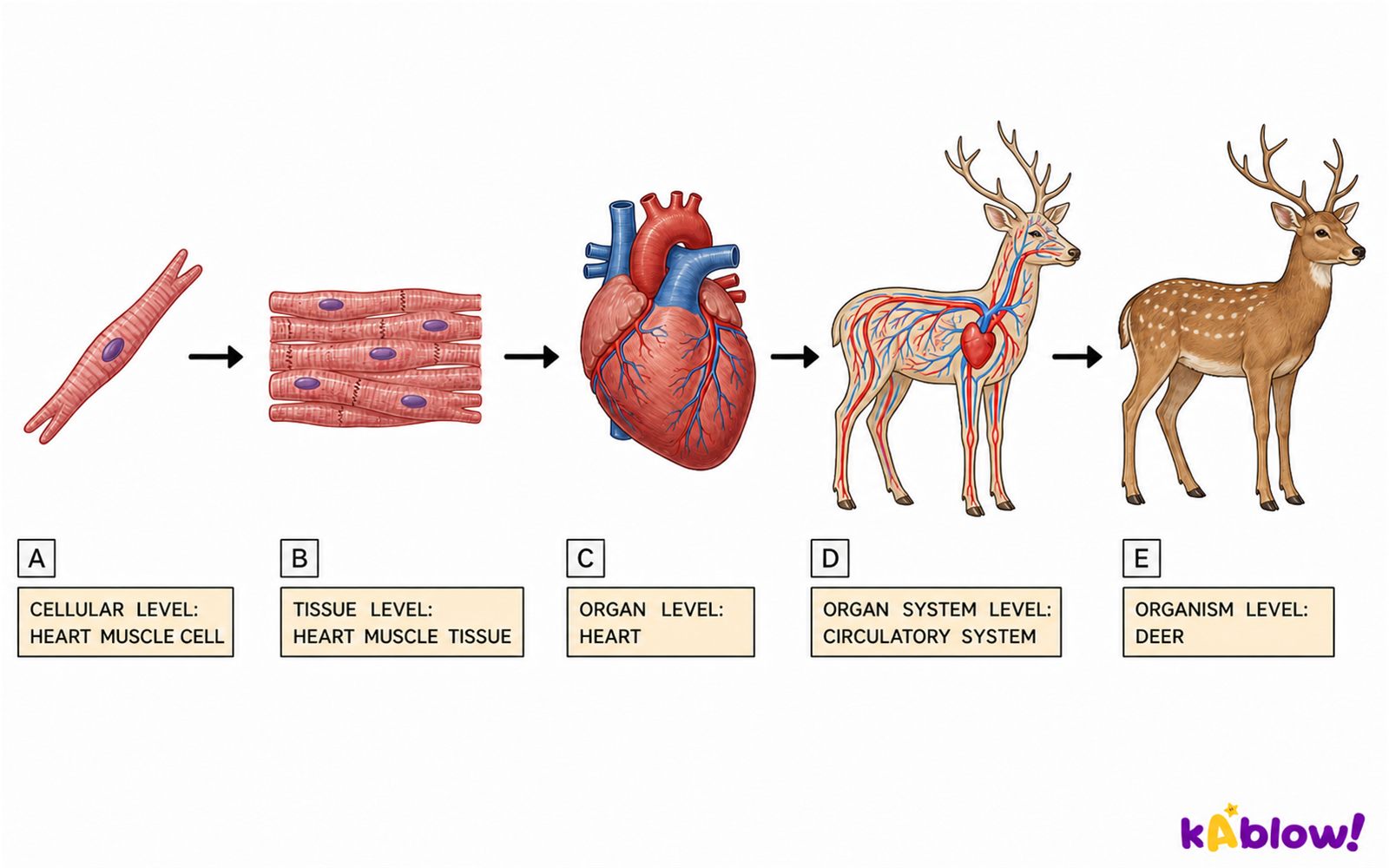
- The levels of organisation in order are cell, tissue, organ, organ system, organism.
- If one part fails, the levels above it are affected. A problem with the cells of the lungs can reduce the oxygen reaching the whole organism.
Levels of organisation: cell to organism
Think like a scientist: does cell size matter?
- Cells take in materials through their surface. A cell with a large surface area compared with its size can take in materials more quickly.
- You can model this with jelly (agar) cubes of different sizes soaked in coloured dye for the same time, then cut open to see how far the dye has reached.
- The independent variable is the size of the cube. The dependent variable is how far the dye has travelled in. Control variables are the time in the dye, the strength of the dye and the temperature.
- Inquiry task: write a plan to test this model. Say what you will change, measure and keep the same, and explain how you will make your results reliable (for example repeating the test and calculating a mean).
- Evaluate: jelly is only a model. List one way the jelly cubes are like a cell and one way they are not.
Folien
Sign up free to view the lesson slides
Step through every slide for this topic — plus flashcards and revision notes — with a free account.
Übungsfragen
Gratis-Vorschau — 8 von 55 Fragen. Registriere dich, um alle zu sehen.
1.What does it mean if a cell is specialised?
Easy- AIt can do every job in the body equally well
- BIt is always larger than the cells around it
- CIt has a shape and parts that suit one job
- DIt has no cell membrane around it
2.Which cell carries oxygen around the body?
Easy- ANerve cell
- BSperm cell
- CPalisade cell
- DRed blood cell
3.Which type of cell carries electrical messages around the body?
Easy- ARed blood cell
- BRoot hair cell
- CPalisade cell
- DNerve cell
4.Which plant cell absorbs water and minerals from the soil?
Easy- APalisade cell
- BRoot hair cell
- CSperm cell
- DRed blood cell
5.Which cell swims using a tail?
Easy- ANerve cell
- BRed blood cell
- CSperm cell
- DPalisade cell
6.Which leaf cells contain lots of chloroplasts for photosynthesis?
Easy- ARoot hair cells
- BNerve cells
- CRed blood cells
- DPalisade cells
7.Why does a red blood cell have no nucleus?
Medium- AIt lets the cell divide faster while it is in the blood
- BIt leaves more room inside for haemoglobin to carry oxygen
- CIt makes the cell light enough to float in blood
- DIt stops the cell using up the oxygen it carries
8.How does the biconcave disc shape help a red blood cell?
Medium- AIt lets the cell swim against the flow of the blood
- BIt lets the cell store food for later
- CIt makes the cell stick to the walls of blood vessels
- DIt gives a large surface area for fast oxygen uptake
Unlock all 55 questions, flashcards & more
Erstelle ein Gratis-Konto, um alle Fragen, Folien, Karteikarten und Lernnotizen zu diesem Thema zu sehen.