Organelles & Compartmentalisation
Lerne es beim Spielen
Beantworte diese Fragen für Energie, dann angle und erkunde. Kein Konto nötig.
Lektionsnotizen
Cell Organelles
- Eukaryotic cells have a more complex ultrastructure than prokaryotic cells, with the cytoplasm divided into membrane-bound compartments called organelles.
- Organelles are bound by either a single or double membrane.
- Structures without a membrane are not considered organelles: cell wall, cytoskeleton, and cytoplasm.
- Compartmentalised organelles include the nucleus, vesicles, ribosomes, and the plasma membrane.
- Compartmentalisation allows enzymes and substrates to be localised at higher concentrations, and keeps damaging substances separated (e.g. digestive enzymes stored in lysosomes).
- It also maintains optimal conditions for processes (e.g. optimal pH for digestive enzymes) and allows the number and location of organelles to be altered based on cell requirements.
- Organelles can become specialised for specific functions, with structures adapted to help them carry out their roles.
- The separation of organelles by membranes allows each organelle to carry out its own chemical reactions without interference from the rest of the cell.
The nucleus
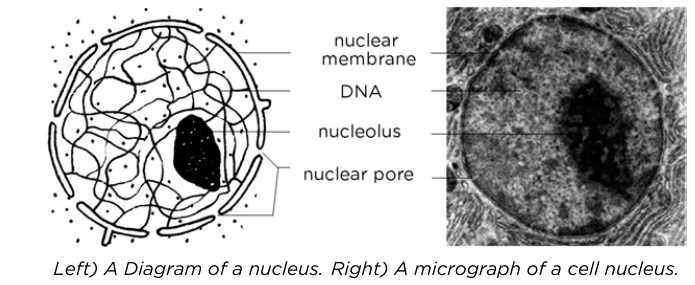
Cell Fractionation
- Progress in understanding organelle function followed the invention of the ultracentrifuge and the development of cell fractionation.
- Cell fractionation separates cell compartments so they can be studied individually, and requires a pure sample containing only the specific organelle.
- The three stages are: homogenisation (breaking up the sample with a homogeniser), filtration (through gauze), and ultracentrifugation (spinning the filtrate in a centrifuge).
- A centrifuge separates materials by spinning; the speed is altered to separate components based on their molecular weight.
- Before the ultracentrifuge was invented, research into separate organelles was limited.
Cell Compartmentalisation
- The nucleus is a key organelle distinguishing eukaryotic cells from prokaryotic cells, allowing processes to occur more efficiently.
- In prokaryotes, transcription and translation occur simultaneously, allowing rapid responses to environmental stimuli.
- In eukaryotes, these processes occur separately due to the compartmentalisation of the nucleus.
- mRNA is modified in isolation within the nucleus before it contacts a ribosome, reducing the chance of errors in the mRNA code and the resulting protein.
- The cytoplasm is not an organelle, but its separation from organelles via membranes is advantageous.
- Organisation into discrete membrane-bound organelles allows separation of incompatible biochemical processes, ensuring pathways run smoothly without interference.
- For example, nitrogenase (used for nitrogen fixation in plant cells) is sensitive to oxygen and is positioned in an anaerobic part of the cytoplasm away from aerobic reactions.
- Lysosomes contain lytic enzymes that could harm the cell if not contained by the lysosome membrane; during endocytosis a phagocytic vacuole forms around harmful substances, keeping them separate until a lysosome digests them.
Adaptations of Mitochondria
- Mitochondria are rod-shaped organelles 0.5–1.0 μm in diameter; they are the site of aerobic respiration and synthesise ATP.
- ATP synthesis occurs during oxidative phosphorylation, relying on the electron transport chain and ATP synthase.
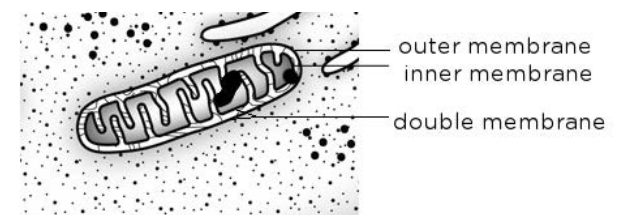
- Mitochondria have two phospholipid membranes: the outer membrane is smooth and permeable to small molecules; the inner membrane is folded into cristae, less permeable, and is the site of the electron transport chain and ATP synthase.
- The intermembrane space has a low pH due to a high concentration of protons; the concentration gradient across the inner membrane is essential for ATP synthesis.
- The matrix is an aqueous solution containing ribosomes, enzymes, and circular mitochondrial DNA.
- The double membrane and small volume of intermembrane space allow concentration build-up of hydrogen ions required for respiration.
- The large surface area of cristae holds many electron transport chain proteins and ATP synthase enzymes, enabling more ATP production.
- More active cell types can have larger mitochondria with longer, more tightly packed cristae; muscle cells have more mitochondria per cell than fat cells.
- Compartmentalisation of enzymes and substrates in the matrix ensures reactions like the Krebs cycle happen more efficiently.
Structure of a mitochondrion
Adaptations of Chloroplasts
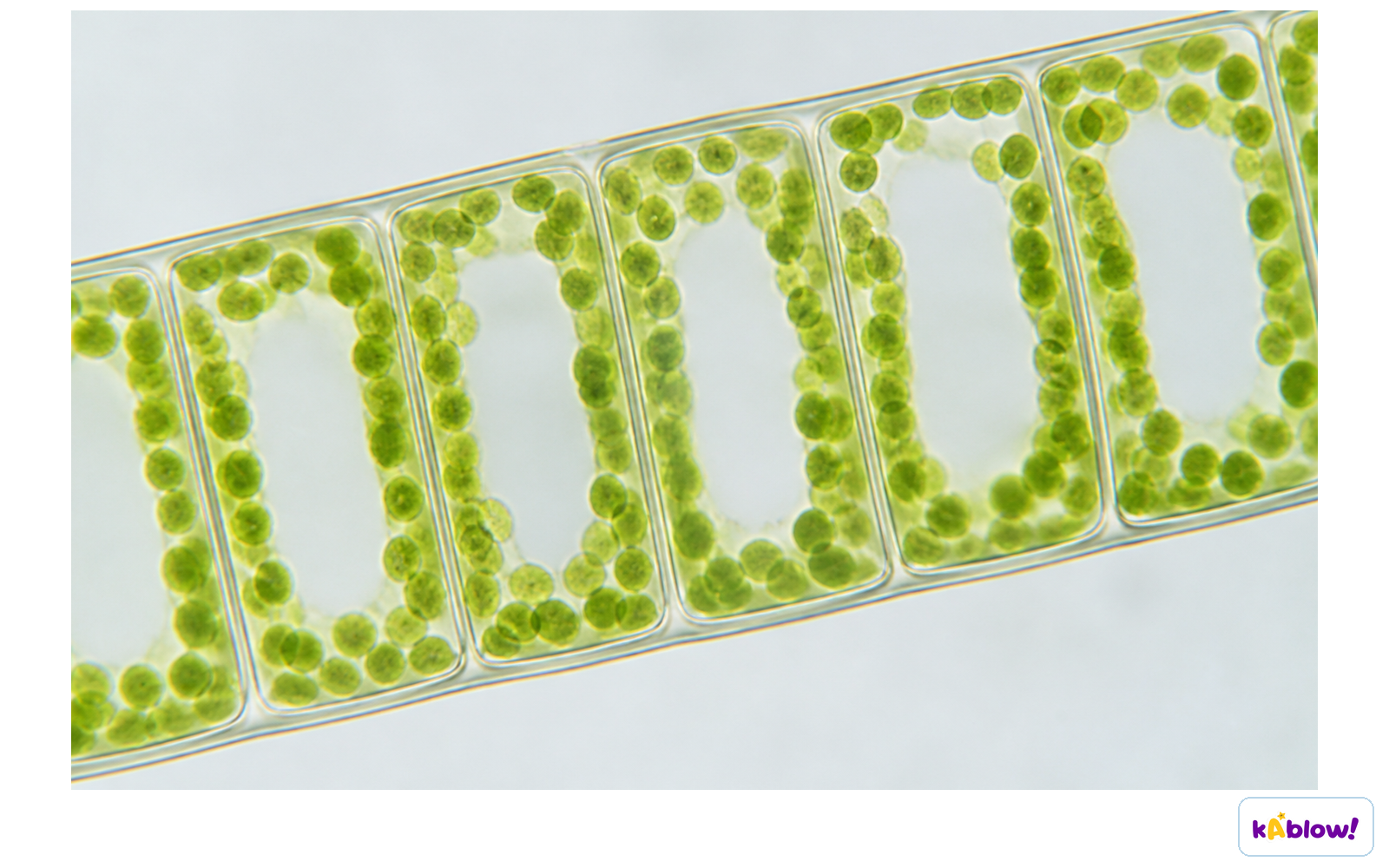
- Chloroplasts are the organelles in plant cells where photosynthesis occurs; they are roughly 2–10 μm in diameter (larger than mitochondria).
- Each chloroplast is surrounded by a double-membrane envelope; the outer membrane is permeable to ions and small molecules, while the inner membrane contains selective transport proteins.
- The stroma is a cytosol-like fluid containing CO₂, sugars, enzymes, and other molecules; starch grains or lipid droplets may be present after photosynthesis.
- A separate membrane system in the stroma consists of flattened fluid-filled sacs called thylakoids, which stack to form grana (singular: granum), connected by stroma lamellae.
- Thylakoid membranes contain pigments, enzymes, and electron carriers; pigments are arranged in light-harvesting clusters called photosystems.
- In a photosystem, pigment molecules are arranged in funnel-like structures; energy passes down to the primary pigment reaction centre.
- Stroma adaptations: gel-like fluid contains enzymes for the light-independent stage; enzymes and substrates of the Calvin cycle are compartmentalised; the stroma surrounds the grana for rapid transport of products.
- Grana adaptations: large surface area for many photosystems, maximising light absorption and providing membrane space for electron carriers and ATP synthase.
- Other adaptations: chloroplast DNA codes for some proteins and enzymes used in photosynthesis; ribosomes allow translation of these proteins; the inner membrane controls flow of molecules; the thylakoid space has a very small volume so a proton gradient develops quickly.
Chlorophyll within chloroplasts
Organelles in Protein Synthesis
- The nucleus is separated from the cytoplasm by a double membrane called the nuclear envelope, studded with nuclear pores.
- Nuclear pores allow mRNA and ribosomes to travel out, and enzymes (e.g. DNA polymerases) and signalling molecules to travel in.
- The outer membrane of the nucleus is continuous with the endoplasmic reticulum; ribosomes attached to sections form the rough endoplasmic reticulum, while sections without ribosomes form the smooth endoplasmic reticulum.
- During mitosis and meiosis, the nuclear membrane breaks into vesicles during prophase and reforms at telophase.
- Ribosomes are found freely in the cytoplasm of all cells, or bound to the ER to form rough ER (only in eukaryotic cells); they are the site of protein synthesis.
- Ribosomes consist of a large and a small subunit composed of protein and ribosomal RNA (rRNA); protein provides structure, and rRNA facilitates binding of mRNA and tRNA and catalyses peptide bond formation.
- Ribosomes have three tRNA binding sites and one mRNA binding site; mRNA sits in a groove between the subunits and the ribosome moves along, forming a polypeptide.
- Free ribosomes synthesise proteins for use within the cell (cytosol, mitochondria, chloroplasts); membrane-bound ribosomes synthesise proteins destined for lysosomes or secretion.
- Signal sequences in the growing polypeptide chain direct the free ribosome to the ER; signal recognition proteins bind and pause translation, the ribosome binds to an ER receptor, translation re-initiates, and the polypeptide moves inside the ER.
- The synthesised protein can be carried via a vesicle to the Golgi apparatus before being secreted.
- The Golgi apparatus consists of flattened sacs called cisternae; it modifies proteins and lipids before packaging them into Golgi vesicles.
- The cis side faces the ER and receives vesicles; the trans side faces the plasma membrane and sends out modified products.
- Proteins passing through the Golgi are usually exported (e.g. insulin), put into lysosomes, or delivered to membrane-bound organelles.
Vesicle Formation
- Vesicles are membrane-bound sacs used for transport and storage.
- Types include peroxisomes (digest fatty acids), lysosomes (digest cellular waste or harmful substances), transport vesicles (move molecules within the cell), and secretory vesicles (transport substances out via exocytosis).
- Clathrins are proteins that help with vesicle formation; they line vesicles transporting molecules between membrane-bound compartments.
- Order of events: (1) a clathrin-coated pit forms on the cell membrane; (2) receptor proteins bind target molecules; (3) cytoskeleton proteins help the pit deepen and seal off, trapping target molecules; (4) a vesicle is formed.
- Vesicles are not the same as vacuoles: vacuoles are larger and their membrane cannot fuse with other cellular membranes, unlike vesicle membranes.
Folien
Sign up free to view the lesson slides
Step through every slide for this topic — plus flashcards and revision notes — with a free account.
Übungsfragen
Gratis-Vorschau — 8 von 60 Fragen. Registriere dich, um alle zu sehen.
1.Which of the following are not considered organelles?
Easy- AVesicles
- BPlasma membrane
- CCell wall
- DRibosomes
2.Which of the following describe how the mitochondria are adapted for the production of ATP by aerobic cell respiration? I. Large surface area of cristae. II. Mitochondria have a double membrane with a large volume of intermembrane space. III. Compartmentalisation of enzymes and substrates of the Krebs cycle in the matrix.
Medium- AI and II only
- BII and III only
- CI and III only
- DI only
3.What is an advantage of the separation of the nucleus and cytoplasm into separate compartments in eukaryotes?
Medium- APost-transcriptional modification of mRNA can happen before the mRNA meets ribosomes in the cytoplasm.
- BPost-transcriptional modification of mRNA can happen after the mRNA meets ribosomes in the cytoplasm.
- CPost-transcriptional modification of mRNA happens immediately upon arrival at ribosomes.
- DPost-transcriptional modification of mRNA can occur in the cytoplasm.
4.Which of the following is true of ribosomes?
Medium- AProteins for transport are synthesised by free ribosomes.
- BRibosomes consist of a large and a small subunit composed of protein and transfer RNA (tRNA).
- CRibosomes exist in the cells of all living organisms.
- DRibosomes on the rough endoplasmic reticulum synthesise proteins for retention within the cell.
5.Vesicles are membrane-bound sacs used for transport and storage. Clathrins are proteins that help with the formation of vesicles. What is the correct order of events for vesicle formation?
Medium- A clathrin coated pit is formed on the surface of the cell membrane
- Receptor proteins on the cell surface bind to the target molecules
- Cytoskeleton proteins help the clathrin pit to deepen and eventually seal off, trapping the target molecules inside
- A vesicle is now formed
6.The chloroplast is adapted for photosynthesis. Which of the following is not an adaptation of the chloroplast for photosynthesis?
Medium- AA large surface area of thylakoid membranes with photosystems.
- BA large volume of fluid inside thylakoids.
- CCompartmentalisation of enzymes and substrates of the Calvin cycle in the stroma.
- DChloroplast DNA that contains genes which code for some of the proteins and enzymes used in photosynthesis.
7.The cell wall is considered an organelle.
EasyTrue or false?
8.Which of the following are advantages of compartmentalisation in eukaryotic cells? (Select all that apply.)
Medium- AEnzymes and substrates can be localised at higher concentrations.
- BDamaging substances such as digestive enzymes can be kept separated from the rest of the cell.
- COptimal conditions such as pH can be maintained for specific processes.
- DAll cellular reactions occur in a single compartment.
- EThe number and location of organelles cannot be altered.
Unlock all 60 questions & more
Erstelle ein Gratis-Konto, um alle Fragen, Folien, Karteikarten und Lernnotizen zu diesem Thema zu sehen.