Drugs In Medicine
Lerne es beim Spielen
Beantworte diese Fragen für Energie, dann angle und erkunde. Kein Konto nötig.
Lektionsnotizen
What is a Drug?
- A drug is a substance taken into the body that modifies or affects chemical reactions in the body.
- Some drugs are medicinal drugs used to treat the symptoms or causes of a disease.
- Examples of medicinal drugs include painkillers and antibiotics.
Antibiotics
- Antibiotics are chemical substances that can kill bacterial cells, useful for treating bacterial infections.
- They target processes and structures specific to bacterial cells, so they do not harm animal cells.
- Antibiotics have no effect on viruses, so they are never used to treat viral infections.
- Bacteria can develop antibiotic resistance, meaning the antibiotic no longer kills them.
How Antibiotics Work
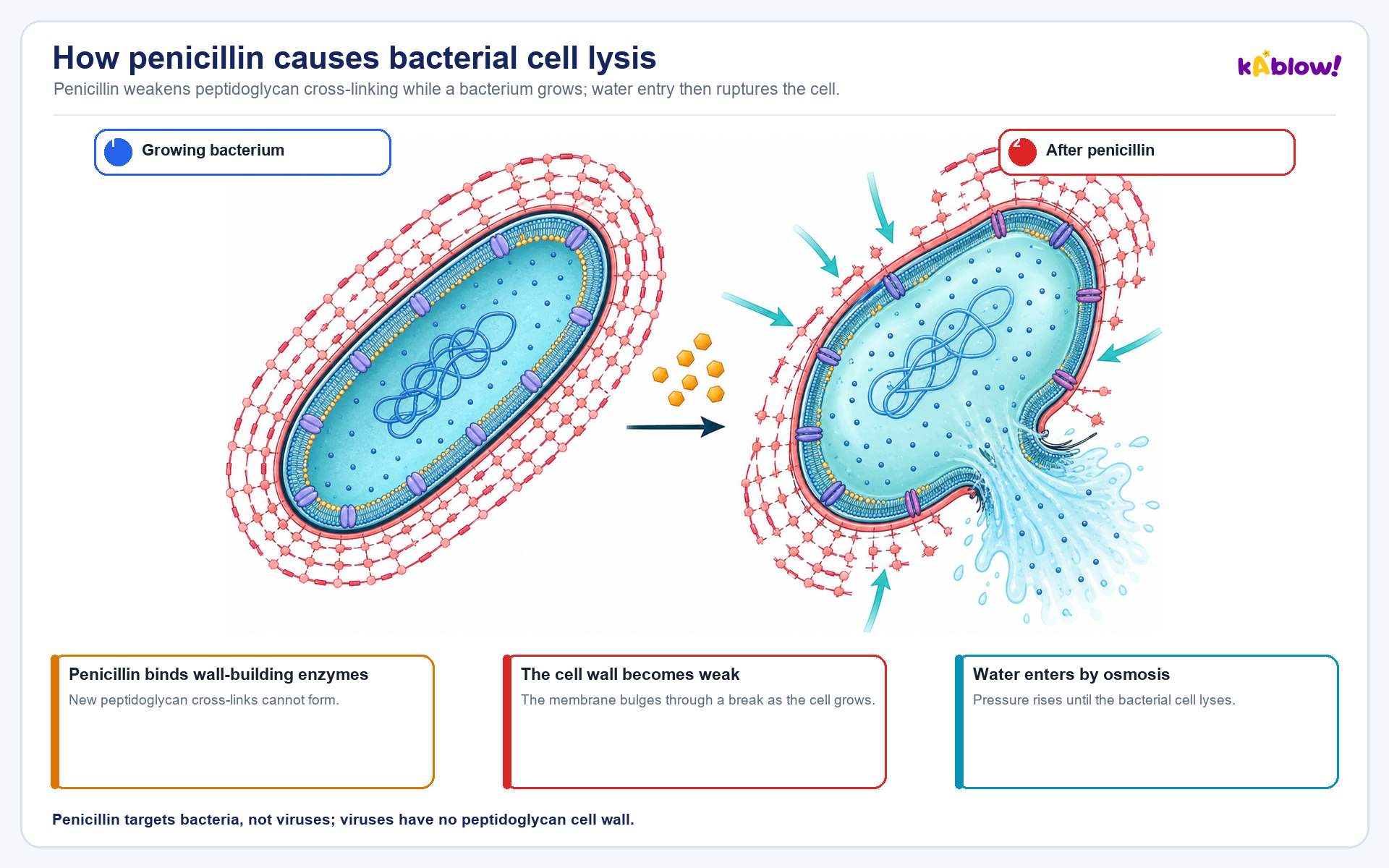
- Antibiotics kill bacteria by damaging bacterial cell walls or interfering with bacterial metabolism.
- They exploit differences between bacterial and human cells to selectively target bacteria.
How antibiotics work: penicillin interferes with bacterial cell wall formation
Antibiotic Resistance
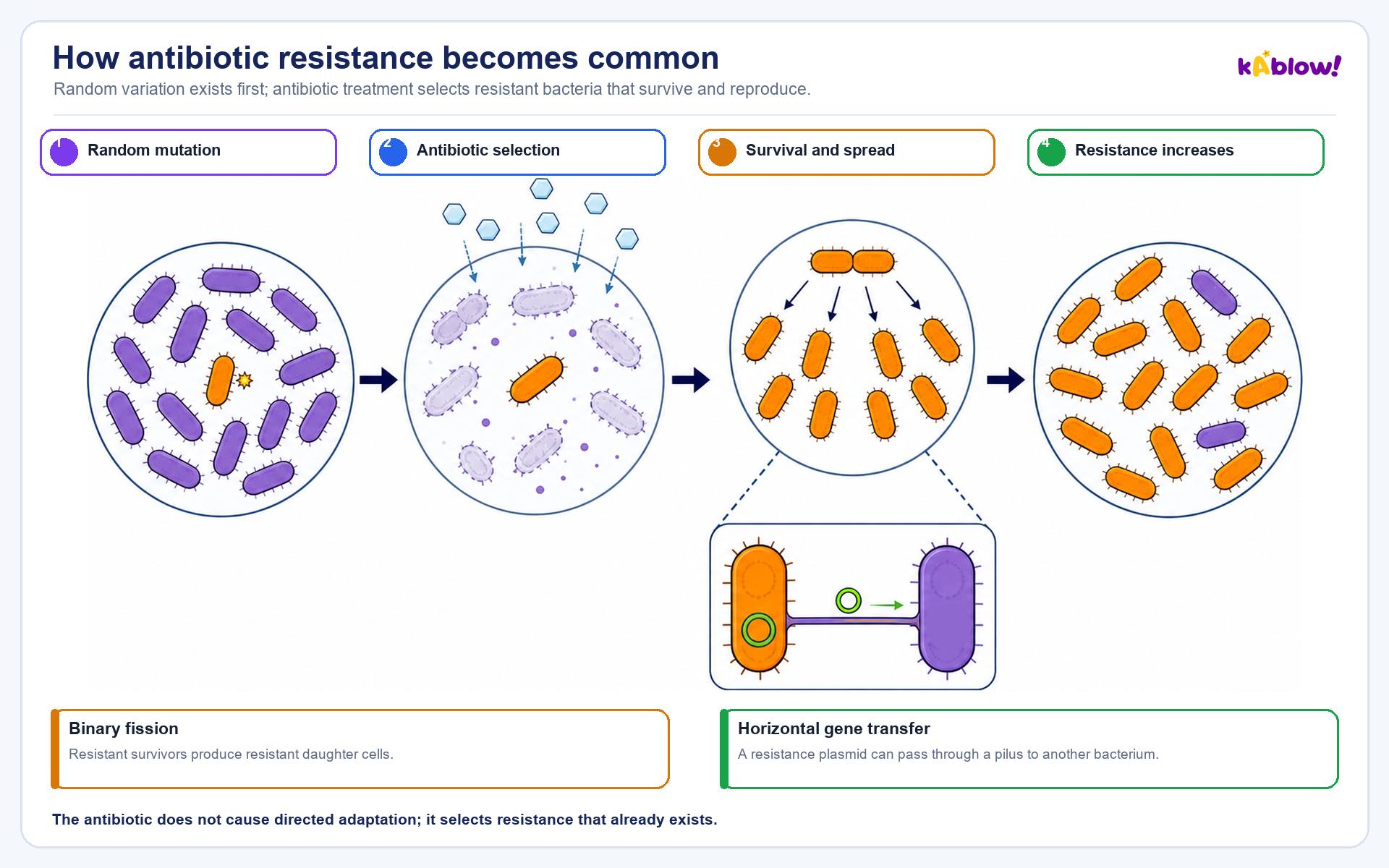
- Antibiotic resistance becomes widespread when bacteria are exposed to antibiotics: non-resistant bacteria die, but resistant ones survive and reproduce.
- Reducing antibiotic use can slow the spread of resistance.
- Doctors prescribe antibiotics only when essential, and never for viral infections.
- MRSA (methicillin-resistant×Staphylococcus aureus×) is a dangerous antibiotic-resistant strain.
- Resistance genes can spread between bacteria by horizontal gene transfer (via plasmids), in addition to being passed on when resistant bacteria reproduce by binary fission.
Development of antibiotic resistance
Preventing Antibiotic Resistance
- Use antibiotics only when prescribed by a doctor.
- Complete the full course of antibiotics as directed.
- Do not use antibiotics for viral infections like colds or flu.
- Good hygiene and vaccination help reduce the need for antibiotics.
Folien
Sign up free to view the lesson slides
Step through every slide for this topic — plus flashcards and revision notes — with a free account.
Übungsfragen
Gratis-Vorschau — 8 von 55 Fragen. Registriere dich, um alle zu sehen.
1.Which of the following best defines a drug?
Easy- AA substance taken into the body that modifies or affects chemical reactions in the body
- BA substance that only kills bacteria
- CA substance that only treats symptoms of disease
- DA substance that is always harmful to the body
2.Antibiotics are effective against which type of pathogen?
Easy- AViruses
- BBacteria
- CFungi
- DProtozoa
3.Antibiotics can be used to treat viral infections.
EasyTrue or false?
4.State one reason why antibiotics do not harm human cells.
Easy5.What is antibiotic resistance?
Easy- AThe ability of bacteria to produce antibiotics
- BThe ability of bacteria to survive exposure to an antibiotic
- CThe ability of viruses to survive antibiotics
- DThe ability of human cells to resist antibiotics
6.Name the antibiotic-resistant strain of bacteria mentioned in the syllabus.
Easy7.Complete the sentence.
EasyAntibiotics kill bacteria but have no effect on ____.
8.Arrange the following events in the correct order to show how antibiotic resistance becomes widespread in a bacterial population.
Medium- Resistant bacteria survive and reproduce
- Exposure to antibiotic kills non-resistant bacteria
- Resistant strain becomes more common
- Some bacteria have a mutation that makes them resistant
Unlock all 55 questions & more
Erstelle ein Gratis-Konto, um alle Fragen, Folien, Karteikarten und Lernnotizen zu diesem Thema zu sehen.