Inheritance Genes And Cell Division
Lerne es beim Spielen
Beantworte diese Fragen für Energie, dann angle und erkunde. Kein Konto nötig.
Lektionsnotizen
Chromosomes, Genes & Proteins
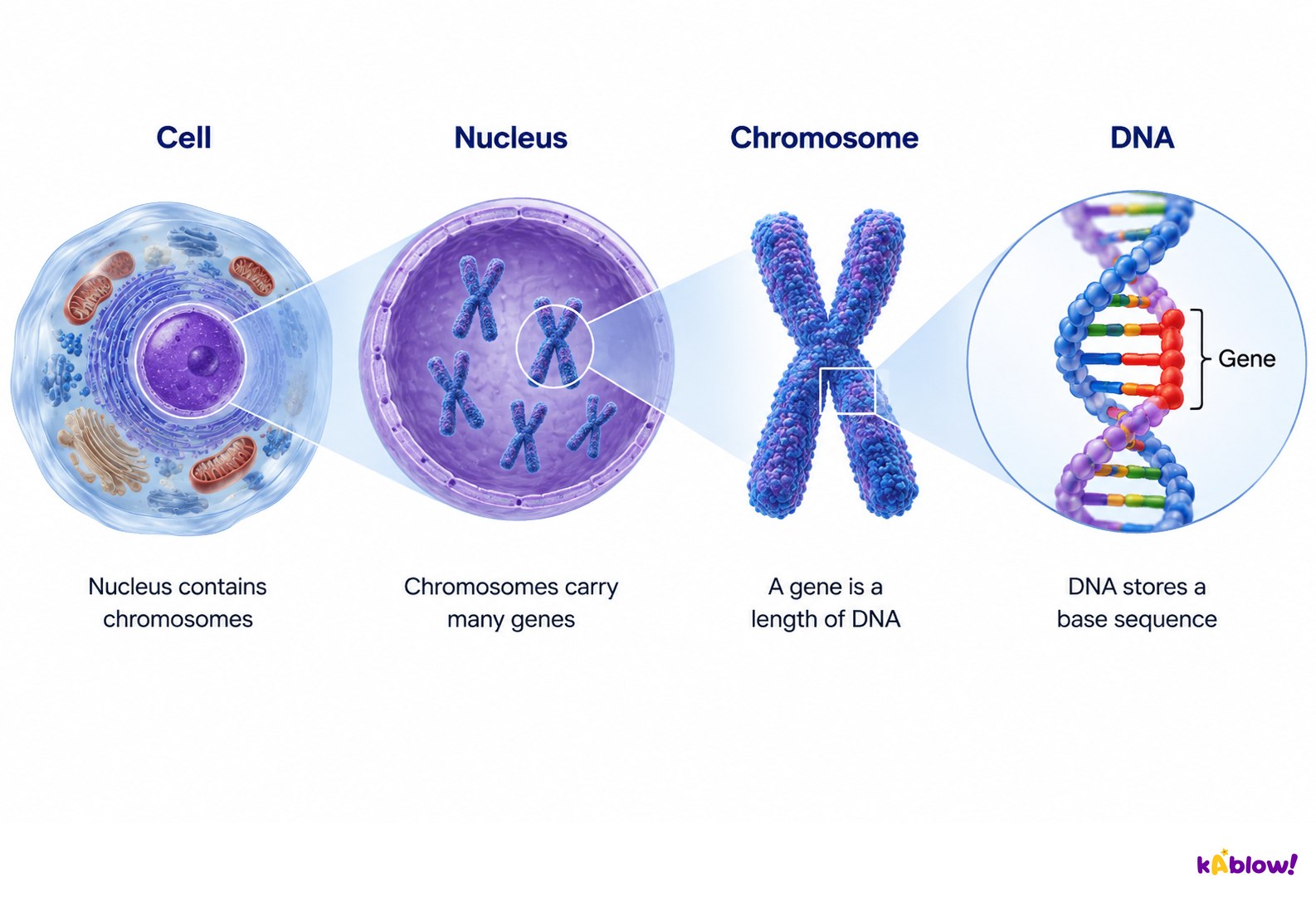
- Chromosomes are thread-like structures in the nucleus made of DNA.
- A gene is a short length of DNA on a chromosome that codes for a specific protein (e.g., collagen, enzyme, hormone).
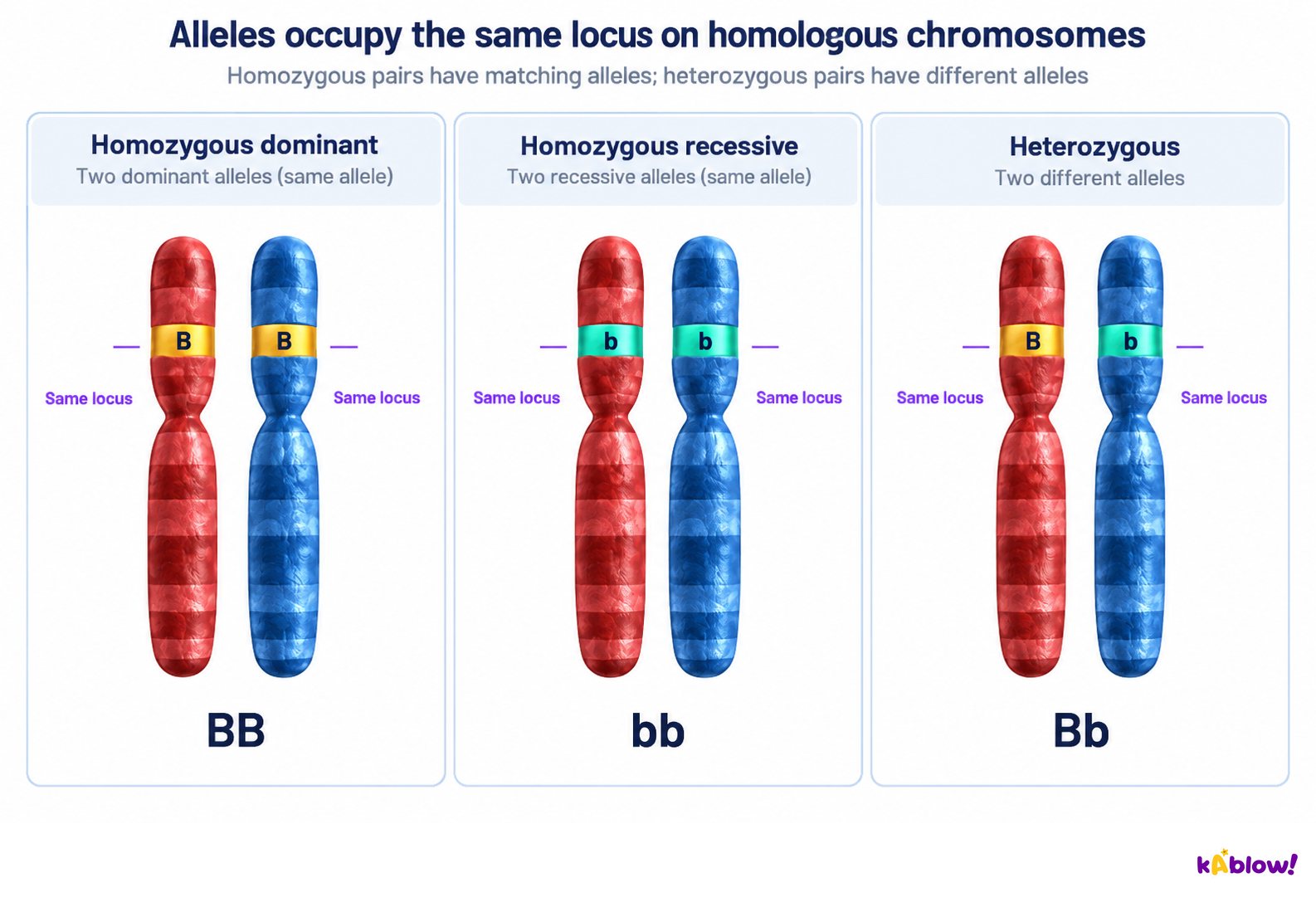
- Alleles are alternative forms of a gene (e.g., blue, green, brown alleles for eye colour).
- Genes determine characteristics by coding for proteins.
The Inheritance of Sex
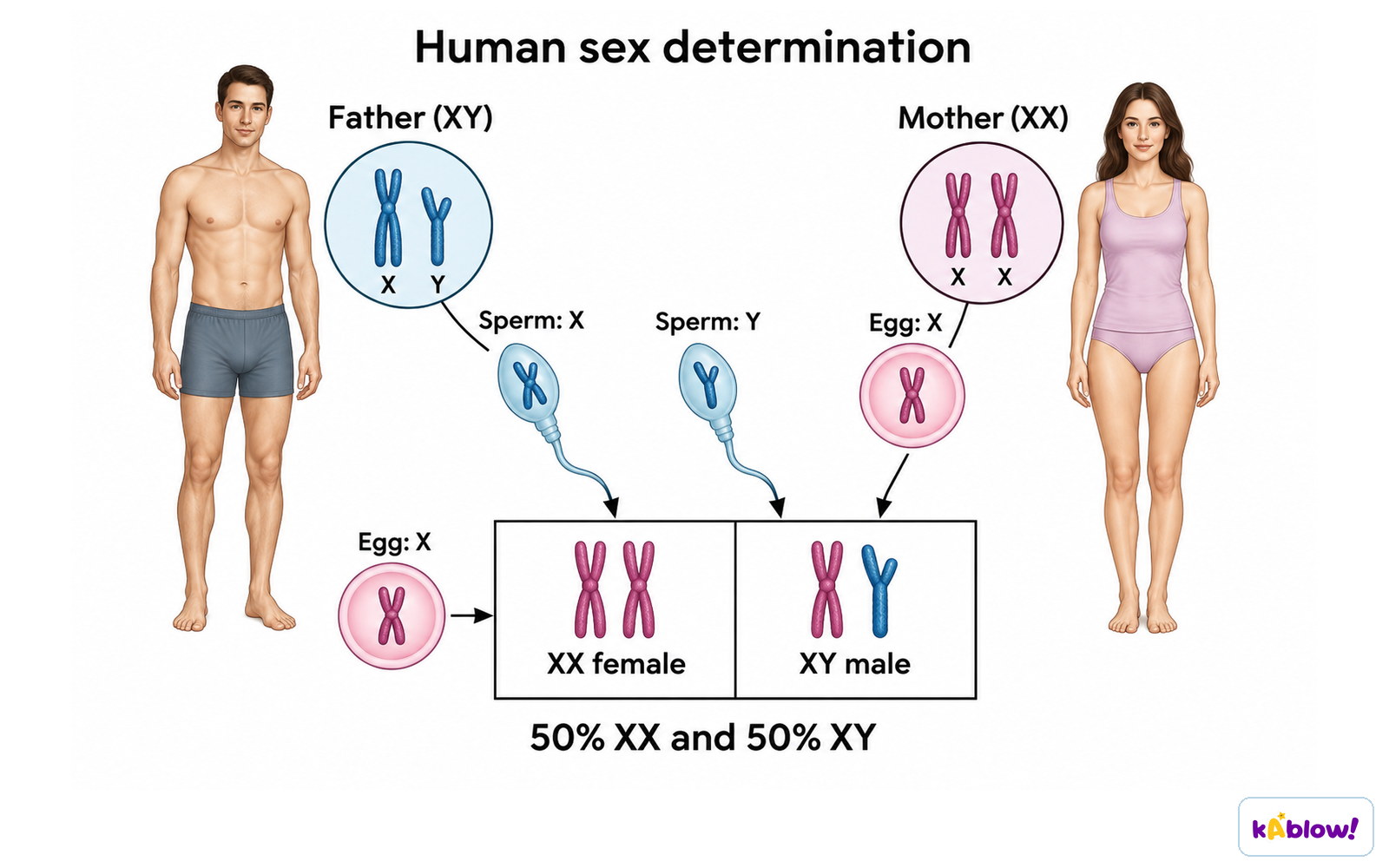
- Sex is determined by sex chromosomes: females are XX, males are XY.
- Only males can pass on a Y chromosome, determining the child's sex.
- Half of sperm carry X, half carry Y; if X fertilises egg (X), offspring is female (XX); if Y fertilises egg, offspring is male (XY).
- Punnett square for sex inheritance shows 50% probability of each sex.
Control of Gene Expression (Extended)
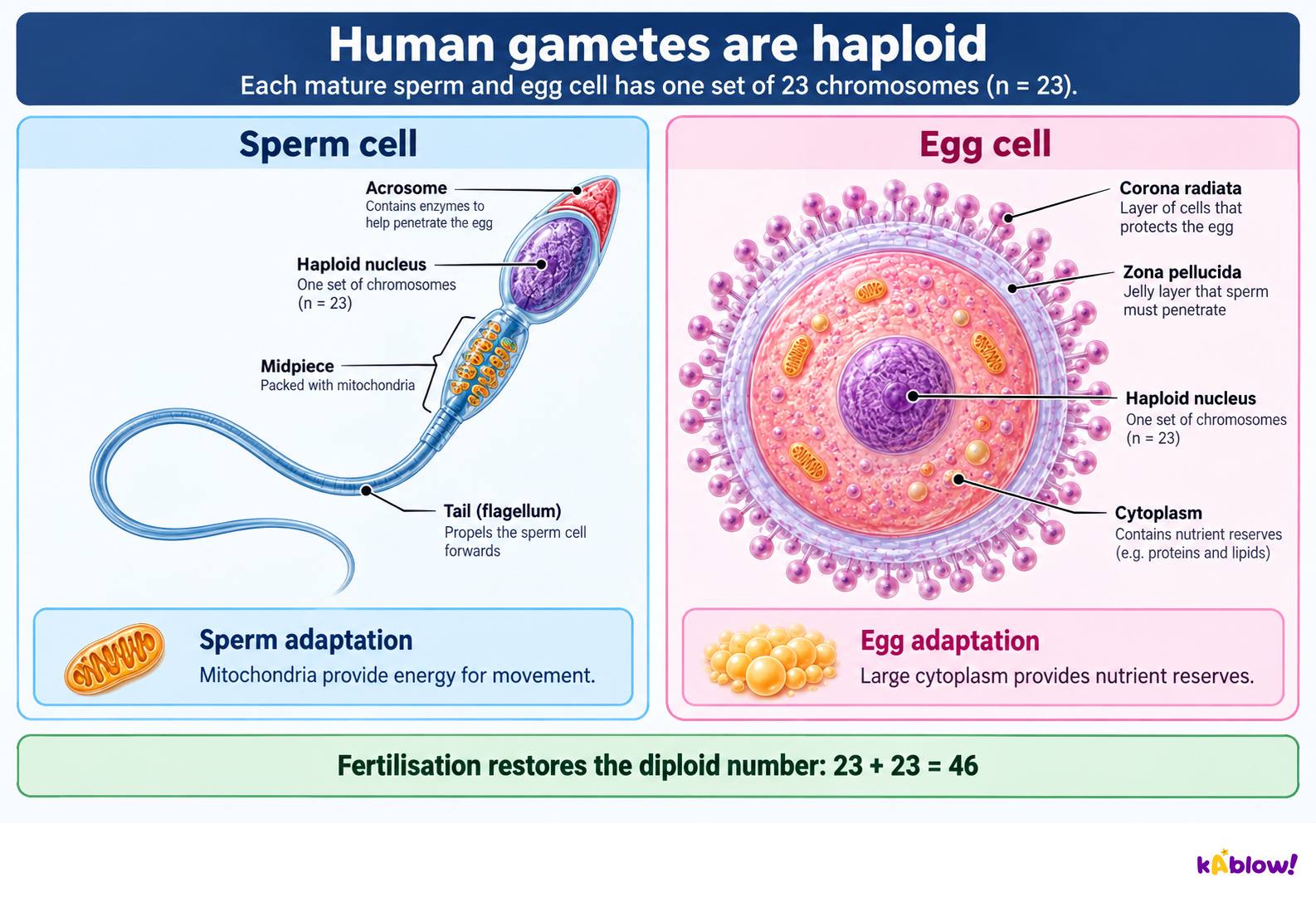
- Diploid cells have two sets of chromosomes (e.g., human body cells: 46 chromosomes).
- Haploid cells have one set of chromosomes (e.g., human gametes: 23 chromosomes).
- Gametes (sperm and egg) are haploid; fertilisation restores diploid number.
Mitosis (Extended)
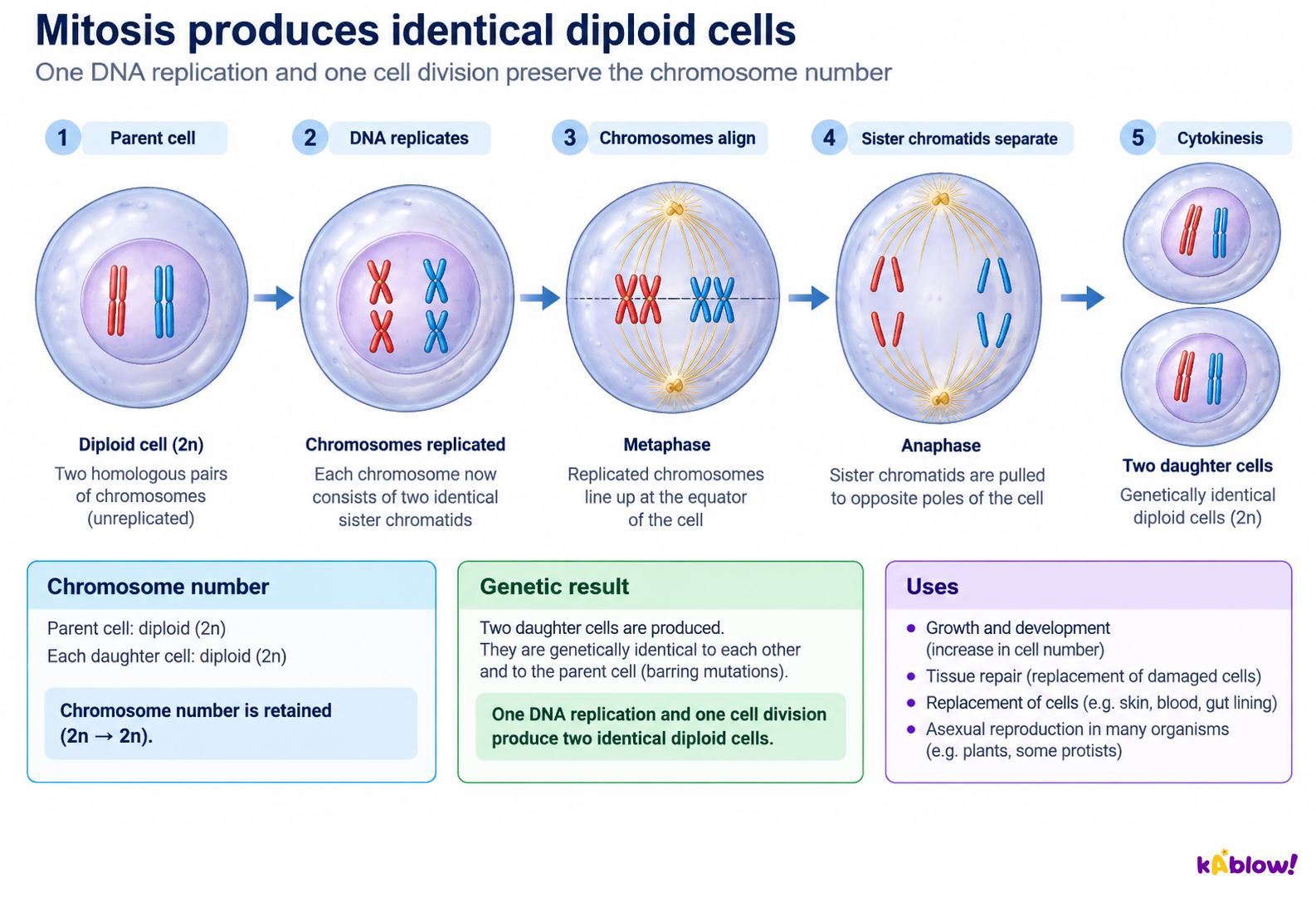
- Mitosis is nuclear division producing genetically identical diploid cells.
- Chromosomes replicate before division, ensuring each daughter cell has the same number of chromosomes.
- Mitosis is used for growth, repair of damaged tissues, replacement of cells, and asexual reproduction.
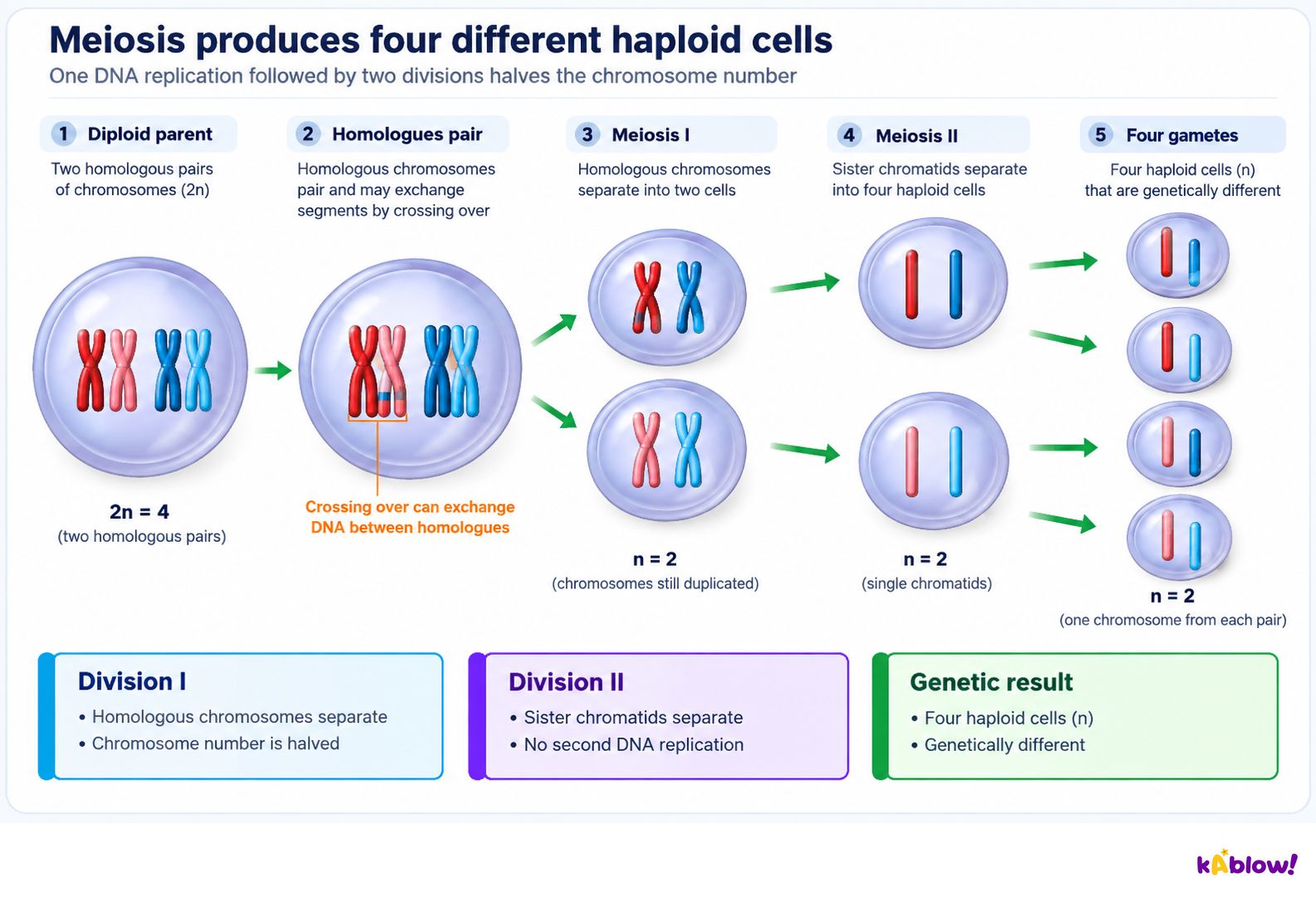
Meiosis (Extended)
- Meiosis is a reduction division that halves chromosome number from diploid to haploid.
- It produces four genetically different haploid cells (gametes).
- Meiosis ensures genetic variation and maintains constant chromosome number after fertilisation.
Monohybrid Inheritance
- Inheritance is the transmission of genetic information from parents to offspring.
- Genotype is the combination of alleles; phenotype is the observable characteristic.
- Dominant allele masks a recessive allele; recessive only shows when homozygous.
- Homozygous = two identical alleles; heterozygous = two different alleles.
- Monohybrid inheritance involves a single gene; Punnett squares predict offspring ratios.
- Example: tall (T) dominant over short (t); cross TT × tt gives all Tt (tall); Tt × Tt gives 3:1 ratio tall:short.
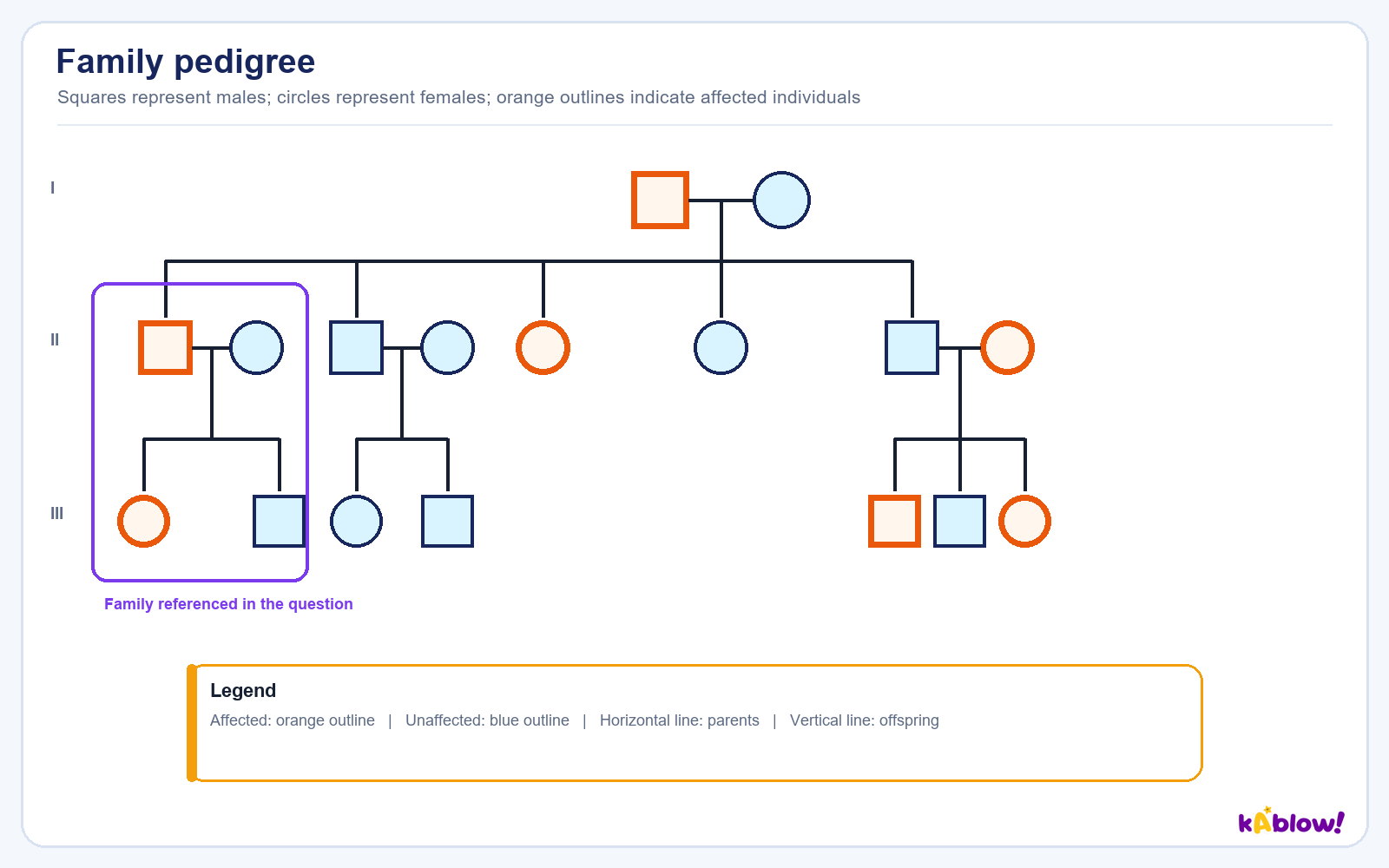
- Pedigree charts trace inheritance patterns through families, using squares (males) and circles (females).
Folien
Sign up free to view the lesson slides
Step through every slide for this topic — plus flashcards and revision notes — with a free account.
Übungsfragen
Gratis-Vorschau — 8 von 59 Fragen. Registriere dich, um alle zu sehen.
1.Where are chromosomes located in a cell?
Easy- AIn the cytoplasm
- BIn the nucleus
- COn the cell membrane
- DIn the mitochondria
2.What is a short length of DNA that codes for a specific protein called?
Easy3.Biological females have the sex chromosomes XY.
EasyTrue or false?
4.Complete the sentence about cell division.
EasyMitosis produces genetically ____ cells.
5.How many chromosomes are in a human diploid cell?
Easy- A46
- B41
- C51
- D56
6.Match each cell division type to its description.
Medium- Mitosis
- Meiosis
- Produces genetically identical cells
- Produces genetically different cells
- Reduces chromosome number by half
7.Arrange the following events in the correct order for meiosis:
Medium- Chromosomes replicate
- Homologous chromosomes separate
- Cell divides twice
- Four haploid cells are formed
8.In a monohybrid cross between two heterozygous tall plants (Tt x Tt), what is the expected phenotypic ratio?
Medium- A1:2:1
- B3:1
- C1:1
- D9:3:3:1
Unlock all 59 questions & more
Erstelle ein Gratis-Konto, um alle Fragen, Folien, Karteikarten und Lernnotizen zu diesem Thema zu sehen.