Solids Liquids And Gases
Lerne es beim Spielen
Beantworte diese Fragen für Energie, dann angle und erkunde. Kein Konto nötig.
Lektionsnotizen
Kinetic Theory & States of Matter
- The kinetic theory describes matter as tiny particles in constant motion.
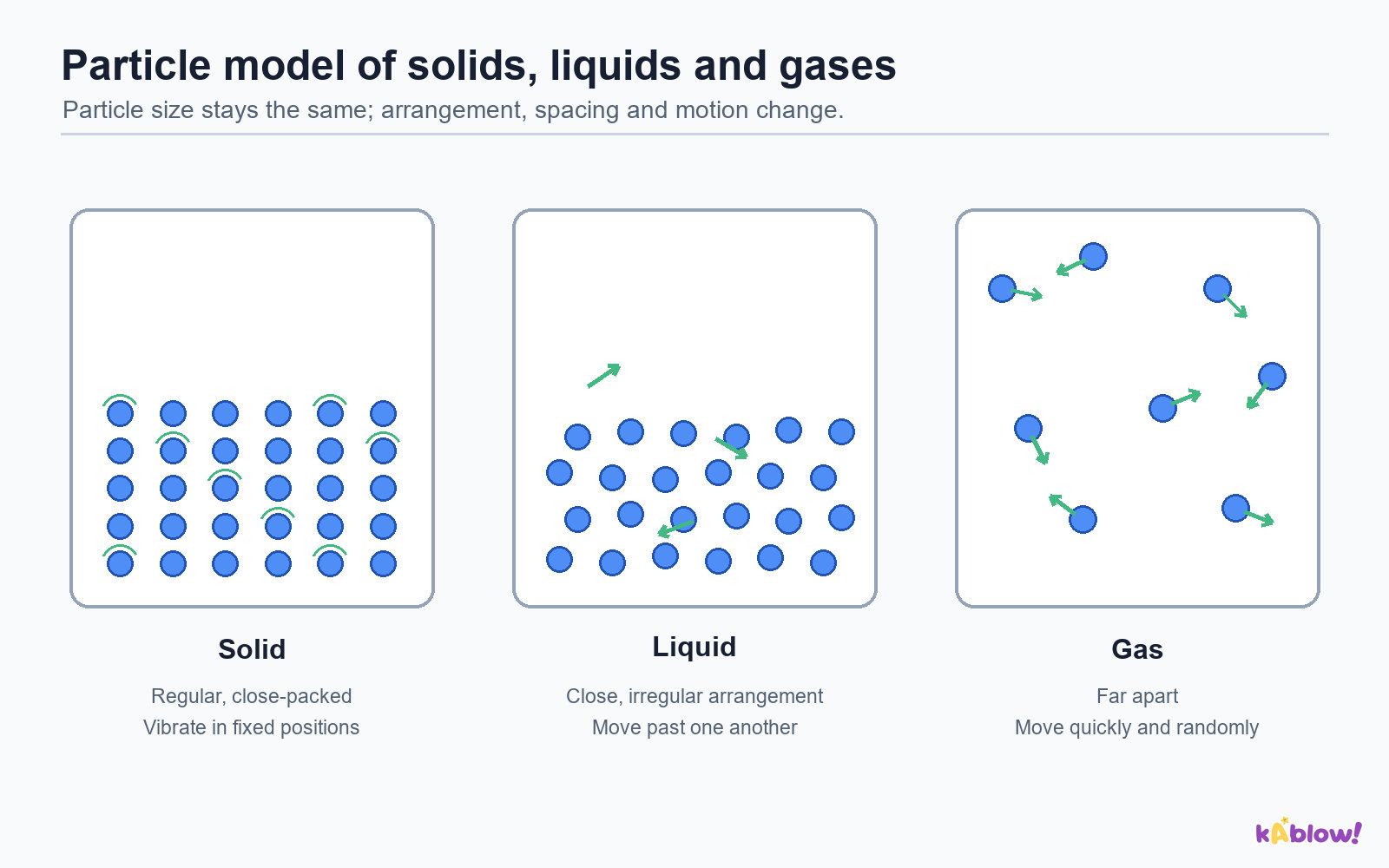
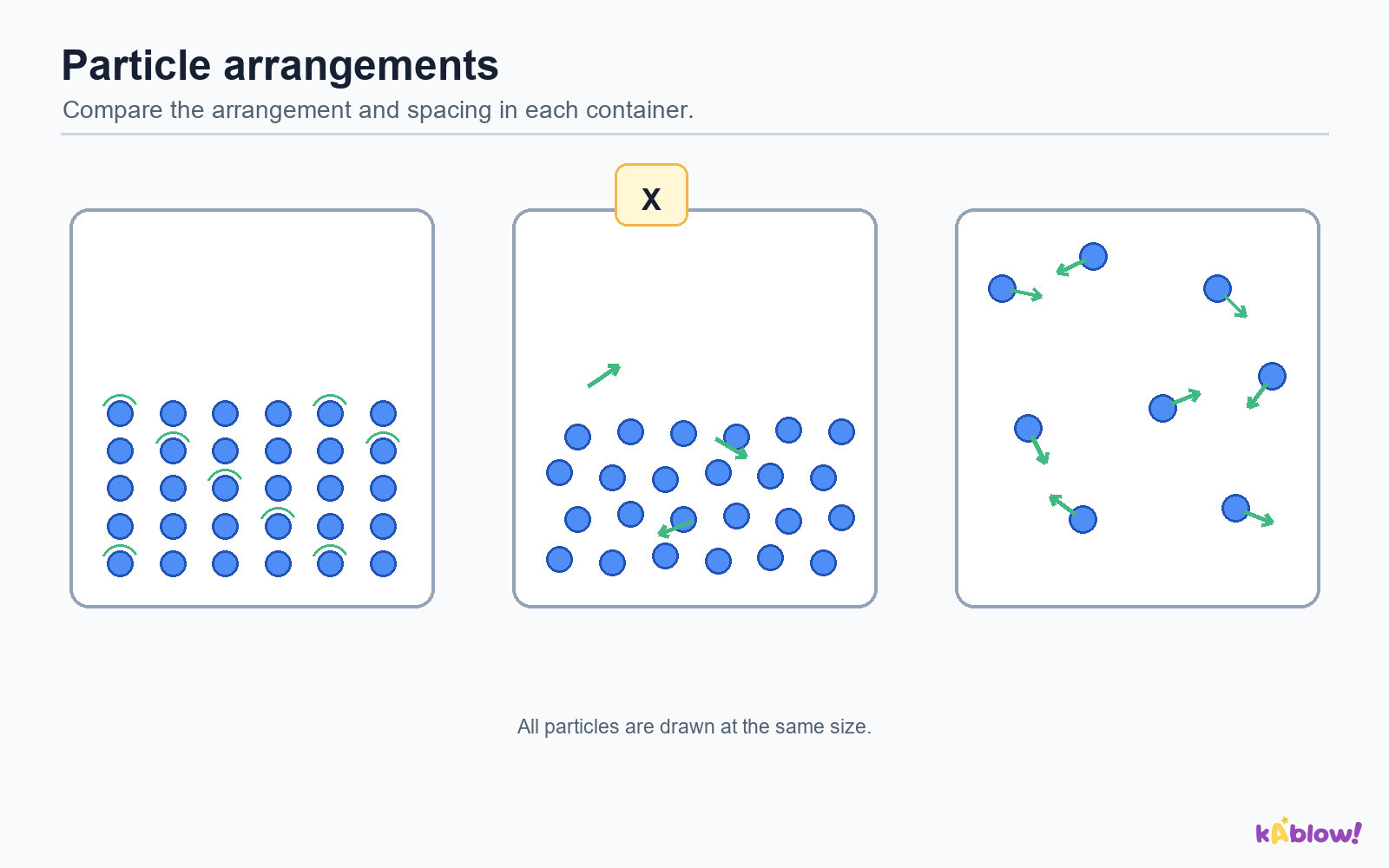
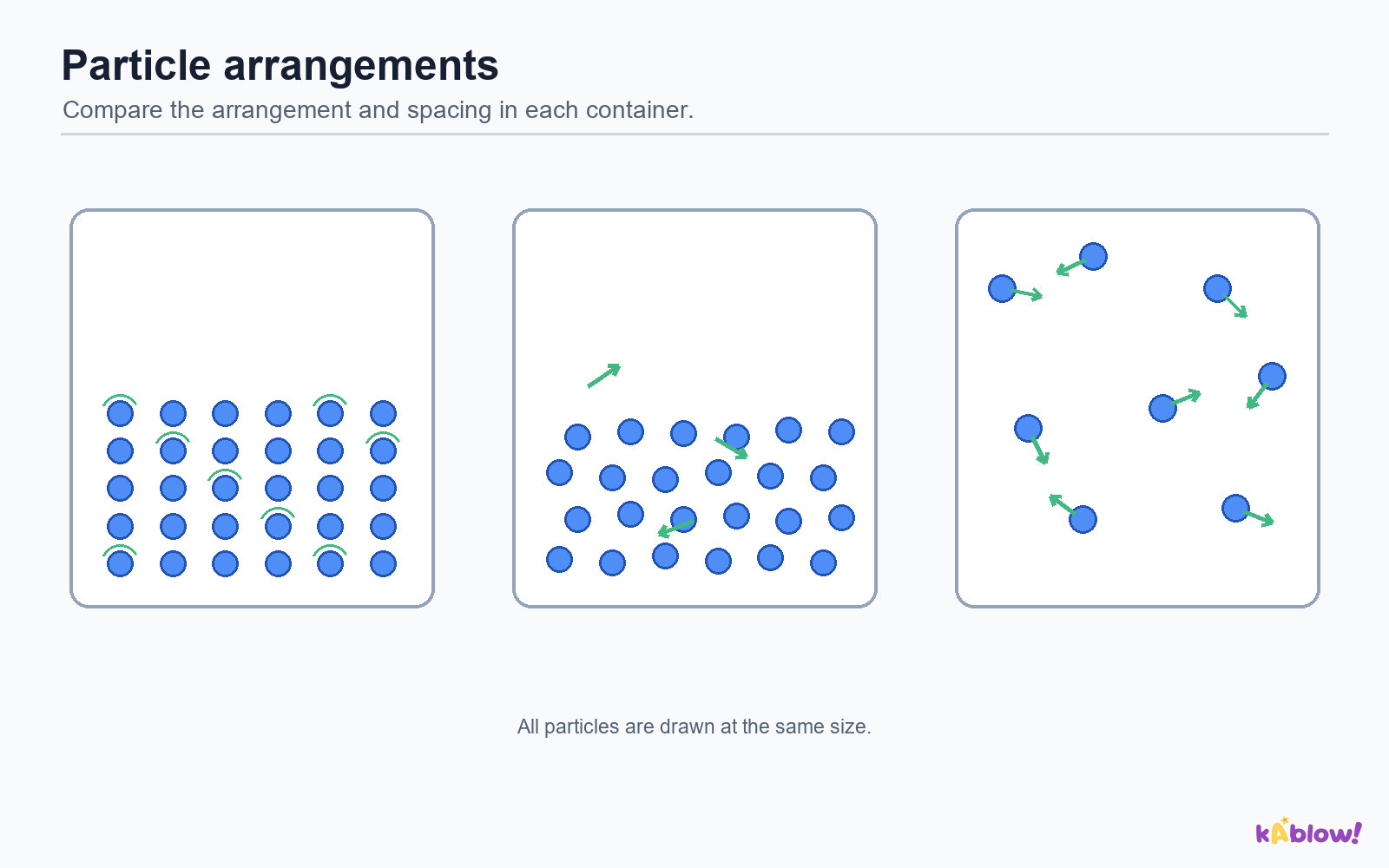
- Solids: particles packed closely in a fixed, regular pattern; vibrate in position; high density.
- Liquids: particles close but randomly arranged; slide past each other; adopt container shape; medium density.
- Gases: particles far apart, move randomly and quickly (~500 m/s); low density; easily compressed.
- Particle energy increases from solid (low) → liquid → gas (highest).
Particle arrangement in solids, liquids, and gases
Changes of State
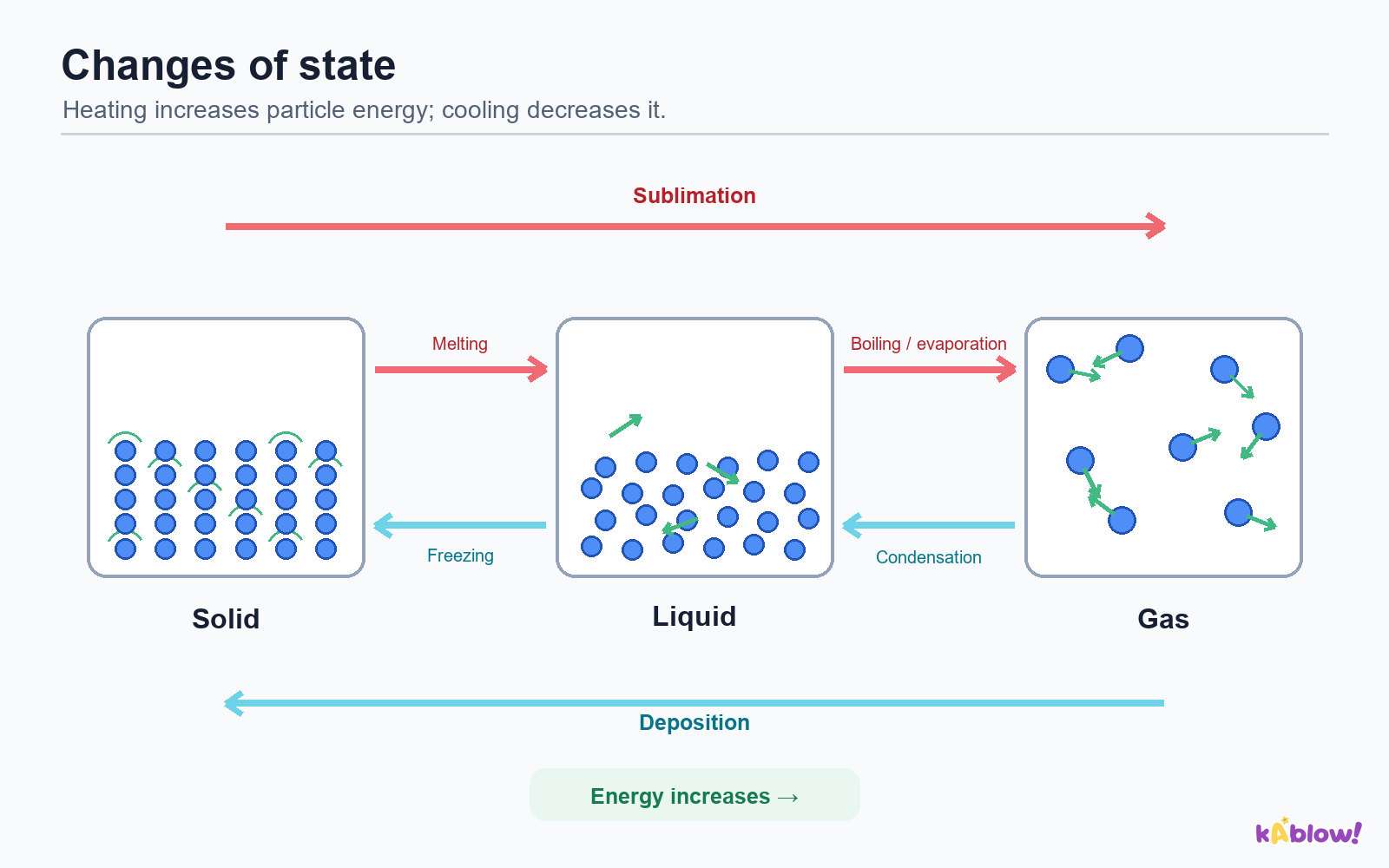
- Melting: solid → liquid at a specific melting point; requires heat to increase particle kinetic energy.
- Freezing: liquid → solid at the same temperature as melting point.
- Boiling: liquid → gas at a specific boiling point; bubbles form throughout the liquid.
- Evaporation: liquid → gas at the surface, below boiling point; faster with larger surface area and higher temperature.
- Condensation: gas → liquid on cooling; particles lose energy and group together.
- State changes are reversible (⇌).
The state changes
Heating & Cooling Curves (Extended)
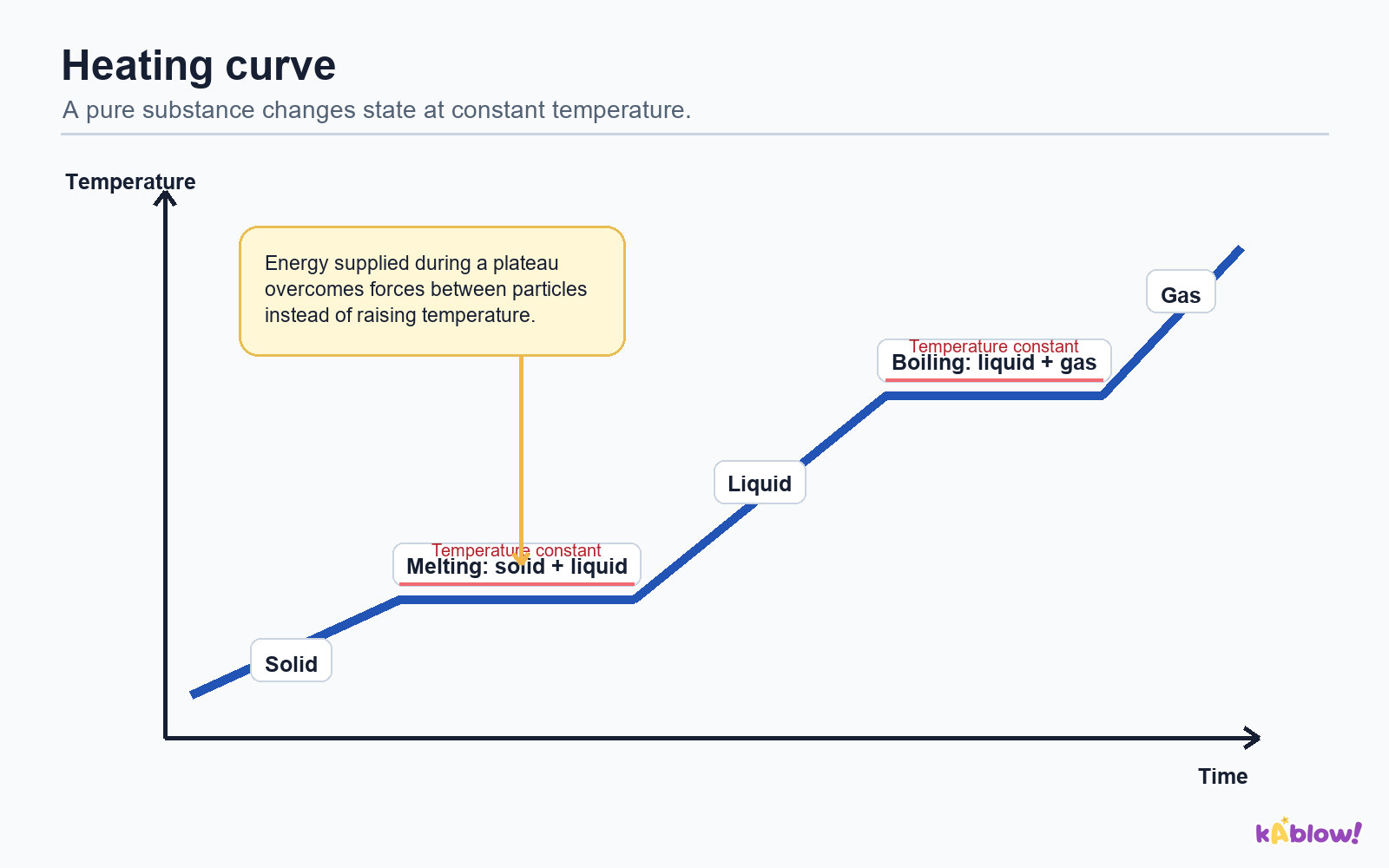
- A heating curve shows temperature vs. time as a substance is heated.
- Horizontal sections indicate a change of state with no temperature change (energy used to overcome forces).
- A cooling curve is the mirror image of a heating curve.
A heating curve
Pressure & Temperature in Gases
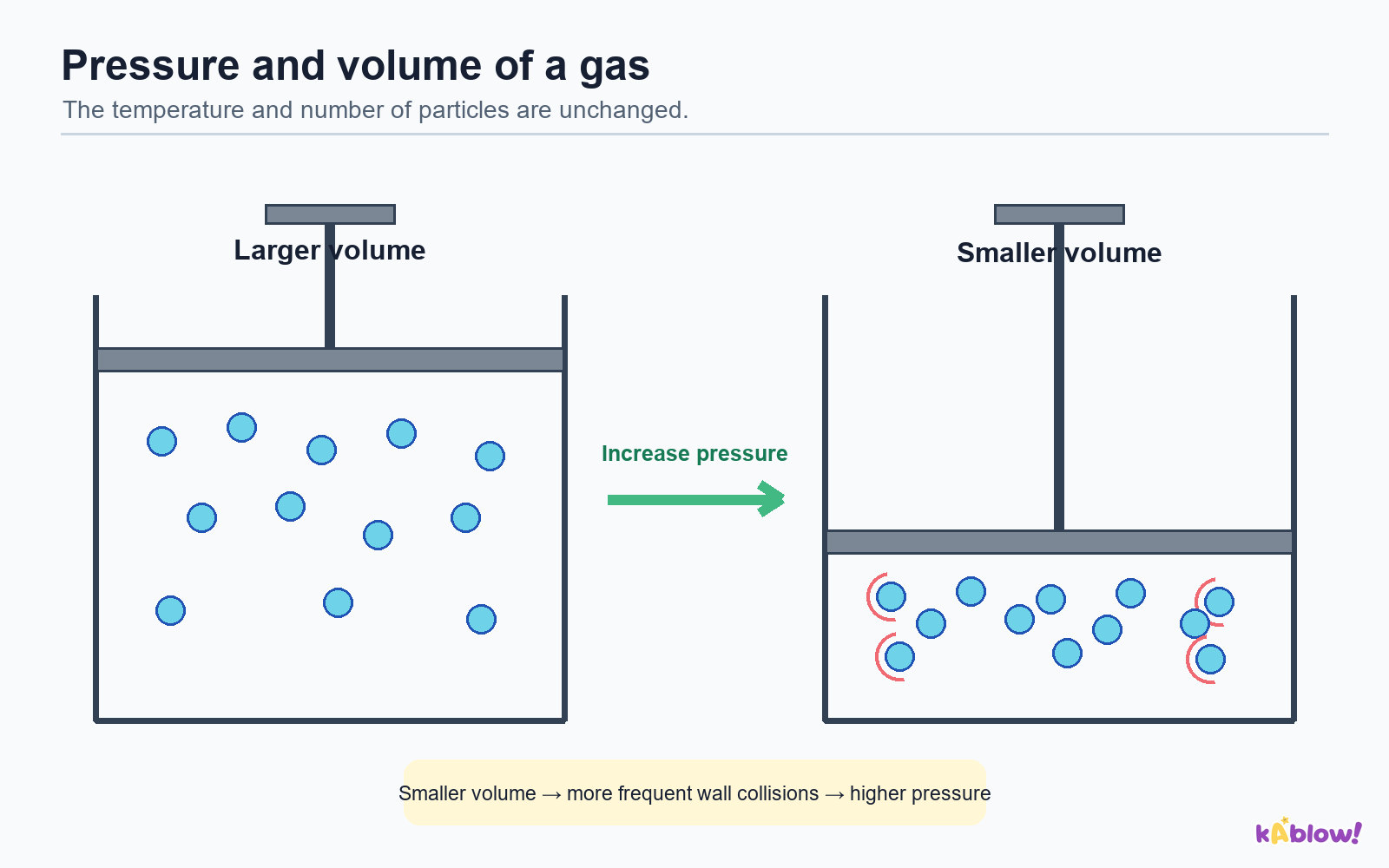
- Gas pressure is caused by particles colliding with container walls.
- Increasing temperature increases particle kinetic energy → more frequent collisions → volume expands if container flexible.
- Increasing pressure (same number of particles in smaller volume) decreases volume; particles hit walls more often.
- If pressure is too high, container may leak or explode.
Pressure increases as volume decreases
Diffusion
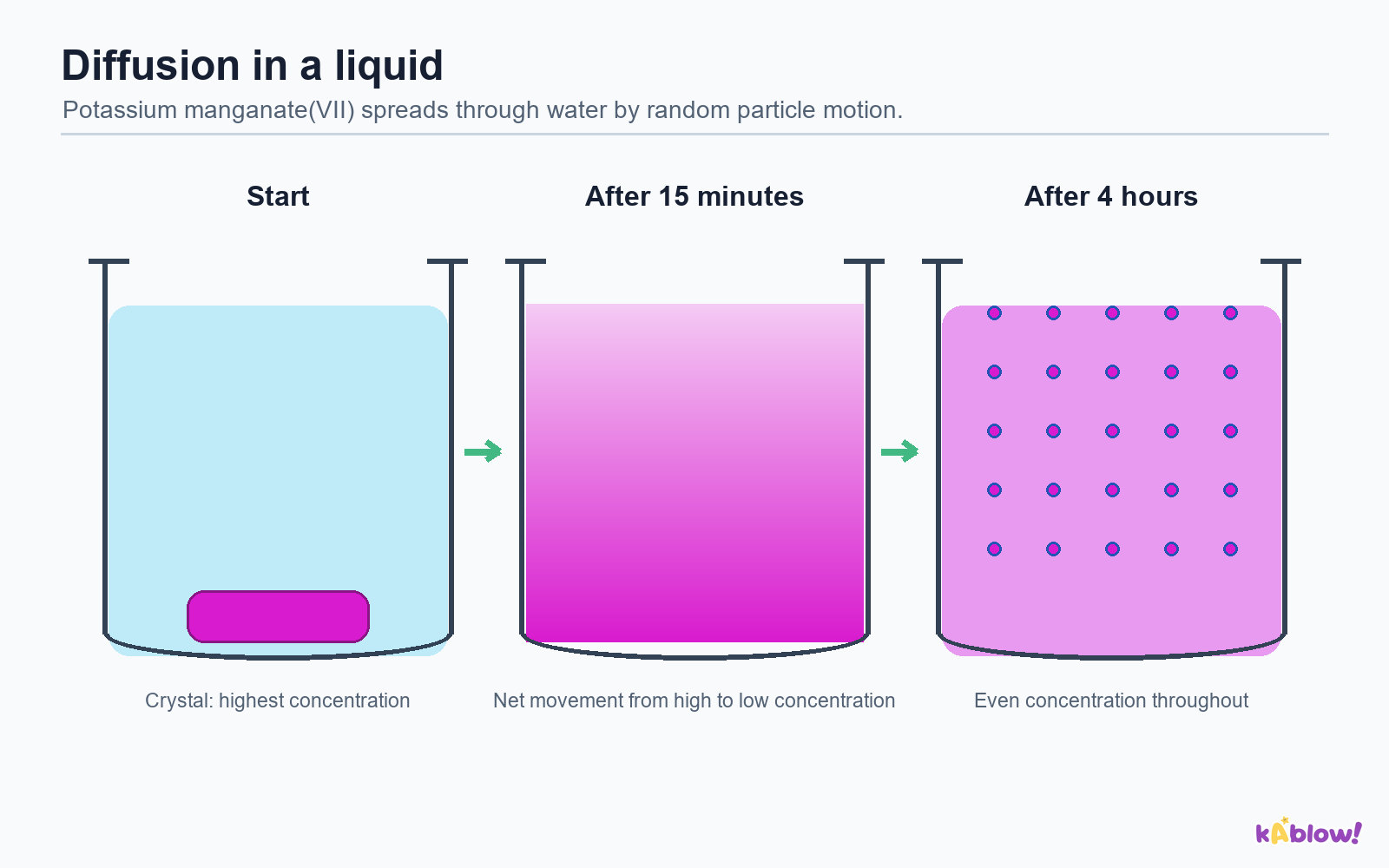
- Diffusion: net movement of particles from high to low concentration due to random motion.
- Occurs in liquids and gases; no energy input required; faster at higher temperatures.
- Diffusion is faster in gases than liquids because gas particles have more kinetic energy.
- Example: potassium manganate(VII) in water spreads until evenly coloured.
Diffusion of potassium manganate(VII) in water
Diffusion & Molecular Mass (Extended)
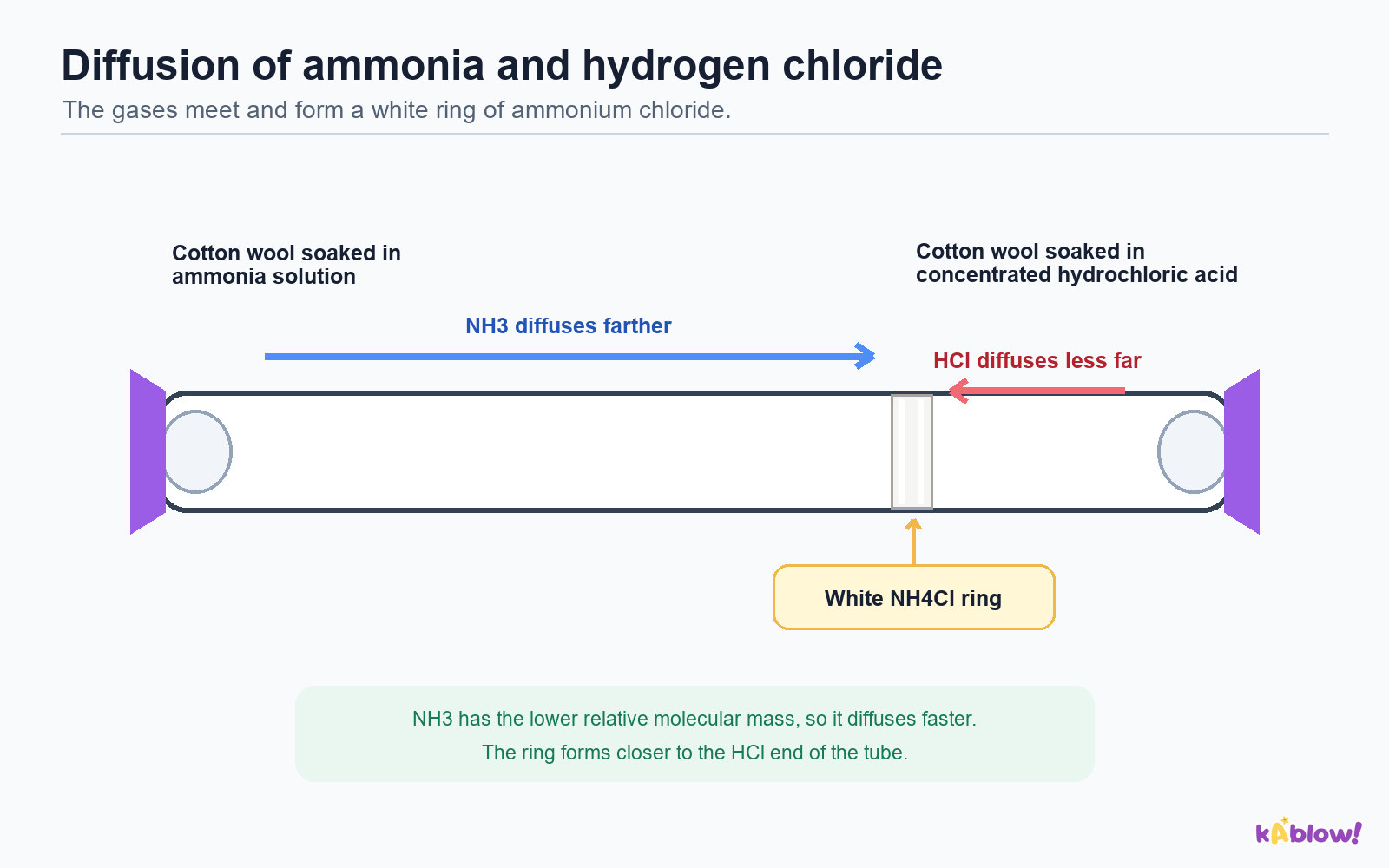
- At the same temperature, gases with lower relative molecular mass diffuse faster.
- Example: ammonia (Mᵣ = 17) diffuses faster than hydrogen chloride (Mᵣ = 36.5).
- In a tube, NH₃ and HCl react to form NH₄Cl; the white ring forms closer to the HCl end.
Diffusion of ammonia and hydrogen chloride
Folien
Sign up free to view the lesson slides
Step through every slide for this topic — plus flashcards and revision notes — with a free account.
Übungsfragen
Gratis-Vorschau — 8 von 51 Fragen. Registriere dich, um alle zu sehen.
1.Which statement about the arrangement of particles in a solid is correct?
Easy- AParticles are far apart and move randomly
- BParticles are close together and arranged randomly
- CParticles are close together in a fixed regular pattern
- DParticles are far apart and vibrate in fixed positions
2.Which statement about the movement of particles in a liquid is correct?
Easy- AParticles vibrate about fixed positions
- BParticles move around each other
- CParticles move quickly in all directions
- DParticles do not move
3.In a gas, the particles are far apart and move randomly.
EasyTrue or false?
4.State the term for the change of state from a solid to a liquid.
Easy5.Water boils at 100 °C. What is the boiling point of water in Kelvin?
Easy- A410
- B373
- C336
- D447
6.Complete the sentence about diffusion.
EasyDiffusion is the movement of particles from an area of ____ concentration to an area of ____ concentration.
7.Match each state of matter with its particle arrangement.
Medium- Solid
- Liquid
- Gas
- Regular arrangement, closely packed
- Randomly arranged, close together
- Randomly arranged, far apart
8.Ammonia (Mr = 17) and hydrogen chloride (Mr = 36.5) diffuse from opposite ends of a tube. Where does the white smoke of ammonium chloride form?
Hard- AExactly in the middle of the tube
- BCloser to the ammonia end
- CCloser to the hydrogen chloride end
- DAt both ends equally
Unlock all 51 questions, flashcards & more
Erstelle ein Gratis-Konto, um alle Fragen, Folien, Karteikarten und Lernnotizen zu diesem Thema zu sehen.