Natural selection
Lerne es beim Spielen
Beantworte diese Fragen für Energie, dann angle und erkunde. Kein Konto nötig.
Lektionsnotizen
What is natural selection?
- Natural selection explains how species change over time.
- It is driven by variation, competition, and survival of the fittest.
- Individuals with traits best suited to their environment are more likely to survive and reproduce.
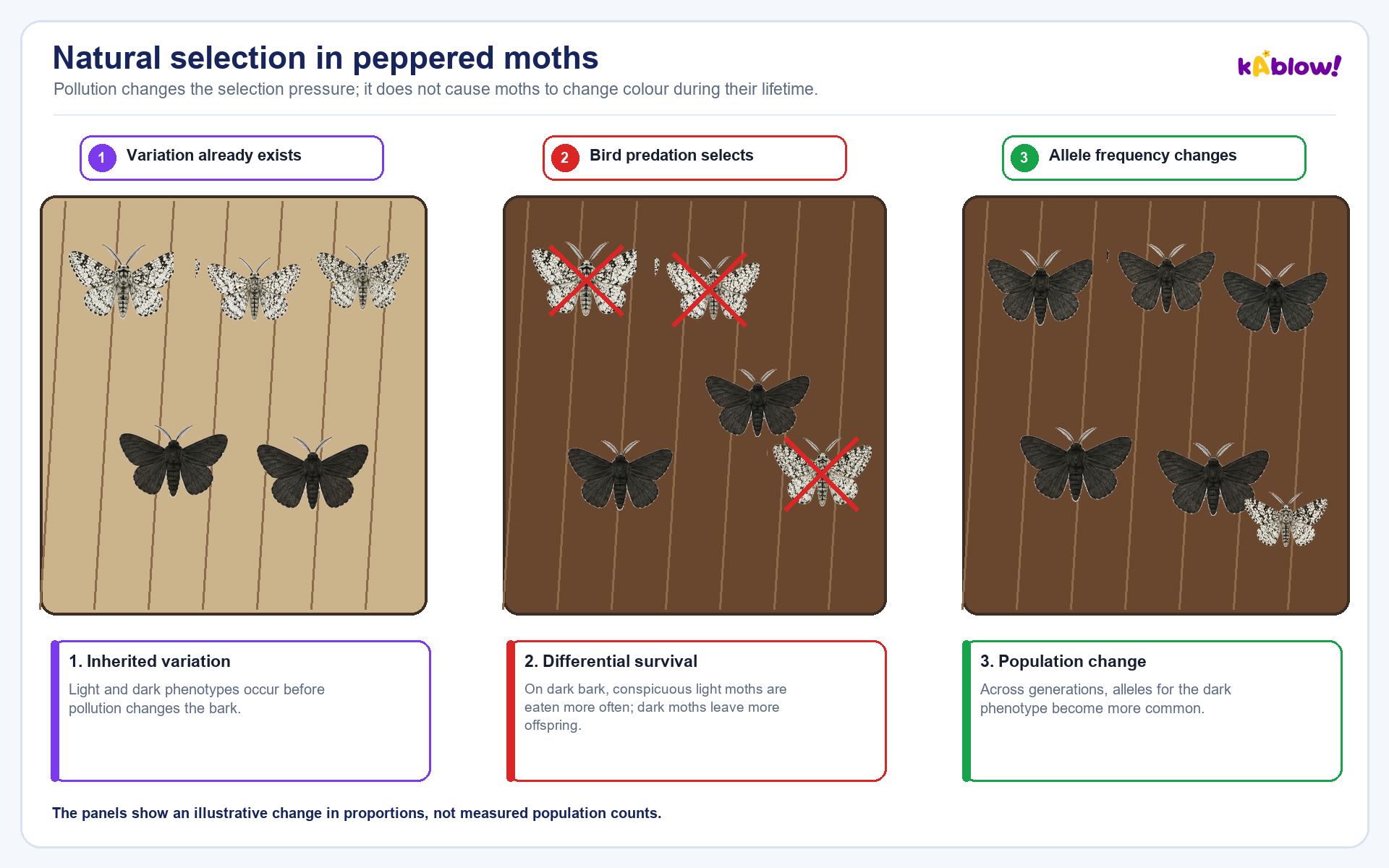
Natural selection in a peppered moth population after pollution darkens the bark: the variation already exists, birds eat the moths that now stand out, and the dark form becomes more common.
Variation and competition
- Variation means individuals in a species are not identical; differences come from their genes.
- Resources like food, water, and shelter are limited, leading to competition.
- Organisms with advantageous traits are more likely to survive and reproduce.
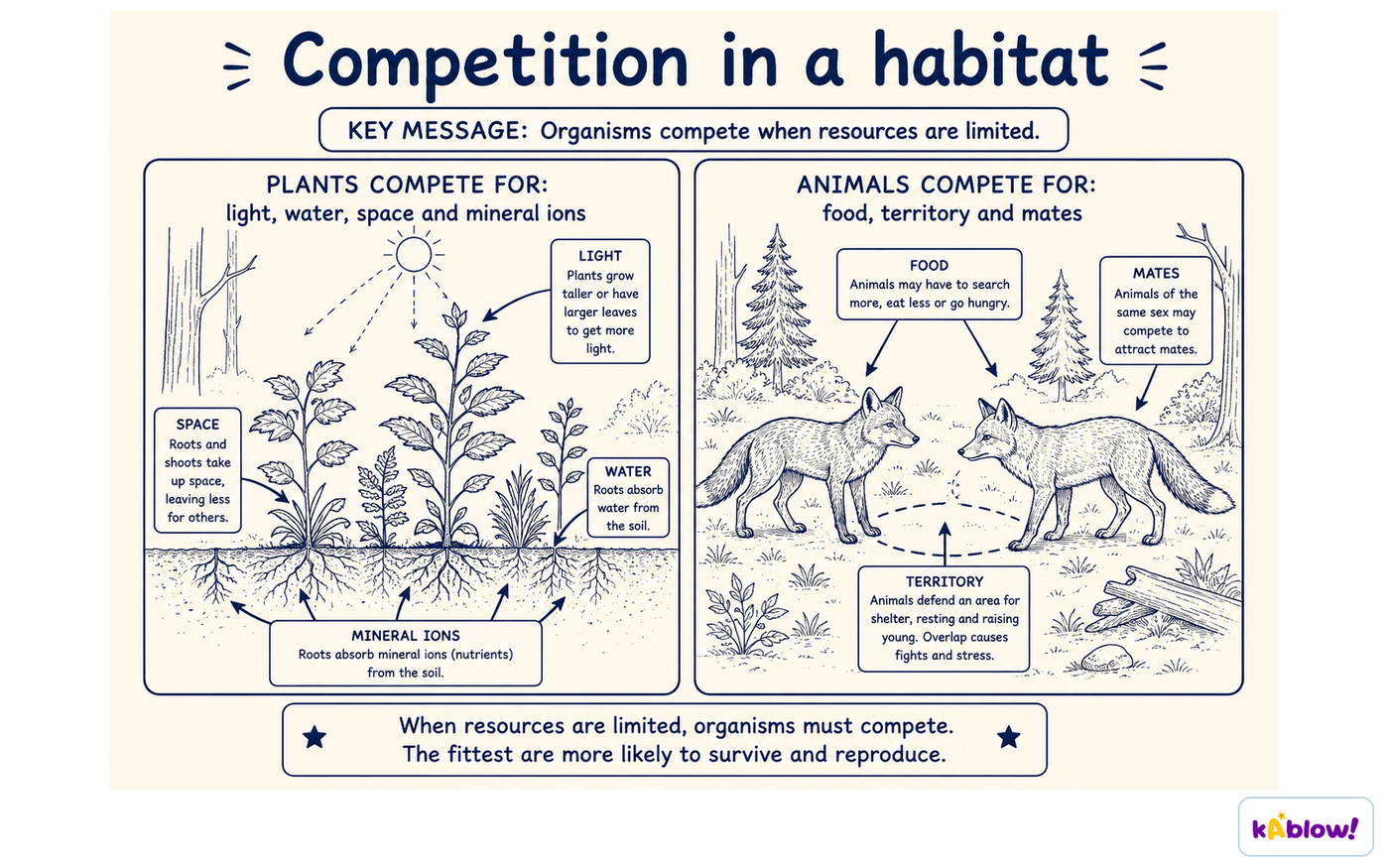
Organisms compete when resources are limited. Plants compete for light, water, space and mineral ions; animals compete for food, territory and mates.
Survival of the fittest
- 'Survival of the fittest' means the best-adapted individuals survive.
- 'Fittest' does not mean strongest or fastest; it means best matched to the environment.
- Surviving longer increases the chance of reproducing and passing on genes.
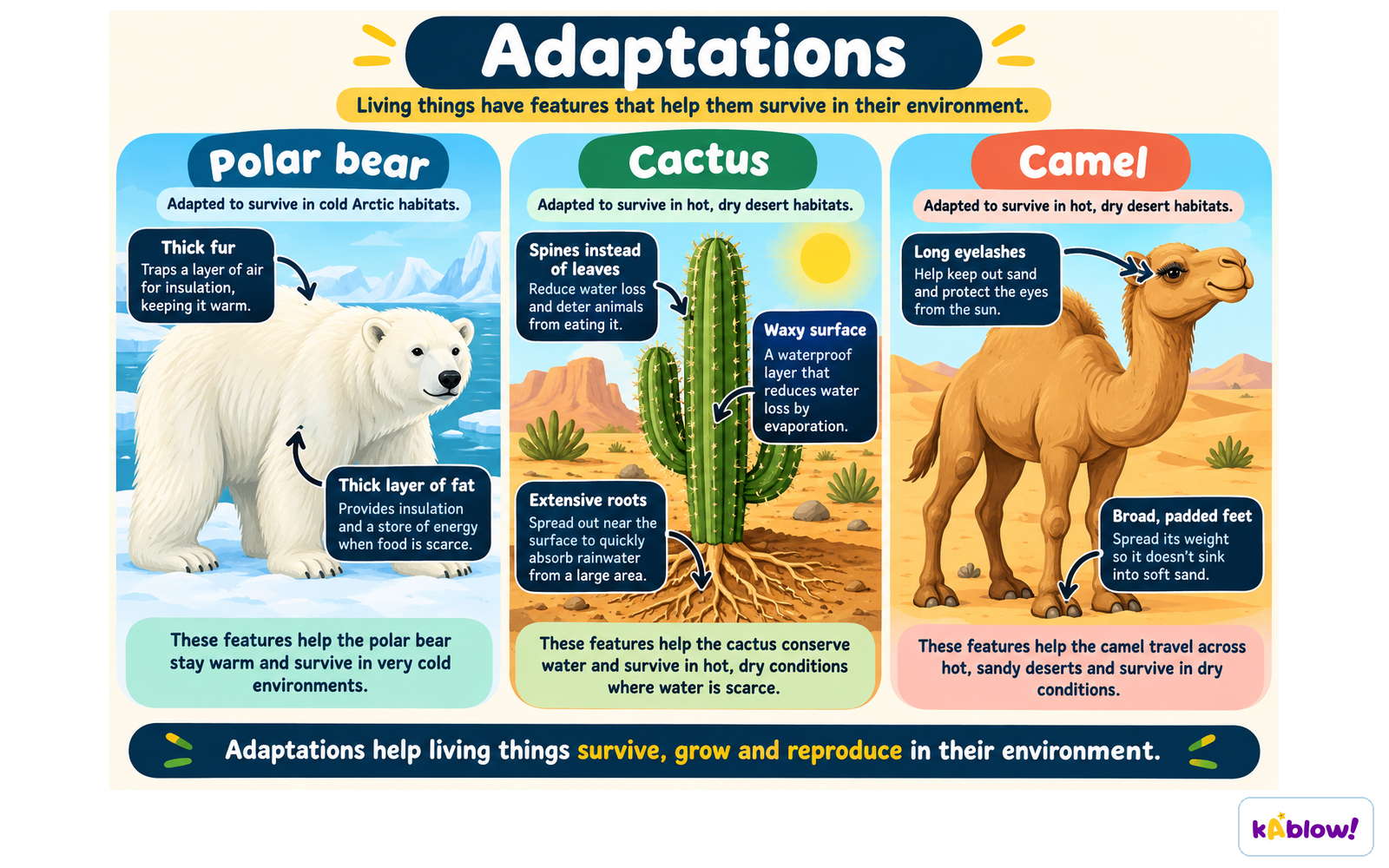
Polar bears, cacti and camels have features suited to their environments. Being well adapted helps an organism survive and reproduce.
Examples of natural selection
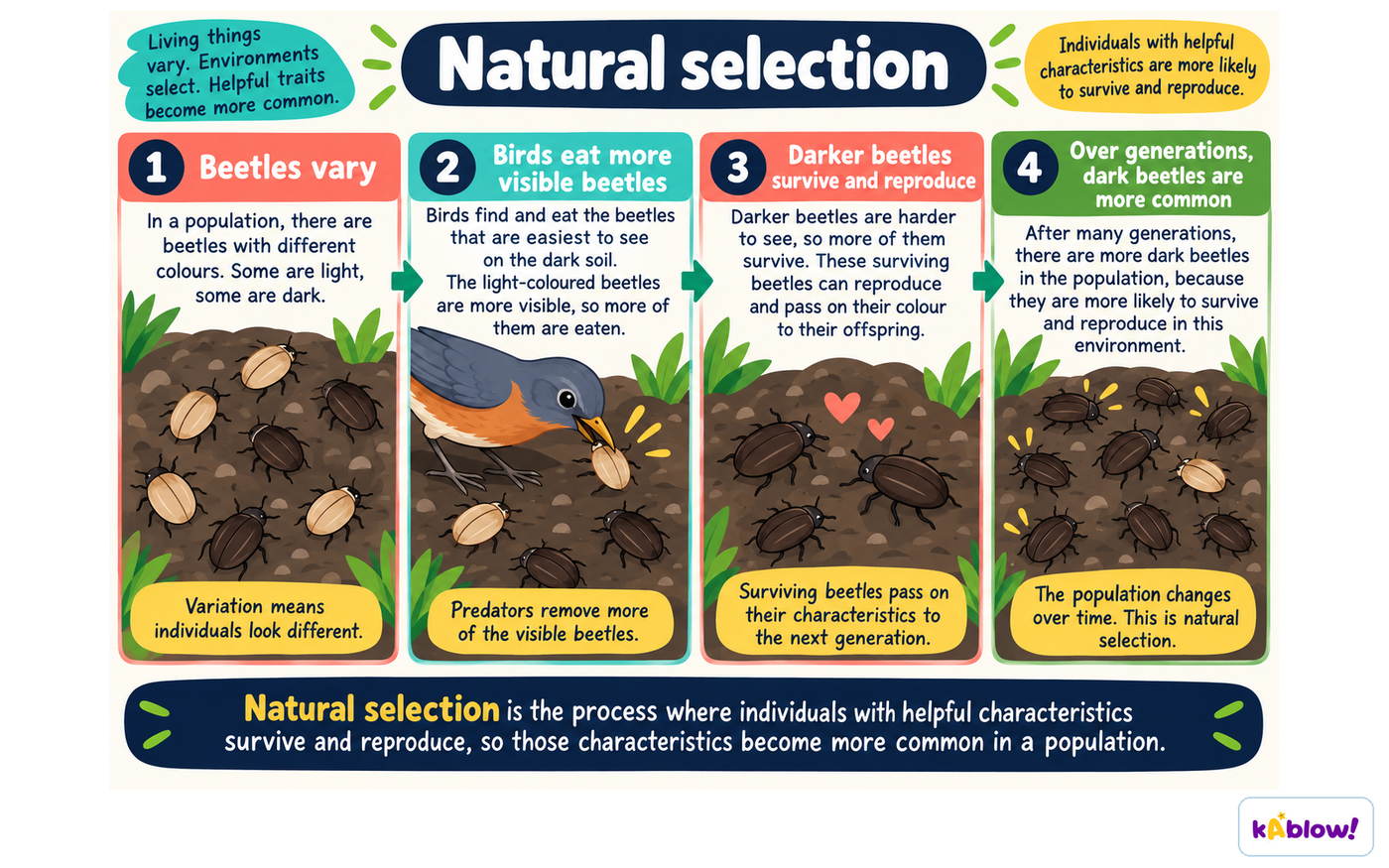
- Beetle colour: In a forest with brown leaves, brown beetles are less visible to predators than green beetles, so they survive and reproduce more.
- Giraffe neck: Originally shorter necks; those with slightly longer necks could reach food others couldn't, leading to longer necks over generations.
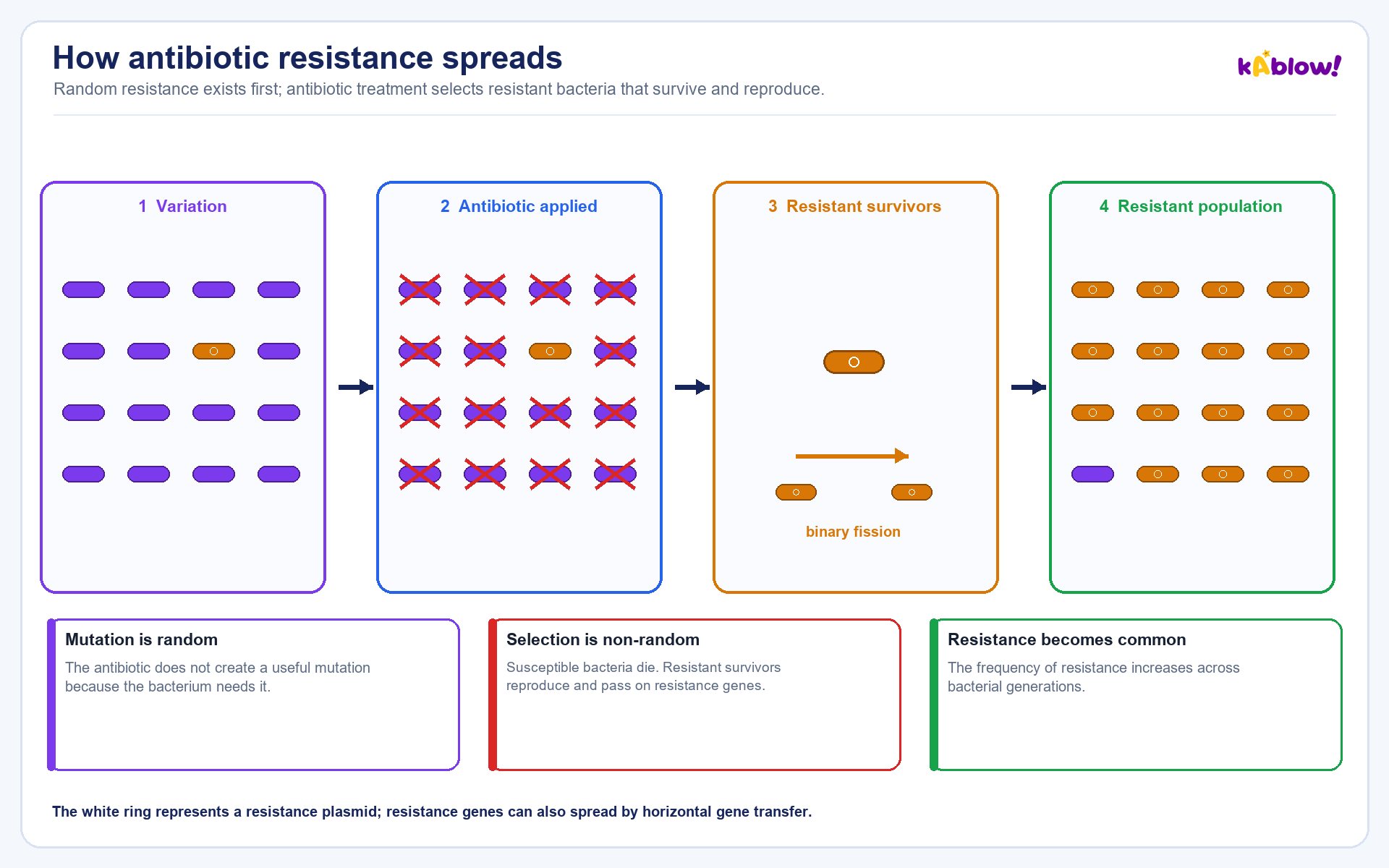
How a resistance mutation spreads through a bacterial population under antibiotic exposure.
Outcome of natural selection
- Advantageous traits become more common in the population over generations.
- Over long periods, these changes can lead to the development of new species.
On dark ground, darker beetles are less visible to predators. More survive and reproduce, so their inherited colour becomes more common over generations.
Folien
Sign up free to view the lesson slides
Step through every slide for this topic — plus flashcards and revision notes — with a free account.
Übungsfragen
Gratis-Vorschau — 8 von 55 Fragen. Registriere dich, um alle zu sehen.
1.All individuals within the same species are exactly the same.
Easy- AFalse
- BTrue
- CSometimes true
- DOnly for plants
2.Individuals that survive for longer are more likely to reproduce.
Easy- ATrue
- BFalse
- COnly if they are male
- DOnly if they are female
3.Which of the following best describes 'survival of the fittest'?
Easy- AIndividuals with traits best matched to their environment are most likely to survive and reproduce
- BThe strongest and fastest individuals always survive
- COnly the largest individuals survive
- DIndividuals that compete the most aggressively survive
4.Variation within a species leads to competition because:
Medium- AResources such as food, water, and shelter are limited
- BIndividuals want to be different from each other
- CPredators always eat the weakest individuals
- DAll individuals have the same traits
5.Giraffes evolved long necks because:
Medium- AGiraffes with slightly longer necks could reach food that others couldn't, so they survived and reproduced more
- BAll giraffes stretched their necks and passed on the stretched length to offspring
- CGiraffes needed longer necks to see predators from far away
- DA mutation suddenly gave all giraffes long necks
6.In a forest with brown leaves, brown beetles survive longer than green beetles because:
Medium- ABrown beetles are less likely to be seen and eaten by predators
- BBrown beetles are faster than green beetles
- CGreen beetles are poisonous
- DBrown beetles can fly higher
7.In a population of birds, food becomes available only in deep crevices. Which birds are more likely to survive?
Medium- ABirds with longer beaks
- BBirds with shorter beaks
- CBirds with wider beaks
- DBirds with stronger wings
8.Natural selection can lead to the development of new species because:
Medium- AOver many generations, advantageous traits become more common and changes accumulate
- BIndividuals change their traits during their lifetime to adapt
- CAll organisms eventually become the same species
- DNew species appear suddenly without any gradual change
Unlock all 55 questions, flashcards & more
Erstelle ein Gratis-Konto, um alle Fragen, Folien, Karteikarten und Lernnotizen zu diesem Thema zu sehen.