The pH scale and indicators
Lerne es beim Spielen
Beantworte diese Fragen für Energie, dann angle und erkunde. Kein Konto nötig.
Lektionsnotizen
The pH Scale
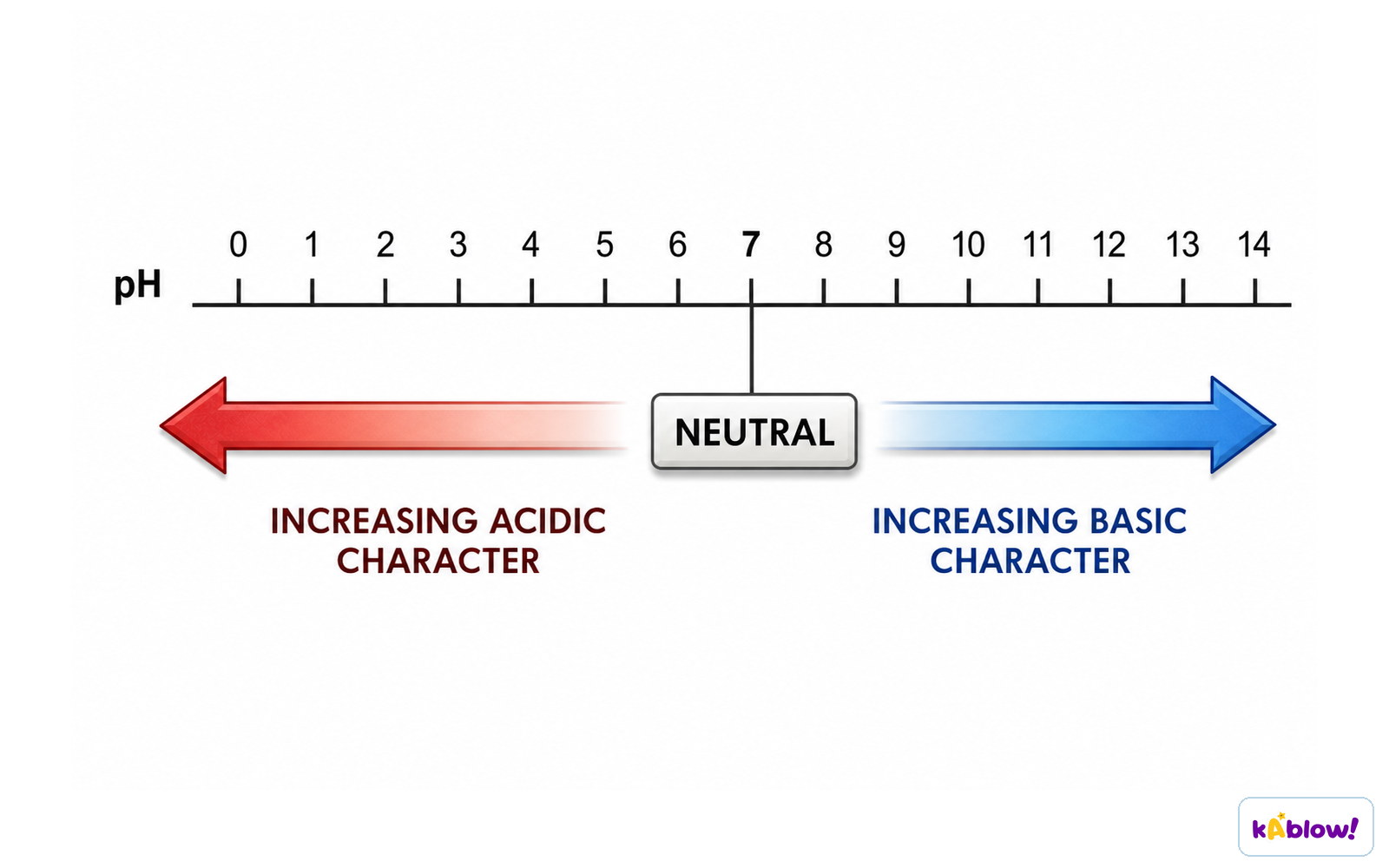
- The pH scale measures how acidic or alkaline a substance is.
- pH values range from 0 (strong acid) to 14 (strong alkali).
- A neutral substance has a pH of 7 (e.g., pure water).
- Substances with pH less than 7 are acids.
- Substances with pH greater than 7 are alkalis.
pH 7 is neutral. Acidic character increases towards pH 0, while basic character increases towards pH 14.
Indicators
- Indicators change colour to show whether a substance is acidic or alkaline.
- Blue litmus paper turns red in acids.
- Red litmus paper turns blue in alkalis.
- Phenolphthalein is colourless in acids and neutral, but turns pink in alkalis.
- Methyl orange is red in acids and yellow in alkalis.
- Red cabbage indicator gives a range of colours: pink/red in acids, purple in neutral, blue/green in alkalis.
Universal Indicator
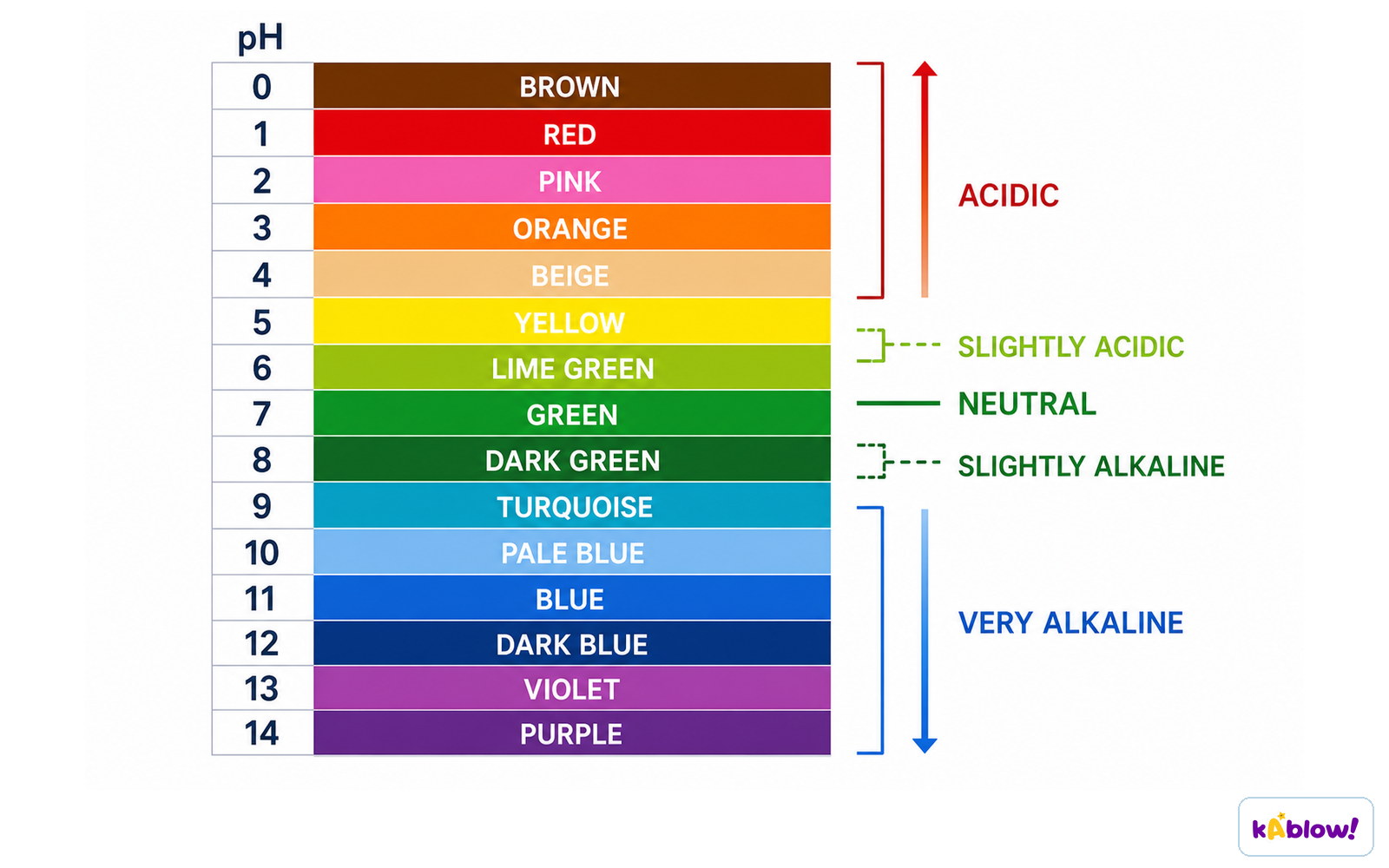
- Universal indicator is a mixture of dyes that changes colour gradually across the pH scale.
- It gives a distinct colour for each pH value, allowing estimation of pH.
- For example, it turns red at pH 0–2, orange at pH 3–4, yellow at pH 5–6, green at pH 7, blue at pH 8–10, and purple at pH 11–14.
Universal indicator changes colour across pH 0–14; match the observed colour to estimate a solution’s pH.
Electronic pH Meter
- An electronic pH meter measures pH directly and gives a numerical reading.
- It is more accurate than using an indicator because it does not rely on colour interpretation.
Common Acids and Alkalis
- Common acids include lemon juice (citric acid) and stomach acid (hydrochloric acid).
- Common alkalis include soap and bleach.
Particle arrangement in solids, liquids, and gases. Not directly about pH, but useful for understanding states of matter in chemistry.
Folien
Sign up free to view the lesson slides
Step through every slide for this topic — plus flashcards and revision notes — with a free account.
Übungsfragen
Gratis-Vorschau — 8 von 56 Fragen. Registriere dich, um alle zu sehen.
1.What colour does blue litmus paper turn in an acid?
Easy- ARed
- BBlue
- CGreen
- DYellow
2.What is the pH of a neutral substance?
Easy- A7
- B0
- C14
- D1
3.Which indicator turns from colourless to pink in an alkali?
Easy- APhenolphthalein
- BMethyl orange
- CRed litmus
- DUniversal indicator
4.A student adds red litmus paper to a solution and it turns blue. What does this indicate about the solution?
Easy- AIt is an alkali
- BIt is an acid
- CIt is neutral
- DIt is pure water
5.Methyl orange is red in acids and yellow in alkalis. What colour would methyl orange be in a solution of pH 9?
Easy- AYellow
- BRed
- COrange
- DPurple
6.Which of the following is an advantage of using an electronic pH meter over an indicator?
Easy- AIt gives a numerical pH value directly
- BIt is cheaper
- CIt changes colour
- DIt can only be used for acids
7.Universal indicator turns orange when added to a substance. What is the approximate pH of the substance?
Easy- A4
- B7
- C9
- D12
8.A student has four unlabelled solutions: lemon juice, soap, pure water, and vinegar. Which solution would turn universal indicator green?
Medium- APure water
- BLemon juice
- CSoap
- DVinegar
Unlock all 56 questions, flashcards & more
Erstelle ein Gratis-Konto, um alle Fragen, Folien, Karteikarten und Lernnotizen zu diesem Thema zu sehen.