Body systems and their interactions
Lerne es beim Spielen
Beantworte diese Fragen für Energie, dann angle und erkunde. Kein Konto nötig.
Lektionsnotizen
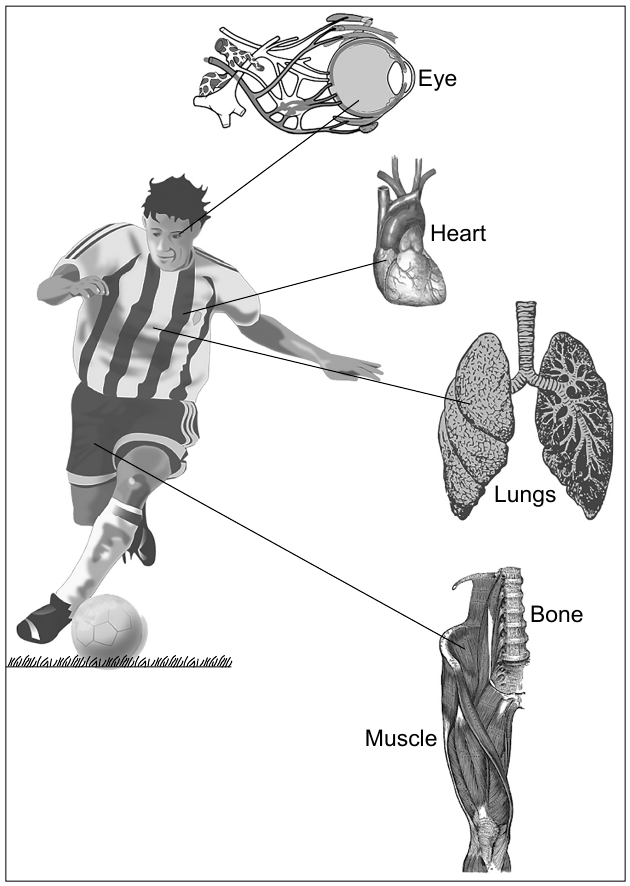
Overview of Body Systems
- The human body consists of several integrated systems that must work together for the body to function as a whole.
- Seven main organ systems are studied: digestive, circulatory, respiratory, musculoskeletal, excretory, nervous, and reproductive.
- Each system has a main purpose, main processes, main components (organs), and related health issues.
- Health issues can often be prevented with a healthy lifestyle and wise life choices.
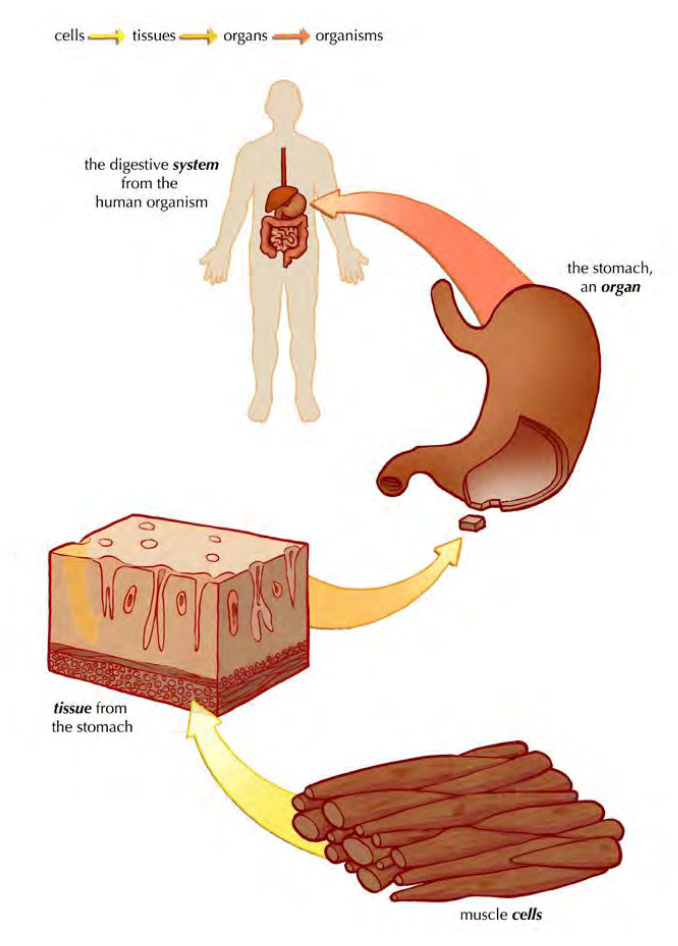
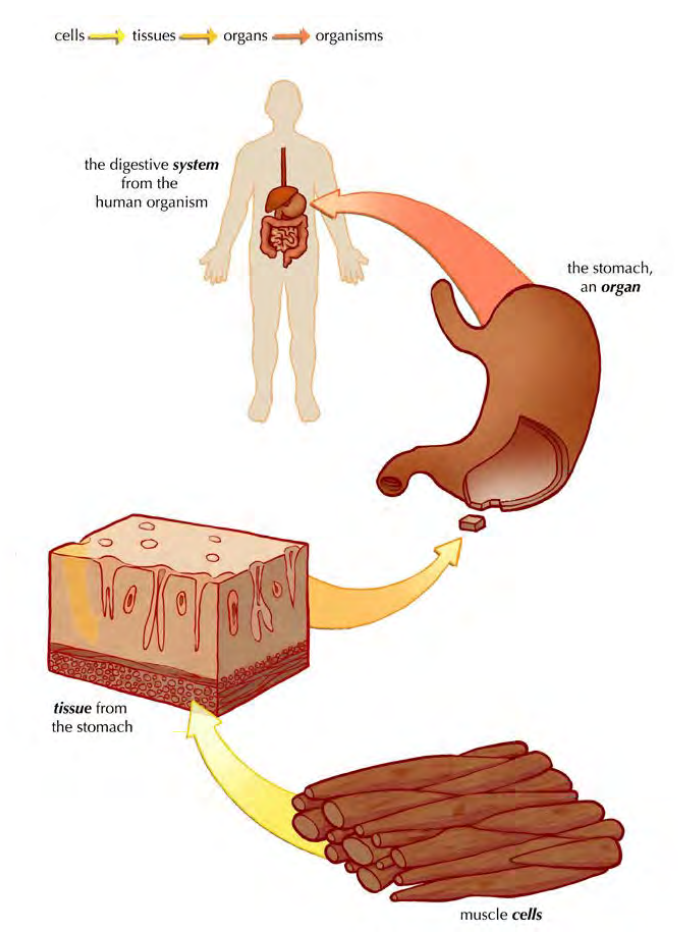
Levels of organization in the human body, from organism to cells, using the digestive system as an example.
The Digestive System
- Purpose: Breaks down food into small particles that can be absorbed into the bloodstream and transported to cells.
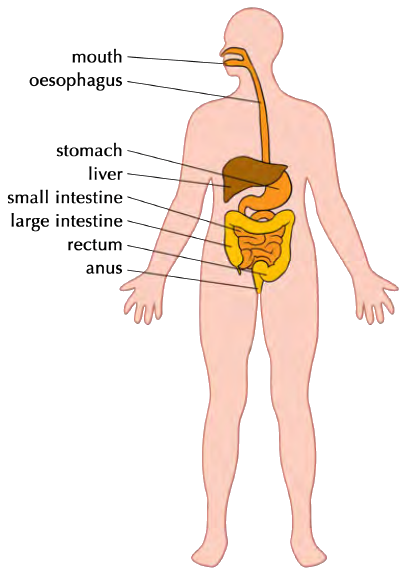
- Made up of the alimentary canal, a long twisting tube about 9 meters long from mouth to anus.
- Four main processes: ingestion (taking in food), digestion (breaking down food), absorption (particles move into bloodstream), egestion (removal of undigested waste as faeces).
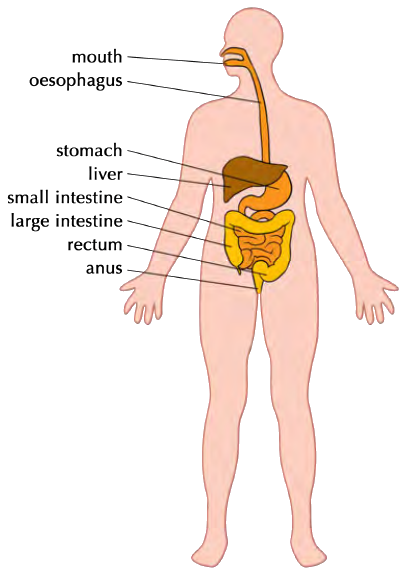
- Components: mouth and oesophagus, stomach, small intestine (most digestion and absorption), large intestine (absorbs water), rectum and anus.
- Health issues: ulcers, anorexia nervosa, diarrhoea, liver cirrhosis.
The human digestive system with key organs labeled
The Circulatory System
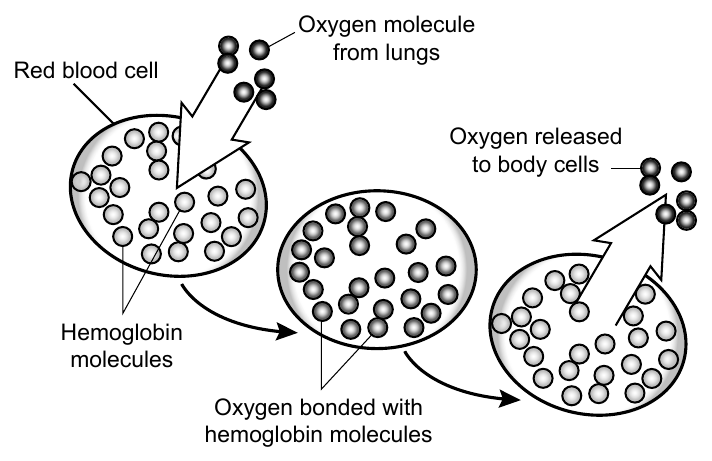
- Purpose: Transports blood with oxygen from lungs to cells and carbon dioxide back to lungs; distributes nutrients and removes waste.
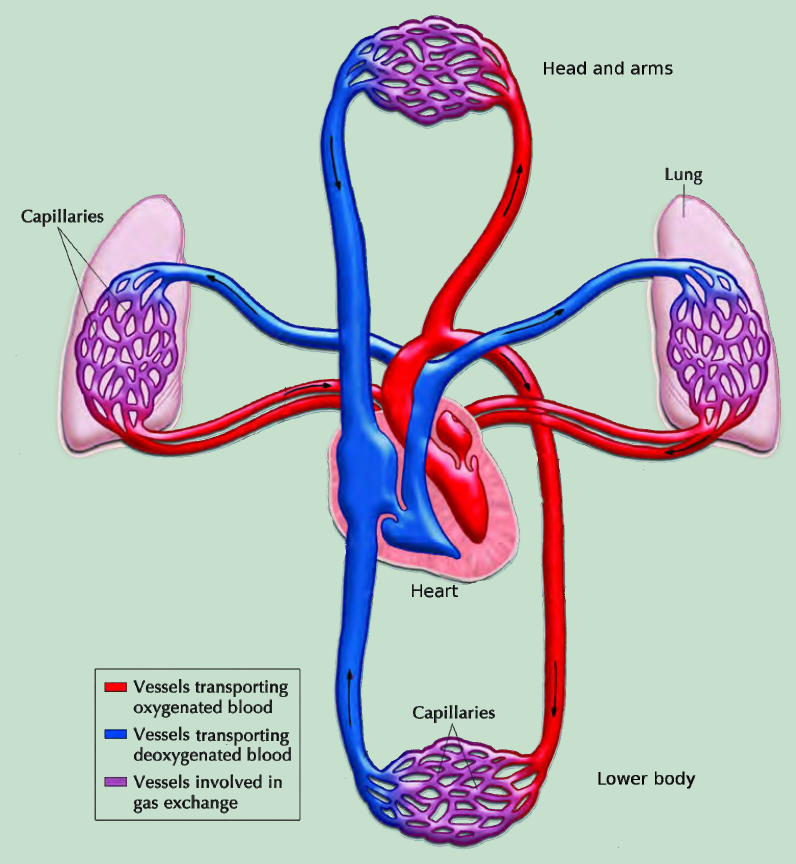
- Components: heart (muscle with four chambers: atria and ventricles), blood vessels (arteries, veins, capillaries), and blood.
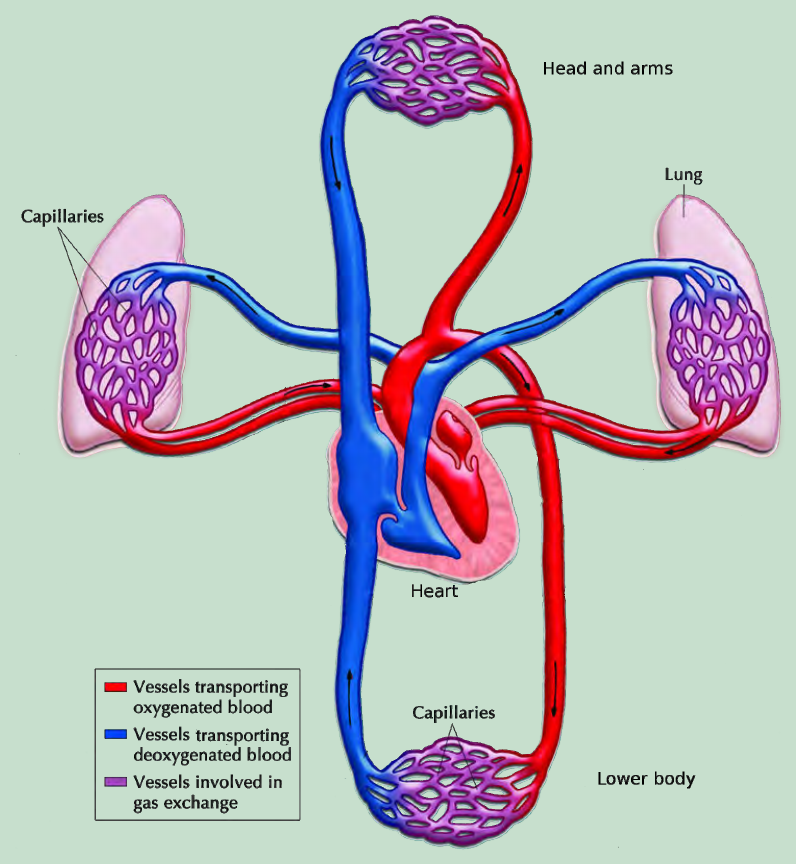
- Two circuits: short circuit between heart and lungs for gaseous exchange; longer circuit from heart to body and back.
- Blood becomes oxygenated (more O2) after lungs and deoxygenated (more CO2) after body tissues.
- Health issues: high blood pressure, heart attacks, strokes.
Diagram of the circulatory system showing oxygenated and deoxygenated blood flow.
The Respiratory System
- Purpose: Supplies cells with oxygen and removes carbon dioxide.
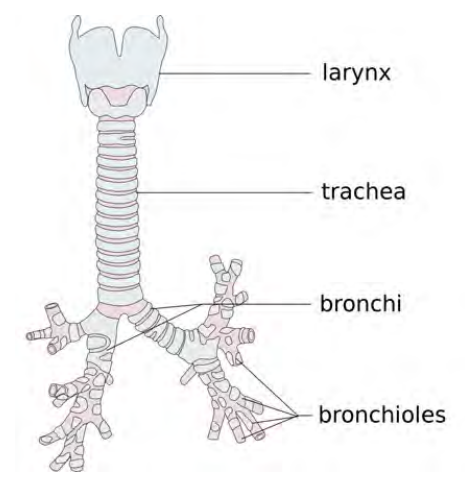
- Components: mouth/nose, trachea (windpipe), bronchi, lungs (with alveoli), diaphragm.
- Three main processes: breathing (inhalation/exhalation), gaseous exchange (diffusion in alveoli and tissues), cellular respiration (release energy in mitochondria).
- Health issues: asthma, lung cancer, bronchitis, pneumonia, TB.
Diagram of the larynx, trachea, bronchi and bronchioles.
The Musculoskeletal System
- Purpose: Produces movement via muscles attached to a frame (skeleton); skeleton also protects organs.
- Components: muscles (contract/relax), bones (support, form joints), cartilage (cushions joints), tendons (attach muscle to bone), ligaments (hold bones together at joints).
- Main process: locomotion (self-propulsion) and movement through muscle contraction and relaxation stimulated by nerves.
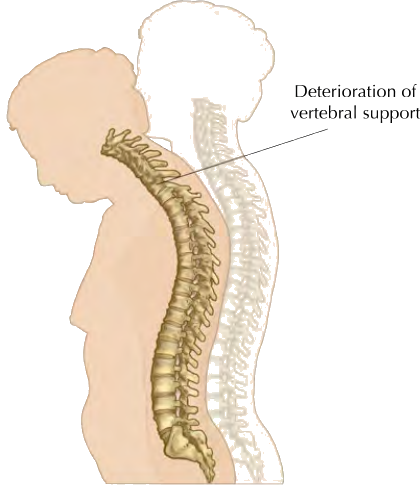
- Health issues: rickets (soft bones), arthritis (inflamed joints), osteoporosis (brittle bones).
Deterioration of vertebral support
The Excretory System
- Purpose: Removes metabolic waste products (urea, carbon dioxide) from blood while retaining nutrients and water.
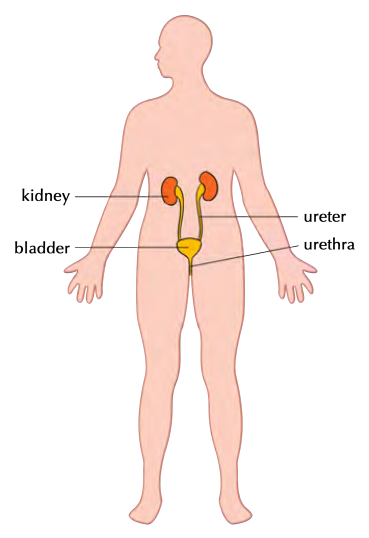
- Components: kidneys (filter blood, produce urine), ureters (carry urine to bladder), bladder (stores urine), urethra (excretes urine).
- Main processes: filtration (blood filtered in kidneys), absorption (needed substances reabsorbed), diffusion (substances move in/out of kidney cells), excretion (urine expelled).
- Health issues: kidney failure (requires dialysis), kidney stones, bladder infection.
Diagram of the kidneys, ureters, bladder and urethra.
The Nervous System
- Purpose: Transmits nerve impulses between body parts; receives stimuli from environment and inside body.
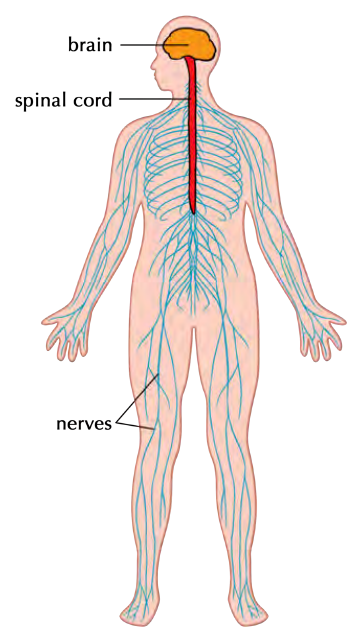
- Components: nerves (bundles of neurons), brain (central nervous system), spinal cord (central nervous system), sensory organs (ears, nose, eyes, skin, tongue).
- Main processes: sending/receiving impulses; sensing (hearing, seeing, feeling, tasting, smelling); regulating body temperature.
- Health issues: trauma/injuries to brain/spinal cord, stroke, degenerative disorders (Alzheimer's, Parkinson's, MS), mental health problems, sensory organ problems, effects of drug/alcohol.
Diagram of the human nervous system showing the brain, spinal cord and nerves.
The Reproductive System
- Purpose: Produces sex cells (gametes) to ensure continuation of the species.
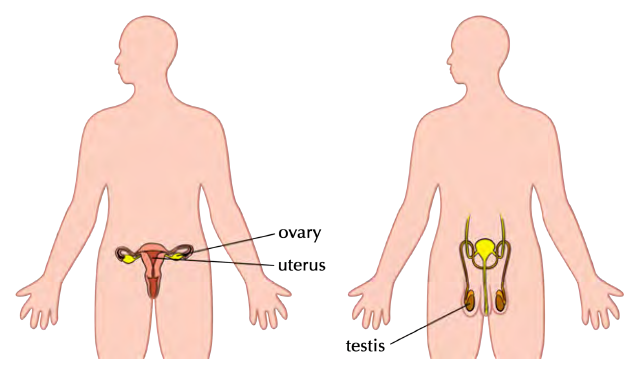
- Components: ovaries (produce ova), uterus (womb, where fertilised egg develops), testes (produce sperm), scrotum, penis, vagina.
- Main processes: growth, cell division (to produce gametes), maturation (puberty), copulation, ejaculation, ovulation, menstruation, fertilisation, implantation.
- Health issues: infertility, foetal alcohol syndrome, sexually transmitted diseases (STDs) like HIV/AIDS, syphilis, gonorrhoea.
Diagram of the female and male reproductive organs.
Folien
Sign up free to view the lesson slides
Step through every slide for this topic — plus flashcards and revision notes — with a free account.
Übungsfragen
Gratis-Vorschau — 8 von 44 Fragen. Registriere dich, um alle zu sehen.
1.The digestive system is also known as the alimentary canal, gastrointestinal tract, or digestive tract.
EasyTrue or false?
2.Which of the following is NOT a main process of the digestive system?
Easy- AIngestion
- BDigestion
- CRespiration
- DEgestion
3.The heart has four chambers: two atria and two ventricles.
EasyTrue or false?
4.Which of the following is NOT a component of the musculoskeletal system?
Easy- AMuscles
- BBones
- CCartilage
- DAlveoli
5.The excretory system is responsible for removing metabolic waste products from the blood.
EasyTrue or false?
6.Which organ of the excretory system filters the blood to remove urea?
Easy- ABladder
- BUreter
- CKidney
- DUrethra
7.The nervous system is composed of the brain, spinal cord, and nerves.
EasyTrue or false?
8.Which of the following is NOT a sensory organ?
Easy- AEars
- BEyes
- CSkin
- DKidneys
Unlock all 44 questions, flashcards & more
Erstelle ein Gratis-Konto, um alle Fragen, Folien, Karteikarten und Lernnotizen zu diesem Thema zu sehen.