Reproduction and genetic variation
Lerne es beim Spielen
Beantworte diese Fragen für Energie, dann angle und erkunde. Kein Konto nötig.
Lektionsnotizen
Types of Reproduction
- All living organisms must reproduce so their species does not become extinct.
- There are two basic types: asexual reproduction (one parent) and sexual reproduction (two parents).
- Asexual reproduction produces offspring identical to the parent; no mating is needed.
- Sexual reproduction combines genetic material (DNA) from two parents, producing genetically unique offspring.
- Examples of asexual reproducers: bacteria, protists, some insects, fish, reptiles.
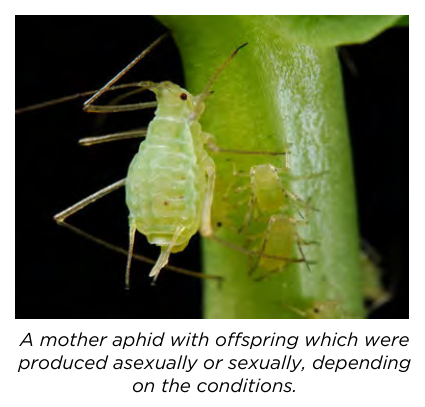
- Some species can switch between asexual and sexual reproduction (e.g., aphids) – called heterogamy.
Asexual Reproduction
- Offspring arise from a single parent and have the exact same genetic material as the parent.
- Advantage: quick and easy; no need to find a mate.
- Disadvantage: no genetic variation; offspring inherit any harmful genes from the parent.
- Examples: bacteria (binary fission), flatworms (fragmentation), some insects/fish/lizards (parthenogenesis).
- In parthenogenesis, an unfertilized egg grows into a new organism; common in honeybees (drones).
A mother aphid with offspring, produced asexually or sexually depending on conditions.
Sexual Reproduction
- Involves two parents; male produces sperm, female produces eggs.
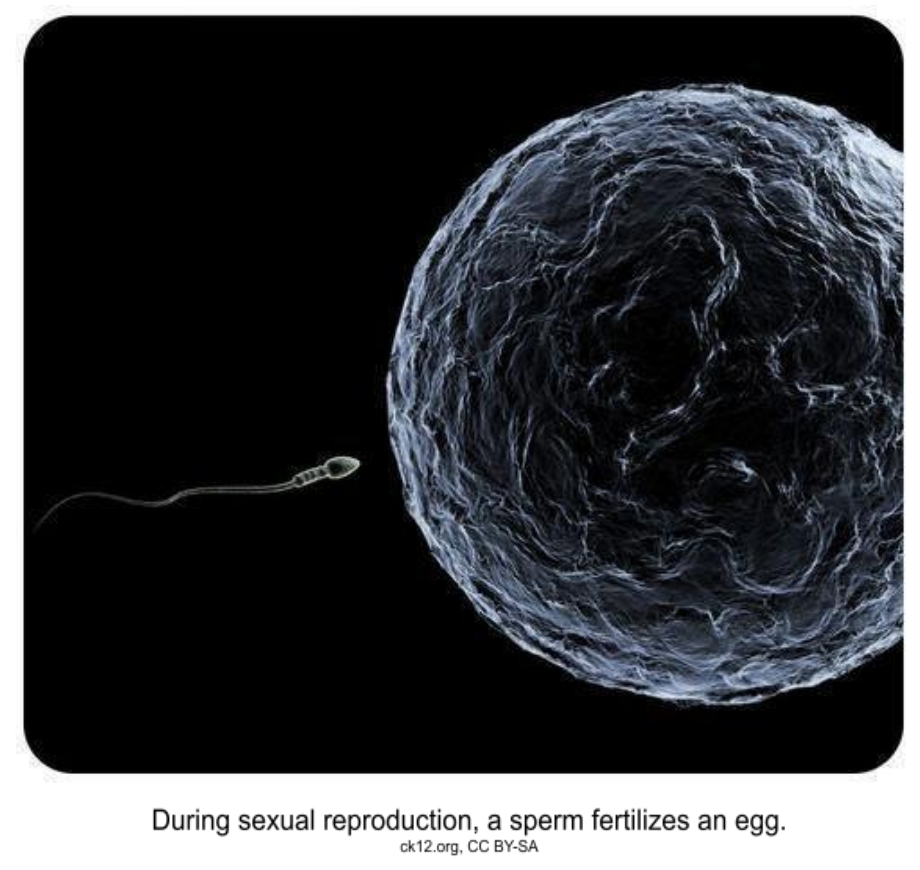
- Fertilization occurs when sperm and egg fuse to form a zygote – the first cell of a new organism.
- Offspring are genetically unique because they inherit a mix of traits from both parents.
- Sex cells (gametes) have half the genetic material of body cells; in humans, 23 chromosomes each.
- In plants, sperm is in pollen, egg is in the ovary of the flower; fertilization leads to seed formation.
During sexual reproduction, a sperm fertilizes an egg.
Reproduction in Angiosperms (Flowering Plants)
- Flowers are the sexual organs of angiosperms; they produce male and female structures.
- Sexual reproduction in angiosperms results in the formation of seeds.
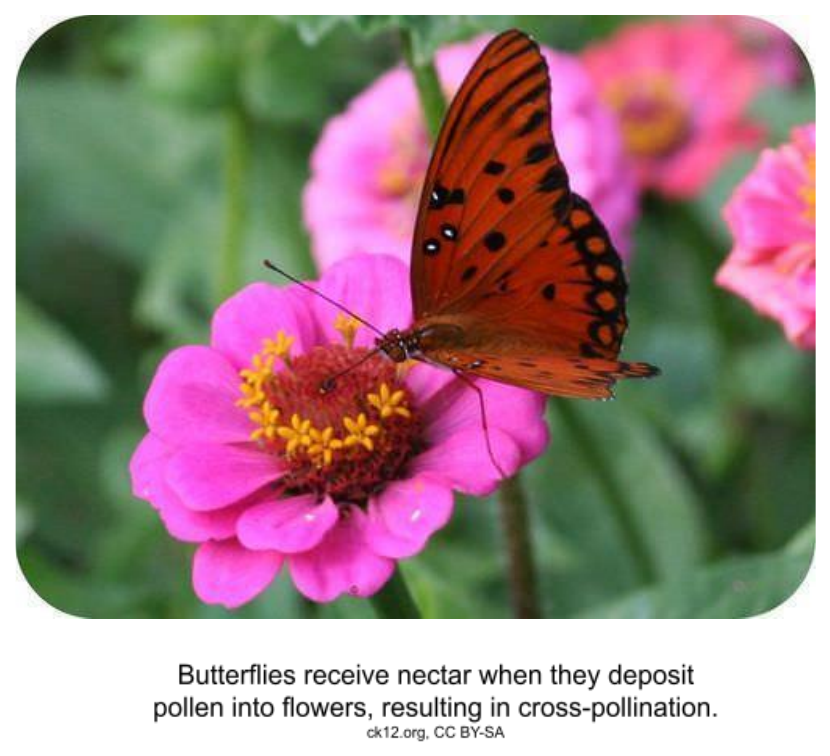
- Pollination is the transfer of pollen from the male part to the female part; often aided by pollinators like bees and butterflies.
- After fertilization, the egg grows into an embryo inside a seed; the seed can germinate into a new plant.
- Seeds are often contained in fruits which help in seed dispersal.
Butterflies receive nectar when they deposit pollen into flowers, resulting in cross-pollination.
Genetic Material and Inheritance
- Heredity is the passing of traits from parents to offspring; genetics is the study of this process.
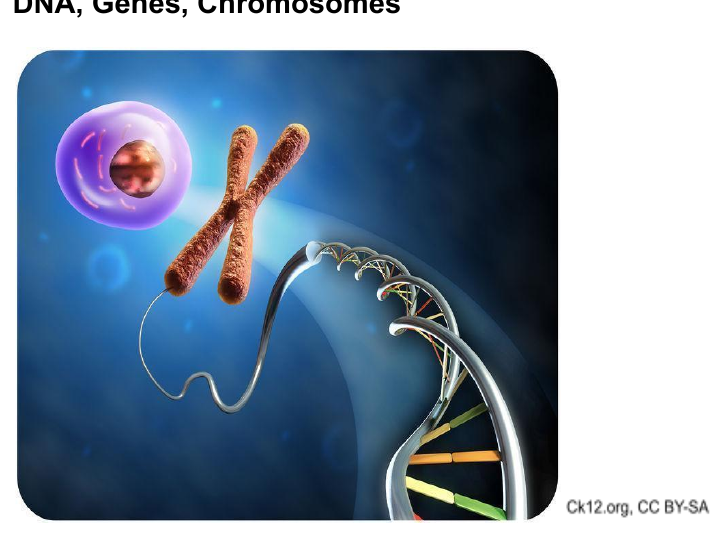
- Traits are coded by genes, which are sections of chromosomes located in the cell nucleus.
- Chromosomes and genes are made of DNA, which acts as a blueprint for building proteins.
- Changes in DNA sequence account for differences in traits among species.
- Inheritance is how traits are passed down from generation to generation.
DNA, genes and chromosomes: genes are sections of chromosomes, and chromosomes are made of DNA.
Variation
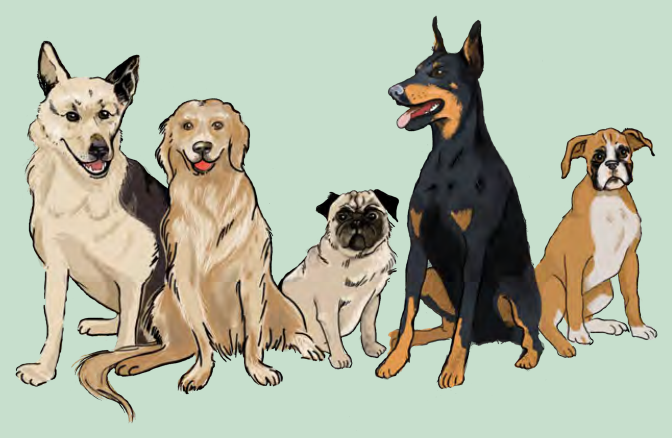
- Variation refers to the differences between individuals within the same species.
- Variation arises from sexual reproduction, as offspring inherit a mix of traits from both parents.
- All humans belong to the species×Homo sapiens×, yet there is huge variation in traits like height, skin color, and hair type.
- Variation is important because it allows species to adapt to changing environments.
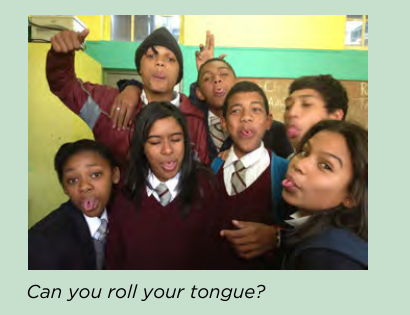
- Examples of inherited human traits: tongue rolling, earlobe attachment, dimples, thumb shape.
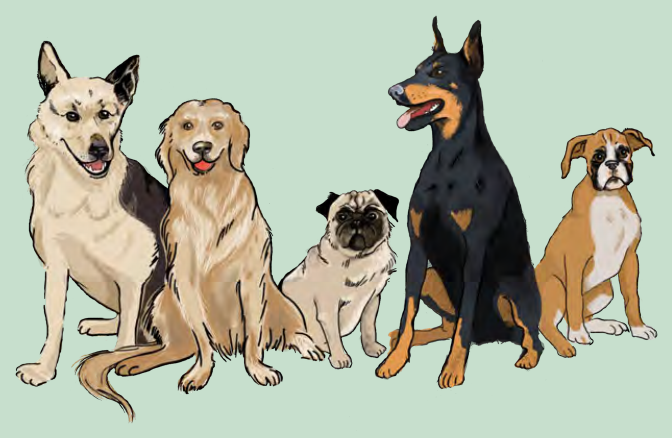
Different breeds of dogs showing variation within a species.
Natural Selection
- Natural selection is the process where individuals better adapted to their environment survive and reproduce more successfully.
- These advantageous traits are passed on to offspring, increasing their frequency in the population over generations.
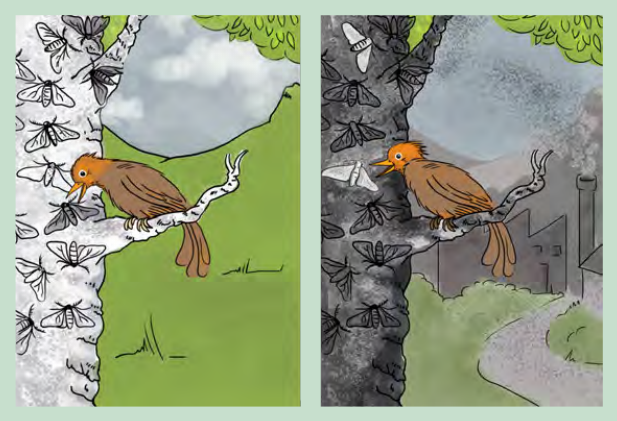
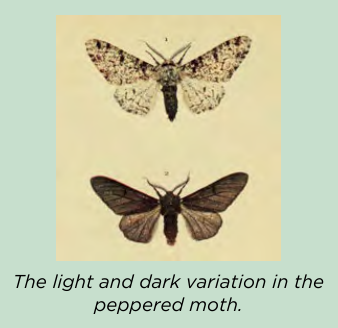
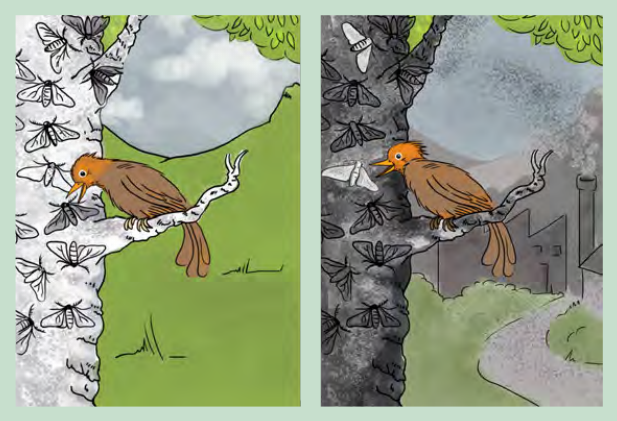
- The peppered moth example: during the Industrial Revolution, dark-colored moths became more common because they were camouflaged on soot-covered trees.
- Natural selection leads to adaptation of species over time.
- Small changes can occur within a few generations, but major changes take thousands of years.
A bird preying on peppered moths on light lichen-covered bark and on soot-darkened bark, illustrating natural selection.
Punnett Squares and Genetic Prediction
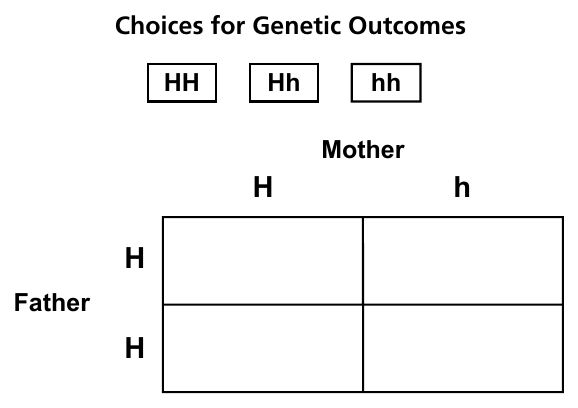
- A Punnett square is a tool used to predict the possible genotypes of offspring from a cross between two parents.
- It is based on probability and shows the combination of alleles from each parent.
- Example: crossing two purple pea plants (Bb x Bb) yields 25% white flowers (bb) and 75% purple (BB or Bb).
- Punnett squares are not used for asexual reproduction because offspring are genetically identical to the single parent.
Folien
Sign up free to view the lesson slides
Step through every slide for this topic — plus flashcards and revision notes — with a free account.
Übungsfragen
Gratis-Vorschau — 8 von 48 Fragen. Registriere dich, um alle zu sehen.
1.Asexual reproduction requires two parents.
EasyTrue or false?
2.In sexual reproduction, the offspring are:
Easy- AIdentical to one parent
- BIdentical to both parents
- CSimilar but not identical to the parents
- DAlways different from both parents
3.In humans, sex cells contain 46 chromosomes.
EasyTrue or false?
4.Which of the following is an advantage of asexual reproduction?
Easy- AIt produces genetically diverse offspring
- BIt does not require finding a mate
- CIt results in offspring with traits from both parents
- DIt always produces more offspring than sexual reproduction
5.In angiosperms, where is the egg contained?
Medium- AIn the pollen
- BIn the ovary
- CIn the petal
- DIn the sepal
6.In asexual reproduction, offspring are genetically identical to the parent.
MediumTrue or false?
7.Which of the following organisms can reproduce both asexually and sexually?
Medium- ABacteria
- BAphids
- CHumans
- DYeast
8.Which of the following are types of asexual reproduction? (select all that apply)
Medium- ABinary fission
- BFragmentation
- CParthenogenesis
- DFertilization
- EPollination
Unlock all 48 questions, flashcards & more
Erstelle ein Gratis-Konto, um alle Fragen, Folien, Karteikarten und Lernnotizen zu diesem Thema zu sehen.