National and global energy resources
Apréndelo jugando
Responde estas preguntas para ganar energía, luego pesca y explora. Sin cuenta.
Apuntes de la lección
Energy Resources and Electricity Generation
- Energy resources are large stores of energy used to generate electricity and heat homes and businesses.
- Electricity is generated in similar ways regardless of the resource: a turbine is turned, which turns a generator, producing electricity.
- The key difference is how the turbine is made to turn.
- Fossil fuels are burned to heat water, producing steam that turns turbines.
- Nuclear fuel undergoes fission to heat water, producing steam that turns turbines.
- Geothermal energy uses hot rocks underground to heat water, which returns as steam to turn turbines.
- Hydroelectric dams use water stored at height; when released, rushing water turns turbines directly.
- Wind turns turbines directly, and tidal movements and water waves also turn turbines directly.
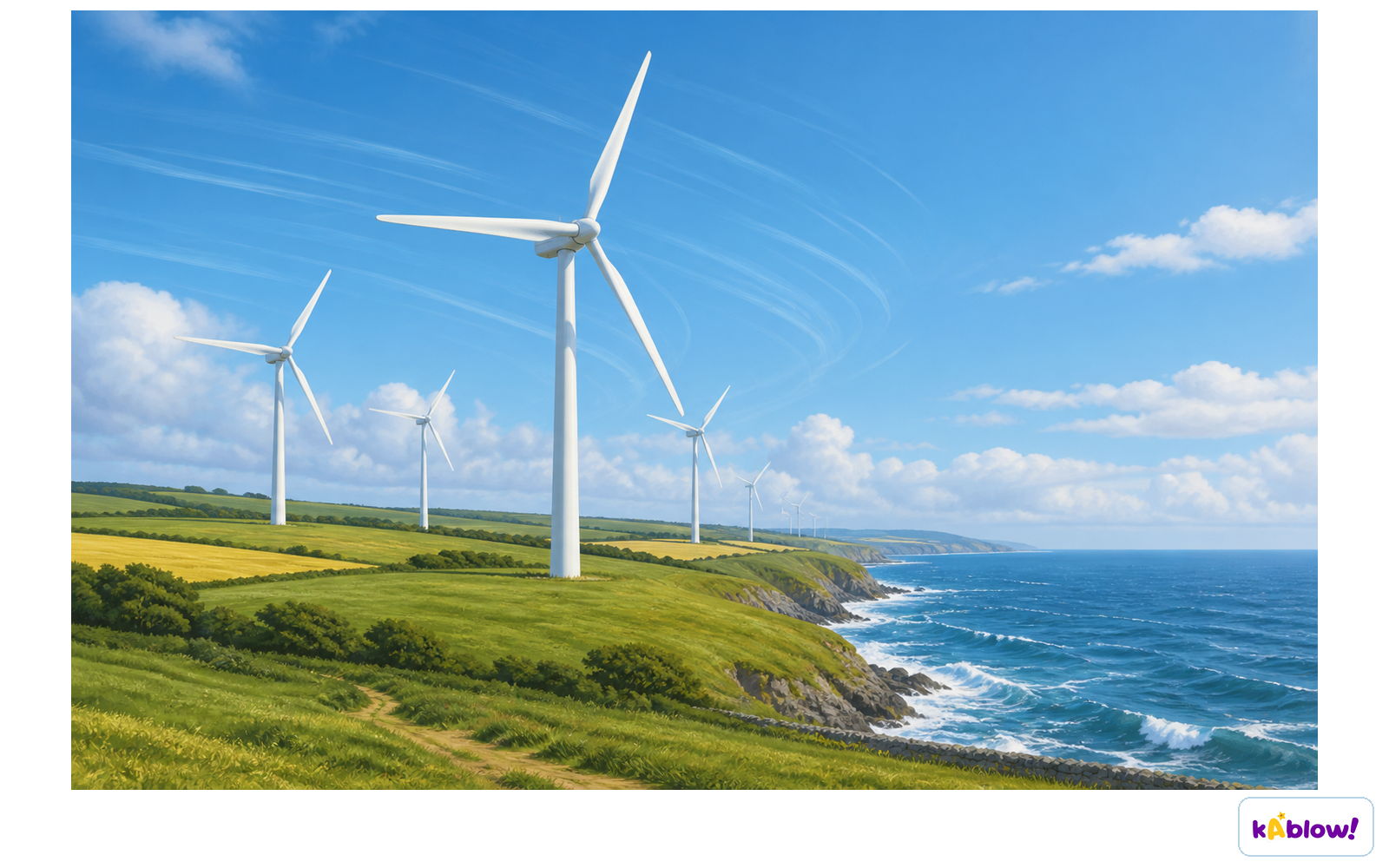
Wind turbines use the kinetic energy of moving air to generate electricity
Renewable and Non-Renewable Energy Resources
- A renewable energy resource is replenished at a faster rate than it is used, so it will not run out.
- Non-renewable resources are being used up faster than they can be replaced.
- Renewable resources include solar, wind, bio-fuel, hydroelectricity, geothermal, tidal and water waves.
- Non-renewable resources include fossil fuels (coal, oil and natural gas) and nuclear fuel.
- Nuclear fuel is non-renewable even though it does not produce carbon dioxide during generation.
- Bio-fuels are renewable because they come from plant matter, but whether they are carbon-neutral is controversial.
Uses of Energy Resources
- The three main uses of energy resources are transport, electricity generation and heating.
- Most vehicles are powered by petroleum products (petrol, diesel, kerosene) derived from crude oil, a fossil fuel.
- Electric vehicles produce zero carbon emissions when driven, but charging them uses electricity from the National Grid, which may come from non-renewable sources.
- Biofuels can power vehicles and are renewable, but their carbon-neutral status is debated.
- Most homes in cold countries use natural gas for central heating, which is non-renewable.
- In geologically active countries like Iceland, geothermal energy is used to heat homes.
Reliability of Energy Resources
- A reliable energy resource can produce energy at any time.
- Non-reliable resources can only produce energy some of the time, e.g. wind and solar.
- Fossil fuels, nuclear and geothermal are reliable because they can generate continuously.
- Tidal power is more predictable than wind or solar because tides follow a regular pattern.
- Hydroelectric and tidal can be reliable but depend on suitable locations.
- Reliability affects how much a resource can be depended upon to meet demand.
Comparing Energy Resources
- Each energy resource has advantages and disadvantages in terms of reliability, cost and environmental impact.
- Fossil fuels are reliable and relatively cheap but produce carbon dioxide and other pollutants.
- Nuclear is reliable and produces no carbon dioxide during generation, but produces radioactive waste and has high decommissioning costs.
- Wind and solar are renewable and produce no carbon dioxide during operation, but are unreliable and can be expensive to install.
- Hydroelectric is renewable and reliable but can flood large areas and disrupt ecosystems.
- Tidal is renewable and predictable but can harm marine life and is expensive to build.
- Geothermal is renewable and reliable but only viable in certain locations.
Environmental Issues
- Burning fossil fuels releases carbon dioxide, a greenhouse gas, contributing to global warming.
- The Greenhouse Effect occurs when greenhouse gases (mainly carbon dioxide and methane) trap infrared radiation, raising Earth's average temperature.
- Consequences of global warming include climate change, rising sea levels, extinction of species, migration, spread of diseases and loss of habitat.
- In the UK over the past 30 years, fossil fuel use has dropped from 75% to 38%, while renewable energy use has increased from 2% to 35%.
- Coal produces the most carbon dioxide of the fossil fuels, while natural gas produces the least, so switching from coal to gas reduces emissions.
- Science can identify environmental issues, but political, social, ethical and economic factors affect how they are addressed.
Trends and Future Energy Use
- Global energy demand is extremely high due to a growing population (over 8 billion people).
- Currently, about 84% of the world's energy is produced from non-renewable, carbon-emitting sources.
- There is a gradual shift towards cleaner technologies, encouraged by government grants for wind and solar farms.
- Further reduction of carbon emissions may require more nuclear power stations and better energy storage for unreliable renewables.
- Fusion is not yet a practical power source because it requires extremely high temperatures and pressures that are difficult to contain and sustain.
- A combination of all available energy resources is needed to meet global demand.
Diapositivas
Sign up free to view the lesson slides
Step through every slide for this topic — plus flashcards and revision notes — with a free account.
Preguntas de práctica
Vista previa gratis — 8 de 61 preguntas. Regístrate para verlas todas.
1.Which of the following is the best definition of a renewable energy resource?
Easy- AAn energy resource that is replenished at a faster rate than the rate at which it is being used
- BAn energy resource that produces no pollution when it is used
- CAn energy resource that can produce energy at any time of day
- DAn energy resource that is stored underground and cannot be replaced
2.Which of the following energy resources are non-renewable? (select all that apply)
Medium- ACoal
- BNuclear fuel
- CNatural gas
- DBio-fuel
- ETidal
3.Which of the following substances are greenhouse gases? (select all that apply)
Medium- ANitrogen
- BCarbon dioxide
- COxygen
- DArgon
- EMethane
4.Wind power is said to be unreliable. Which statement best explains why?
Easy- AIt only works when the wind is blowing
- BWind turbines cannot generate electricity at night
- CWind power is a non-renewable resource
- DThe fuel for wind turbines is expensive
5.A wind turbine has an average power output of 0.60 MW. A typical gas-fired power station has an average power output of 875 MW. How many wind turbines would be needed to produce the power output of one typical gas-fired power station?
Medium- A1458
- B525
- C146
- D8750
6.The UK has a minimum electrical power demand of 30 000 000 000 W. An average large hydroelectric power plant produces 30 MW. How many large hydroelectric power plants would be needed to meet this minimum demand?
Medium- A1000
- B100
- C10000
- D30
7.Nuclear fuel is a renewable energy resource.
EasyTrue or false?
8.A reliable energy resource is one that can produce energy at any time.
EasyTrue or false?
Unlock all 61 questions, flashcards & more
Crea una cuenta gratis para ver todas las preguntas, las diapositivas, las tarjetas y los apuntes de repaso de este tema.