Biotechnology & Genetic Modification
Apréndelo jugando
Responde estas preguntas para ganar energía, luego pesca y explora. Sin cuenta.
Apuntes de la lección
Usefulness of Bacteria
- Bacteria are the most common microorganisms used in biotechnology.
- They can produce complex molecules (e.g., enzymes for yoghurt).
- They reproduce rapidly, so chemical production can increase quickly.
- Extended: Few ethical concerns for large-scale growth.
- Extended: Possess plasmids – small circular DNA loops ideal for gene transfer.
Biotechnology – Everyday Products
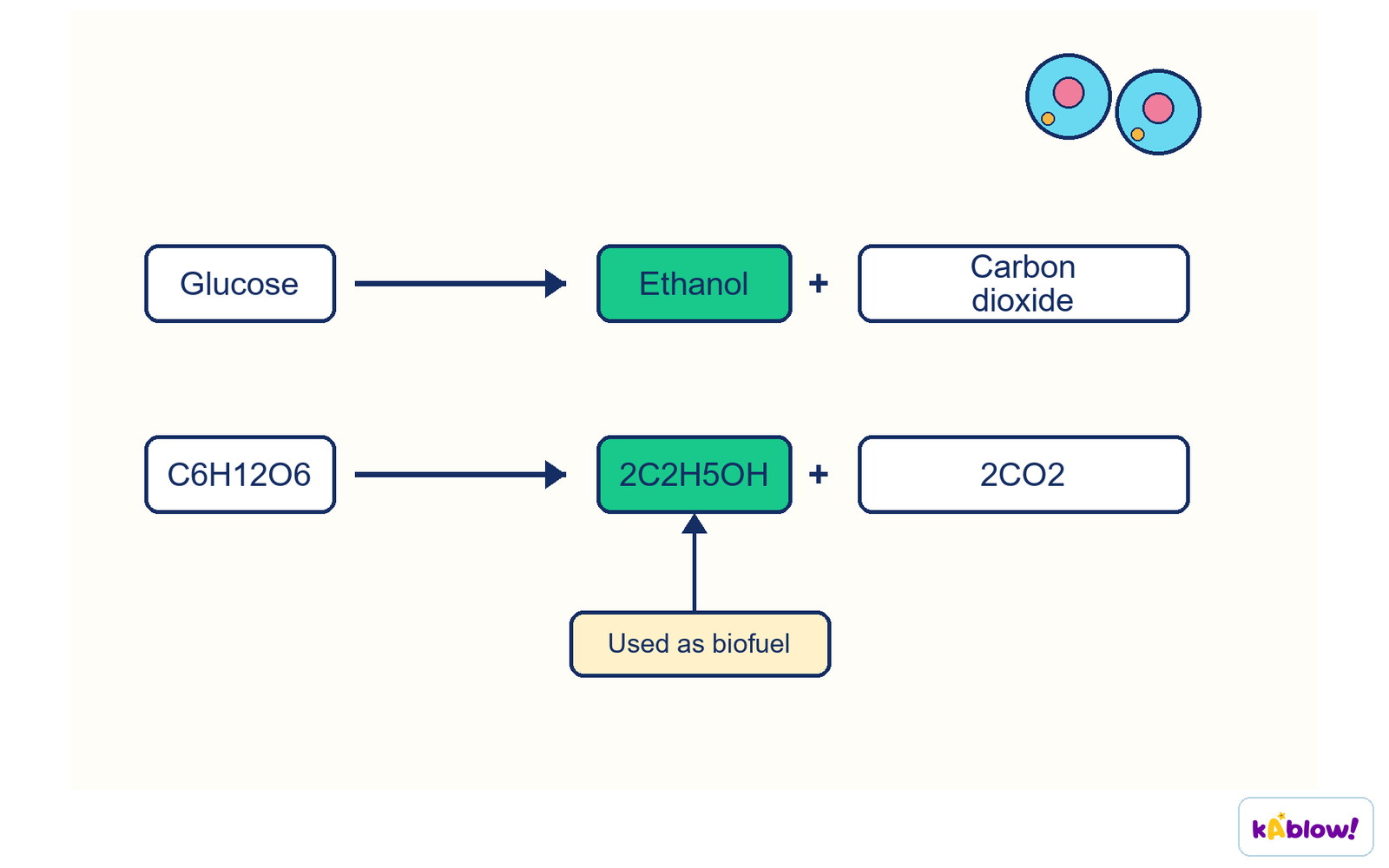
- Biofuels: Yeast ferments glucose anaerobically to produce ethanol (and CO₂).
- Ethanol is concentrated and blended with petrol or used alone.
- Waste plant parts or dedicated crops can be used; concern over land for food.
- Bread: Yeast produces CO₂ by anaerobic respiration, making dough rise.
- Fruit juice: Enzyme pectinase breaks down pectin in cell walls, releasing more juice and making it clearer.
- Biological washing powders: Contain enzymes (e.g., proteases, lipases) that break down stains at lower temperatures.
- Extended – Lactose-free milk: Enzyme lactase breaks down lactose for intolerant individuals.
Anaerobic respiration in yeast producing biofuel
Penicillin Production
- Penicillin is an antibiotic produced by the fungus×Penicillium×.
- Discovered by Alexander Fleming in 1928.
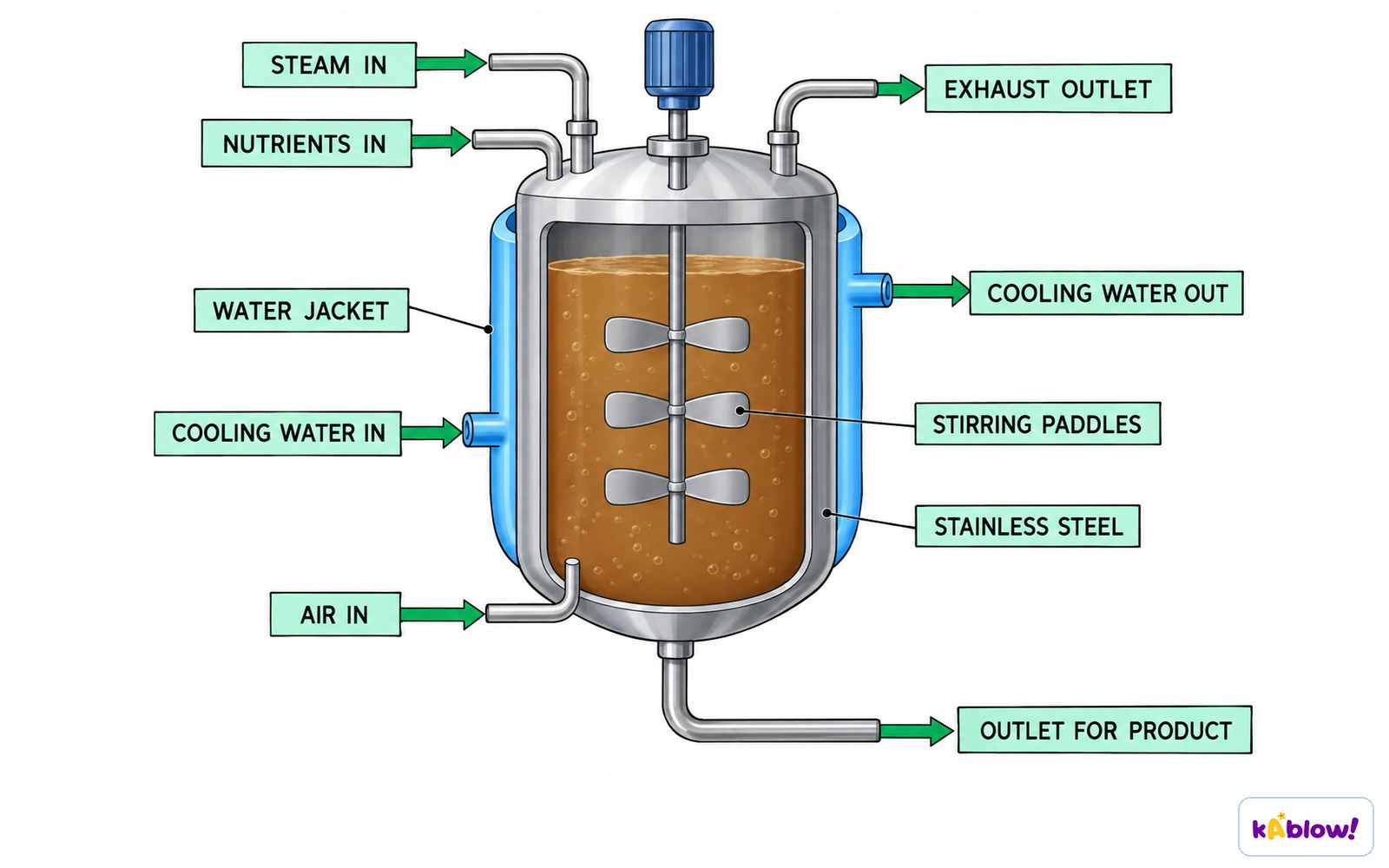
- Produced on a large scale in industrial fermenters.
- Fermenters control conditions: aseptic (steam sterilisation), nutrients, optimum temperature (water jacket), optimum pH (probes + acids/alkalis), oxygenation, agitation (stirring paddles), and waste removal.
Industrial fermenter used to produce penicillin
Mycoprotein Production
- Fungus×Fusarium×is cultured in fermenters under aerobic conditions.
- Provided with glucose syrup as food source.
- Fungal biomass is harvested and purified to produce mycoprotein.
- Mycoprotein is a protein-rich food suitable for vegetarians (e.g., Quorn).
Genetic Modification – Definition & Examples
- Genetic modification (GM) alters an organism's DNA by removing, changing, or inserting genes from another organism.
- The modified organism is transgenic; its DNA is recombinant.
- Example 1: Human insulin gene inserted into bacteria to produce insulin for diabetes.
- Example 2: Crops (e.g., maize) with a bacterial gene for insect poison – pest resistance.
- Example 3: Herbicide-resistant crops – only weeds die when herbicide is sprayed.
- Example 4: Golden rice – genes from another plant and a bacterium produce vitamin A precursor.
Genetic Modification – Process (Extended)
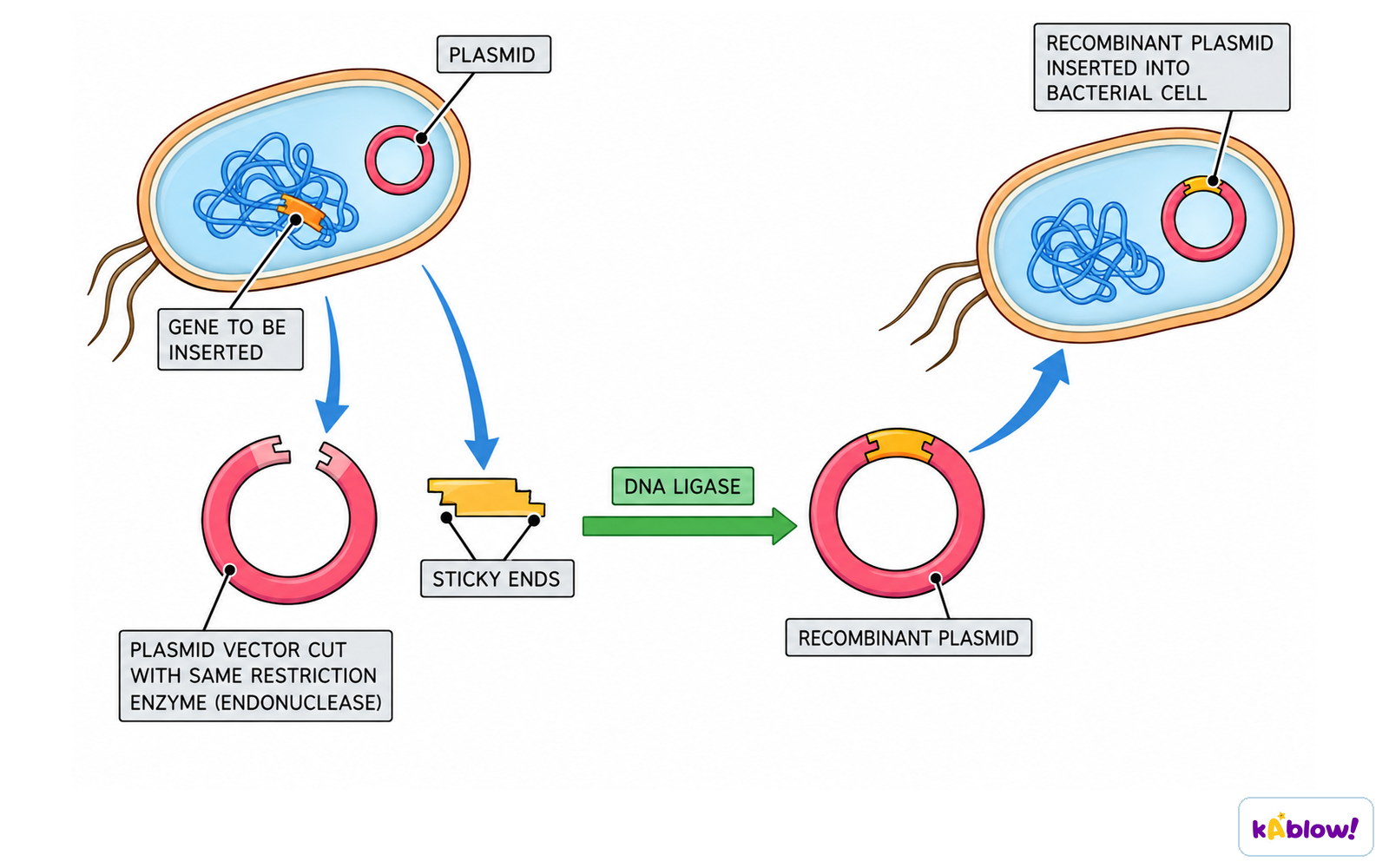
- 1. Restriction enzymes cut out the desired gene, leaving sticky ends (unpaired bases).
- 2. Same enzyme cuts a bacterial plasmid, creating complementary sticky ends.
- 3. DNA ligase joins the gene and plasmid to form recombinant plasmid.
- 4. Recombinant plasmid is inserted into a bacterial cell.
- 5. Bacteria multiply in a fermenter, copying the plasmid and producing the human protein.
- Bacteria are ideal because they share the same genetic code, have plasmids, and raise few ethical issues.
Genetic modification: cutting, joining and inserting a recombinant plasmid
Diapositivas
Sign up free to view the lesson slides
Step through every slide for this topic — plus flashcards and revision notes — with a free account.
Preguntas de práctica
Vista previa gratis — 8 de 56 preguntas. Regístrate para verlas todas.
1.Which of these statements correctly describes genetic engineering?
Easy- AOnly breeding from crop plants that are resistant to pests.
- BAltering the DNA in crop plants so that they are resistant to herbicides.
- CUsing yeast to produce ethanol.
- DProduction of insulin in the pancreas.
2.Which of the following is a reason yeast is used to make bread?
Easy- AIt produces ethanol.
- BIt produces lactic acid.
- CIt produces carbon dioxide.
- DIt produces oxygen.
3.What is the name of the enzyme used to produce clear apple juice?
Easy- ALipase
- BAmylase
- CProtease
- DPectinase
4.What needs to be inserted into a bacterial cell to allow it to produce insulin to treat diabetes?
Easy- AAn enzyme.
- BA molecule of insulin.
- CA length of DNA from a human.
- DA length of DNA from a bacterium.
5.Why are bacteria used in biotechnology?
Easy- AThey can make complex molecules.
- BThey are found inside the human body.
- CThey reproduce slowly.
- DThey can become resistant to antibiotics.
6.What is an example of genetic modification?
Easy- AInserting genes into bacteria
- BInserting insulin into bacteria
- CSpraying plants with herbicides
- DUsing biological washing powders
7.Which cell structure makes bacteria useful for genetic modification?
Easy- ACell membrane
- BCell wall
- CCytoplasm
- DPlasmids
8.The diagram shows an industrial fermenter used to produce penicillin. What is the function of the part labelled WATER JACKET?
Medium- AAdd oxygen to the solution
- BMaintain an even temperature throughout the solution
- CRecord the pH of the solution
- DSterilise the solution

Unlock all 56 questions & more
Crea una cuenta gratis para ver todas las preguntas, las diapositivas, las tarjetas y los apuntes de repaso de este tema.