Characteristics, Classification & Features Of Organisms
Apréndelo jugando
Responde estas preguntas para ganar energía, luego pesca y explora. Sin cuenta.
Apuntes de la lección
Characteristics of Living Organisms (MRS GREN)
- Movement: an action causing a change of position or place.
- Respiration: chemical reactions breaking down nutrient molecules to release energy.
- Sensitivity: ability to detect stimuli and make appropriate responses.
- Growth: permanent increase in size and dry mass (cell number/size).
- Reproduction: processes that make more of the same kind of organism.
- Excretion: removal of toxic metabolic wastes and excess substances.
- Nutrition: intake of materials for energy, growth and development.
Concept & Uses of Classification Systems
- A species is a group of organisms that can reproduce to produce fertile offspring.
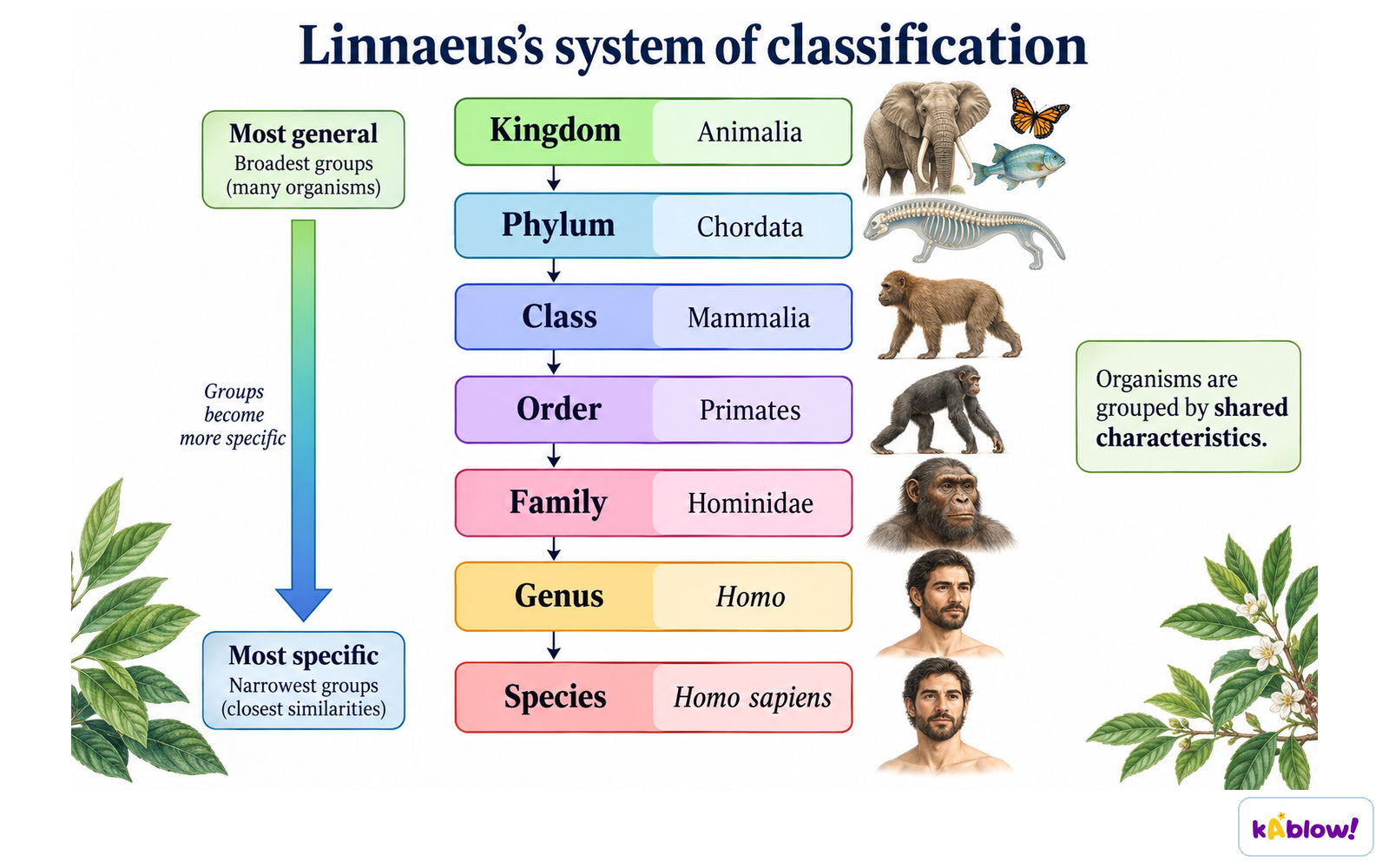
- Linnaeus developed the binomial system: scientific name = Genus (capital) + species (lowercase), e.g.×Homo sapiens×.
- Hierarchy: Kingdom, Phylum, Class, Order, Family, Genus, Species (mnemonic: King Philip Came Over For Grand's Spaghetti).
- Dichotomous keys use paired statements to identify organisms by their features.
- Modern classification uses DNA sequencing; more similar base sequences = more closely related.
Linnaeus's system of classification
The Five Kingdoms
- Animals: multicellular, no cell walls/chloroplasts, feed on organic substances.
- Plants: multicellular, cellulose cell walls, chloroplasts, feed by photosynthesis.
- Fungi: usually multicellular, cell walls not cellulose, saprophytic/parasitic nutrition.
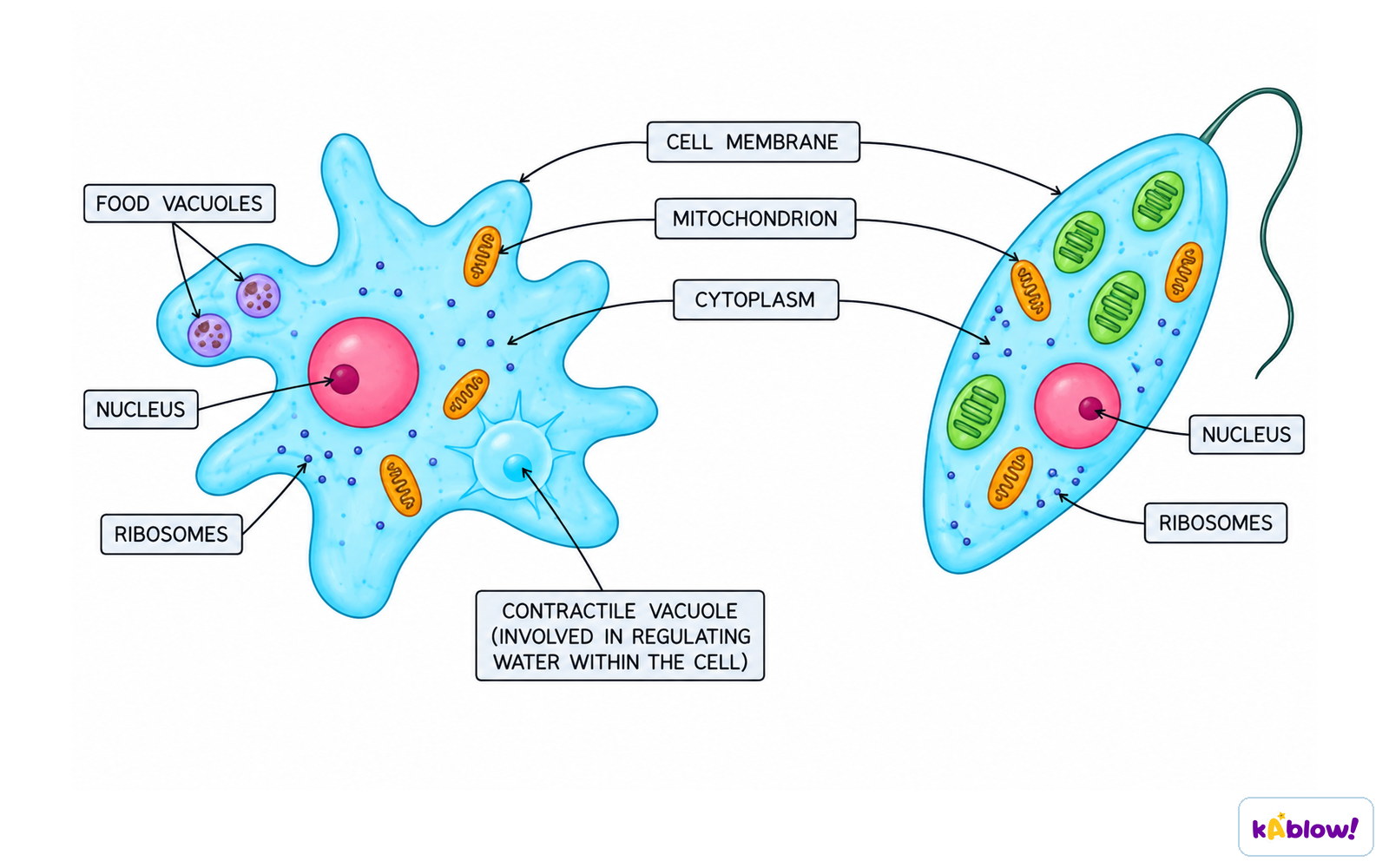
- Protoctists: mostly unicellular, some have chloroplasts, varied nutrition.
- Prokaryotes (bacteria): unicellular, cell walls not cellulose, no nucleus or mitochondria.
Two examples of protoctist cells
Features of Animals – Vertebrates
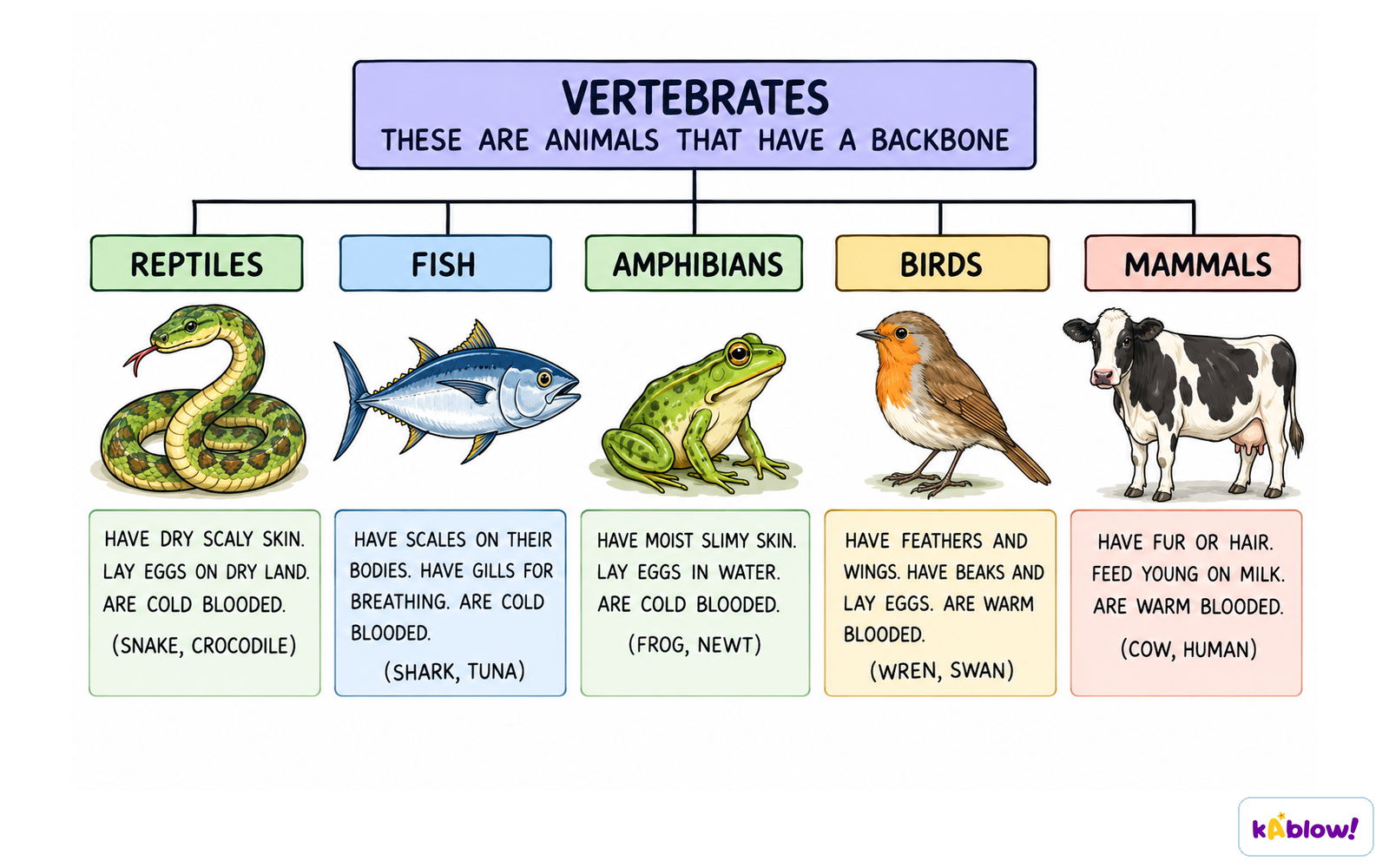
- All vertebrates have a backbone.
- Fish: scales, gills, lay eggs in water.
- Amphibians: moist skin, gills as larvae/lungs as adults, lay eggs in water.
- Reptiles: dry scaly skin, lungs, lay eggs on land.
- Birds: feathers, wings, beak, lay eggs with hard shells.
- Mammals: fur/hair, mammary glands, external ears (pinnas), give birth to live young.
Classification of vertebrates
Features of Animals – Invertebrates (Arthropods)
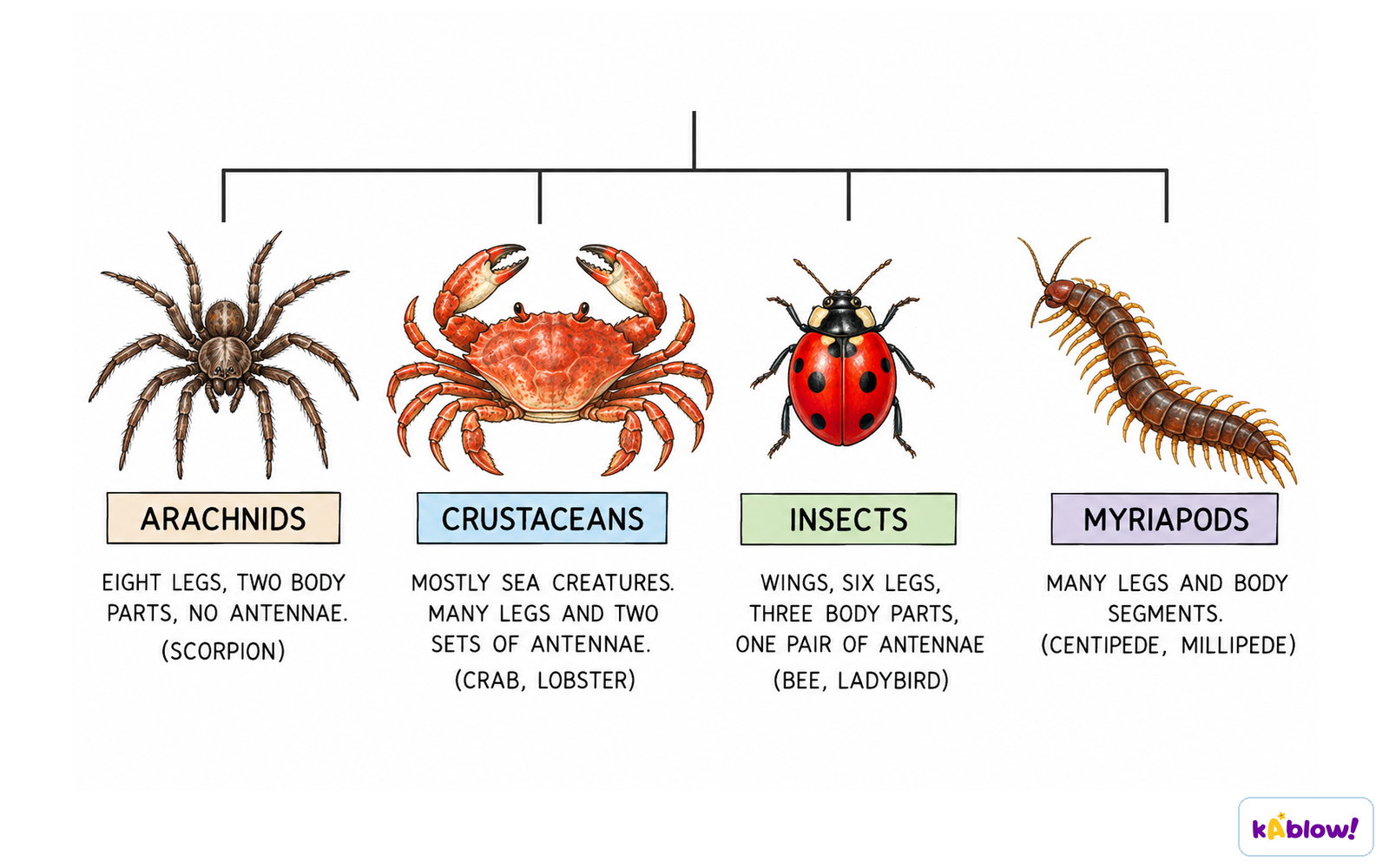
- Invertebrates lack a backbone; arthropods have jointed legs and segmented bodies.
- Myriapods: many body segments, 1 or 2 pairs of legs per segment.
- Insects: 3 body parts, 3 pairs of legs, 1 pair of antennae, often 2 pairs of wings.
- Arachnids: 2 body parts, 4 pairs of legs, no antennae.
- Crustaceans: 2 pairs of antennae, variable legs, often have a carapace.
Classification of arthropods
Features of Plants (Extended)
- Plants contain chlorophyll for photosynthesis.
- Ferns: leaves called fronds, reproduce by spores on underside of fronds.
- Flowering plants: reproduce by flowers and seeds; seeds inside ovary.
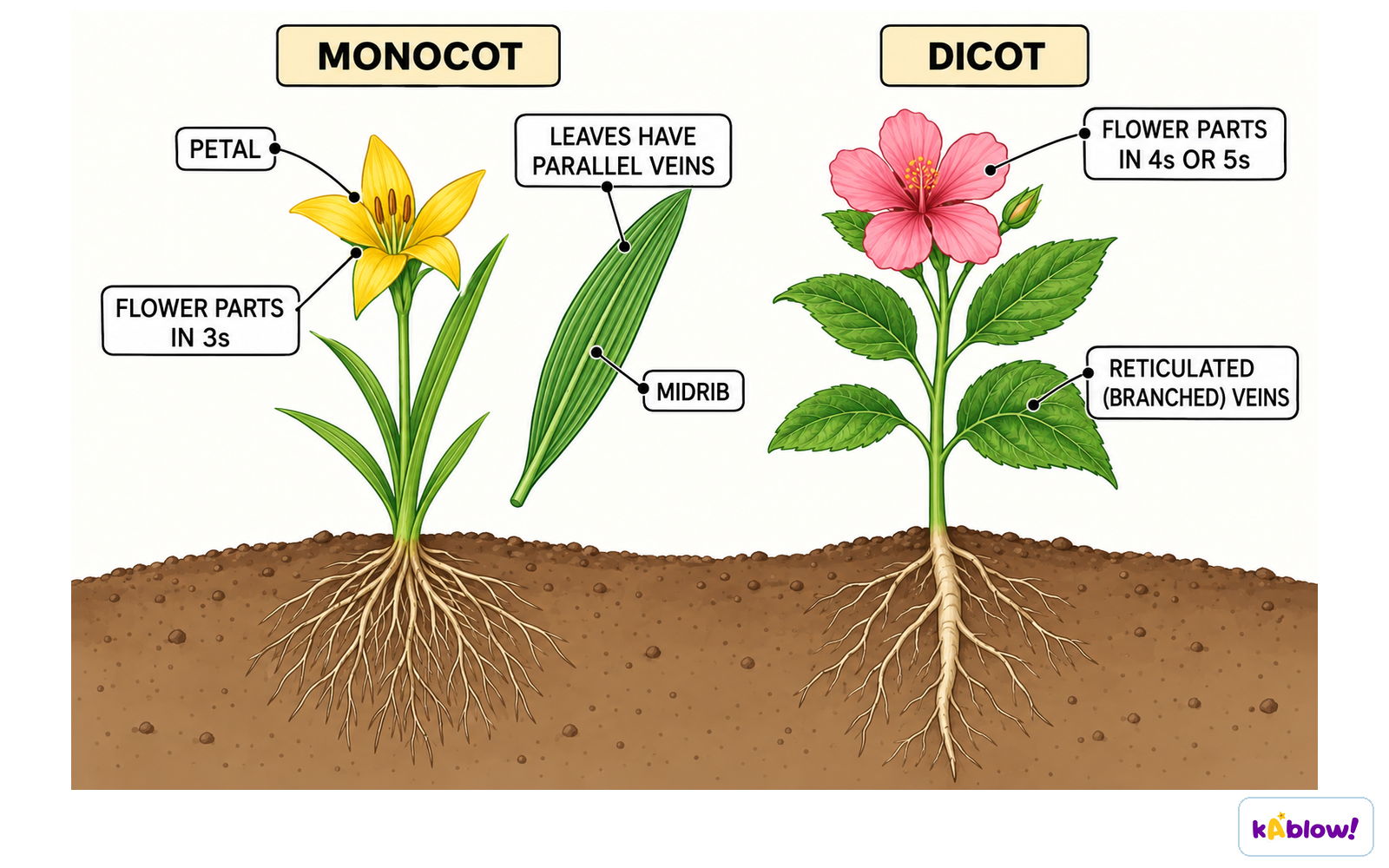
- Monocotyledons: petals in multiples of 3, parallel leaf veins, narrow grass-like leaves.
- Dicotyledons: petals in multiples of 4 or 5, reticulated leaf veins, broad leaves.
Monocotyledon and dicotyledon plant features
Viruses (Extended)
- Viruses are not considered living; they do not carry out MRS GREN.
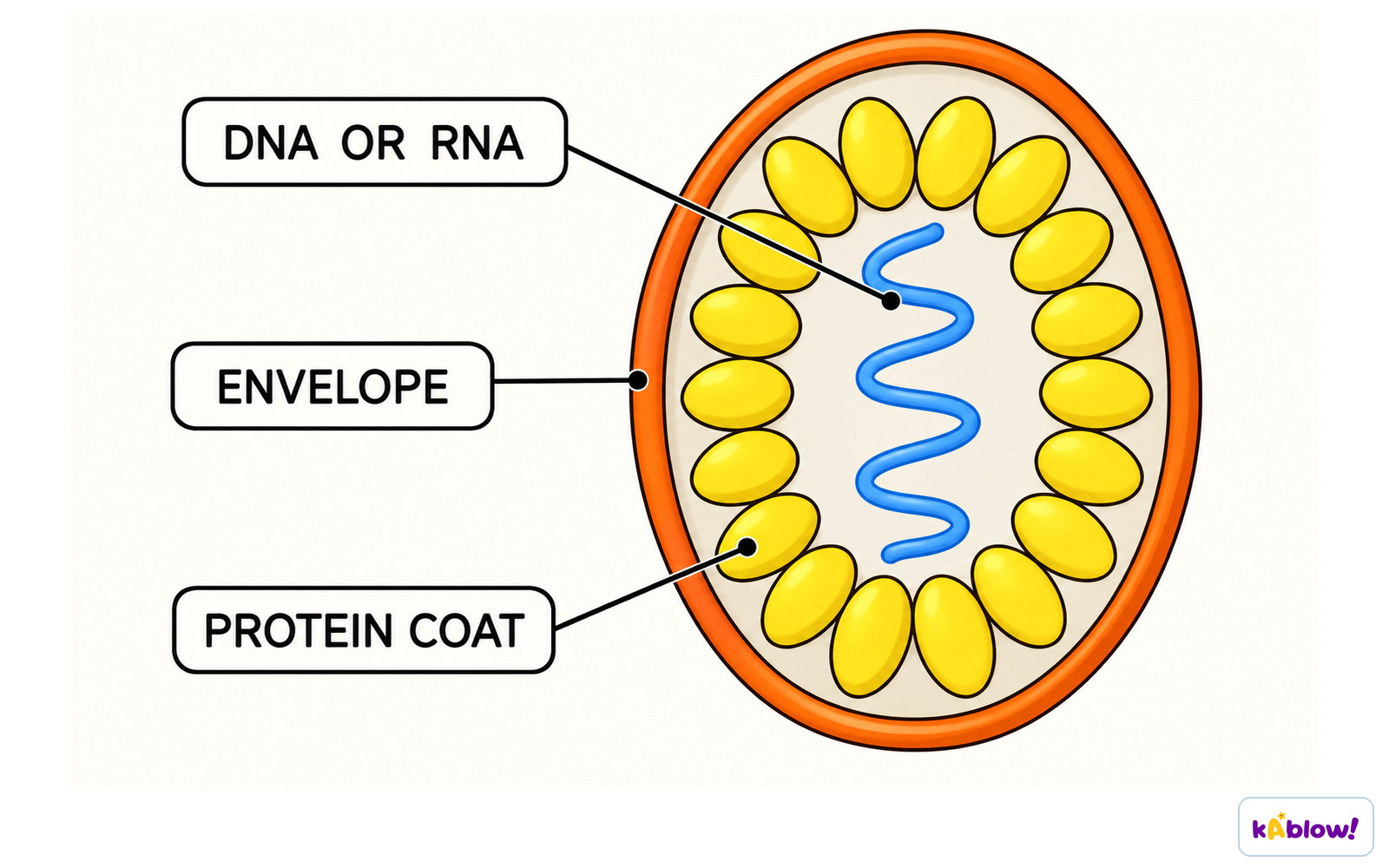
- They consist of genetic material (RNA or DNA) inside a protein coat.
- They replicate by taking over a host cell's metabolic pathways.
Structure of a typical virus
Diapositivas
Sign up free to view the lesson slides
Step through every slide for this topic — plus flashcards and revision notes — with a free account.
Preguntas de práctica
Vista previa gratis — 8 de 46 preguntas. Regístrate para verlas todas.
1.Which characteristic of living organisms is defined as 'the chemical reactions that break down nutrient molecules in living cells to release energy for metabolism'?
Easy- ARespiration
- BNutrition
- CExcretion
- DGrowth
2.What is the correct order of classification from the broadest to the most specific group?
Easy- AKingdom, Phylum, Class, Order, Family, Genus, Species
- BKingdom, Class, Phylum, Order, Family, Genus, Species
- CSpecies, Genus, Family, Order, Class, Phylum, Kingdom
- DPhylum, Kingdom, Class, Order, Family, Genus, Species
3.The scientific name for the house mouse is Mus musculus. To which genus does it belong?
Easy- AMus
- Bmusculus
- CMammal
- DVertebrate
4.Which of the following is NOT a characteristic of all living organisms?
Easy- APhotosynthesis
- BMovement
- CExcretion
- DReproduction
5.A new organism is discovered. It is unicellular, has a nucleus, and feeds on organic matter. To which kingdom does it most likely belong?
Medium- AProtoctista
- BProkaryotae
- CFungi
- DAnimalia
6.Which group of vertebrates has moist skin and spends part of its life in water?
Easy- AAmphibians
- BReptiles
- CFish
- DMammals
7.Two species have very similar DNA base sequences. What does this indicate?
Medium- AThey are closely related and share a recent common ancestor.
- BThey are not related at all.
- CThey belong to the same species.
- DThey have identical physical features.
8.Which of the following is a feature of all arthropods?
Medium- ASegmented body
- BSix legs
- CTwo pairs of antennae
- DExoskeleton made of chitin
Unlock all 46 questions & more
Crea una cuenta gratis para ver todas las preguntas, las diapositivas, las tarjetas y los apuntes de repaso de este tema.