Diffusion, Osmosis & Active Transport
Apréndelo jugando
Responde estas preguntas para ganar energía, luego pesca y explora. Sin cuenta.
Apuntes de la lección
Diffusion
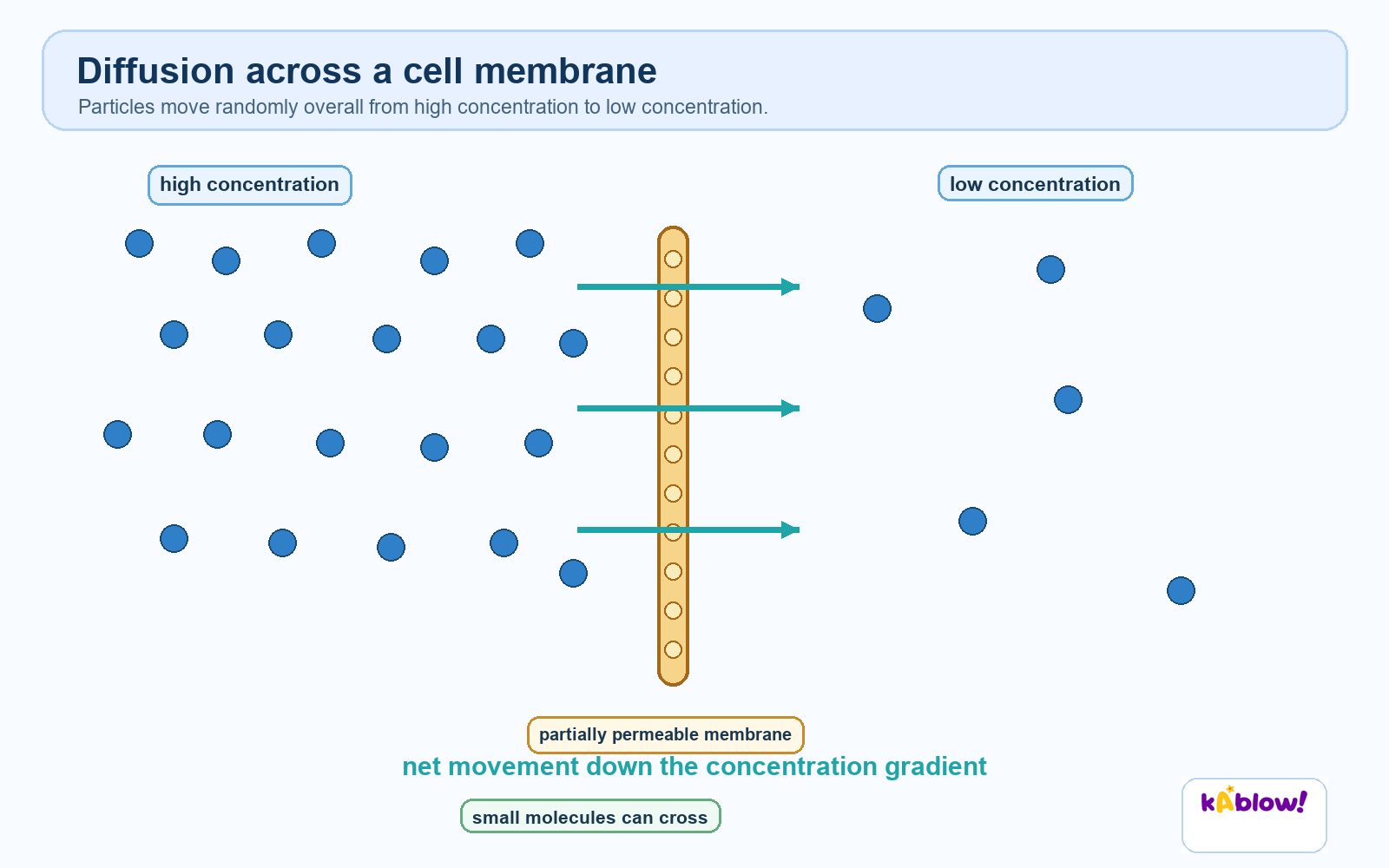
- Diffusion is the net movement of molecules from a region of higher concentration to a region of lower concentration, down a concentration gradient.
- It results from the random movement (Brownian motion) of particles; energy comes from their kinetic energy.
- The cell membrane is partially permeable, allowing only some molecules (e.g., small ones) to cross easily.
- Examples: O₂ and CO₂ move between cells and capillaries; CO₂ moves out of cells; water vapour diffuses out of leaves.
Diffusion across the cell membrane
Factors Affecting Diffusion Rate
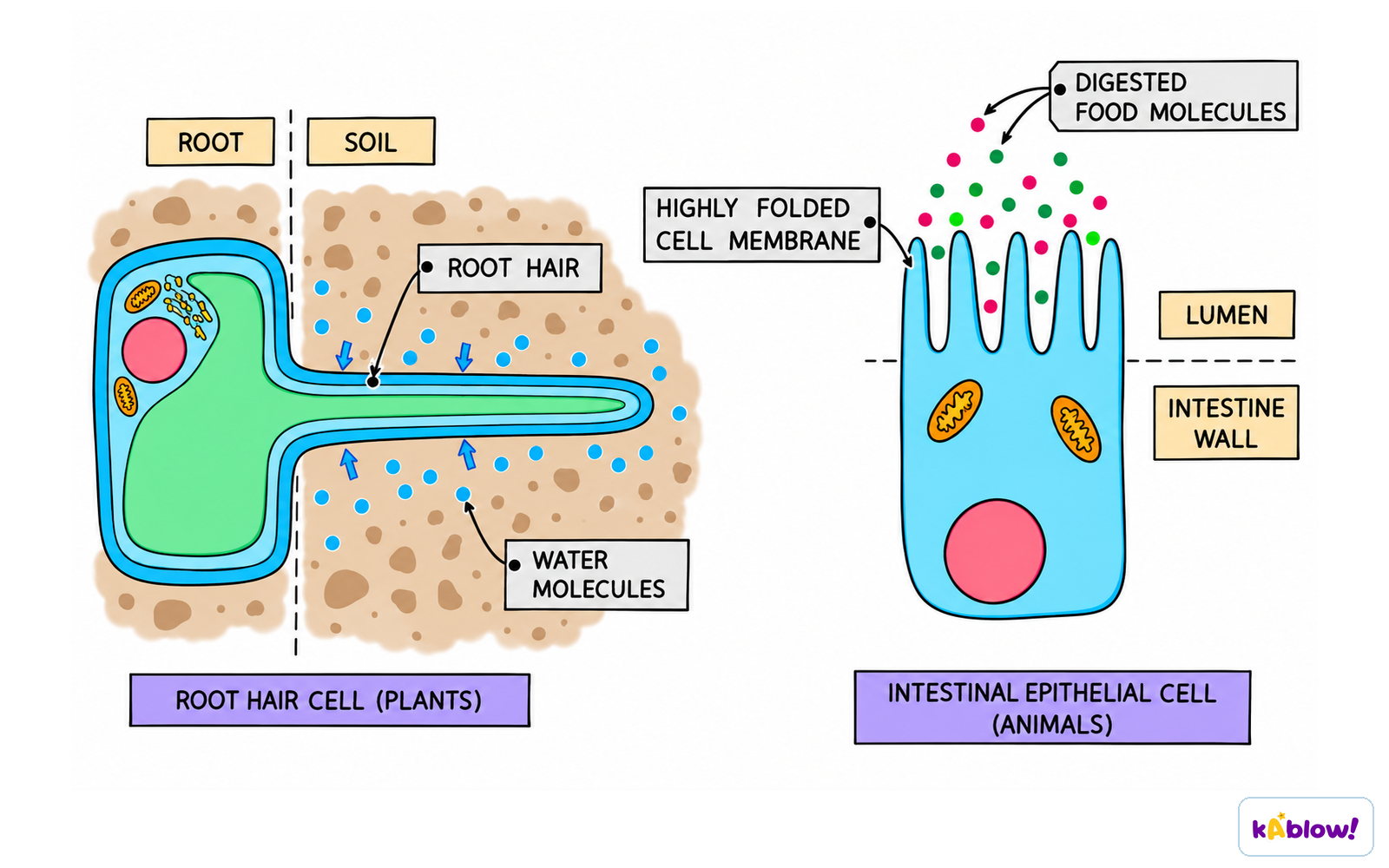
- Surface area to volume ratio: Larger SA:V increases rate; cells like root hair cells and ileum cells have folded surfaces to increase SA.
- Distance: Shorter distance (e.g., one-cell-thick walls of capillaries and alveoli) speeds up diffusion.
- Temperature: Higher temperature gives molecules more kinetic energy, increasing diffusion rate.
- Concentration gradient: A steeper gradient results in faster diffusion.
Cell adaptations for diffusion
Water as a Solvent
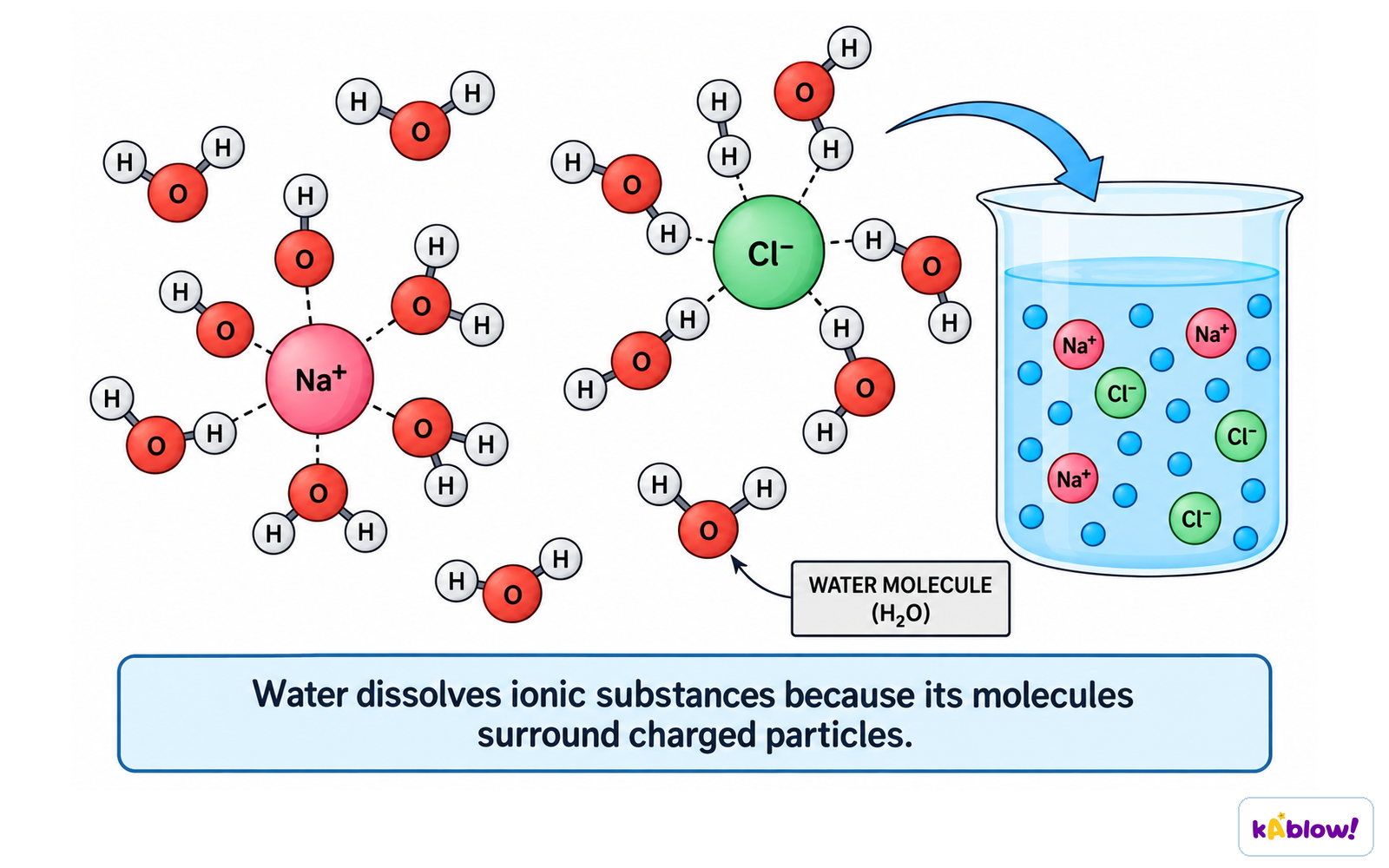
- Water is a solvent; many substances dissolve in it, enabling transport and reactions.
- Dissolved substances are transported in xylem/phloem (plants) and blood (animals).
- Digested food molecules dissolve in water for absorption; urea and excess salts dissolve for removal in urine.
- Water is a major component of cytoplasm, allowing metabolic reactions to occur.
Water as a solvent
Osmosis
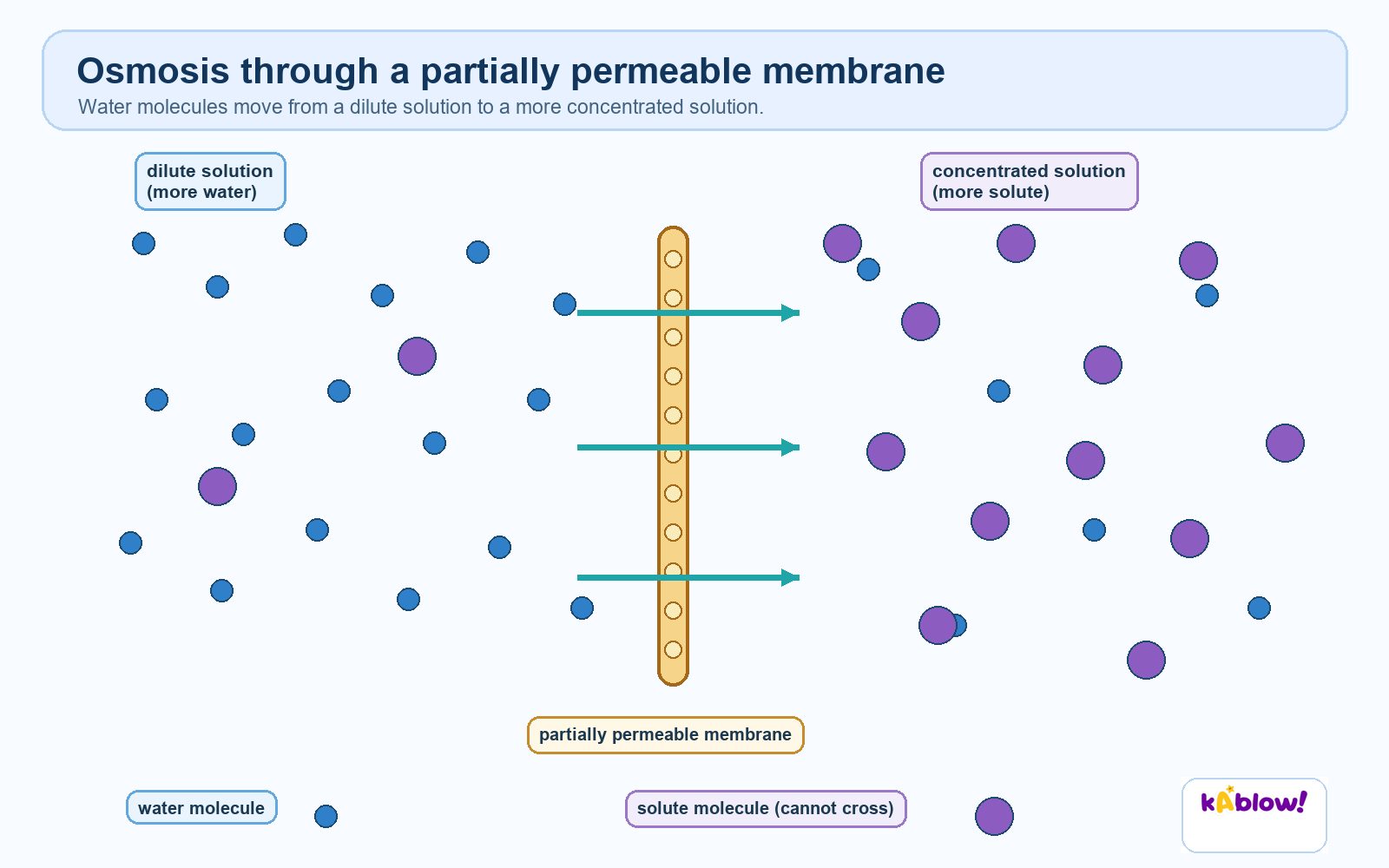
- Osmosis is the net movement of water molecules from a region of higher water potential (dilute solution) to a region of lower water potential (concentrated solution) through a partially permeable membrane.
- Water moves down its concentration gradient; the membrane allows water but not larger solute molecules to pass.
- In plant cells, water entry makes the cell turgid (firm), providing support; water loss makes it flaccid or plasmolysed (membrane pulls from wall).
- In animal cells, water entry can cause bursting (no cell wall); water loss causes crenation (shrivelling).
Osmosis and the partially permeable membrane
Osmosis Experiments
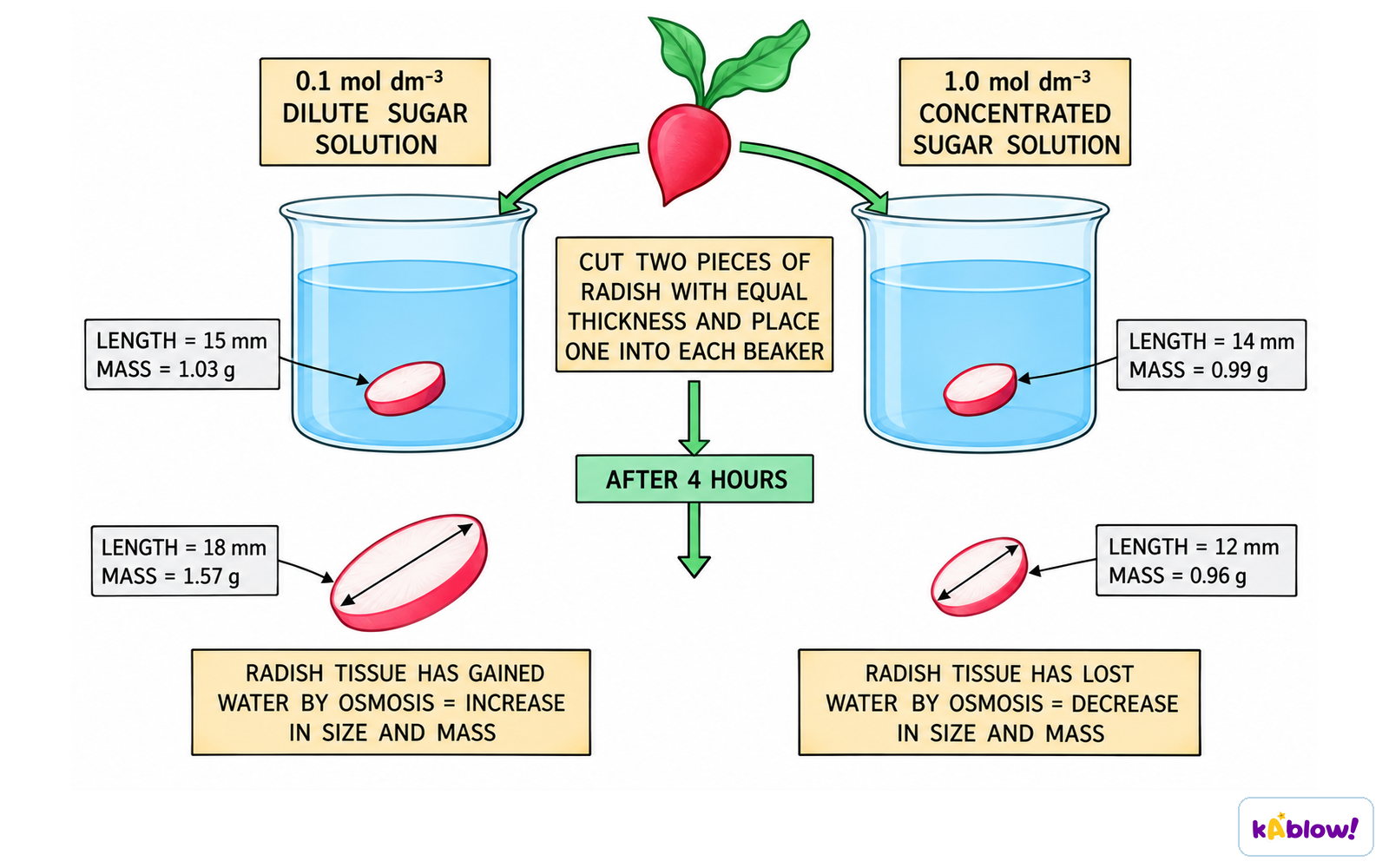
- Potato cylinder experiment: Cylinders are weighed, placed in solutions of different concentrations, then reweighed after 20–30 min.
- Mass gain → water moved into tissue (solution more dilute); mass loss → water moved out (solution more concentrated); no change → equal concentrations.
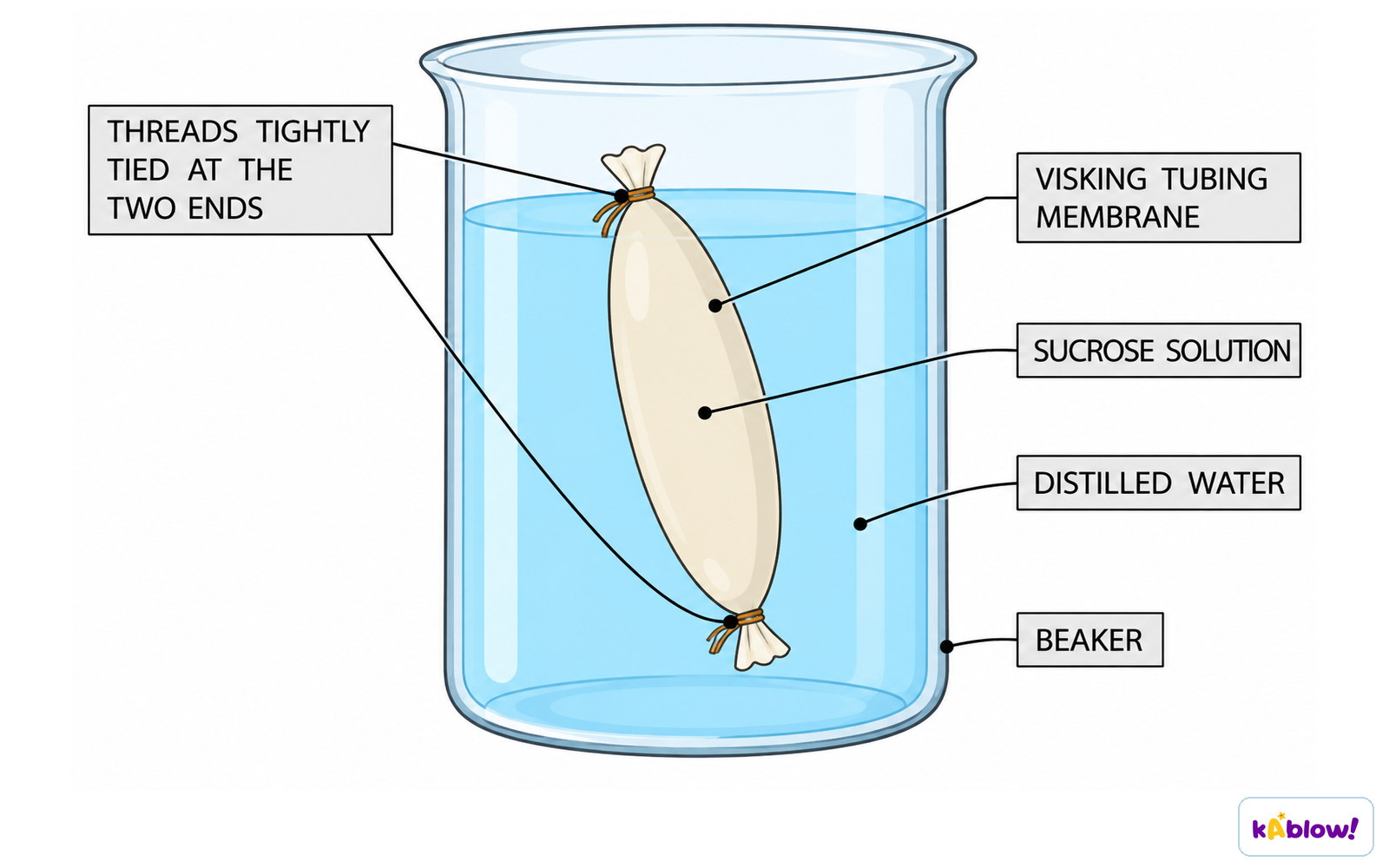
- Dialysis tubing experiment: Tubing filled with concentrated sucrose solution is placed in water; water moves in, causing the tubing to swell or the external water level to drop.
- Dialysis tubing is a non-living partially permeable membrane; it allows water and small molecules but not large solutes.
Investigating osmosis with plant tissue
Active Transport
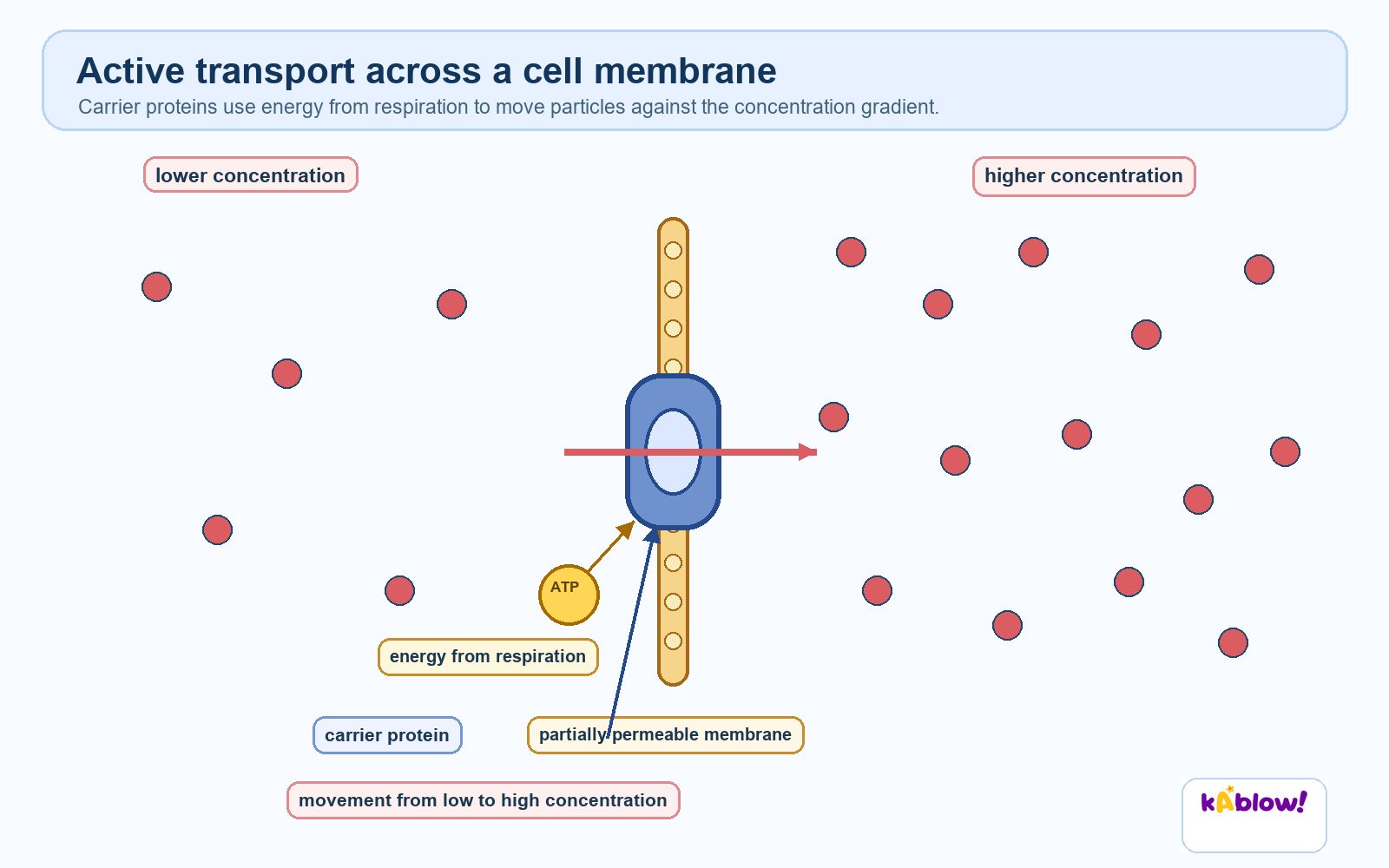
- Active transport is the movement of particles through a cell membrane from a region of lower concentration to a region of higher concentration, against a concentration gradient.
- It requires energy from respiration (ATP).
- Examples: uptake of glucose by epithelial cells of villi and kidney tubules; uptake of mineral ions by root hair cells.
- Carrier proteins in the membrane bind the substance, change shape using energy, and release it inside the cell.
The process of active transport
Diapositivas
Sign up free to view the lesson slides
Step through every slide for this topic — plus flashcards and revision notes — with a free account.
Preguntas de práctica
Vista previa gratis — 8 de 57 preguntas. Regístrate para verlas todas.
1.What is diffusion?
Easy- AThe movement of molecules from a region of higher concentration to a region of lower concentration
- BThe movement of molecules from a region of lower concentration to a region of higher concentration
- CThe movement of water through a partially permeable membrane
- DThe movement of molecules using energy from respiration
2.Which process involves the movement of water through a partially permeable membrane from a more dilute to a more concentrated solution?
Easy- ADiffusion
- BActive transport
- COsmosis
- DTranspiration
3.What is the energy source for diffusion?
Easy- AATP from respiration
- BKinetic energy of random movement
- CLight energy
- DHeat energy from the environment
4.Which statement correctly describes active transport?
Easy- AMovement of particles down a concentration gradient using energy
- BMovement of particles against a concentration gradient using energy from respiration
- CMovement of water through a partially permeable membrane
- DMovement of particles from high to low concentration without energy
5.A potato cylinder is placed in a concentrated salt solution. After one hour, its mass has decreased. What is the correct explanation?
Medium- ASalt entered the potato cells by active transport
- BWater moved out of the potato cells by osmosis
- CWater moved into the potato cells by osmosis
- DSalt left the potato cells by diffusion
6.Which of the following is an example of active transport in plants?
Easy- AMovement of water into root hair cells
- BUptake of mineral ions from soil by root hair cells
- CMovement of carbon dioxide into leaf mesophyll cells
- DLoss of water vapour from leaves
7.A plant cell is placed in a concentrated sugar solution. Which of the following correctly describes the events that occur?
Medium- AWater enters the cell by osmosis, cell becomes turgid
- BWater leaves the cell by osmosis, cell becomes plasmolysed
- CWater enters the cell by active transport, cell bursts
- DWater leaves the cell by active transport, cell becomes flaccid
8.Which row correctly compares diffusion and osmosis?
Medium- ABoth require a partially permeable membrane and move particles down a concentration gradient
- BOnly osmosis requires a partially permeable membrane; both move particles down a concentration gradient
- CBoth require energy; diffusion moves particles down a gradient, osmosis moves water up a gradient
- DOnly diffusion requires a partially permeable membrane; osmosis moves water against a gradient
Unlock all 57 questions & more
Crea una cuenta gratis para ver todas las preguntas, las diapositivas, las tarjetas y los apuntes de repaso de este tema.