Solids, Liquids & Gases
Apréndelo jugando
Responde estas preguntas para ganar energía, luego pesca y explora. Sin cuenta.
Apuntes de la lección
Kinetic Theory
- Matter consists of tiny particles in constant motion.
- Arrangement and movement differ in solids, liquids, and gases.
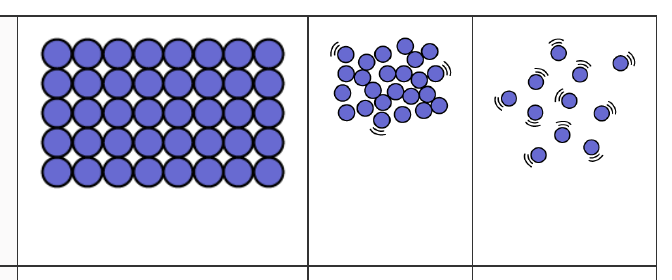
- Solids: particles packed closely in a regular pattern, vibrate in fixed positions.
- Liquids: particles close but randomly arranged, slide past each other.
- Gases: particles far apart, move randomly and quickly (~500 m/s).
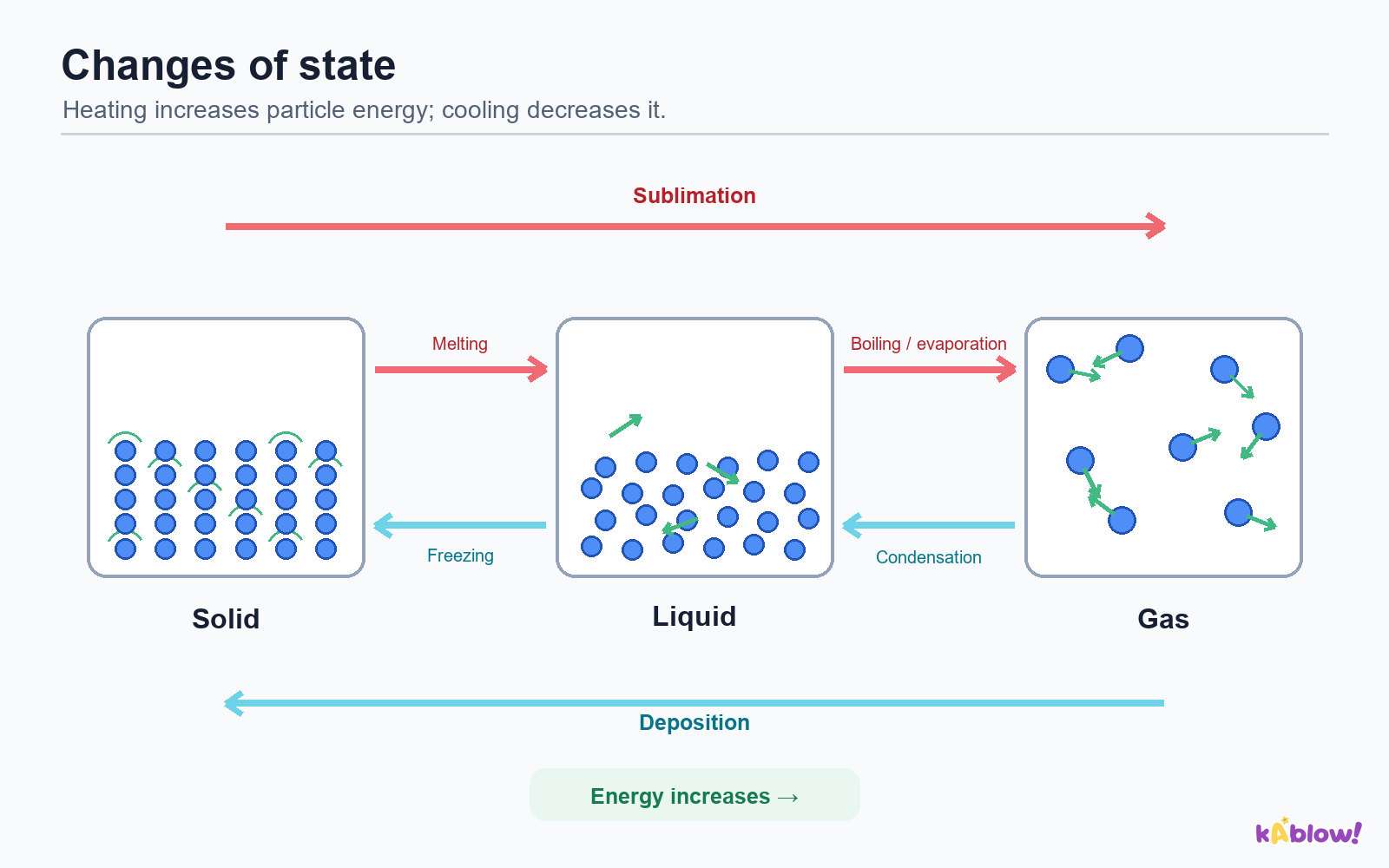
- Particle energy increases from solid to liquid to gas.
Particle arrangement in solids, liquids and gases
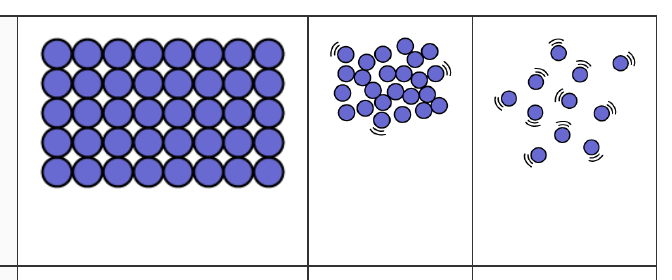
States of Matter
- Solid: fixed volume and shape, high density.
- Liquid: fixed volume, shape of container, medium density.
- Gas: no fixed volume, shape of container, low density, easily compressed.
- Density order: solid > liquid > gas (water is an exception).
State Changes
- Melting: solid → liquid at melting point; heat energy increases particle movement.
- Freezing: liquid → solid at same temperature as melting point.
- Boiling: liquid → gas at boiling point; bubbles form throughout liquid.
- Evaporation: liquid → gas at surface, below boiling point; faster with larger surface area and higher temperature.
- Condensation: gas → liquid on cooling; particles lose energy and clump together.
- During a state change, temperature remains constant because energy overcomes attractive forces, not increase kinetic energy.
The state changes
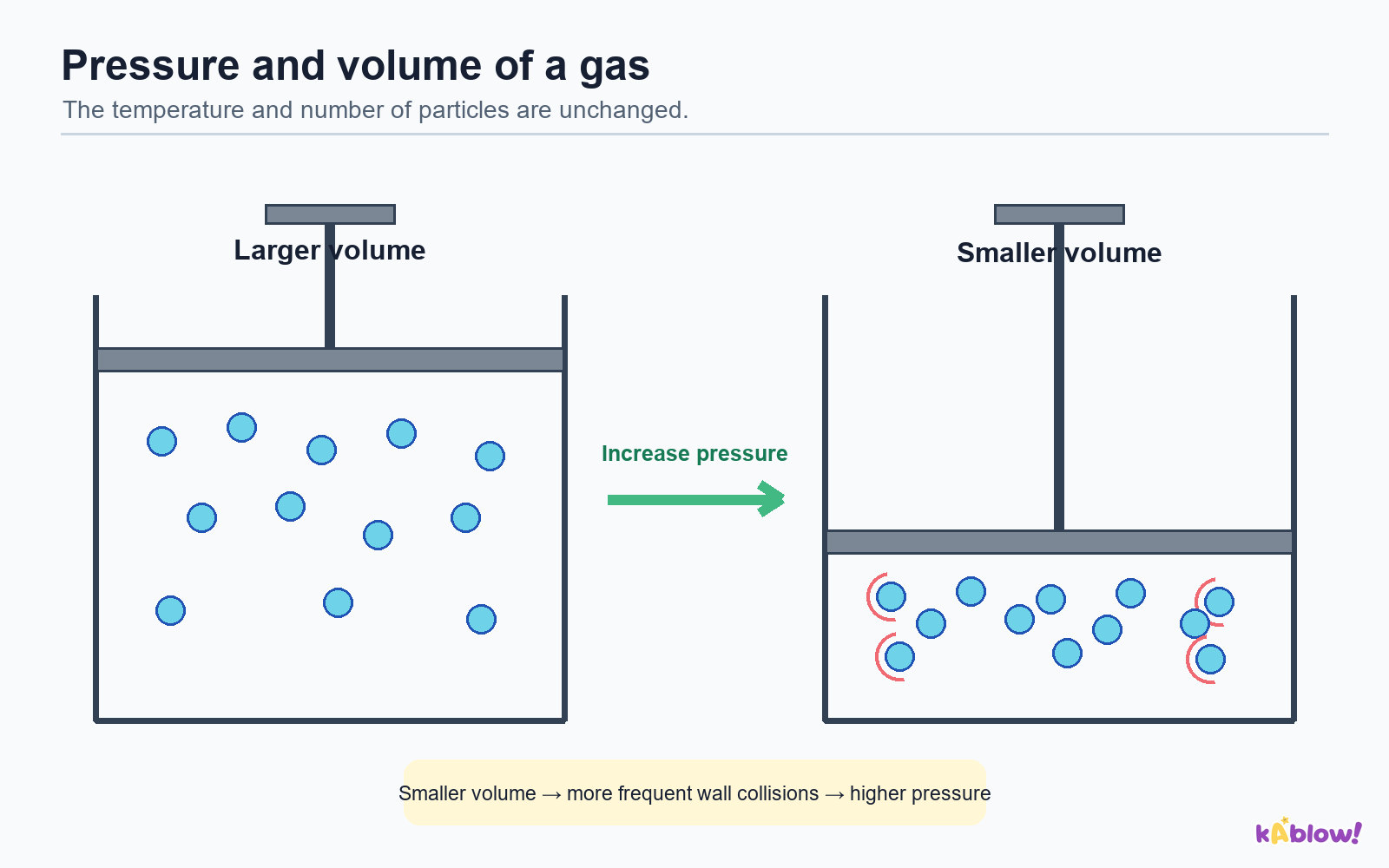
Pressure & Temperature in Gases
- Gas pressure results from particles colliding with container walls.
- Increasing temperature increases particle kinetic energy, causing faster movement and more frequent collisions.
- If container is flexible, volume increases as temperature rises (e.g., hot air balloon).
- Increasing pressure (squeezing) decreases volume; particles collide more frequently.
- Decreasing pressure increases volume.
- Do not say particles expand; say they spread out.
Pressure increases as volume decreases
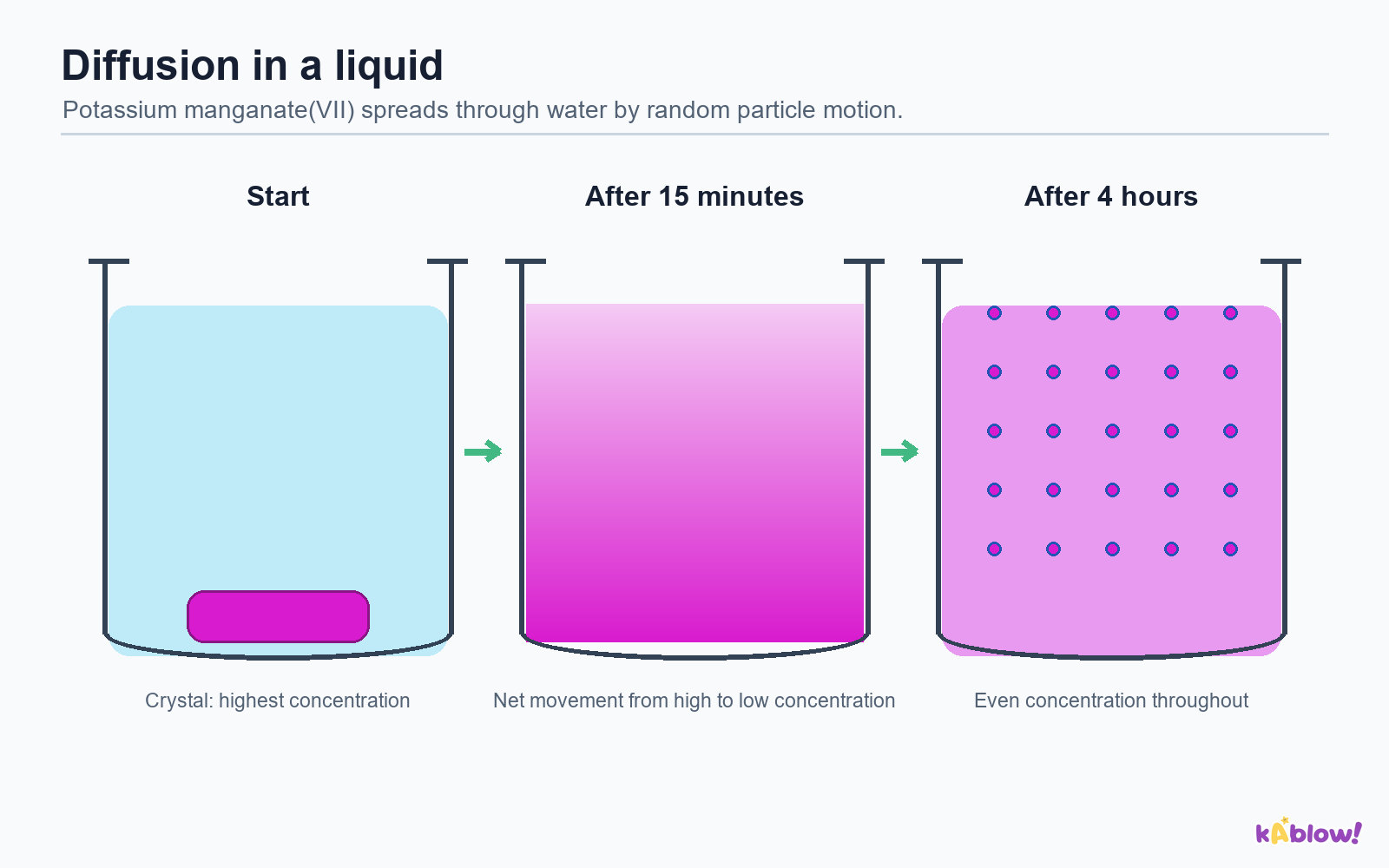
Diffusion
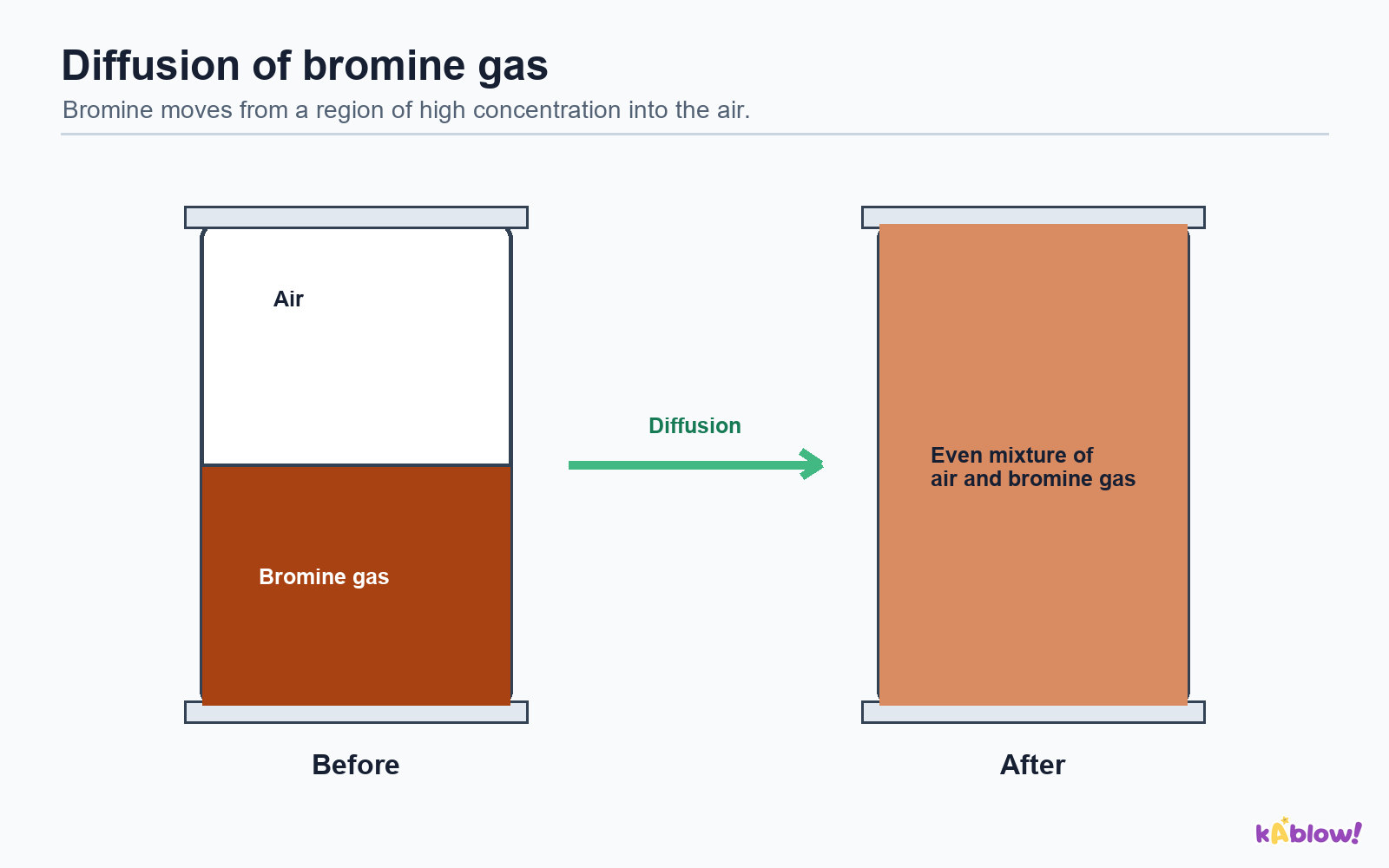
- Diffusion: net movement of particles from high to low concentration.
- Occurs in gases and liquids due to random particle motion.
- No energy input required; rate increases with temperature.
- Diffusion is faster in gases than liquids because gas particles have more kinetic energy.
- Example: potassium manganate(VII) in water spreads until evenly distributed.
Diffusion of potassium manganate(VII) in water
Diffusion & Molecular Mass (Extended)
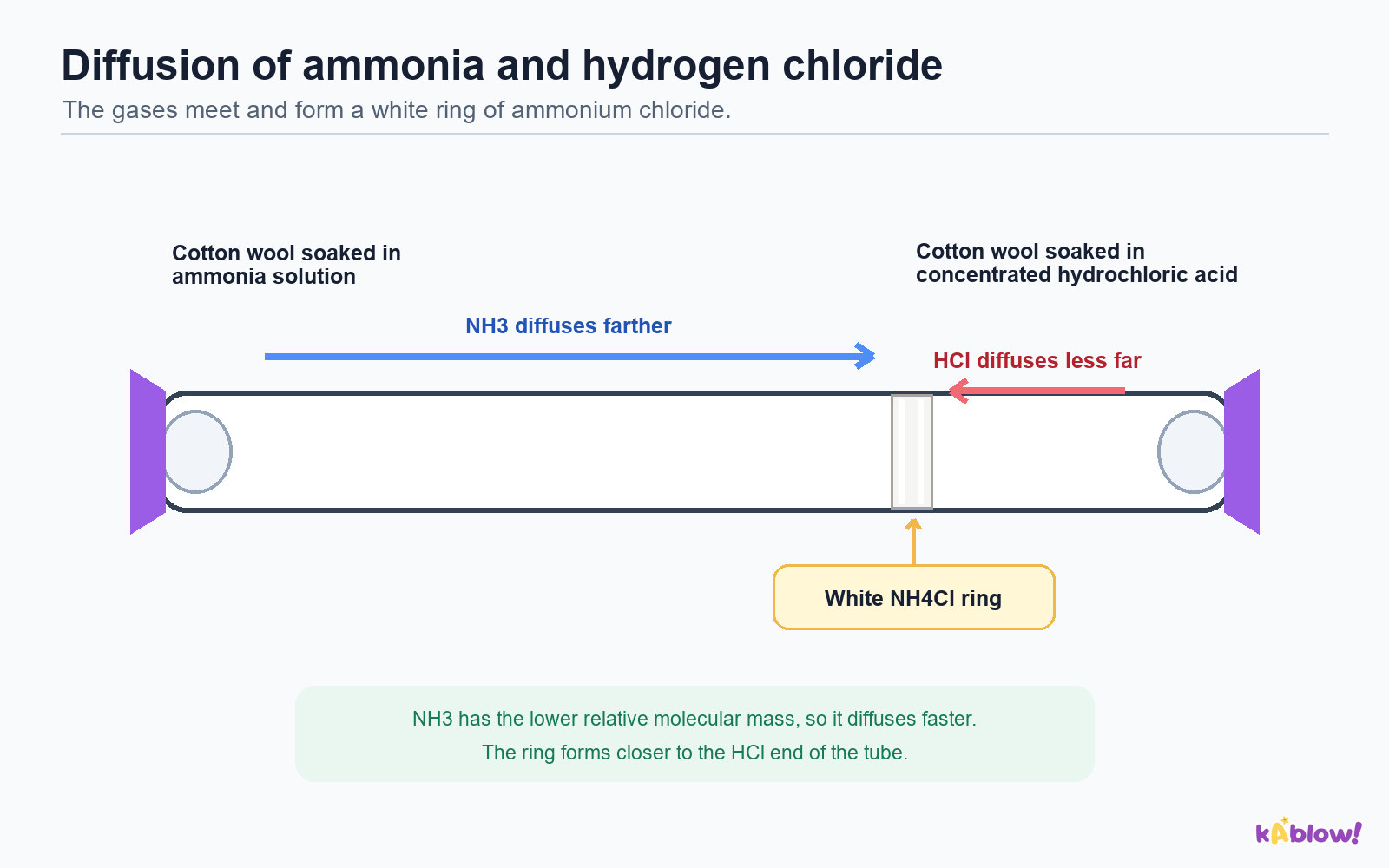
- At same temperature, lighter gases diffuse faster than heavier ones.
- Relative molecular mass (Mᵣ) determines rate: lower Mᵣ → faster diffusion.
- Example: ammonia (Mᵣ=17) diffuses faster than hydrogen chloride (Mᵣ=36.5).
- In a tube, ammonium chloride forms closer to the HCl end because NH₃ travels further.
Diffusion of ammonia and hydrogen chloride
Diapositivas
Sign up free to view the lesson slides
Step through every slide for this topic — plus flashcards and revision notes — with a free account.
Preguntas de práctica
Vista previa gratis — 8 de 46 preguntas. Regístrate para verlas todas.
1.Which of the following statements about a specific mass of a liquid at room temperature is correct?
Easy- AIt has a fixed volume.
- BIt has a fixed shape.
- CIts particles are in fixed positions.
- DIts volume is the same as that of an equal mass of gas.
2.In which of these substances are the particles close together and moving slowly past each other?
Easy- AIce
- BAir
- CSteam
- DWater
3.The statement 'The particles moved slowly from an area of high concentration to an area of low concentration' describes which process?
Easy- ADiffusion of a substance in a liquid
- BThe particles of a solid during melting
- CA liquid being frozen
- DDiffusion of a substance through air
4.A small amount of bleach spilled on a kitchen floor. After a while the floor was dry and the whole kitchen smelled of bleach. Which processes have occurred?
Medium- AEvaporation and diffusion
- BDistillation and diffusion
- CEvaporation only
- DDiffusion only
5.As the temperature of air in a balloon increases, the volume increases. When the volume increases, the pressure inside the balloon:
Easy- Aincreases
- Bdecreases
- Cstays the same
- Dbecomes zero
6.Water boils at 100 °C to form steam. Which statement about the particles of steam is correct?
Easy- AThe arrangement of the molecules is regular.
- BThe molecules move quickly in random directions.
- CThe forces of attraction between the molecules are strong.
- DThe molecules are close together.
7.Which statement about diffusion is correct?
Easy- AIt is a chemical change.
- BThe net movement of particles is from a region of lower concentration to a region of higher concentration.
- CThe particles spread in order with a fixed pattern.
- DThe net movement of particles is from a region of higher concentration to a region of lower concentration.
8.Which statements describe the arrangement of particles in a solid? 1. Particles are moving in all directions. 2. Particles are arranged in neat rows. 3. Particles can move past each other. 4. Particles vibrate about their positions.
Medium- A1 and 2
- B2 and 4
- C1 and 3
- D2 only
Unlock all 46 questions & more
Crea una cuenta gratis para ver todas las preguntas, las diapositivas, las tarjetas y los apuntes de repaso de este tema.