Respiration
Apréndelo jugando
Responde estas preguntas para ganar energía, luego pesca y explora. Sin cuenta.
Apuntes de la lección
Respiration in Cells
- Respiration is a chemical process that breaks down glucose to release energy; it is enzyme-controlled.
- Respiration can be aerobic (with oxygen) or anaerobic (without oxygen).
- Aerobic respiration releases much more energy per glucose molecule than anaerobic respiration.
- Most aerobic respiration reactions occur in the mitochondria.
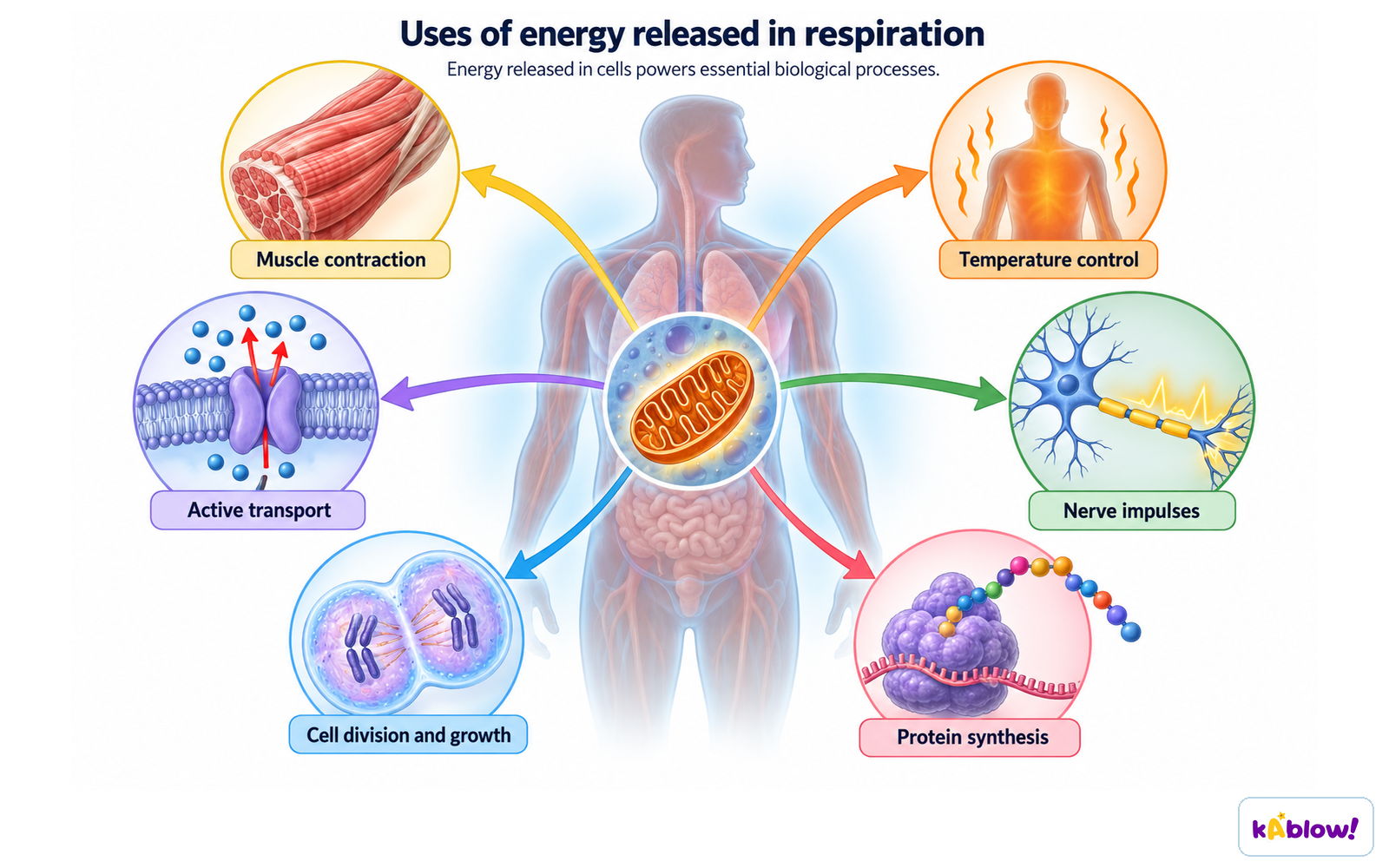
- Energy released is used for: muscle contraction, protein synthesis, cell division, growth, active transport, nerve impulses, and maintaining body temperature.
Uses of Energy in the Body of Humans
Aerobic Respiration
- Aerobic respiration requires oxygen and is the complete breakdown of glucose.
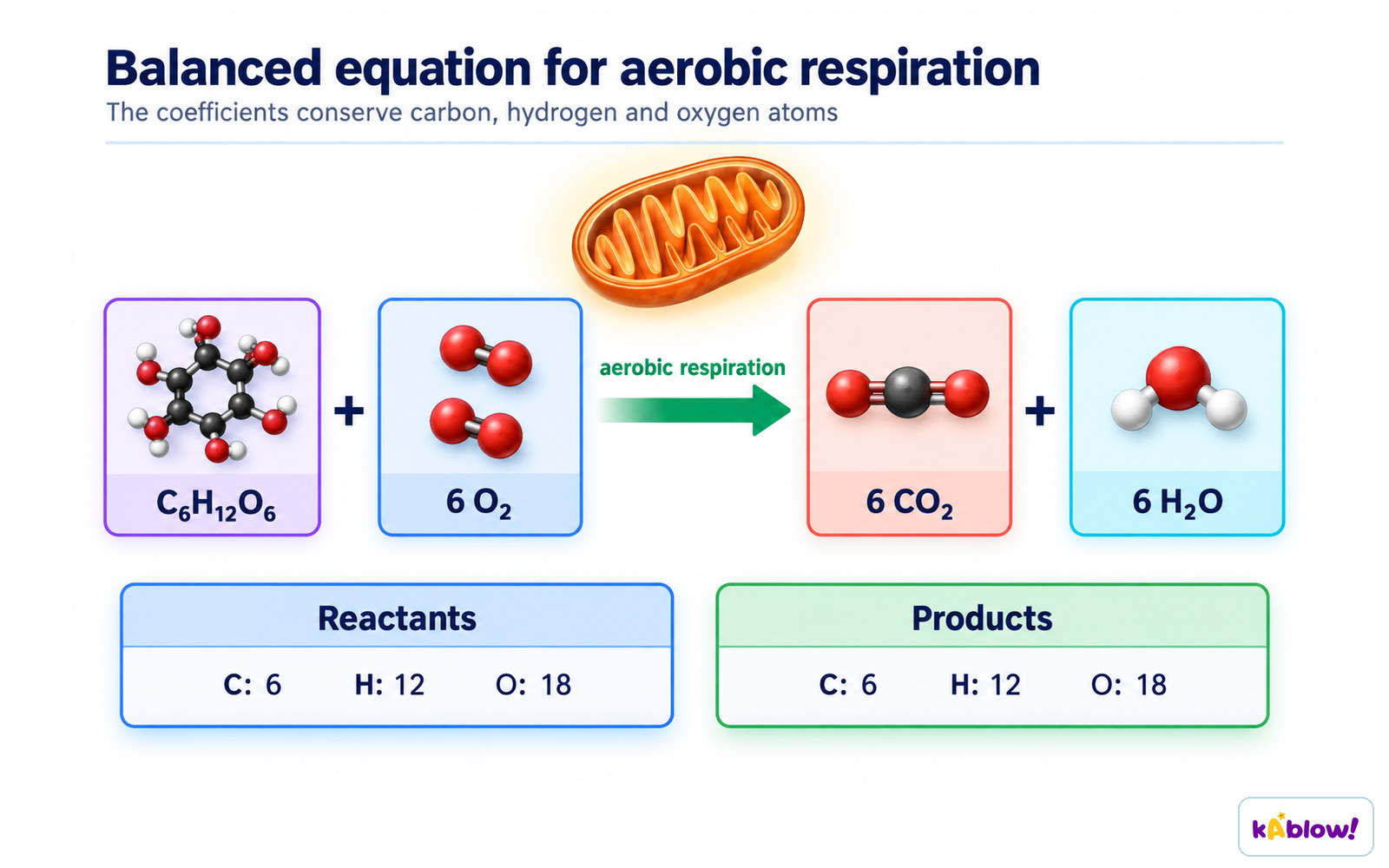
- Word equation: glucose + oxygen → carbon dioxide + water (+ energy).
- Balanced symbol equation: C₆H₁₂O₆ + 6O₂ → 6CO₂ + 6H₂O.
- This equation is the reverse of photosynthesis.
Balanced equation for aerobic respiration
Anaerobic Respiration in Animals
- Anaerobic respiration does not use oxygen and is an incomplete breakdown of glucose.
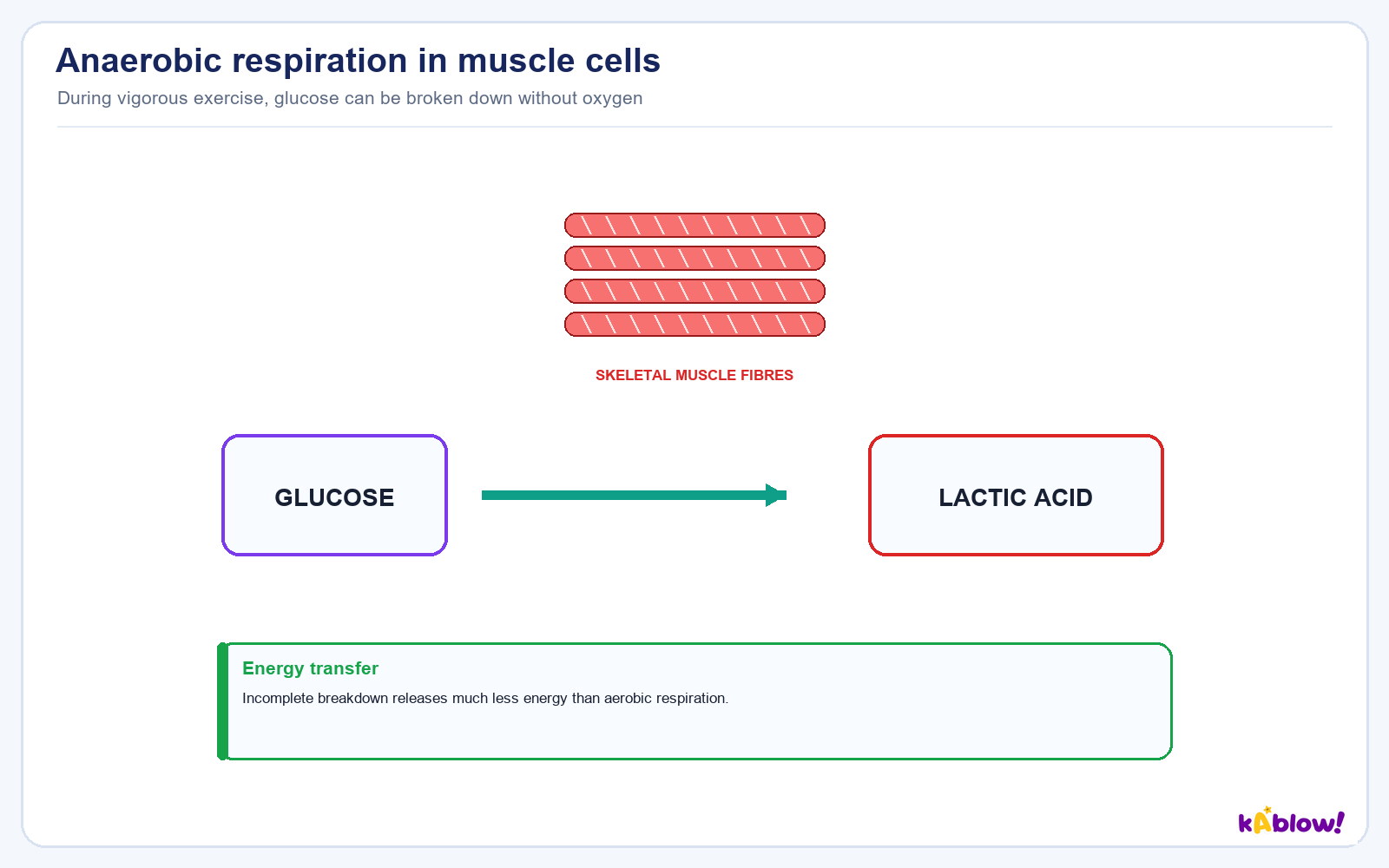
- In animals (e.g., during vigorous exercise), glucose is converted to lactic acid.
- Word equation: glucose → lactic acid (+ a small amount of energy).
- Lactic acid build-up lowers pH in muscle cells, which can denature enzymes.
- Lactic acid is transported to the liver where it is oxidised (using oxygen) back to carbon dioxide and water – this is repaying the oxygen debt.
Word equation for anaerobic respiration in animals
Anaerobic Respiration in Yeast
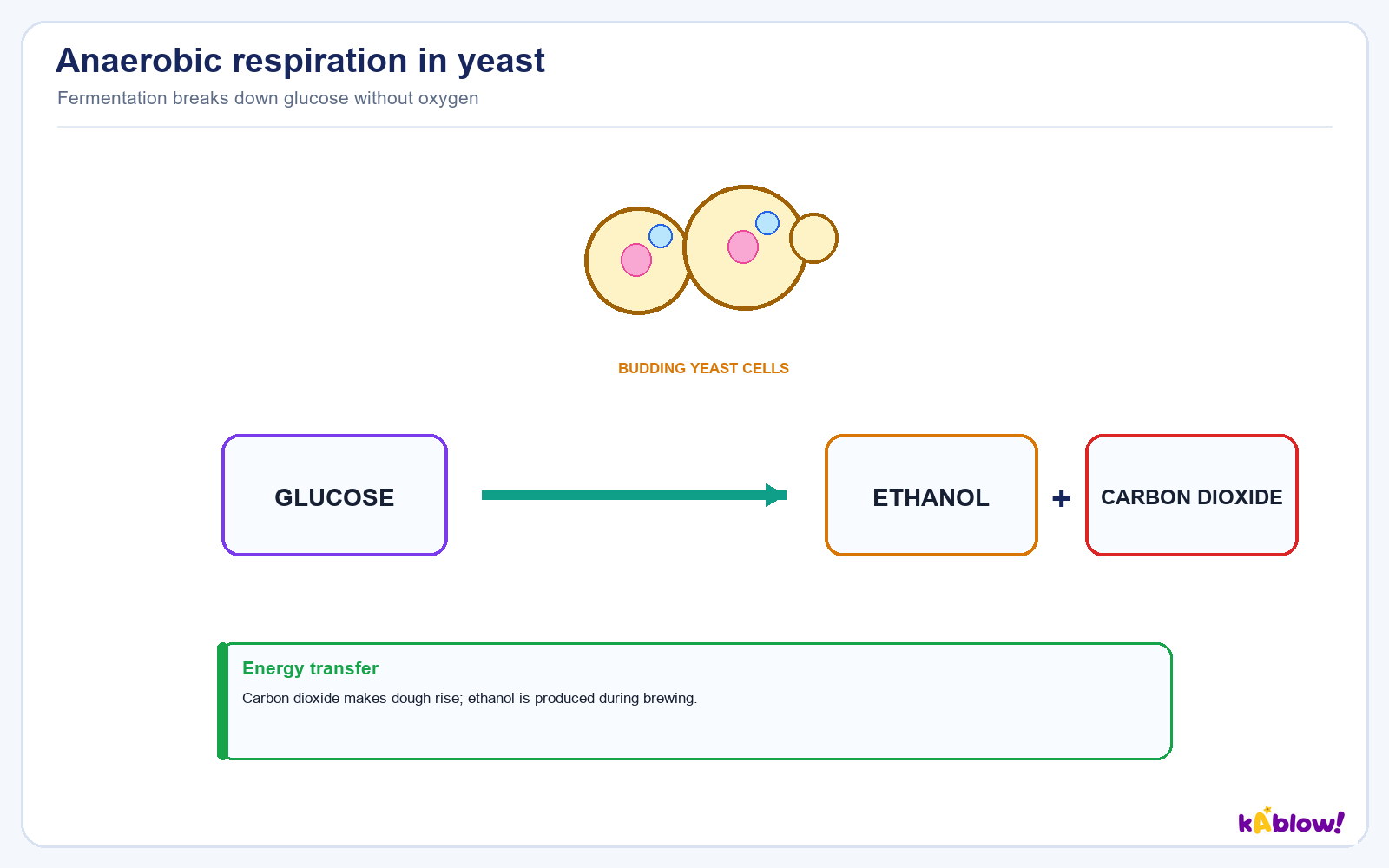
- In yeast, anaerobic respiration produces ethanol and carbon dioxide.
- Word equation: glucose → ethanol + carbon dioxide (+ a small amount of energy).
- Used in bread making (CO₂ makes dough rise) and brewing (ethanol in beer, CO₂ gives fizz).
Word equation for anaerobic respiration in yeast
Comparing Aerobic and Anaerobic Respiration
- Aerobic: uses oxygen, complete breakdown, large energy release, products CO₂ and H₂O.
- Anaerobic (animals): no oxygen, incomplete, small energy release, product lactic acid only.
- Anaerobic (yeast): no oxygen, incomplete, small energy release, products ethanol and CO₂.
- Anaerobic respiration in animals does not produce carbon dioxide.
Comparing aerobic and anaerobic respiration
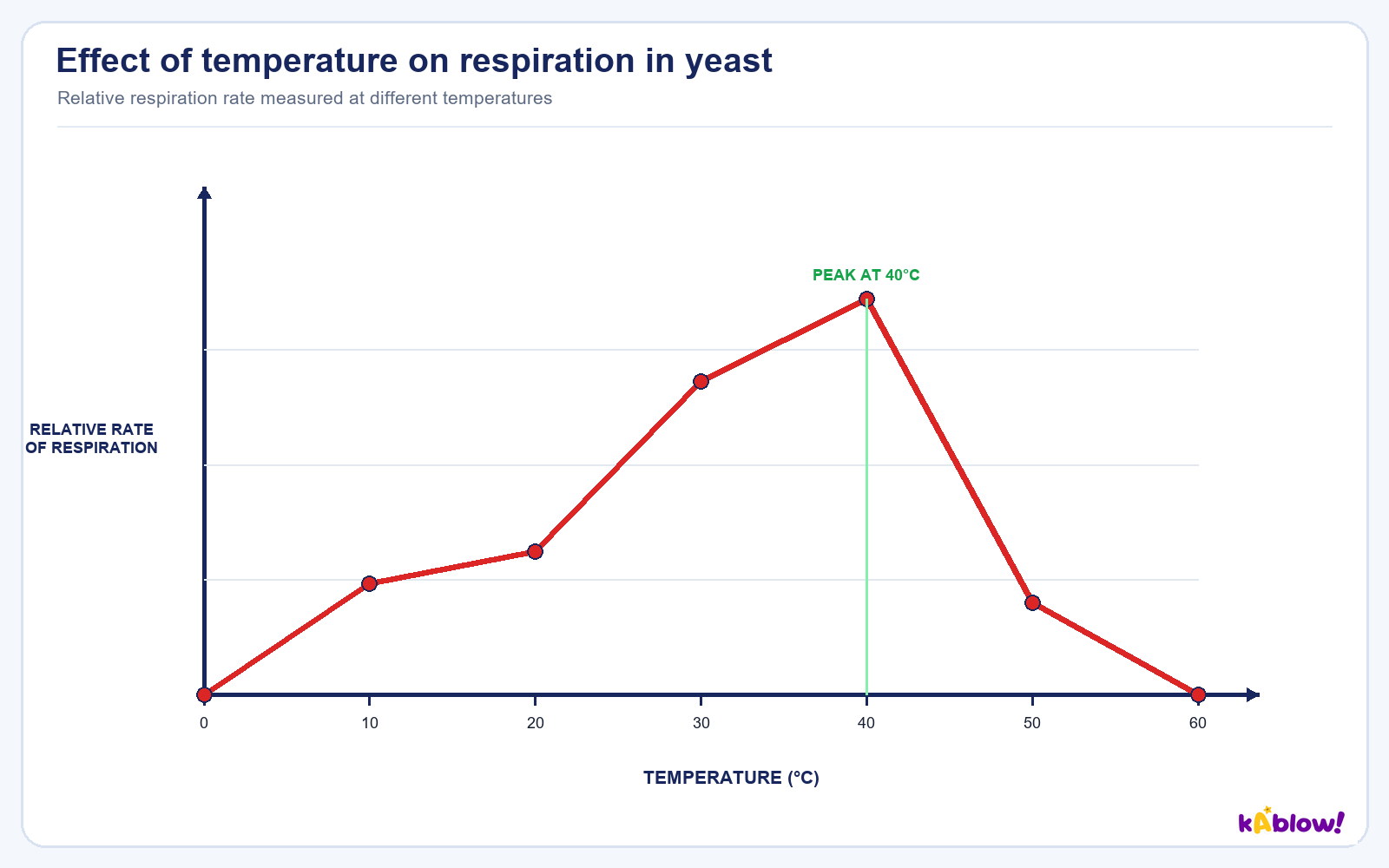
Effect of Temperature on Respiration Rate
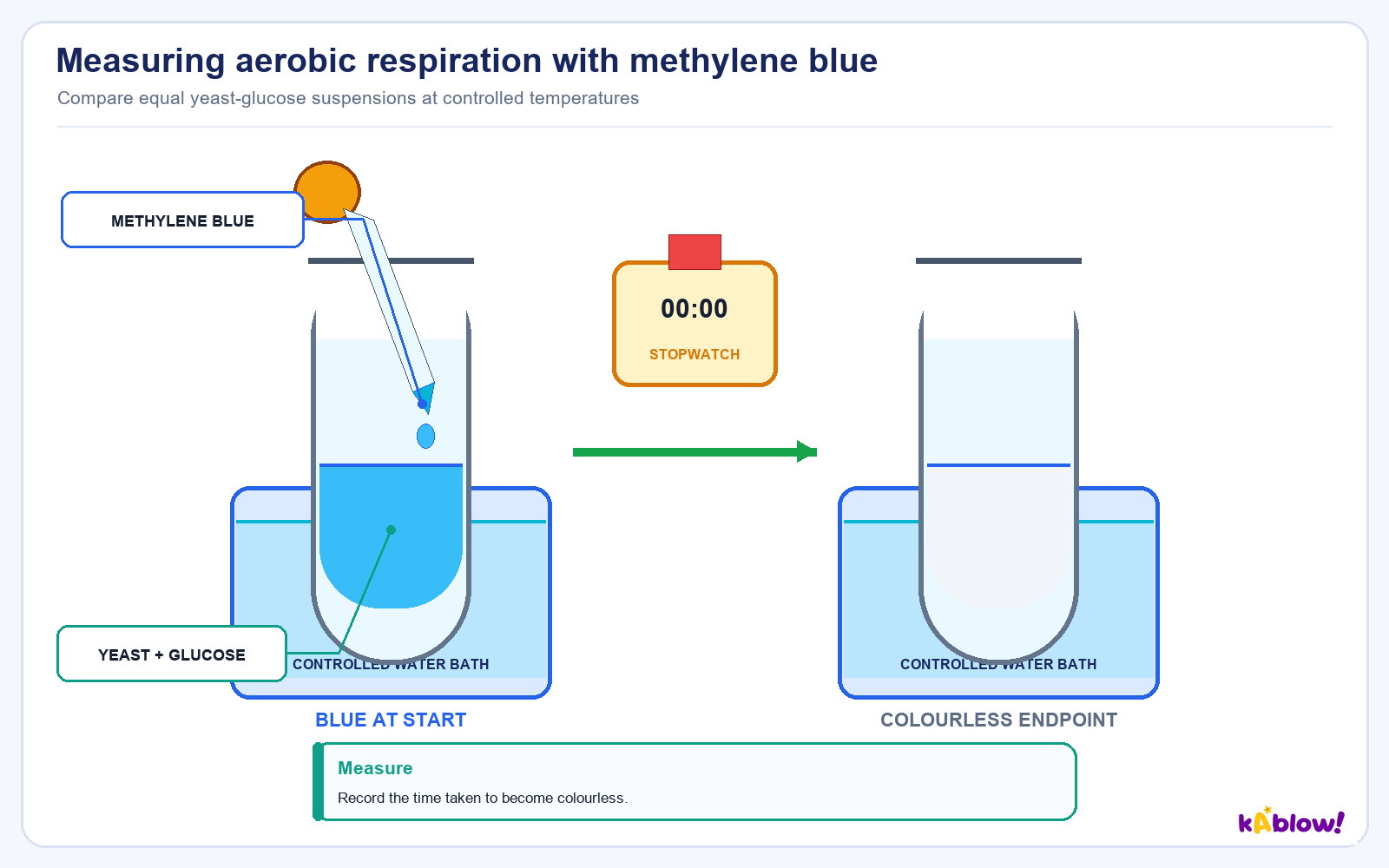
- Respiration rate can be measured using methylene blue dye – it turns from blue to colourless as oxygen is used up.
- Independent variable: temperature; dependent variable: time for colour change (rate of respiration).
- Rate increases up to ~40 °C due to more kinetic energy and enzyme–substrate collisions.
- Above 40 °C, rate decreases because enzymes denature (active site changes shape).
- Control other variables: volume/concentration of dye, yeast suspension, glucose, and pH.
Methylene blue apparatus
Diapositivas
Sign up free to view the lesson slides
Step through every slide for this topic — plus flashcards and revision notes — with a free account.
Preguntas de práctica
Vista previa gratis — 8 de 48 preguntas. Regístrate para verlas todas.
- 1.Easy
Glucose is broken down in the chemical processes of aerobic respiration. Which row correctly shows the products of this breakdown?
Row Products A carbon dioxide and water B lactic acid only C ethanol and carbon dioxide D oxygen and glucose - ARow A
- BRow B
- CRow C
- DRow D
2.Which of the following processes require, and are dependent on, the activity of enzymes? 1. aerobic respiration 2. glucose → lactic acid 3. osmosis 4. anaerobic respiration in yeast
Medium- A1 and 2
- B1 and 3
- C1, 2 and 4
- DAll of them
3.A student investigated respiration in yeast. Every 30 minutes they replaced the water with the same volume but it was 10°C warmer and counted the bubbles given off in 2 minutes. What are the independent and dependent variables in this experiment?
Medium- Aindependent: number of bubbles, dependent: time
- Bindependent: time, dependent: number of bubbles
- Cindependent: water temperature, dependent: number of bubbles
- Dindependent: water temperature, dependent: volume of water
4.Which of the following do humans require energy for? 1. Producing proteins 2. Cell division 3. Generation of nerve impulses 4. Maintaining body temperature
Easy- A1 & 3
- B2, 3 & 4
- C4 only
- DAll of the above
5.Which of the following options correctly shows the products produced by anaerobic respiration in yeast and in animals?
Medium- Aanimals: lactic acid (no), carbon dioxide (yes); yeast: lactic acid (no), carbon dioxide (no)
- Banimals: lactic acid (yes), carbon dioxide (no); yeast: lactic acid (no), carbon dioxide (yes)
- Canimals: lactic acid (no), carbon dioxide (yes); yeast: lactic acid (yes), carbon dioxide (no)
- Danimals: lactic acid (yes), carbon dioxide (yes); yeast: lactic acid (no), carbon dioxide (no)
6.Why does anaerobic respiration of glucose release less energy in muscle cells than aerobic respiration? 1. Energy is lost in oxygen. 2. Energy remains trapped in the chemical bonds in the molecule lactic acid. 3. Energy remains trapped in the chemical bonds in the molecule ethanol. 4. Energy is lost in carbon dioxide.
Medium- A1, 2 and 4
- B2 only
- C2 and 3
- D4 only
7.The diagram below shows an experimental set-up which can be used to investigate gas exchange in a plant leaf. In which direction would the ink drop move and for what reason?
Hard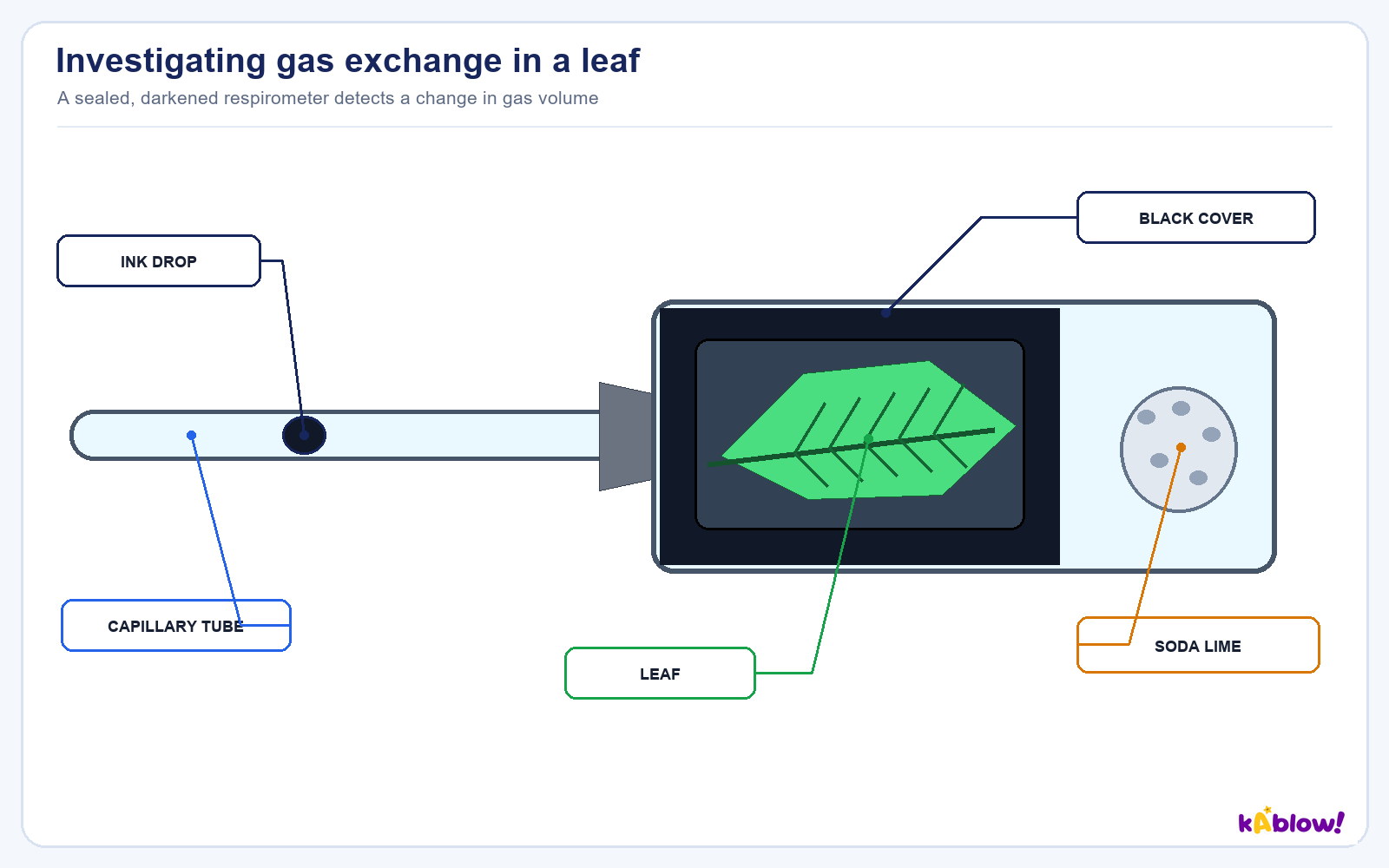
- Adirection: to the right, reason: photosynthesis
- Bdirection: to the left, reason: photosynthesis
- Cdirection: to the right, reason: respiration
- Ddirection: to the left, reason: respiration
8.The diagram below shows an experiment set up by a group of students to investigate respiration in yeast. Which row of the table below correctly describes the contents of the flask after 20 hours?
Medium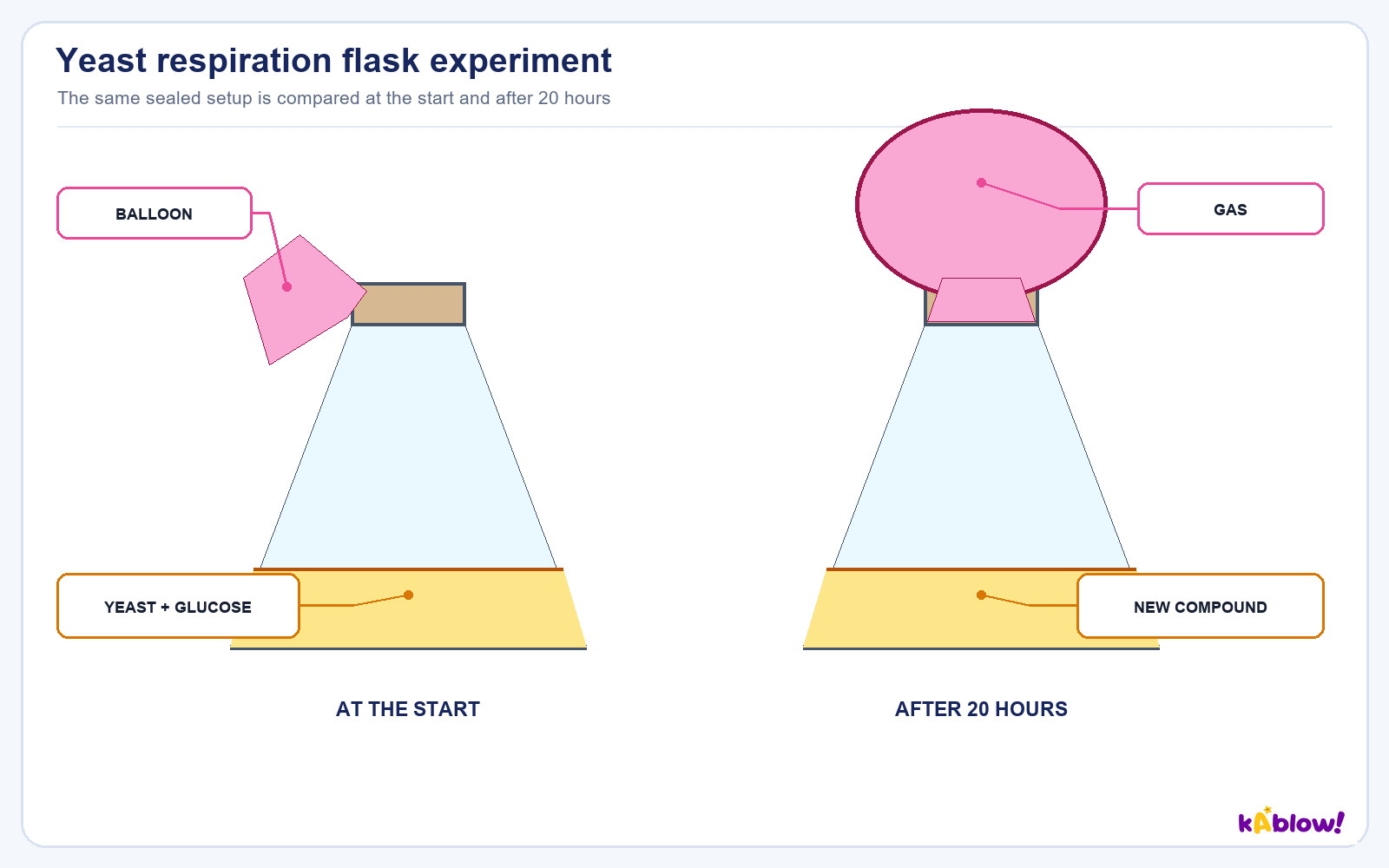
- Anew compound: ethanol (alcohol), gas produced: oxygen
- Bnew compound: ethanol (alcohol), gas produced: carbon dioxide
- Cnew compound: lactic acid, gas produced: oxygen
- Dnew compound: lactic acid, gas produced: carbon dioxide
Unlock all 48 questions & more
Crea una cuenta gratis para ver todas las preguntas, las diapositivas, las tarjetas y los apuntes de repaso de este tema.