Exothermic And Endothermic Reactions
Apréndelo jugando
Responde estas preguntas para ganar energía, luego pesca y explora. Sin cuenta.
Apuntes de la lección
Endothermic & Exothermic Reactions
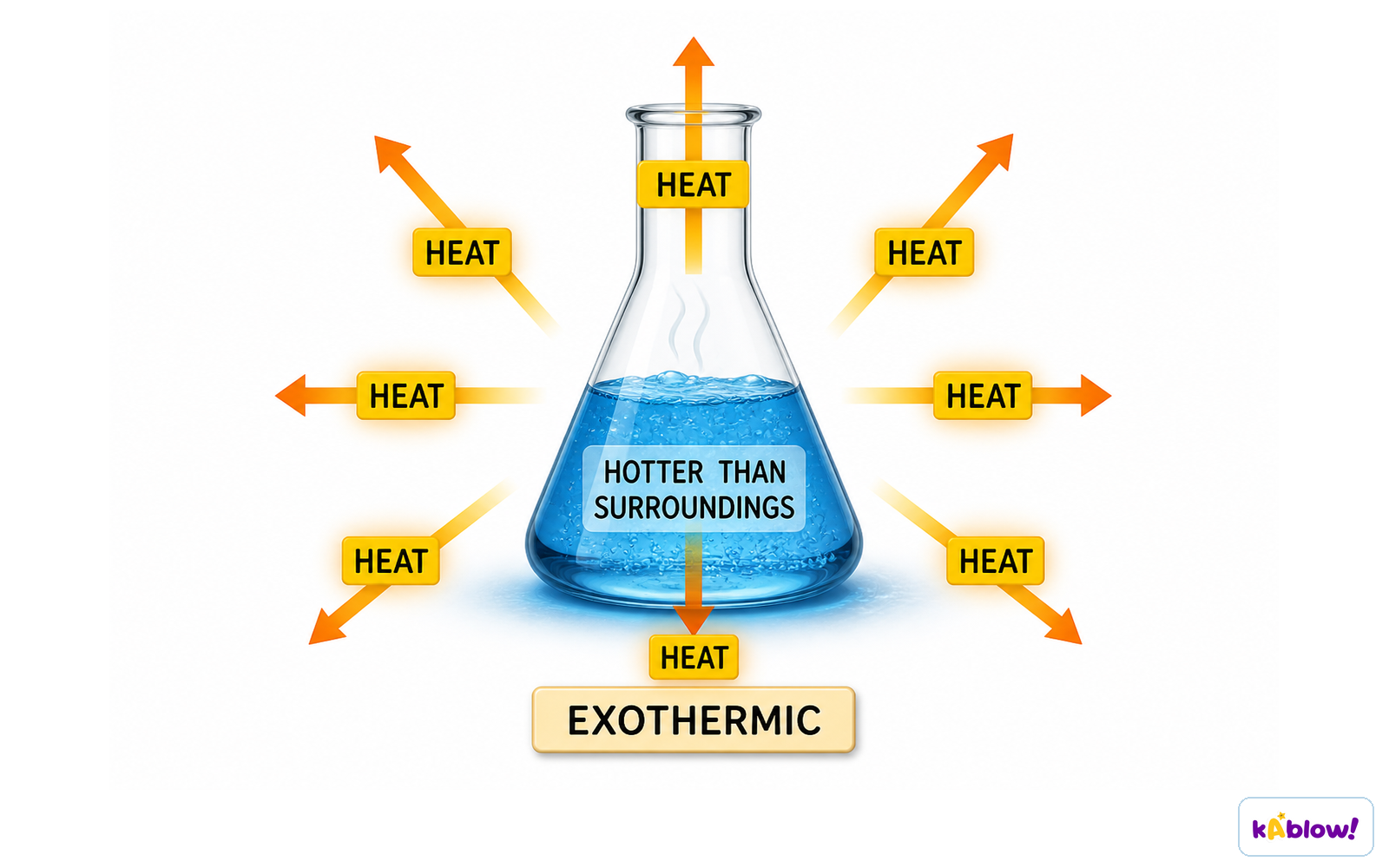
- In exothermic reactions, thermal energy is transferred from the system (reacting chemicals) to the surroundings; the temperature of surroundings increases.
- Exothermic reactions have a negative enthalpy change (ΔH < 0) because the system loses energy.
- Common examples: combustion, oxidation, neutralisation; also hand warmers and self-heating cans.
- In endothermic reactions, thermal energy is transferred from the surroundings to the system; the temperature of surroundings decreases.
- Endothermic reactions have a positive enthalpy change (ΔH > 0) because the system gains energy.
- Common examples: electrolysis, thermal decomposition, first stages of photosynthesis; also cold packs for sports injuries.
- Mnemonic: In Exothermic heat Exits; in Endothermic heat Enters.
Heat transfer outwards in an exothermic reaction
Enthalpy Change & Activation Energy
- Enthalpy change (ΔH) is the transfer of thermal energy during a reaction: negative for exothermic, positive for endothermic.
- Activation energy (Eₐ) is the minimum energy required for a successful collision between reactant particles.
- Reactions with higher activation energy need more energy to start.
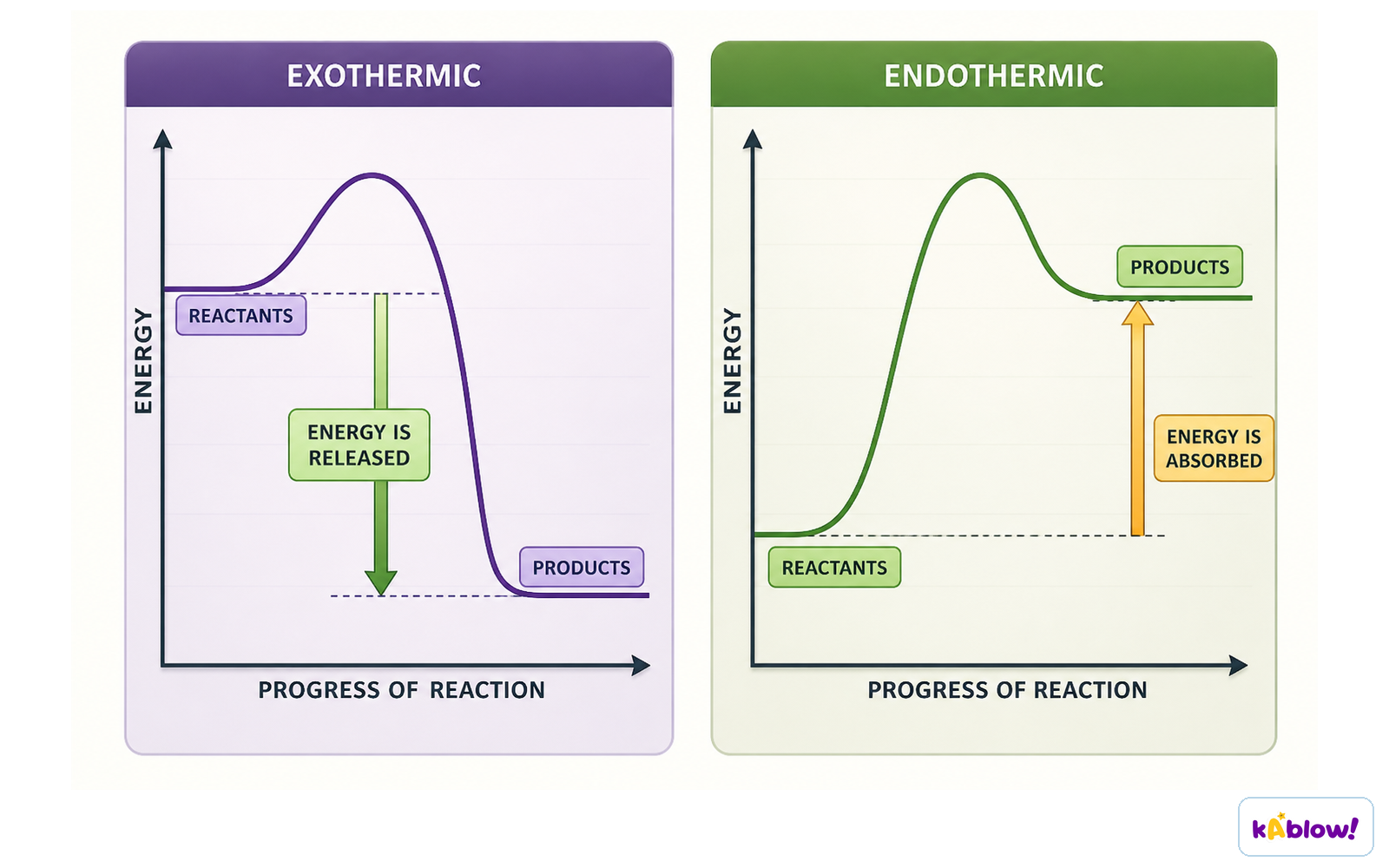
- Reaction pathway diagrams plot energy (y-axis) against progress of reaction (x-axis).
- For exothermic reactions: products have lower energy than reactants; ΔH is shown as a downward arrow.
- For endothermic reactions: products have higher energy than reactants; ΔH is shown as an upward arrow.
- Activation energy is the energy difference between reactants and the highest point on the curve.
Reaction pathway diagrams for exothermic and endothermic reactions
Bond Breaking & Bond Forming
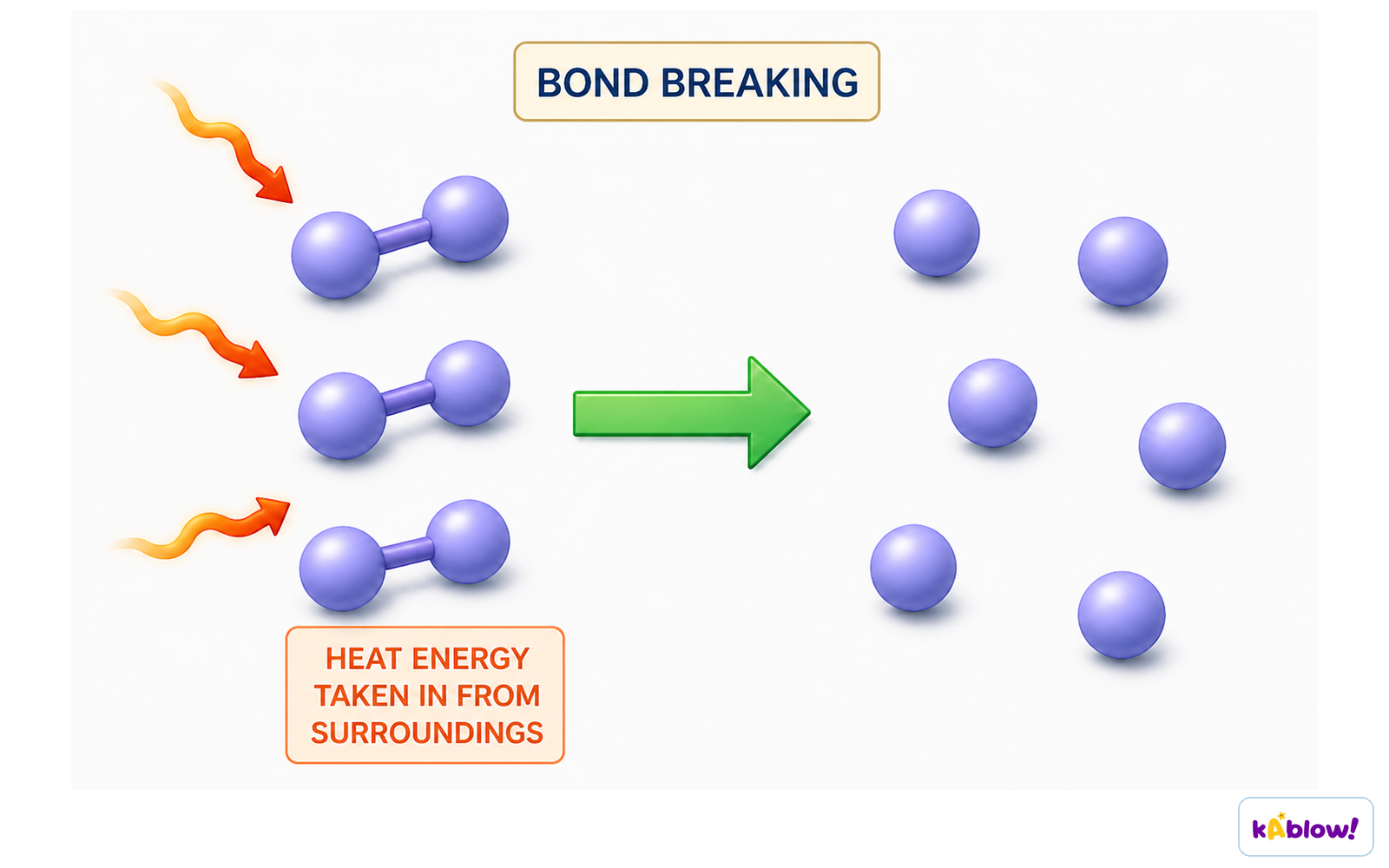
- Bond breaking is always endothermic (energy absorbed from surroundings).
- Bond making is always exothermic (energy released to surroundings).
- If more energy is released in bond making than absorbed in bond breaking, the overall reaction is exothermic (ΔH negative).
- If more energy is absorbed in bond breaking than released in bond making, the overall reaction is endothermic (ΔH positive).
- The overall enthalpy change is the difference between the energy needed to break bonds and the energy released when new bonds form.
Bond breaking is endothermic
Diapositivas
Sign up free to view the lesson slides
Step through every slide for this topic — plus flashcards and revision notes — with a free account.
Preguntas de práctica
Vista previa gratis — 8 de 52 preguntas. Regístrate para verlas todas.
1.In an exothermic reaction, thermal energy is transferred from the surroundings to the system.
EasyTrue or false?
2.Bond breaking is an endothermic process.
EasyTrue or false?
3.Which of the following is an example of an endothermic reaction?
Easy- ACombustion
- BNeutralisation
- CThermal decomposition
- DOxidation
4.State the meaning of the symbol ΔH.
Easy5.Complete the sentence using the words 'system' and 'surroundings'.
EasyIn an endothermic reaction, thermal energy is transferred from the ____ to the ____.
6.Explain why a reaction with a positive ΔH value is endothermic.
Medium7.Which statement about activation energy is correct?
Medium- AIt is the energy difference between reactants and products.
- BIt is the minimum energy required for a successful collision.
- CIt is always negative for exothermic reactions.
- DIt is the same as the enthalpy change.
8.In an exothermic reaction, the energy of the products is higher than the energy of the reactants.
EasyTrue or false?
Unlock all 52 questions, flashcards & more
Crea una cuenta gratis para ver todas las preguntas, las diapositivas, las tarjetas y los apuntes de repaso de este tema.