Simple Phenomena Of Magnetism
Apréndelo jugando
Responde estas preguntas para ganar energía, luego pesca y explora. Sin cuenta.
Apuntes de la lección
Magnetism
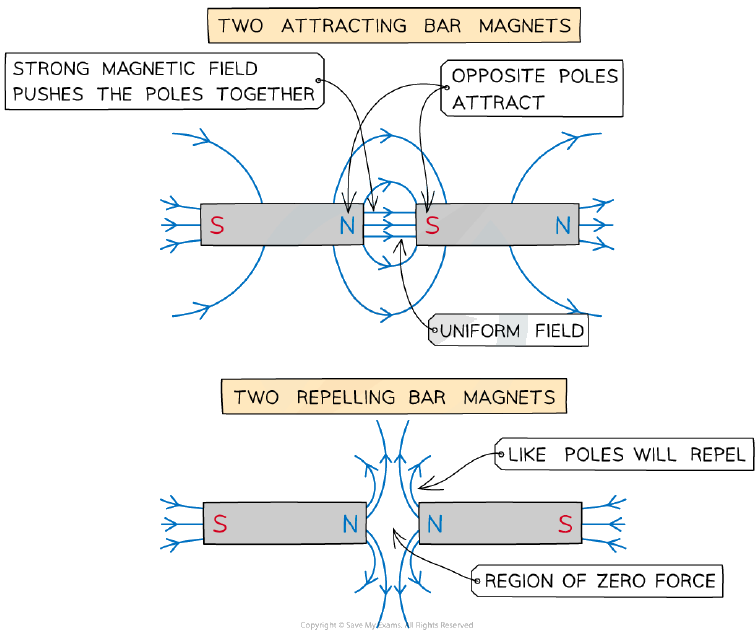
- Magnets have two poles: north and south.
- Magnetic forces are strongest at the poles.
- Like poles repel (N–N or S–S).
- Opposite poles attract (N–S).
- Attraction/repulsion between magnetic poles is a non-contact force.
Magnetic field lines showing attraction and repulsion between bar magnets.
Magnetic Materials
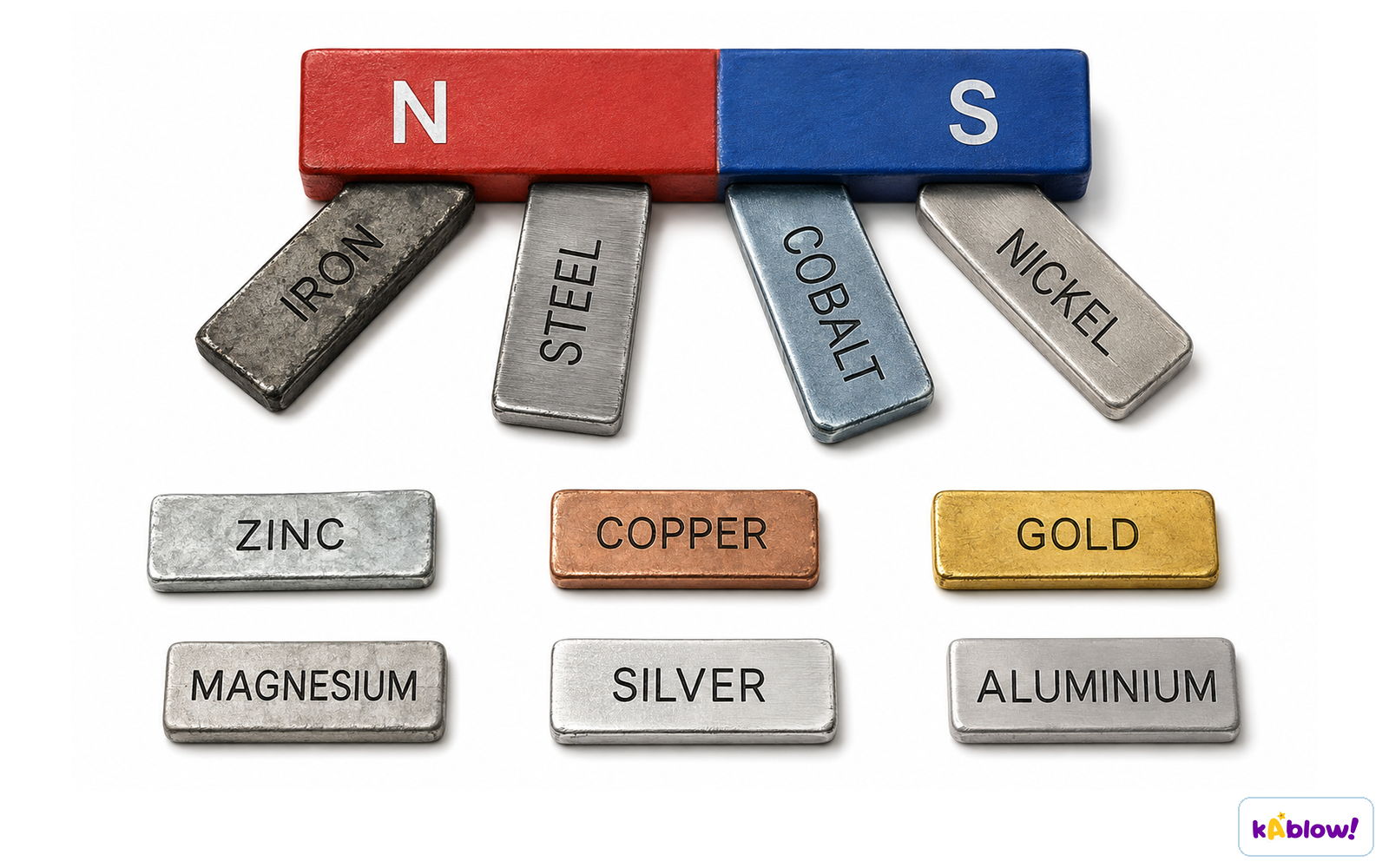
- Only a few metals are magnetic: iron, cobalt, nickel.
- Steel (an alloy containing iron) is also magnetic.
- Magnetic materials are attracted to both poles of a magnet.
- Non-magnetic materials (e.g., aluminium, plastic) are not affected by a magnet.
- A material is a magnet if it repels a known magnet; it is magnetic if it attracts; non-magnetic if neither.
Magnetic materials are attracted to a magnet; non-magnetic materials are not
Permanent Magnets
- Made from hard magnetic materials such as steel.
- Produces its own magnetic field.
- Does not lose its magnetism easily.
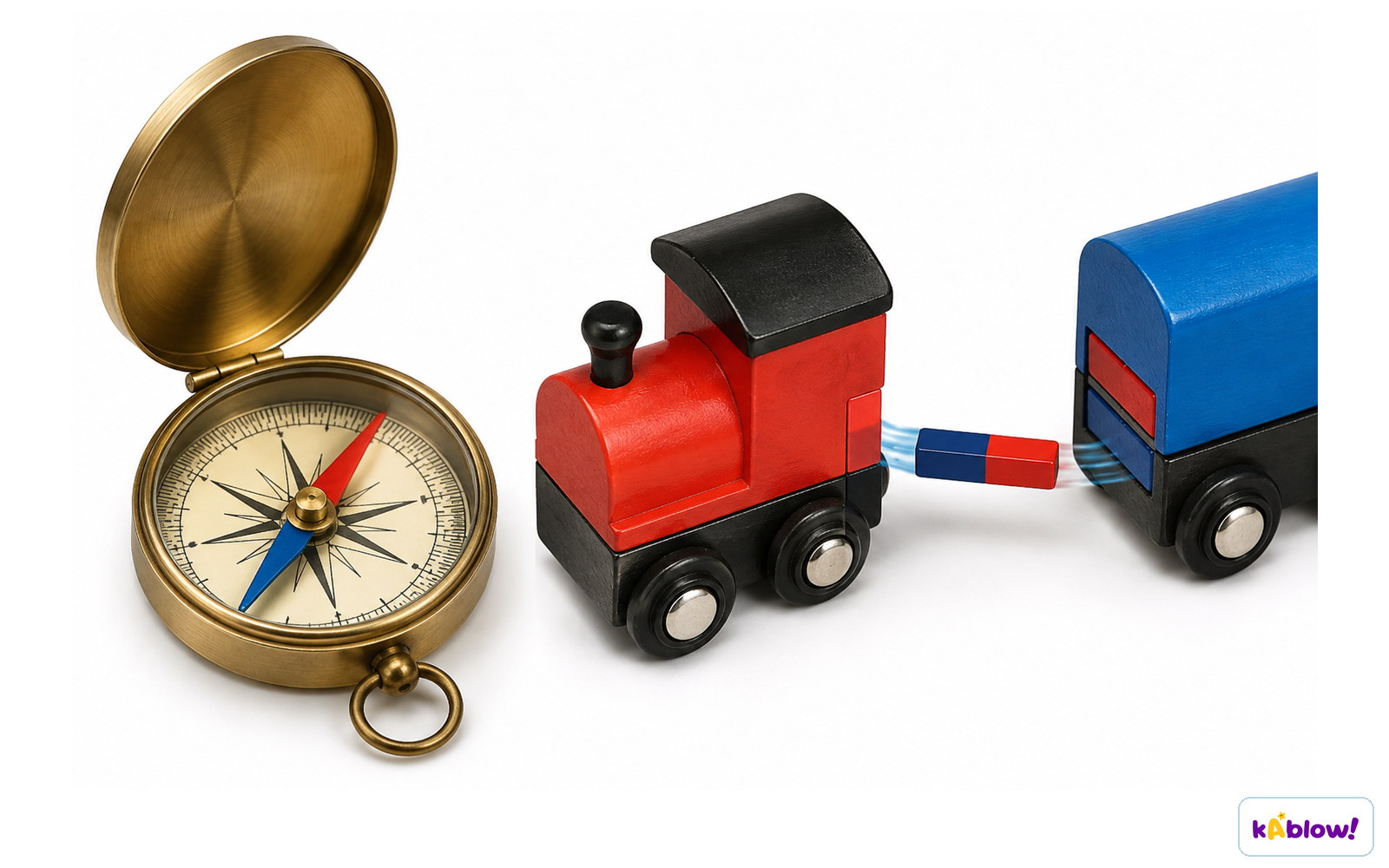
- Used in: compasses, school lab magnets, toys, fridge magnets.
Compasses and toy trains are examples of the use of permanent magnets
Induced (Temporary) Magnets
- Made from soft magnetic materials such as soft iron.
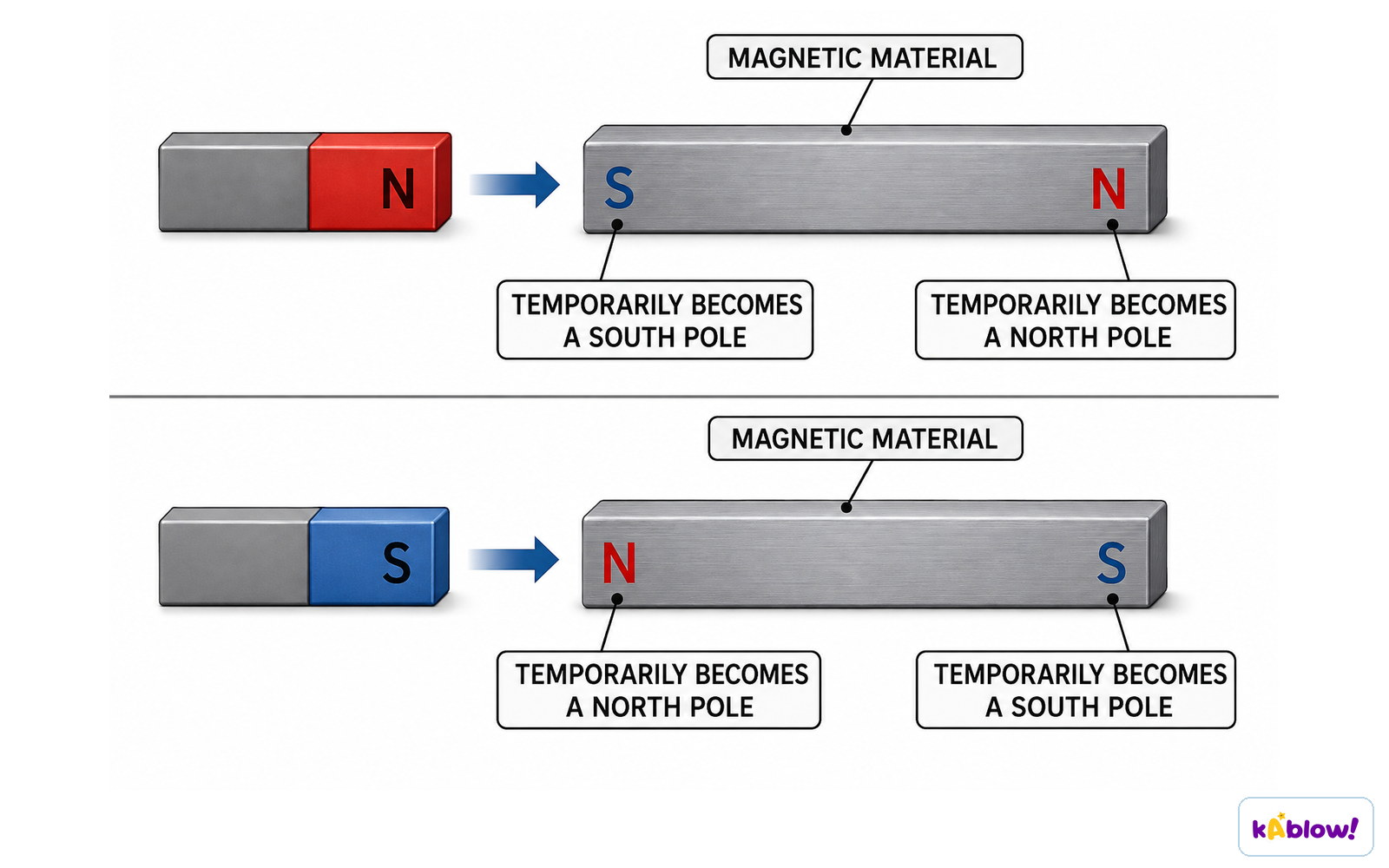
- Becomes magnetised only when placed in a magnetic field.
- The end closest to the magnet gains the opposite pole.
- Loses magnetism quickly when removed from the field.
- Used in: electromagnets, transformers.
Inducing magnetism in a magnetic material
Magnetic Fields
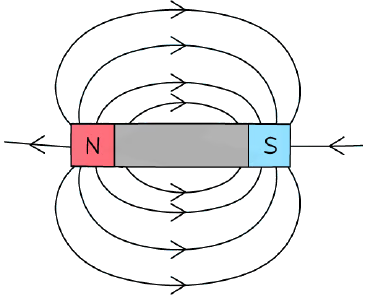
- A magnetic field is a region where a magnetic pole experiences a force.
- Field lines go from north pole to south pole.
- Arrows show direction of force on a north pole.
- Field is strongest at the poles (lines are closer together).
- Field weakens with distance (lines spread apart).
Magnetic field lines around a bar magnet
Plotting Magnetic Fields
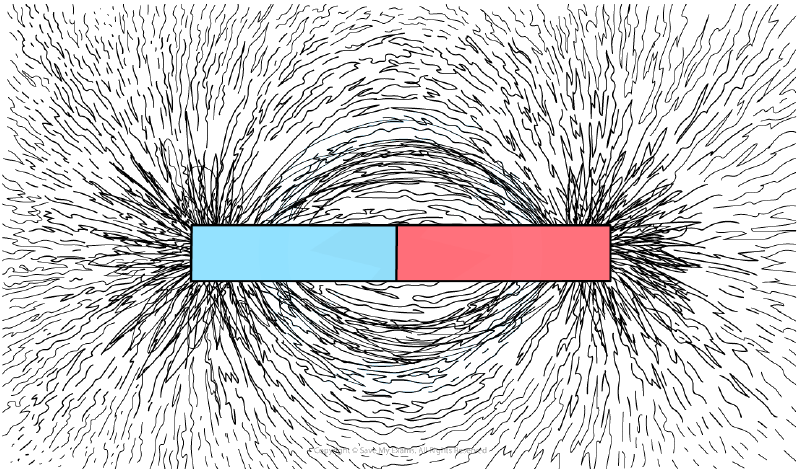
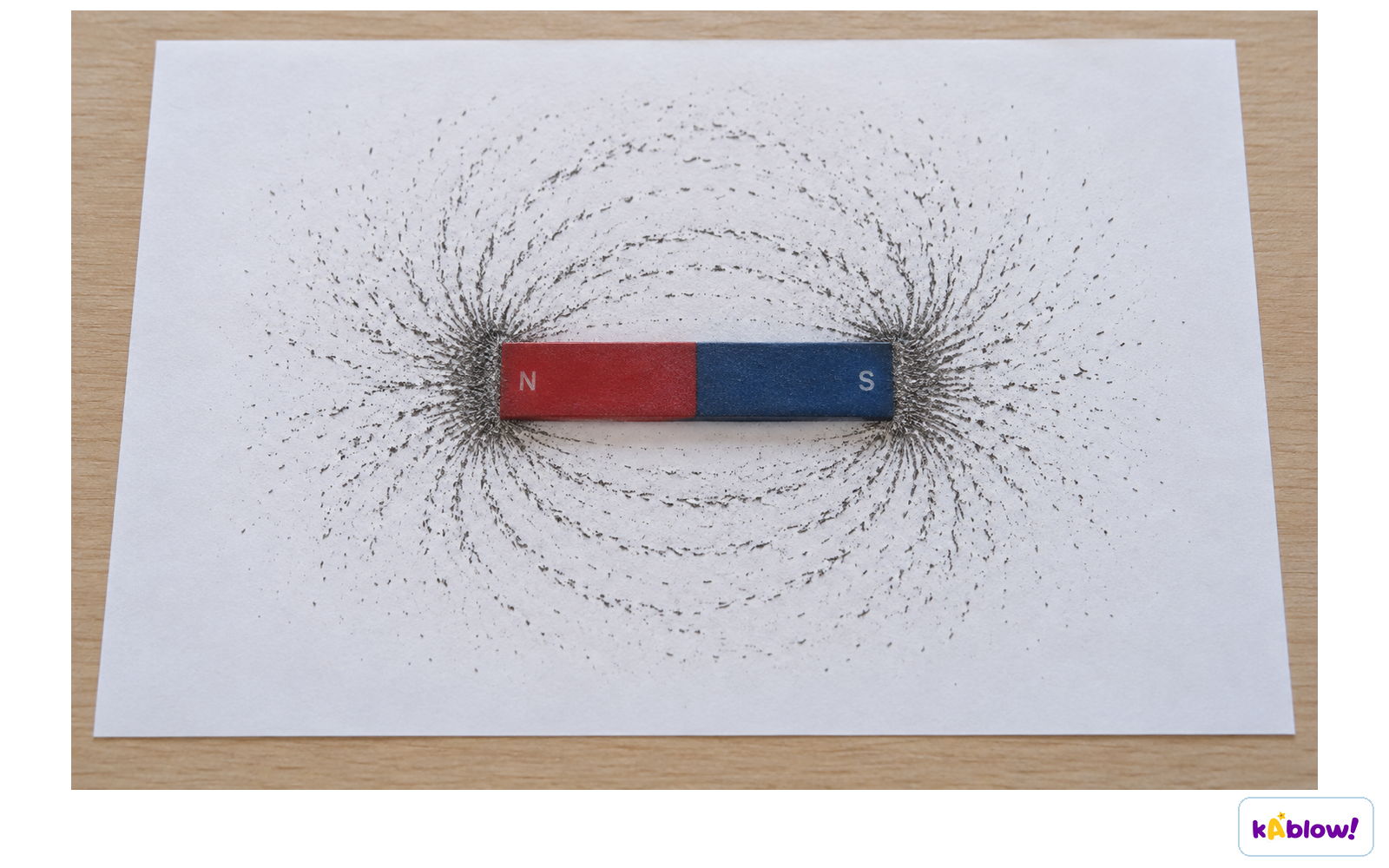
- Iron filings method: Place paper over magnet, sprinkle filings, tap gently to reveal field pattern.
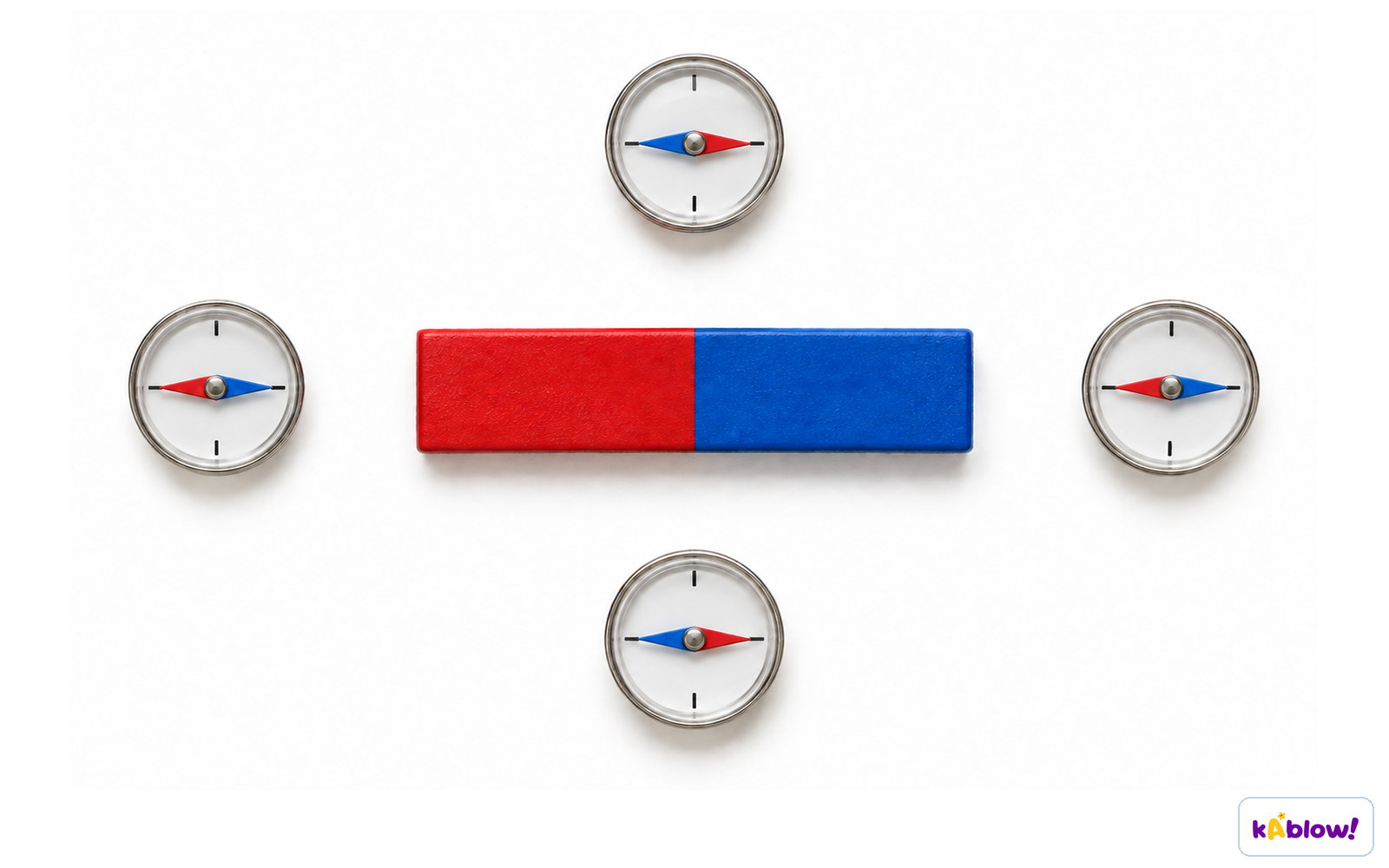
- Plotting compass method: Place compass near magnet, mark needle ends, move compass step by step to trace field lines.
- Compass needle points from north to south (north arrow points to south pole of magnet).
Magnetic field lines around a bar magnet shown using iron filings.
Uses of Electromagnets
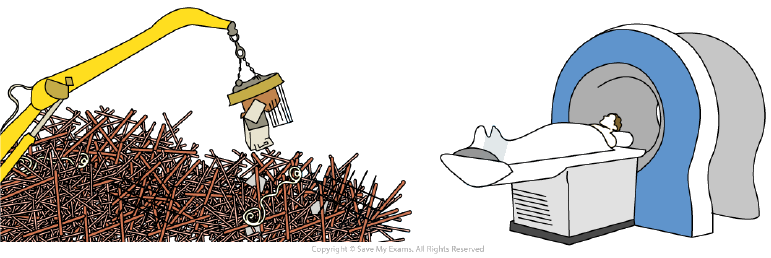
- MRI scanners in hospitals use powerful electromagnets for imaging.
- Speakers and earphones use electromagnets to produce sound.
- Recycling: Electromagnets separate steel from other scrap.
- Mag-Lev trains use repulsion between electromagnets to hover and reduce friction.
Uses of electromagnets in recycling and MRI scanners
Diapositivas
Sign up free to view the lesson slides
Step through every slide for this topic — plus flashcards and revision notes — with a free account.
Preguntas de práctica
Vista previa gratis — 8 de 40 preguntas. Regístrate para verlas todas.
1.Which of the following lists of metals contains only metals that are non-ferrous?
Easy- AIron, steel, nickel
- BCobalt, copper, steel
- CAluminium, brass, copper
- DIron, tin, aluminium
2.Which metal is suitable for use as a permanent magnet?
Easy- ASteel
- BSoft iron
- CCopper
- DAluminium
3.Which of the following lists contains only ferrous metals?
Easy- AAluminium and iron
- BSteel and iron
- CSteel and lead
- DTin and iron
4.Which statement about a permanent bar magnet is incorrect?
Easy- AThe S-pole attracts the N-pole of another magnet
- BThe S-pole repels the S-pole of another magnet
- CIt cannot repel a non-magnetic material
- DIt is made from a soft magnetic material (such as soft iron)
5.Which magnet has the strongest magnetic field?
Easy- AA bar magnet with widely spaced field lines
- BA bar magnet with closely spaced field lines
- CA bar magnet with no field lines
- DA bar magnet with field lines that cross
6.What material can a temporary magnet be made from?
Easy- APlastic
- BSoft iron
- CSteel
- DWood
7.Which compass correctly shows the direction of the magnetic field due to a bar magnet?
Easy- AA compass with its north pole pointing towards the magnet's south pole
- BA compass with its north pole pointing towards the magnet's north pole
- CA compass with its south pole pointing towards the magnet's south pole
- DA compass with its needle aligned perpendicular to the magnet
8.Which of the following statements about a permanent bar magnet is true?
Medium- AThe north pole of a permanent bar magnet will repel the north pole of another magnet.
- BA permanent bar magnet must be made from a soft magnetic material.
- CA permanent bar magnet can repel a magnetic material.
- DThe field lines of a permanent bar magnet cross each other where the field is strongest.
Unlock all 40 questions & more
Crea una cuenta gratis para ver todas las preguntas, las diapositivas, las tarjetas y los apuntes de repaso de este tema.