Food energy requirements
Apréndelo jugando
Responde estas preguntas para ganar energía, luego pesca y explora. Sin cuenta.
Apuntes de la lección
Energy in Food
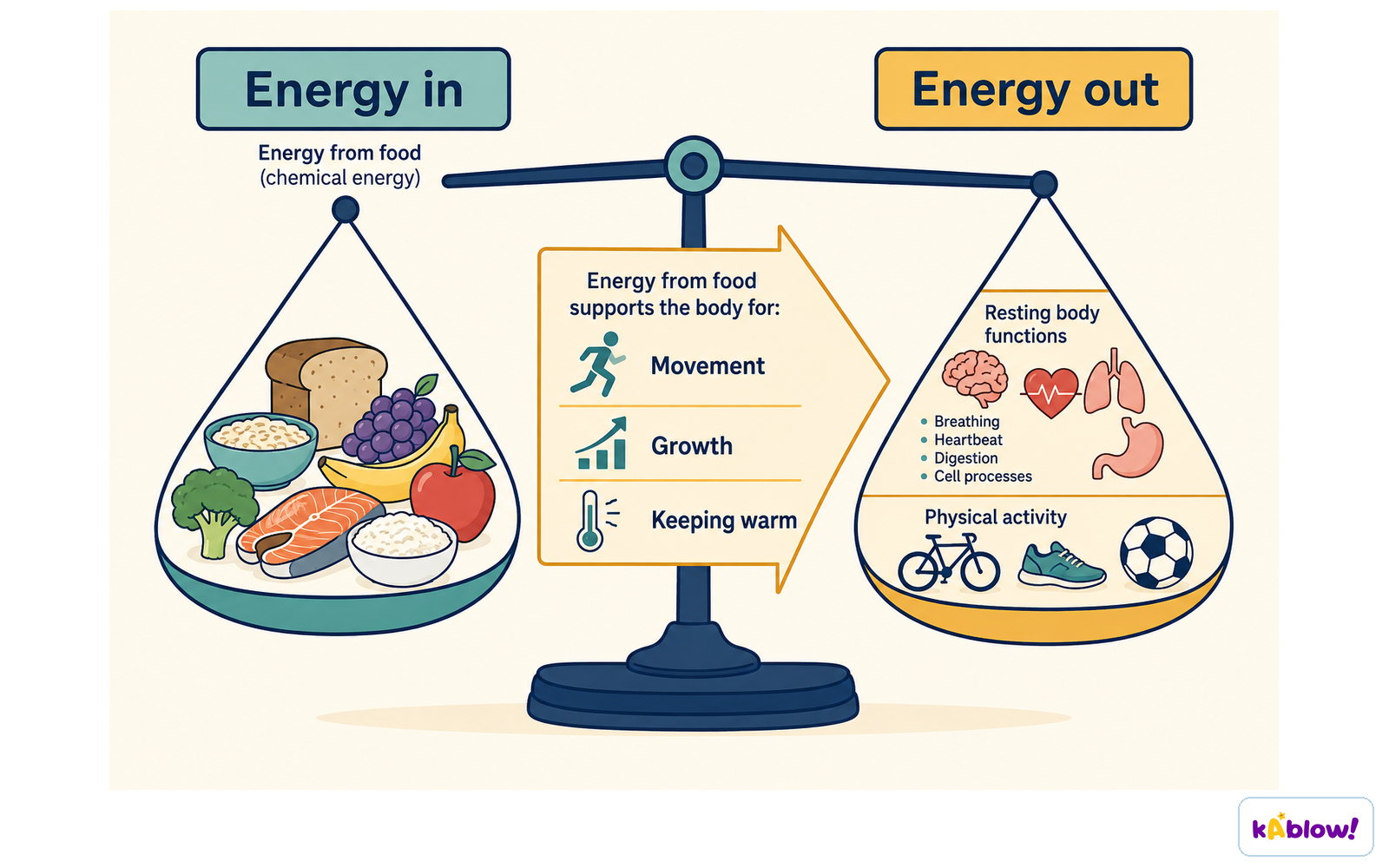
- Food is a store of chemical energy that is transferred to us when we eat.
- The unit of energy for food is the kilojoule (kJ); 1 calorie = 4.2 J.
- A balanced diet provides the right amount of energy and nutrients.
Consequences of Imbalance
- Eating too little leads to weight loss, starvation, and eventually death.
- Eating too much leads to weight gain, obesity, heart disease, and diabetes.
- Malnutrition results from an unbalanced diet.
Metabolic Rate
- Basal metabolic rate (BMR) is the energy needed to survive when inactive.
- Physical activity level adds to BMR to give the overall metabolic rate.
- Factors affecting metabolic rate: age, gender, body mass, exercise, pregnancy.
Energy from food supports resting body functions, movement, growth and keeping warm.
Daily Energy Requirements
- Average man needs 10 500 kJ per day; average woman needs 8400 kJ per day.
- Active people need more energy than inactive ones.
Food Labels
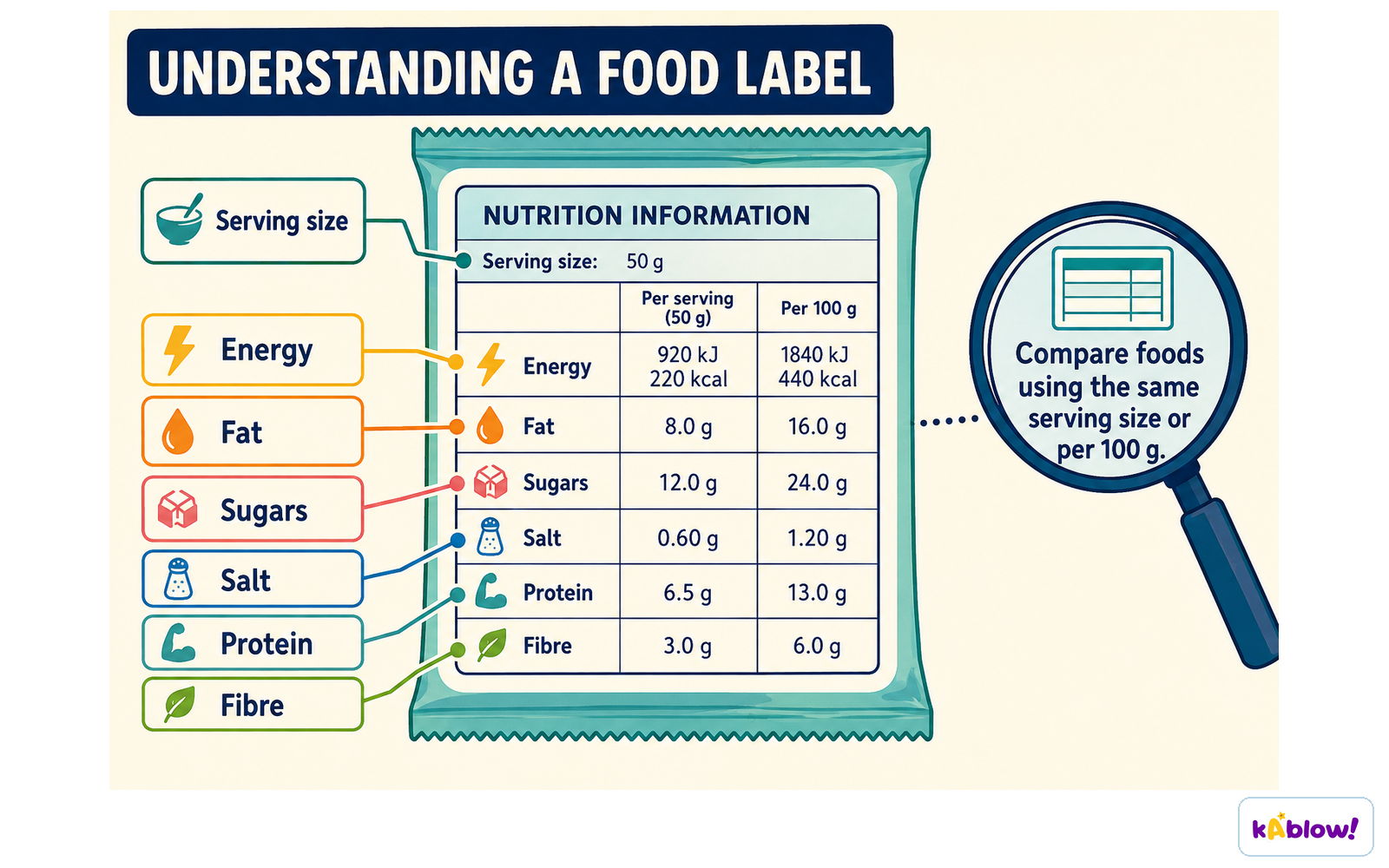
- Food labels show energy content and amounts of food groups (carbohydrates, fat, fibre, protein).
- Labels help consumers choose a balanced diet.
Compare food labels using the same serving size or values per 100 g. This example shows energy and nutrient amounts for both.
Diapositivas
Sign up free to view the lesson slides
Step through every slide for this topic — plus flashcards and revision notes — with a free account.
Preguntas de práctica
Vista previa gratis — 8 de 57 preguntas. Regístrate para verlas todas.
1.Which unit is used when referring to the energy content of food?
Easy- AKilojoule (kJ)
- BJoule (J)
- CCalorie
- DKilocalorie
2.What is the term for having too much body fat?
Easy- AMalnourishment
- BObesity
- CStarvation
- DDiabetes
3.Which two components make up a person's overall metabolic rate?
Easy- ABasal metabolic rate and physical activity level
- BAge and gender
- CBody mass and exercise levels
- DEnergy intake and energy expenditure
4.According to the source, which of the following is a risk of obesity?
Easy- AHeart disease
- BStarvation
- CMalnourishment
- DWeight loss
5.A man requires 10 500 kJ per day and a woman requires 8 400 kJ per day. What is the ratio of the man's requirement to the woman's requirement?
Easy- A5:4
- B4:5
- C5:3
- D3:5
6.Why is it important that food labels show the amount of each food group?
Easy- ATo help people choose a balanced diet
- BTo increase the price of food
- CTo make food look more attractive
- DTo reduce the energy content
7.What is the basal metabolic rate a measure of?
Easy- AEnergy needed when inactive
- BEnergy needed for exercise
- CTotal energy used per day
- DEnergy stored in food
8.Which factor does NOT affect overall metabolic rate according to the source?
Easy- AHeight
- BAge
- CGender
- DPregnancy
Unlock all 57 questions, flashcards & more
Crea una cuenta gratis para ver todas las preguntas, las diapositivas, las tarjetas y los apuntes de repaso de este tema.