Exothermic and endothermic reactions
Apréndelo jugando
Responde estas preguntas para ganar energía, luego pesca y explora. Sin cuenta.
Apuntes de la lección
Exothermic Reactions
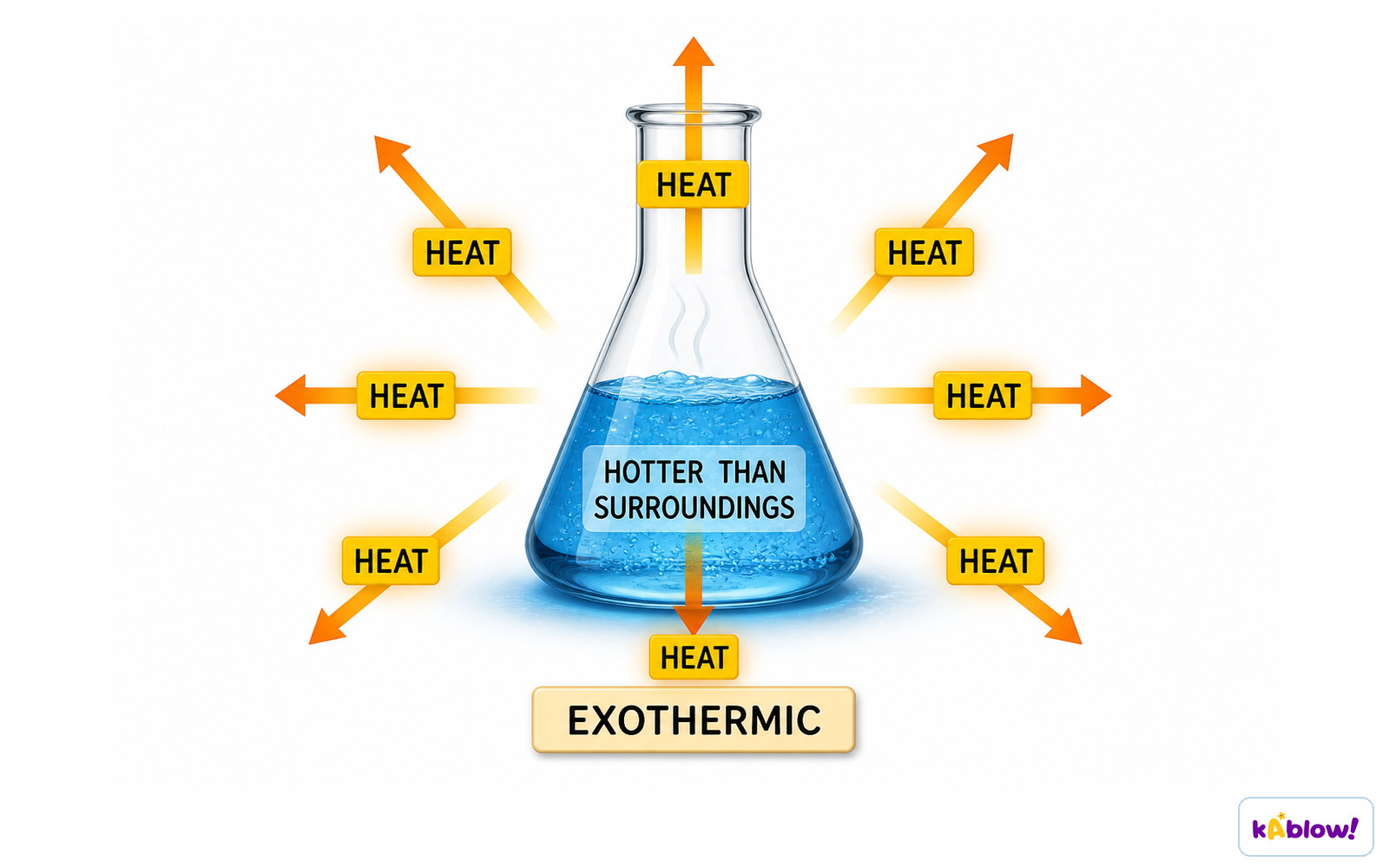
- Exothermic reactions transfer energy to the surroundings, usually as heat, causing a temperature rise.
- Combustion is a key example: fuel + oxygen → carbon dioxide + water.
- Neutralisation reactions (acid + metal oxide/hydroxide/carbonate → salt + water) are exothermic.
- Oxidation reactions (metal + oxygen → metal oxide) are also exothermic.
- Everyday uses include hand warmers and self-heating cans.
Diagram showing the transfer of heat energy outwards from an exothermic reaction
Endothermic Reactions
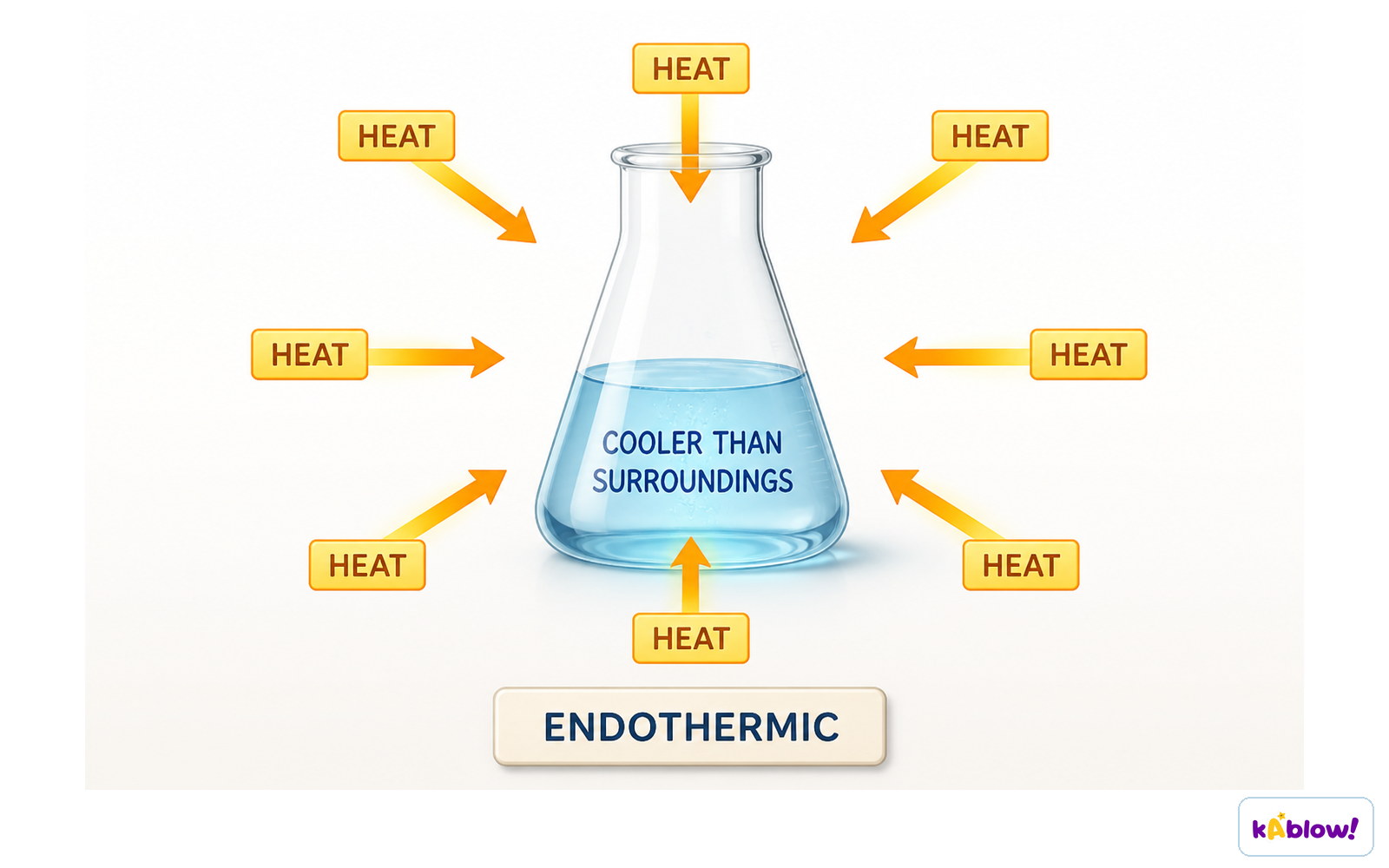
- Endothermic reactions take in energy from the surroundings, causing a temperature fall.
- Thermal decomposition is a key example: a compound breaks down when heated.
- Instant cold packs use an endothermic reaction: water combines with another compound, absorbing heat.
- These packs are used to treat sports injuries.
Diagram showing the transfer of heat energy from the surroundings into an endothermic reaction
Comparing Exothermic and Endothermic
- Exothermic: energy transferred to surroundings → temperature rises.
- Endothermic: energy taken from surroundings → temperature falls.
- Examples of exothermic: combustion, neutralisation, oxidation.
- Examples of endothermic: thermal decomposition.
General Word Equations
- Combustion: fuel + oxygen → carbon dioxide + water.
- Neutralisation (acid + metal oxide): acid + metal oxide → salt + water.
- Neutralisation (acid + metal hydroxide): acid + metal hydroxide → salt + water.
- Neutralisation (acid + metal carbonate): acid + metal carbonate → salt + carbon dioxide + water.
- Oxidation: metal + oxygen → metal oxide.
Particle arrangement in solids, liquids, and gases. Exothermic reactions often involve particles moving faster (more energy), while endothermic reactions involve particles slowing down (less energy).
Diapositivas
Sign up free to view the lesson slides
Step through every slide for this topic — plus flashcards and revision notes — with a free account.
Preguntas de práctica
Vista previa gratis — 8 de 58 preguntas. Regístrate para verlas todas.
1.What is an exothermic reaction?
Easy- AA reaction that transfers energy to the surroundings
- BA reaction that takes in energy from the surroundings
- CA reaction that does not involve energy change
- DA reaction that only occurs when heated
2.Which of the following is an example of an exothermic reaction?
Easy- ACombustion
- BThermal decomposition
- CPhotosynthesis
- DMelting ice
3.What is an endothermic reaction?
Easy- AA reaction that takes in energy from the surroundings
- BA reaction that transfers energy to the surroundings
- CA reaction that produces a temperature increase
- DA reaction that always requires a catalyst
4.Which of the following is an example of an endothermic reaction?
Easy- AThermal decomposition
- BBurning wood
- CNeutralisation
- DOxidation of iron
5.State whether the following statement is true or false: 'Oxidation is an example of an endothermic reaction.'
Easy- AFalse
- BTrue
- CCannot be determined
- DIt depends on the substance
6.State whether the following statement is true or false: 'Thermal decomposition is an example of an endothermic reaction.'
Easy- ATrue
- BFalse
- COnly if the compound is a carbonate
- DOnly if it produces a gas
7.State whether the following statement is true or false: 'Neutralisation is an example of an exothermic reaction.'
Easy- ATrue
- BFalse
- COnly for acid-metal hydroxide reactions
- DOnly if a gas is produced
8.Complete the word equation: acid + metal hydroxide → ?
Easy- Asalt + water
- Bsalt + hydrogen
- Csalt + carbon dioxide + water
- Dmetal oxide + water
Unlock all 58 questions, flashcards & more
Crea una cuenta gratis para ver todas las preguntas, las diapositivas, las tarjetas y los apuntes de repaso de este tema.