Variation and mutation
Apprends en jouant
Réponds à ces questions pour gagner de l'énergie, puis pêche et explore. Sans compte.
Notes de leçon
Big idea: no two individuals are quite the same
- Big idea (key concept): Change. Populations are never fixed. New differences keep appearing, and over many generations the features of a species can change.
- Related concept: Evidence. We can collect and measure evidence about variation, such as heights, leaf lengths or blood groups, and use it to decide whether genes or the environment cause a difference.
- Global context: Identities and relationships. Your features come from the DNA you inherited and from the life you have lived. Understanding variation helps explain why family members look alike but are never identical.
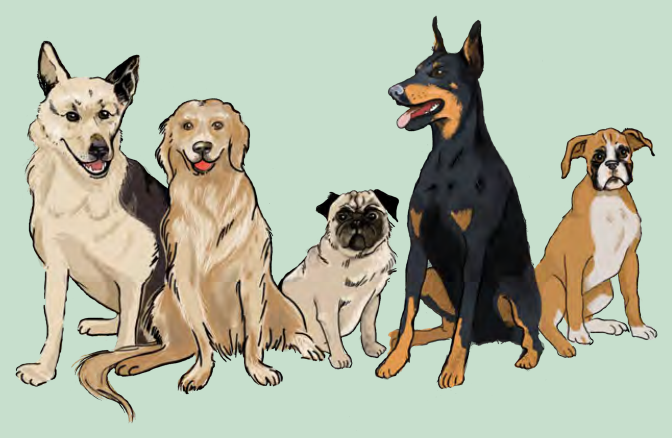
- Variation means the differences between individuals. It exists within a species (two dogs of different breeds, two pupils in your class) and between species (a dog and a daisy). In this topic we study variation within one species.
- Variation matters because it is the raw material for natural selection. If every individual were identical, a change in the environment could harm them all at once.
Dogs of different breeds, all one species
Continuous and discontinuous variation
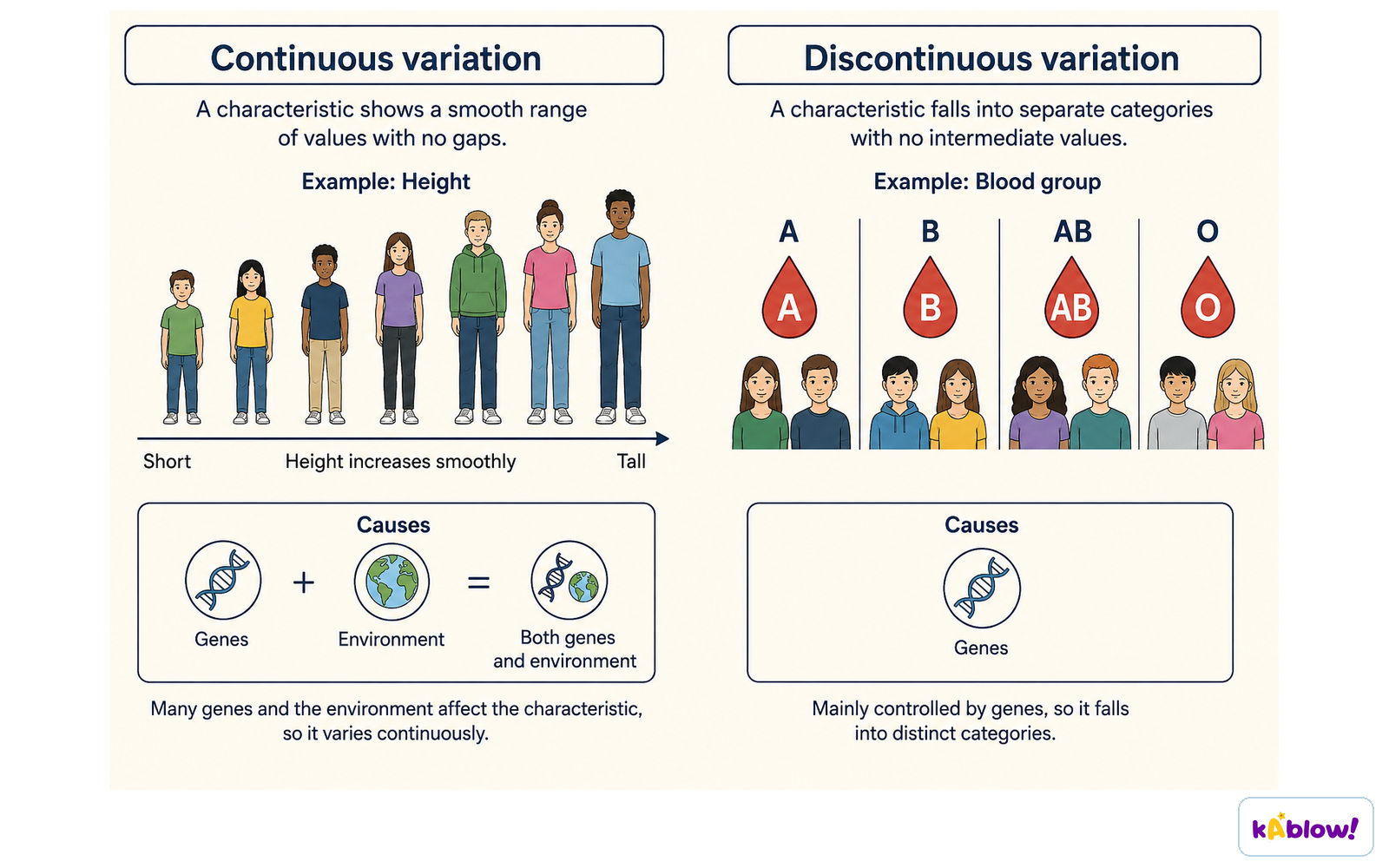
- Continuous variation means a characteristic can take any value within a range, with no gaps. Examples: height, mass, leaf length, foot length. You measure these, and you can always find a value between two others.
- Discontinuous variation means a characteristic falls into separate categories with no in-between values. Examples: ABO blood group (A, B, AB or O), whether a pea seed is round or wrinkled, whether a person has XX or XY sex chromosomes.
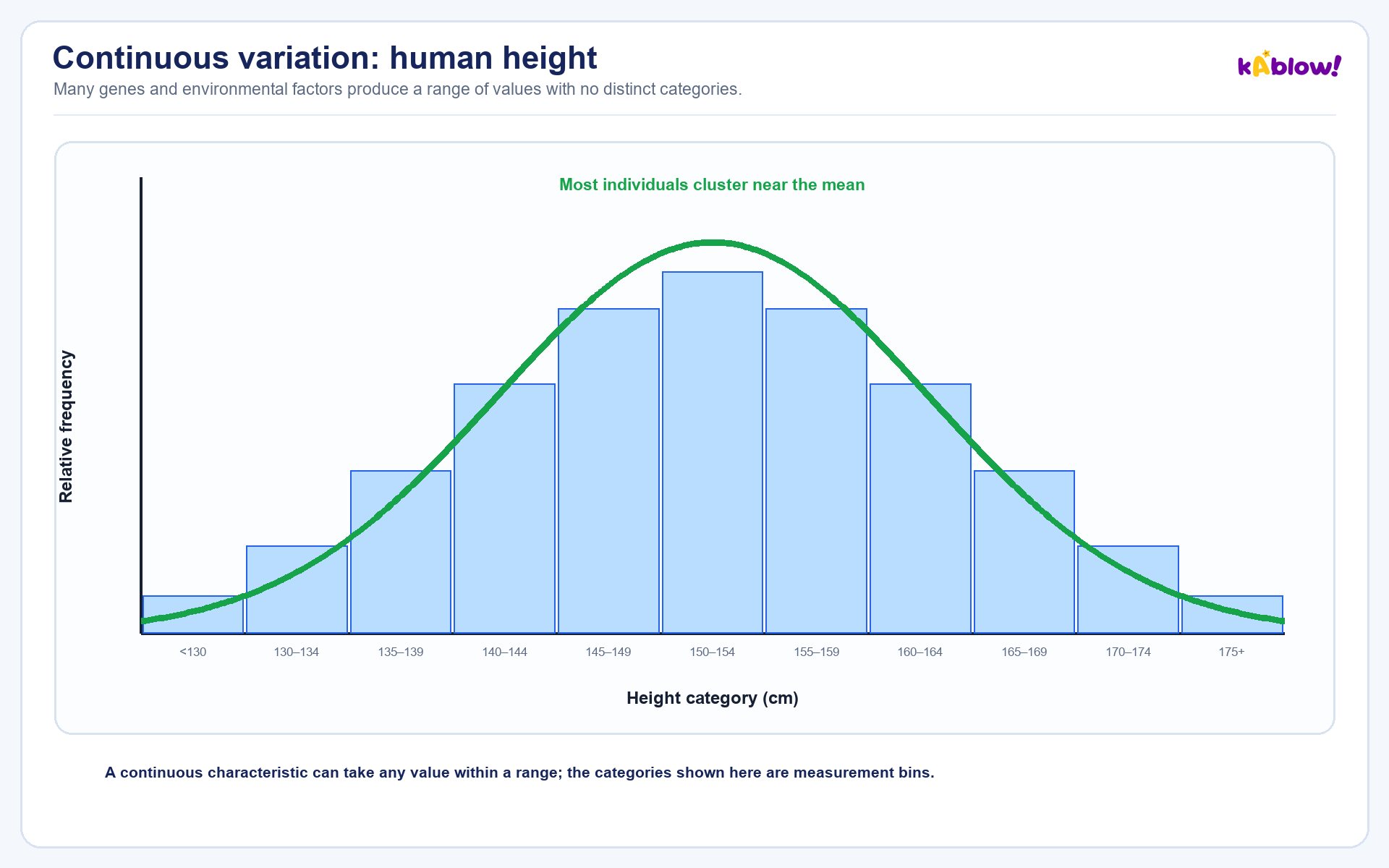
- For continuous data, collect measurements into groups (for example 150 to 154 cm) and draw a histogram: the bars touch because the scale has no gaps. For discontinuous data draw a bar chart with gaps between the bars, because the categories are separate.
- To summarise continuous data use the mean (add the values and divide by how many there are) and the range (largest minus smallest).
- Continuous variation is usually affected by many genes and the environment. Discontinuous variation is usually controlled by one or a few genes, with little effect from the environment.
Continuous and discontinuous variation compared
Causes of variation: genes, environment and sexual reproduction
- Genetic variation is caused by different alleles, which are different versions of a gene. You inherit your alleles from your parents. Eye colour and blood group are examples.
- Environmental variation is caused by conditions during life: a plant grown in the shade is paler and taller than a clone grown in the sun, and a scar is not inherited at all.
- Many features depend on both. Your genes set a possible range for height, but diet, health and exercise during growth decide where you end up. Identical twins begin with the same genes, so differences between them are mostly caused by environment.
- Height in a large group forms a bell-shaped distribution. Most people are near the mean because many genes each add a small effect, and the environment adds more.
- Sexual reproduction produces genetic variation. Each parent makes gametes by meiosis, and each gamete gets a random mix of one chromosome from each of the 23 pairs. That gives about 8 million (2 to the power 23) possible combinations from one person, before any other shuffling. Fertilisation is also random, because any sperm could fertilise any egg.
- Asexual reproduction makes offspring that are genetically identical to the parent (clones), so apart from mutations there is no new genetic variation.
Height in a population forms a bell-shaped distribution
Mutations: random changes to DNA
- A mutation is a change in the sequence of bases in DNA. A gene is a code of bases read in groups of three, and each group codes for an amino acid. Changing the bases can change the amino acids and so change the protein.
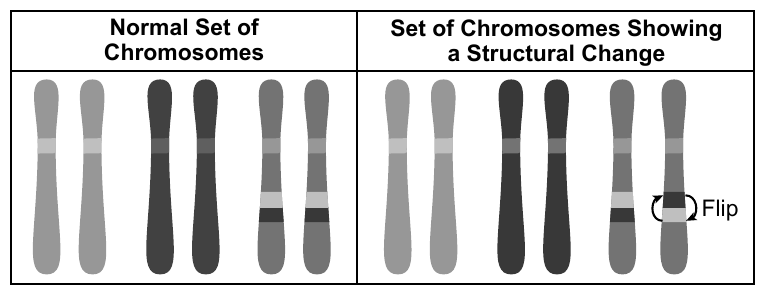
- Small mutations change one base (a substitution) or add or remove bases (an insertion or deletion). Larger mutations change the structure of a whole chromosome, for example when a section flips over (an inversion).
- Mutations happen at random and by chance. They occur naturally as mistakes when DNA is copied before cells divide. The rate goes up with ionising radiation (X-rays and gamma rays), with ultraviolet light, and with some chemicals, such as those in tobacco smoke.
- A mutation in a body cell, such as a skin cell, can harm that cell or its descendants, but it is not passed on to children. Only a mutation in the cells that make gametes can be inherited.
- A mutation produces a new allele. This is the only way entirely new alleles arise, so mutation is the original source of all genetic variation.
A normal set of chromosomes and a set with a structural change
Harmful, neutral and beneficial mutations
- Most mutations are neutral. The change might be in a part of the DNA that does not code for anything, or the new base group might still code for the same amino acid. The organism looks and works exactly as before.
- Some mutations are harmful. If the protein no longer works, the cell or organism can be affected. A mutation that causes cells to divide out of control can lead to cancer. Albinism, where no pigment is made, is another example.
- A few mutations are beneficial. A mutation that lets some adults keep digesting lactose (milk sugar) helps in communities that drink milk. A mutation that makes a pest insect resistant to an insecticide helps the insect, though not the farmer.
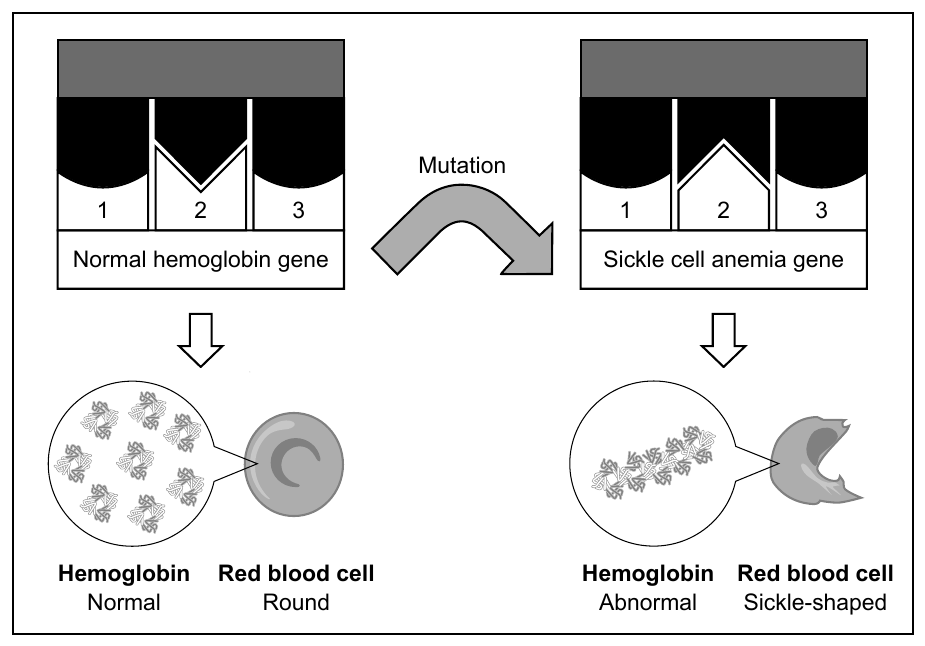
- The environment decides. The sickle cell mutation changes one amino acid in haemoglobin. People with two copies of the allele have sickle cell disease. But people with one copy are better protected against malaria. In regions with malaria the allele stays fairly common. In regions without malaria it has no such benefit.
- So a mutation is not good or bad by itself. Whether it helps depends on the protein it changes and the conditions the organism lives in.
A mutation in the haemoglobin gene causes sickle-shaped cells
Think like a scientist: nature or nurture?
- Question: does the amount of light a plant gets affect how tall it grows? Use bean seeds from the same pack so that their genes are as similar as possible.
- The independent variable is the light level (for example full light, partial shade, dark cupboard). The dependent variable is plant height after two weeks, measured in cm.
- Control variables to keep the same: type of seed, volume and timing of watering, compost, pot size and temperature.
- To make results reliable, use at least five plants per light level, repeat the investigation and calculate a mean for each level. Look at the range too. A very large range suggests the plants differed for another reason.
- Inquiry task 1: plan this investigation and say how you would record and display the results. Inquiry task 2: a student measures one plant per light level and concludes that light controls height. Evaluate the conclusion and suggest two improvements.
Diapos
Sign up free to view the lesson slides
Step through every slide for this topic — plus flashcards and revision notes — with a free account.
Questions d'entraînement
Aperçu gratuit — 8 sur 49 questions. Inscris-toi pour toutes les voir.
1.What does the word variation mean in biology?
Easy- AThe change from one generation to the next
- BDifferences between individuals of the same species
- CDifferences between living and non-living things
- DThe number of species living in one habitat
2.Which of these shows continuous variation?
Easy- AThe ABO blood groups of pupils
- BWhether pea seeds are round or wrinkled
- CWhether a person has XX or XY chromosomes
- DThe heights of pupils in a class
3.Which of these shows discontinuous variation?
Easy- AABO blood group
- BMass of a person
- CLength of a leaf
- DLength of a foot
4.Continuous variation puts individuals into separate categories with no in-between values.
EasyTrue or false?
5.Identical twins start life with the same genes.
EasyTrue or false?
6.Which of these is caused by the environment rather than by genes?
Easy- AWhich blood group a person has
- BWhether a person is XX or XY
- CA scar on a knee from a fall
- DThe colour of a pea flower
7.What is a mutation?
Easy- AA change in the number of cells in the body
- BA disease caused by a virus entering a cell
- CA change in the sequence of bases in DNA
- DA change in the habitat where a species lives
8.Which of these can increase the rate of mutation?
Easy- AIonising radiation such as X-rays
- BDrinking more water each day
- CEating a diet rich in protein
- DSleeping for longer each night
Unlock all 49 questions, flashcards & more
Crée un compte gratuit pour voir toutes les questions, les diapos, les cartes mémo et les notes de révision de ce thème.