Immunity and medicine
Apprends en jouant
Réponds à ces questions pour gagner de l'énergie, puis pêche et explore. Sans compte.
Notes de leçon
Big idea: living with pathogens
- Big idea (key concept): Relationships. Pathogens and their hosts are in a constant relationship: they evolve and respond to each other. Our immune system, our medicines and our communities are all part of that relationship.
- Related concept: Consequences. Choices such as vaccinating, prescribing antibiotics or approving a new medicine have consequences for individuals and for whole populations.
- Global context: Globalization and sustainability. Pathogens travel with people and goods around the world. Keeping medicines effective for future generations is a sustainability problem.
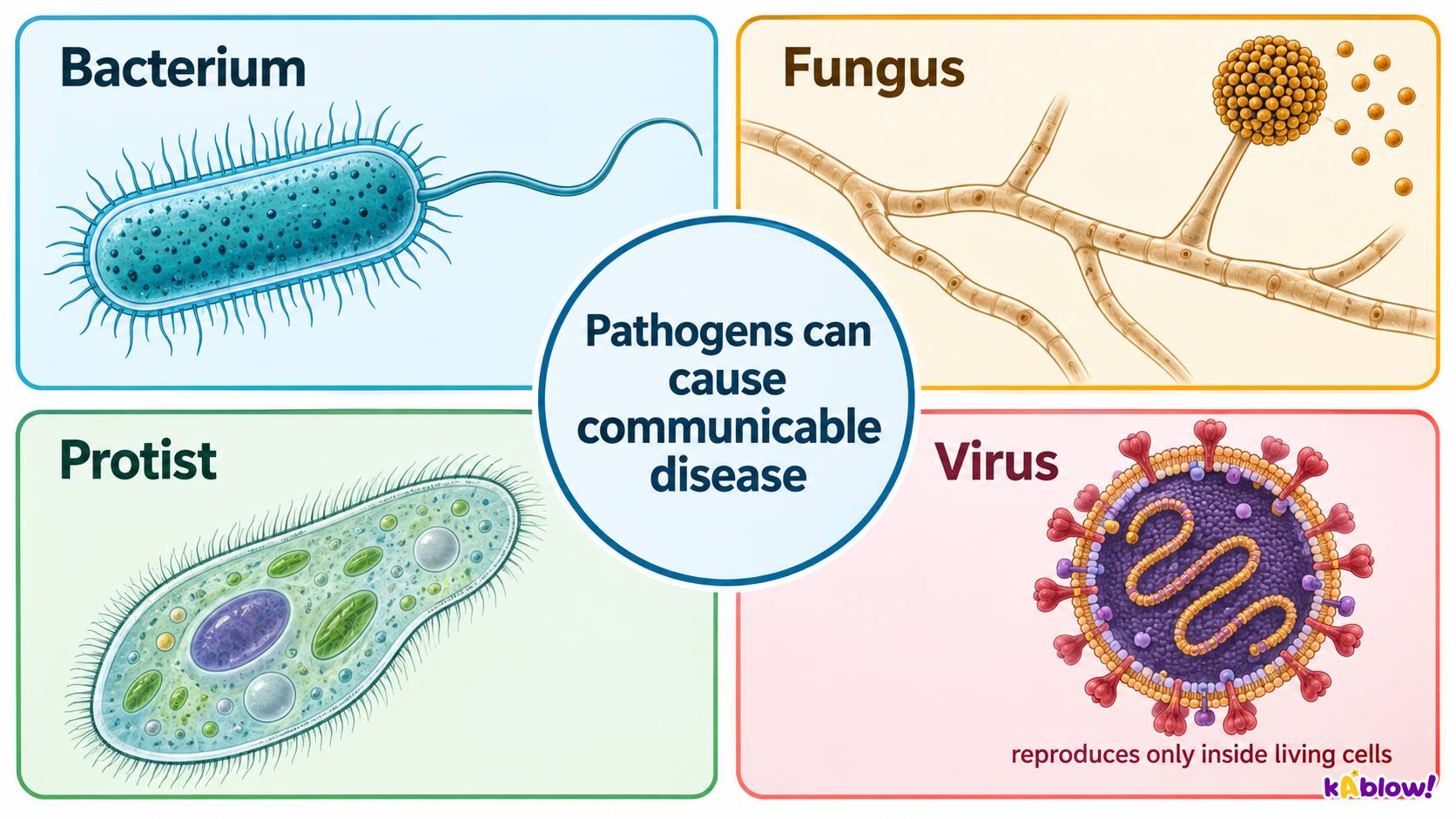
- A pathogen is a microorganism that causes disease. The four main groups are bacteria, viruses, fungi and protists. A communicable disease is one that can spread from one host to another.
- First-line defences stop most pathogens getting in: the skin, mucus and cilia in the airways, lysozyme in tears, and hydrochloric acid in the stomach. If a pathogen gets through, the immune system takes over.
The four groups of pathogen
Inside the body: phagocytes, lymphocytes and antibodies
- Every pathogen has molecules on its surface called antigens. The immune system recognises antigens as foreign.
- Phagocytes are white blood cells that detect a pathogen, engulf it and digest it with enzymes. This is a non-specific response because it works against many types of pathogen.
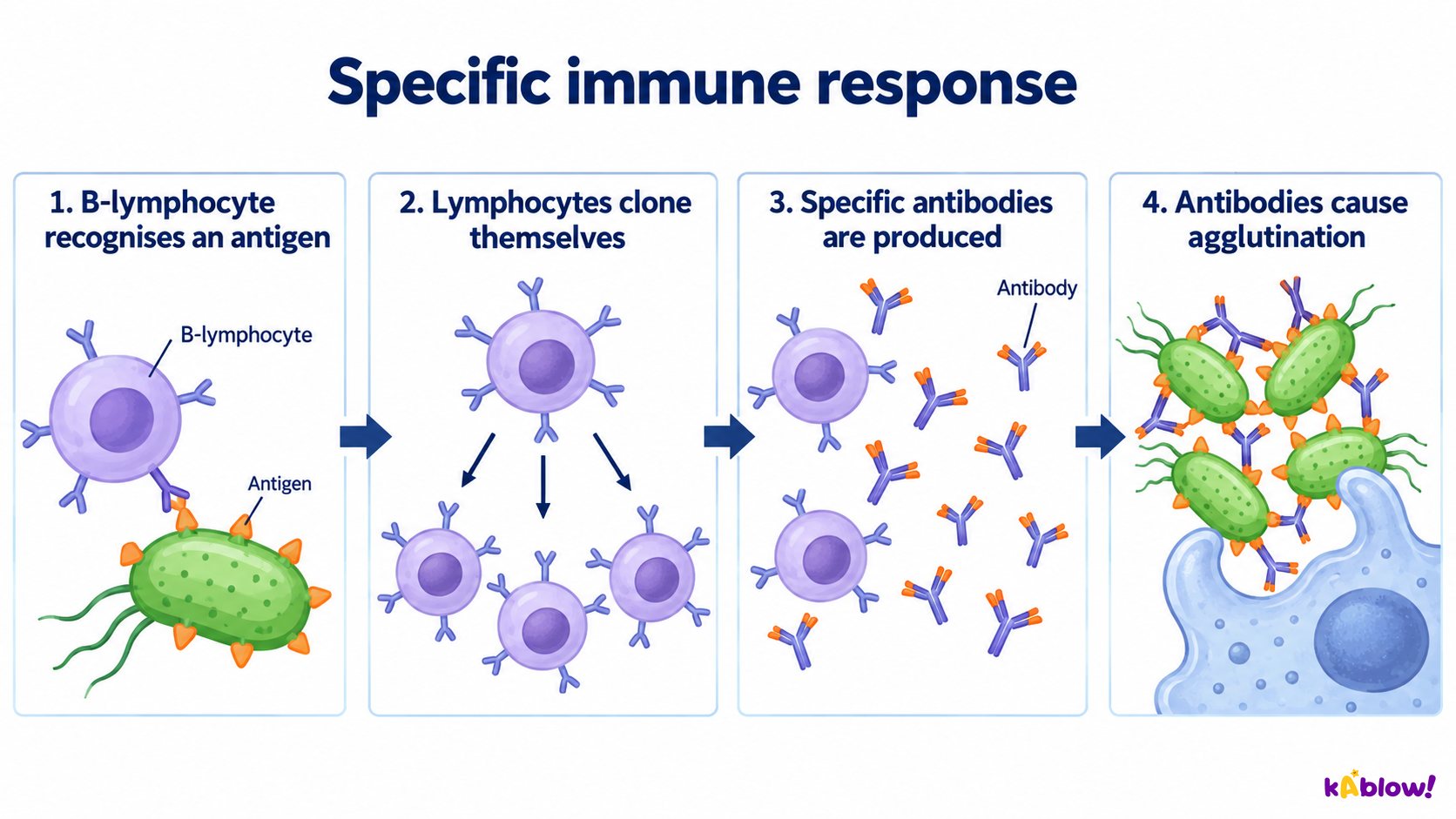
- Lymphocytes are white blood cells that make a specific response. Each lymphocyte has a receptor that matches one antigen. When it meets that antigen it divides to form a clone of identical cells, and these make large numbers of antibodies.
- An antibody has a shape that is complementary to its antigen, so it only fits one type of pathogen. Antibodies bind to pathogens, make them clump together (agglutination), neutralise toxins, and mark the pathogens for destruction by phagocytes. Other lymphocytes, called T cells, destroy body cells that are already infected.
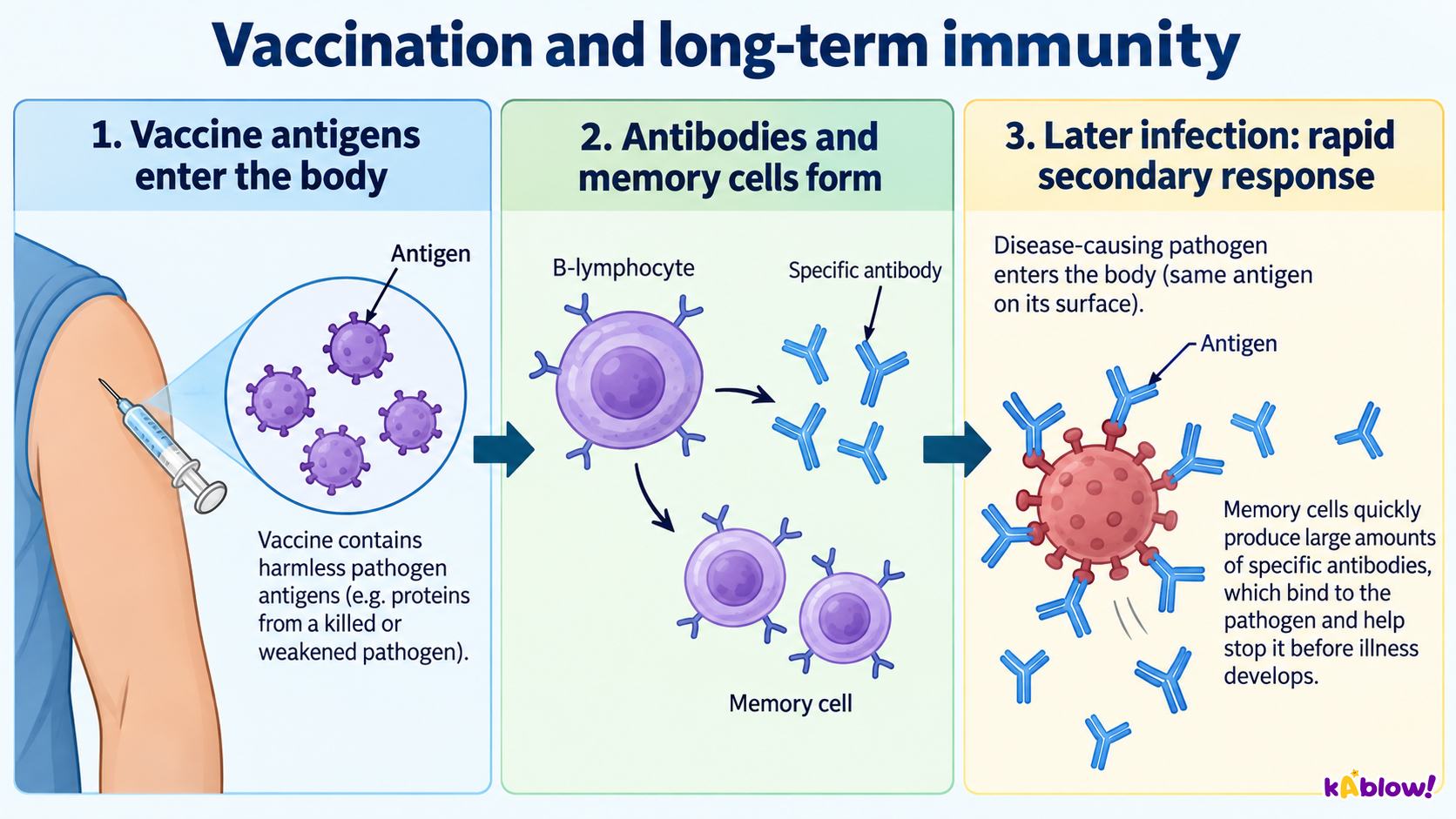
- The first time a pathogen is met, the response takes several days, so you may become ill. During that time some lymphocytes become memory cells, which stay in the body for years.
- If the same pathogen returns, memory cells respond faster and make more antibodies. This secondary response often stops the pathogen before it makes you ill. That is immunity.
The specific immune response in four steps
Vaccination and herd immunity
- A vaccine contains antigens from a pathogen in a harmless form, such as a weakened or inactivated pathogen, or just parts of it. Some vaccines use a molecule of mRNA that tells the body's cells to make a harmless antigen. Whichever type is used, the immune system makes antibodies and memory cells without the person getting the disease. This is active immunity.
- A booster dose can strengthen the memory response. Pathogens such as the influenza virus mutate and change their antigens, so memory cells for last year's strain may not recognise this year's. That is why the flu vaccine is updated.
- Vaccines can have side effects. Most are mild, such as a sore arm or a short fever. Serious reactions are very rare, and vaccines are monitored after they are approved. Public health experts compare these small risks with the risk from the disease itself.
- Herd immunity happens when enough people are immune that a pathogen finds it hard to spread. This helps protect people who cannot be vaccinated, such as babies or people with weakened immune systems. How many people must be immune depends on how easily the disease spreads: for measles, which spreads very easily, about 95% need to be immune.
- Passive immunity means receiving ready-made antibodies, for example from a mother through the placenta and breast milk. It protects straight away but only for a short time, because the body has not made its own memory cells.
How a vaccine gives long-term immunity
Antibiotics and resistance
- Antibiotics are medicines that kill bacteria or stop them growing. Penicillin, for example, stops bacteria building their cell walls. Water then enters the weakened cell by osmosis and it bursts.
- Antibiotics do not work on viruses. Viruses live inside host cells and do not have the cell walls or other structures that antibiotics target.
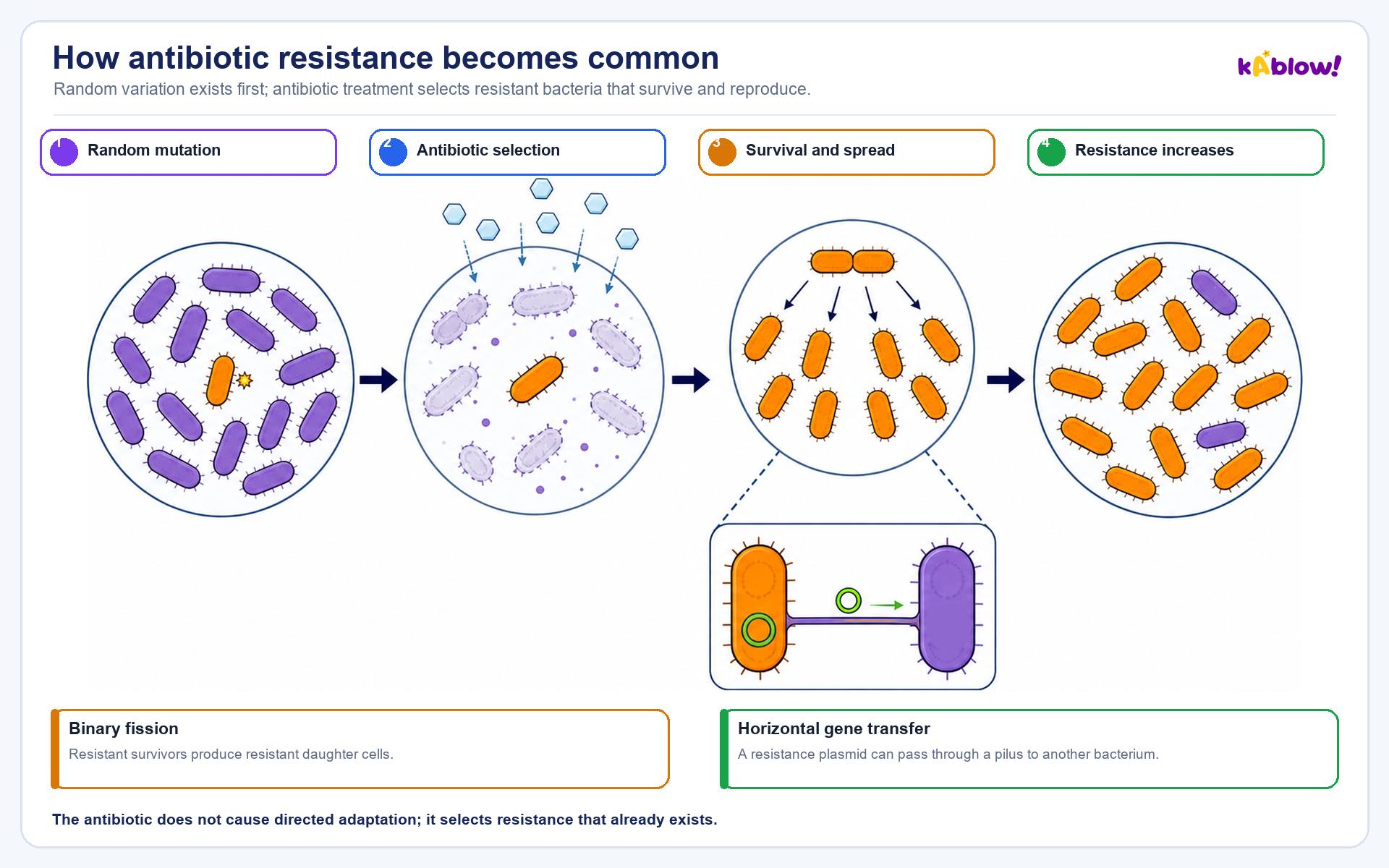
- In a large population of bacteria, a random mutation may make one bacterium resistant to an antibiotic. The antibiotic does not cause the mutation. It simply kills the non-resistant bacteria, so the resistant bacterium survives, reproduces by binary fission, and passes on the resistance gene.
- Bacteria can also pass resistance genes on plasmids to other bacteria, even of a different species. Over time, resistant strains such as MRSA become common.
- The more an antibiotic is used, the stronger the selection for resistance. Doctors therefore try to prescribe antibiotics only when they are needed, and researchers search for new ones. Resistance is a worldwide problem, because bacteria travel with people.
How antibiotic resistance becomes common
Monoclonal antibodies
- Monoclonal antibodies are antibodies that are all identical, because they are made by a single clone of cells. Each one binds to one specific antigen.
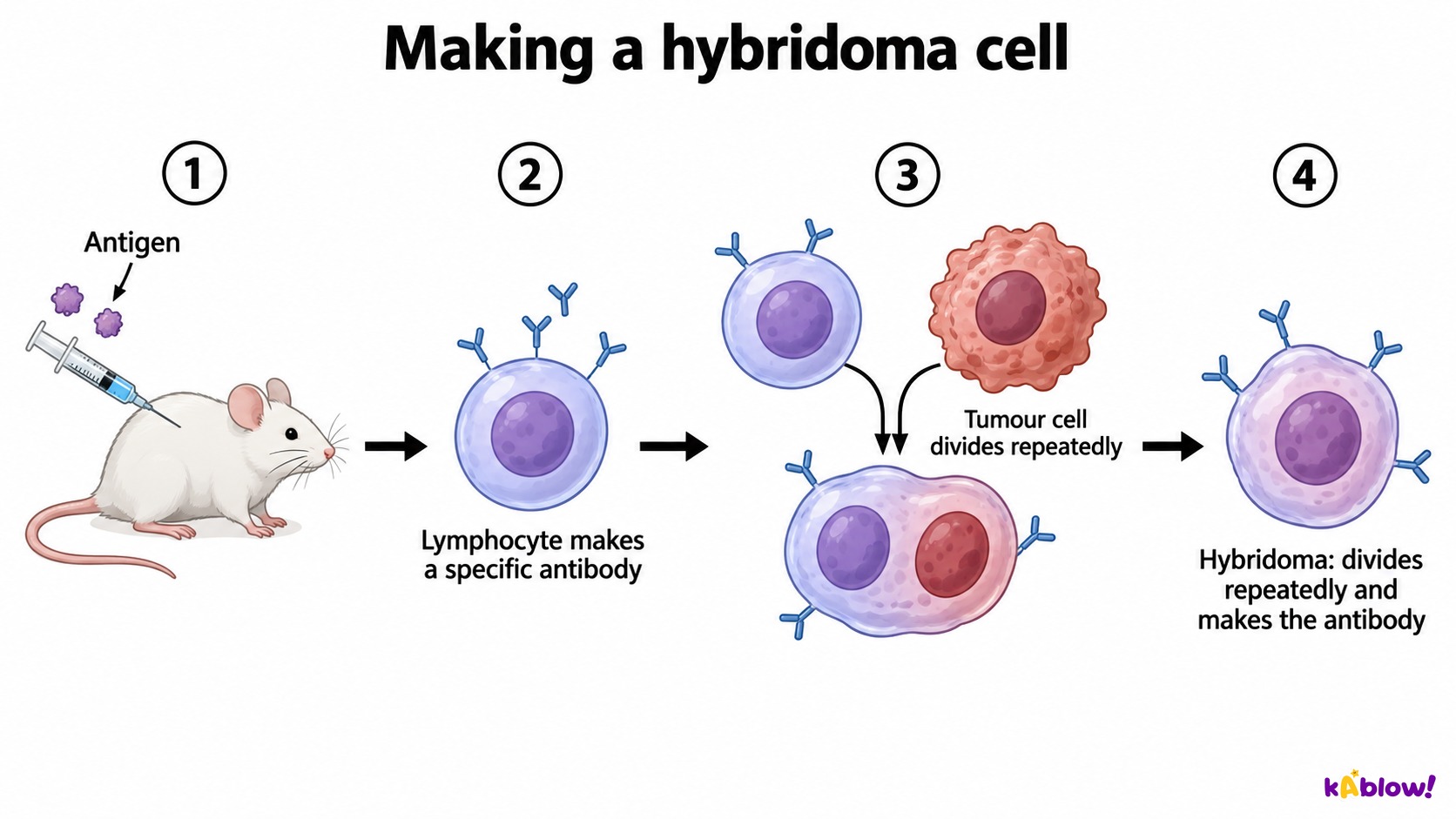
- To make them, a mouse is injected with the antigen and a lymphocyte that makes the matching antibody is taken. It is fused with a tumour cell, which divides endlessly. The fused cell is called a hybridoma. It divides repeatedly and every cell makes the same antibody, which can be collected and purified.
- Uses. In a pregnancy test, monoclonal antibodies bind to the hormone HCG in urine. In diagnosis they can locate a particular molecule. In research they can be given a fluorescent label to show where a molecule is in a tissue. In treatment they can carry a drug to cancer cells by binding to an antigen on their surface.
- Limitations. Some patients have side effects. Making them is expensive. Early hopes that they would treat many diseases have only partly been met. Using mice raises ethical questions about animal welfare, which people weigh differently.
- Evaluating a technology like this means weighing the potential benefits, such as specific and targeted action, against costs, risks and ethical concerns.
Making a hybridoma cell
Think like a scientist: testing a new medicine
- A new medicine is first tested in the laboratory with cells and computer models, and sometimes on animals, which is regulated and debated. Then it goes through clinical trials on people.
- Phase 1: a small group, often healthy volunteers, to check safety and a suitable dose. Phase 2: a larger group of patients to see whether it works and to find the best dose. Phase 3: large groups of patients, often thousands, to compare the medicine with the best existing treatment or a placebo.
- A placebo looks like the medicine but contains no active ingredient. Comparing with a placebo shows whether any improvement comes from the medicine and not just from expecting to feel better.
- To reduce bias, trials are randomised (chance decides who gets which treatment) and often double-blind (neither patients nor doctors know who is receiving which until the end). Results are checked by other scientists (peer review) and by regulators.
- Inquiry task 1: in a trial of a new pain medicine, name the independent variable, the dependent variable and two variables that should be controlled. Inquiry task 2: a trial of 20 people finds that 12 improved with the medicine and 9 with the placebo. Evaluate how strongly these data support the medicine.
Diapos
Sign up free to view the lesson slides
Step through every slide for this topic — plus flashcards and revision notes — with a free account.
Questions d'entraînement
Aperçu gratuit — 8 sur 54 questions. Inscris-toi pour toutes les voir.
1.What is a pathogen?
Easy- AA cell that makes antibodies
- BA medicine that kills bacteria
- CA microorganism that causes disease
- DA protein found in blood plasma
2.What is an antigen?
Easy- AA molecule that the immune system recognises as foreign
- BA white blood cell that engulfs bacteria and digests them
- CA protein made by lymphocytes to fit a pathogen
- DA medicine that destroys viruses inside the cells
3.Antibiotics are used to treat infections caused by viruses.
EasyTrue or false?
4.Which of these is a first-line defence that helps stop pathogens getting into the body?
Easy- AAntibodies that are made by lymphocytes in the blood
- BMemory cells that stay in the blood for many years
- CA booster dose of a vaccine given by a nurse
- DMucus that traps microorganisms in the airways
5.Which type of cell makes antibodies?
Easy- ARed blood cells
- BLymphocytes
- CPhagocytes
- DPlatelets
6.Complete the sentence.
EasyAn antibody has a shape that is ____ to one particular antigen.
7.What is the job of memory cells?
Easy- ATo engulf and digest any pathogen that they meet
- BTo respond quickly if the same pathogen returns
- CTo carry oxygen from the lungs to the body cells
- DTo make the very first antibodies in a new infection
8.What does a vaccine usually contain?
Easy- AA harmless form of antigens from a pathogen
- BReady-made antibodies from another person
- CA live and fully active pathogen
- DAn antibiotic that kills bacteria
Unlock all 54 questions, flashcards & more
Crée un compte gratuit pour voir toutes les questions, les diapos, les cartes mémo et les notes de révision de ce thème.