Gas Exchange In Humans
Apprends en jouant
Réponds à ces questions pour gagner de l'énergie, puis pêche et explore. Sans compte.
Notes de leçon
Features of Gas Exchange Surfaces
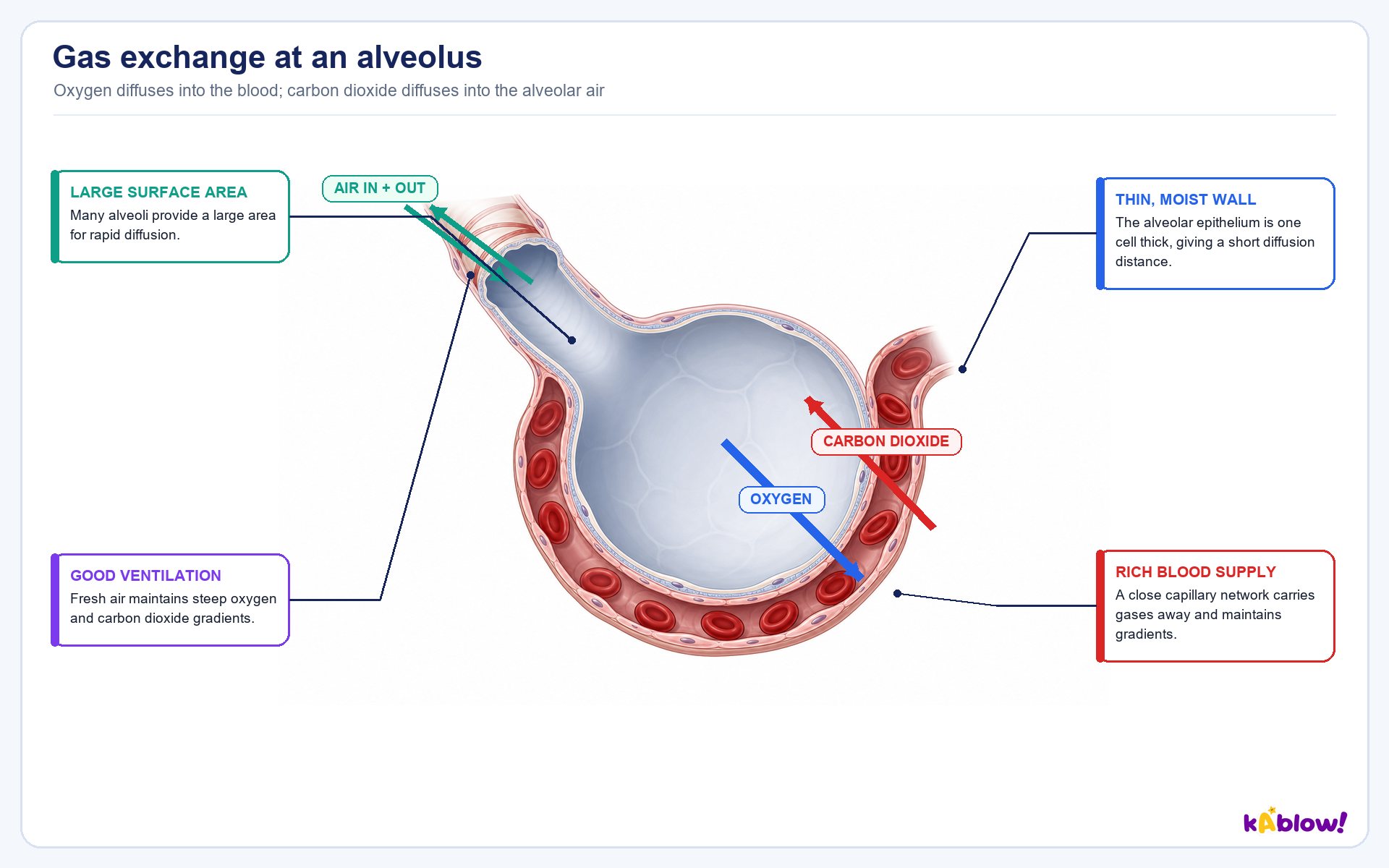
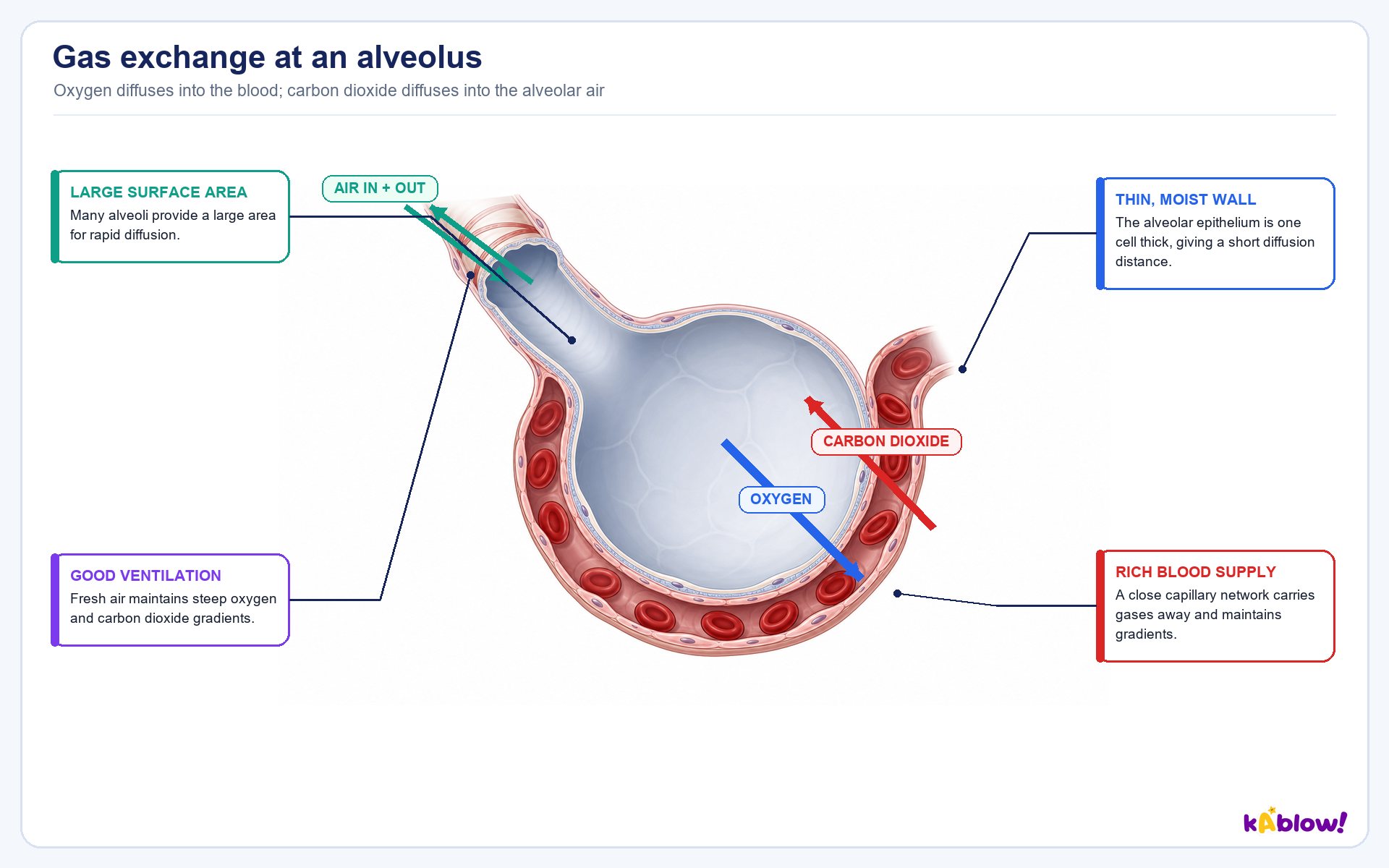
- All gas exchange surfaces share features that maximise the rate of diffusion.
- Large surface area – allows faster diffusion of gases across the surface.
- Thin walls – ensure short diffusion distances.
- Good ventilation – maintains diffusion gradients.
- Good blood supply – maintains a steep concentration gradient for faster diffusion.
- The alveolus is the gas exchange surface in humans.
Features of gas exchange surfaces
The Breathing System
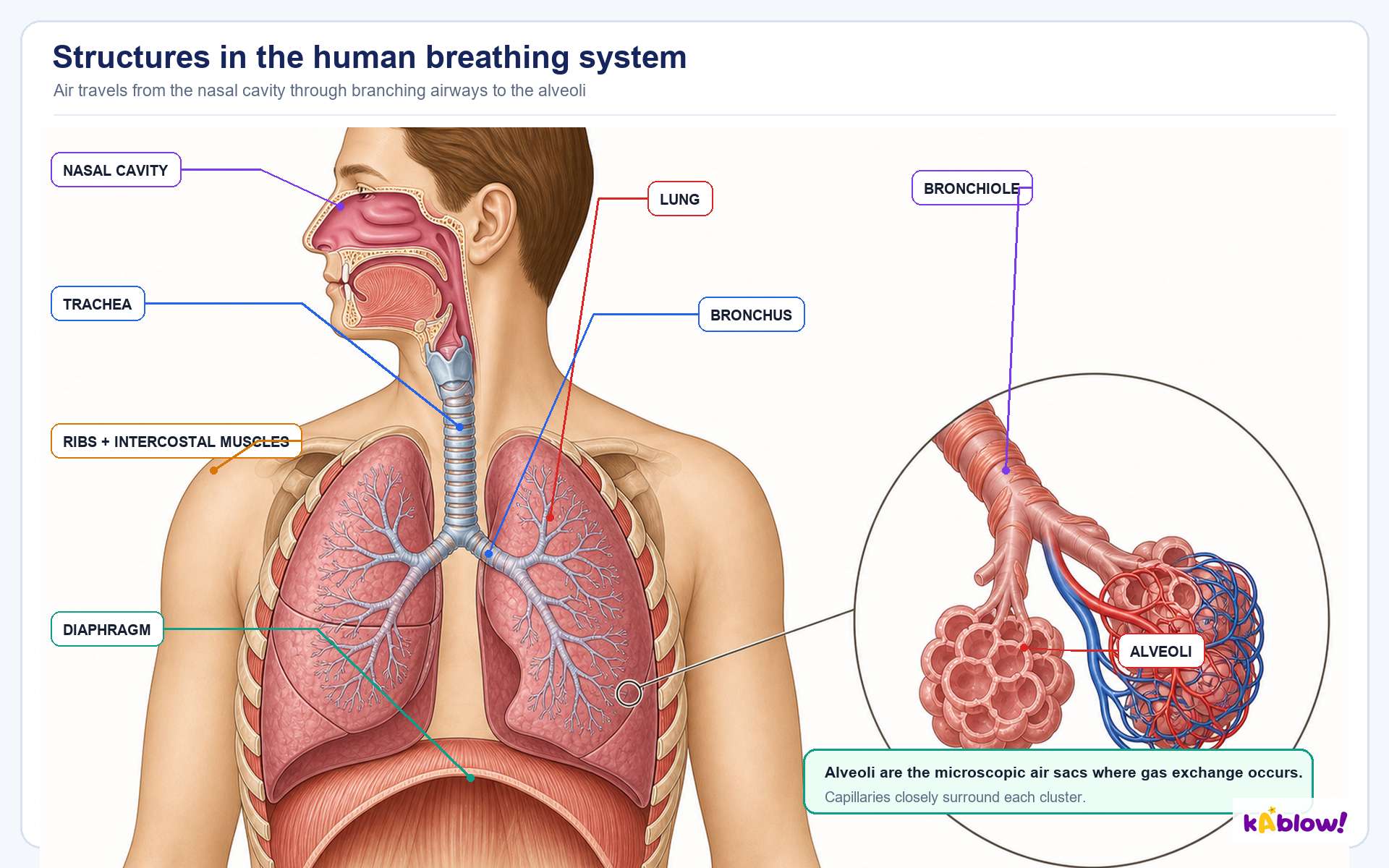
- Air enters through the nose/mouth, passes through the trachea, bronchi, bronchioles, and reaches the alveoli.
- The trachea is supported by rings of cartilage to prevent collapse.
- The bronchi branch from the trachea into each lung.
- Bronchioles are smaller branches leading to alveoli.
- Alveoli are tiny air sacs where gas exchange occurs.
- The diaphragm is a sheet of muscle separating the thorax from the abdomen.
- Intercostal muscles are located between the ribs; external (outside) and internal (inside).
Structures in the human breathing system
Ventilation: Volume & Pressure Changes
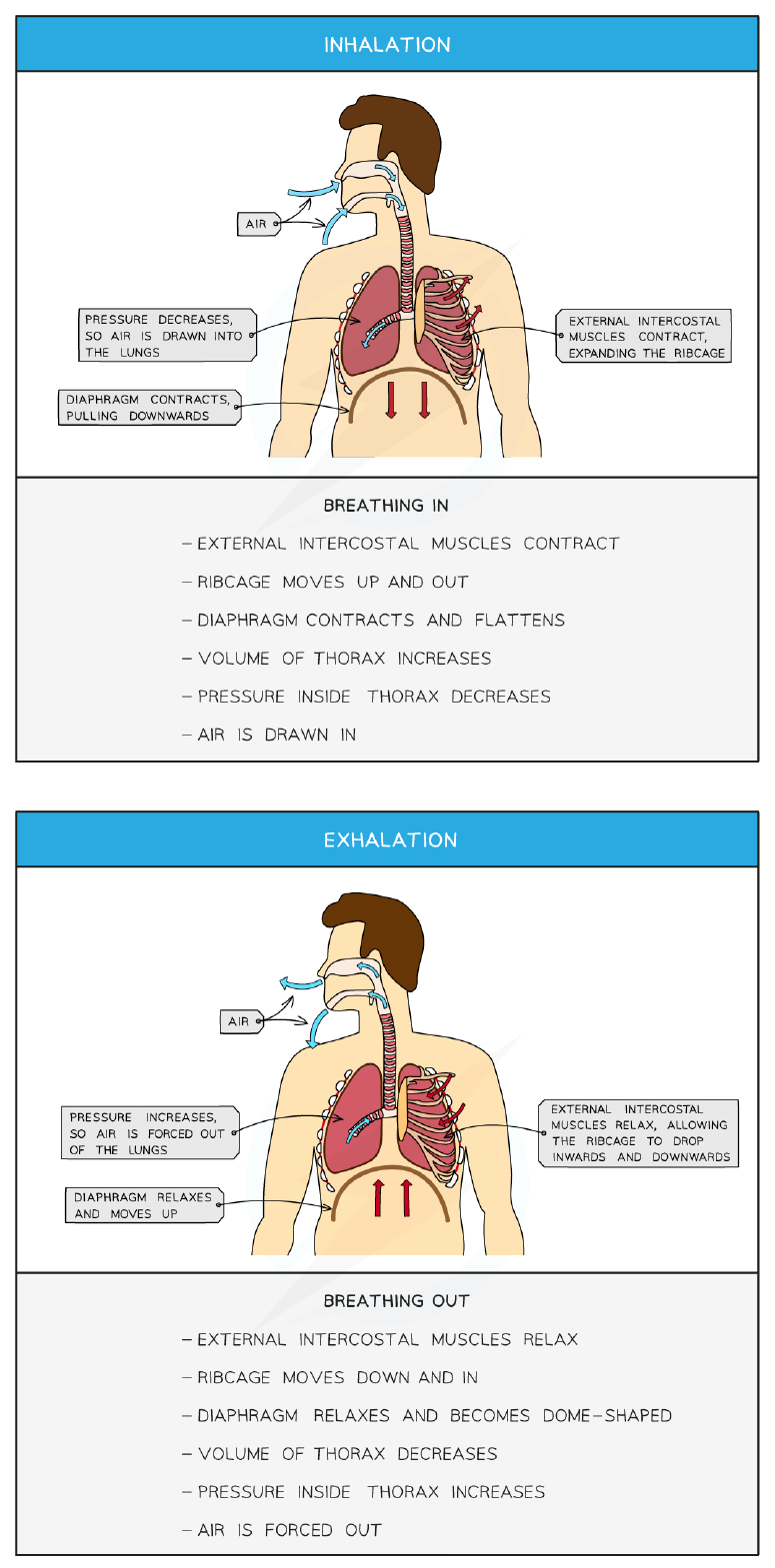
- Inspiration (inhalation): diaphragm contracts and flattens; external intercostal muscles contract, pulling ribs up and out.
- This increases thorax volume, decreases air pressure inside lungs, drawing air in.
- Expiration (exhalation): diaphragm relaxes and moves up; external intercostal muscles relax, ribs drop down and in.
- This decreases thorax volume, increases air pressure, forcing air out.
- Forced exhalation (e.g., during exercise) involves internal intercostal muscles contracting to pull ribs down more forcefully.
- Cartilage in trachea and bronchi keeps airways open during pressure changes.
Inhalation and exhalation
Differences Between Inspired and Expired Air
- Inspired air: ~21% oxygen, ~0.04% carbon dioxide, variable water vapour.
- Expired air: ~16% oxygen, ~4% carbon dioxide, more water vapour.
- Nitrogen remains constant at ~78%.
- Differences arise because oxygen diffuses into blood and carbon dioxide diffuses out in alveoli.
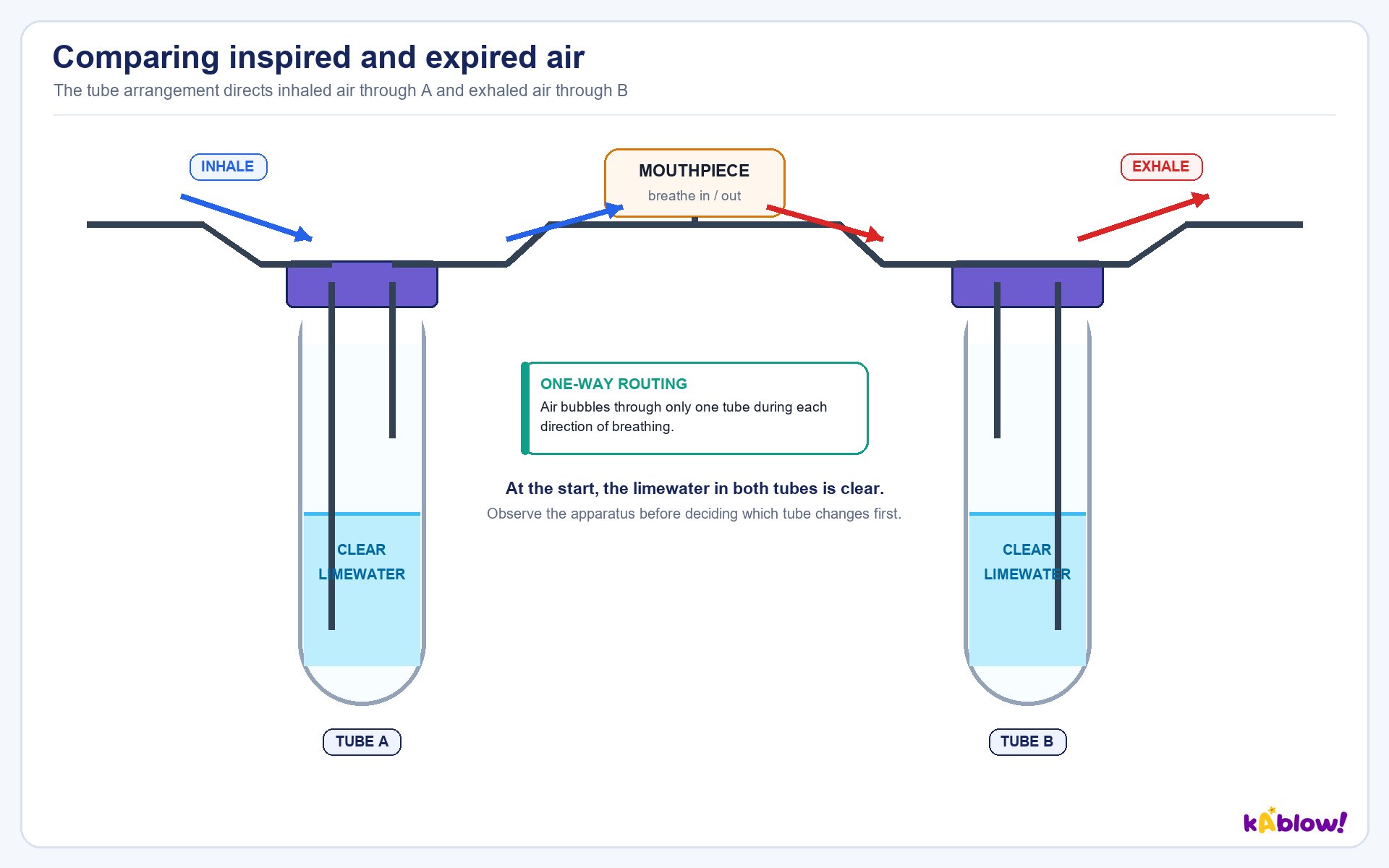
- Limewater test: expired air turns limewater cloudy (milky) due to higher CO₂; inspired air does not.
Effects of Physical Activity on Breathing
- Exercise increases both breathing rate (breaths per minute) and depth (tidal volume).
- More oxygen is needed for increased aerobic respiration in muscles; more CO₂ is produced.
- Increased CO₂ lowers blood pH, detected by chemoreceptors in the medulla oblongata.
- The brain sends nerve impulses to diaphragm and intercostal muscles to increase ventilation.
- After exercise, breathing remains elevated to repay oxygen debt (remove lactic acid).
- Investigation: count breaths per minute and measure chest expansion before and after exercise.
Protecting the Breathing System
- Airways are lined with ciliated epithelial cells and goblet cells.
- Goblet cells produce mucus that traps dust, bacteria, and particles.
- Cilia beat to move mucus upwards towards the throat, where it is swallowed or expelled.
- This prevents pathogens and debris from reaching the lungs.
Diapos
Sign up free to view the lesson slides
Step through every slide for this topic — plus flashcards and revision notes — with a free account.
Questions d'entraînement
Aperçu gratuit — 8 sur 54 questions. Inscris-toi pour toutes les voir.
1.Which of the following is a feature of gas exchange surfaces that maximises the rate of gas exchange?
Easy- ALarge surface area
- BThick walls
- CPoor blood supply
- DLack of ventilation
2.What is the function of cartilage in the trachea?
Easy- ATo produce mucus
- BTo support the airways and keep them open
- CTo contract and expand the lungs
- DTo trap dust and bacteria
3.During inhalation, the diaphragm:
Easy- ARelaxes and moves upwards
- BContracts and flattens
- CRemains stationary
- DContracts and moves upwards
4.Which gas has the same percentage in inspired and expired air?
Easy- AOxygen
- BCarbon dioxide
- CNitrogen
- DWater vapour
5.What is the approximate percentage of carbon dioxide in exhaled air?
Easy- A0.04%
- B4%
- C16%
- D21%
6.In an investigation using limewater to compare inhaled and exhaled air, which observation indicates a higher carbon dioxide concentration?
Medium- ALimewater turns cloudy in the tube receiving exhaled air
- BLimewater turns cloudy in the tube receiving inhaled air
- CLimewater remains clear in both tubes
- DLimewater turns red in the tube receiving exhaled air
7.Which muscles contract during forced exhalation?
Medium- AExternal intercostal muscles only
- BInternal intercostal muscles only
- CBoth external and internal intercostal muscles
- DDiaphragm only
8.What causes the increase in breathing rate during exercise?
Medium- AIncreased oxygen levels in the blood
- BDecreased carbon dioxide levels in the blood
- CIncreased carbon dioxide levels detected by chemoreceptors
- DDecreased pH in the muscles
Unlock all 54 questions & more
Crée un compte gratuit pour voir toutes les questions, les diapos, les cartes mémo et les notes de révision de ce thème.