Identification Of Ions & Gases
Apprends en jouant
Réponds à ces questions pour gagner de l'énergie, puis pêche et explore. Sans compte.
Notes de leçon
Identification of Anions
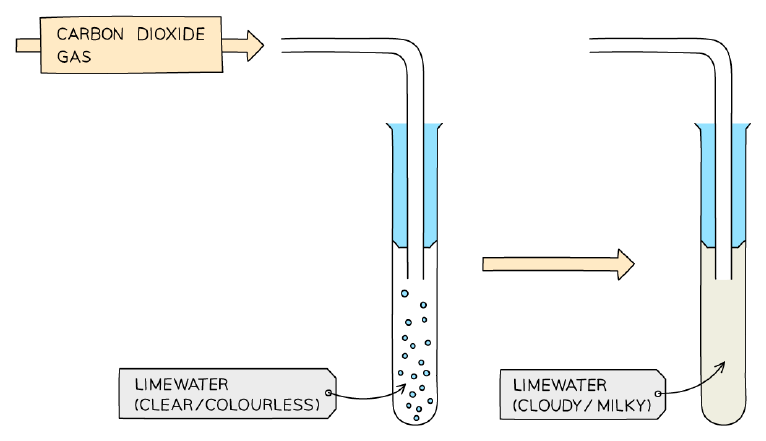
- Carbonate (CO₃²⁻): Add dilute acid → CO₂ gas → bubble through limewater → turns cloudy/milky (white CaCO₃ precipitate).
- Halide (Cl⁻, Br⁻, I⁻): Acidify with dilute HNO₃, add AgNO₃(aq) → coloured precipitate: Cl⁻ = white (AgCl), Br⁻ = cream (AgBr), I⁻ = yellow (AgI).
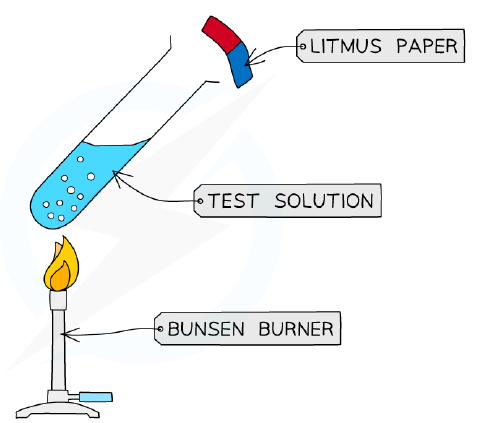
- Nitrate (NO₃⁻): Add aq. NaOH + Al foil, warm gently → ammonia gas (turns damp red litmus blue).
- Sulfate (SO₄²⁻): Acidify with dilute HNO₃, add BaCl₂(aq) or Ba(NO₃)₂ → white precipitate (BaSO₄).
- Sulfite (SO₃²⁻): Add dilute acid, warm, bubble gas through acidified KMnO₄ → purple to colourless.
Testing for carbonate ions
Identification of Cations – NaOH Test
- Add few drops aq. NaOH → observe precipitate colour; then excess NaOH → note solubility.
- Al³⁺: white ppt, soluble in excess NaOH → colourless solution.
- NH₄⁺: ammonia gas on warming (turns damp red litmus blue).
- Ca²⁺: white ppt, insoluble in excess NaOH.
- Cr³⁺: green ppt, soluble in excess NaOH.
- Cu²⁺: light blue ppt, insoluble in excess NaOH.
- Fe²⁺: green ppt, insoluble in excess, surface turns brown on standing.
- Fe³⁺: red-brown ppt, insoluble in excess.
- Zn²⁺: white ppt, soluble in excess NaOH → colourless solution.
Metal cations with sodium hydroxide
Identification of Cations – Ammonia Test
- Add few drops aq. NH₃ → observe precipitate; then excess NH₃ → note solubility.
- Al³⁺: white ppt, insoluble in excess NH₃.
- Ca²⁺: no ppt or very slight white ppt; no change with excess.
- Cr³⁺: green ppt, insoluble in excess NH₃.
- Cu²⁺: light blue ppt, soluble in excess NH₃ → dark blue solution.
- Fe²⁺: green ppt, insoluble in excess, surface turns brown.
- Fe³⁺: red-brown ppt, insoluble in excess.
- Zn²⁺: white ppt, soluble in excess NH₃ → colourless solution.
Metal cations with ammonia
Flame Tests for Metal Cations
- Clean nichrome or platinum wire by dipping in conc. HCl and heating until no colour.
- Dip wire into sample and hold in blue Bunsen flame.
- Li⁺ = red; Na⁺ = yellow; K⁺ = lilac; Ca²⁺ = orange-red; Ba²⁺ = light green; Cu²⁺ = blue-green.
Flame test colours
Identification of Gases
- Ammonia (NH₃): damp red litmus turns blue; sharp choking smell.
- Carbon dioxide (CO₂): bubble through limewater → turns cloudy/milky.
- Chlorine (Cl₂): damp blue litmus turns red then bleached white; toxic – use fume cupboard.
- Hydrogen (H₂): burning splint → squeaky pop (rapid combustion).
- Oxygen (O₂): glowing splint → relights (or glows brightly).
- Sulfur dioxide (SO₂): bubble through acidified KMnO₄ → purple to colourless; sharp choking smell.
Testing for ammonia gas
Key Tips & Common Mistakes
- For carbonate test: describe the test (bubble gas through limewater), not just the result.
- Halide test: use HNO₃ to acidify, not HCl (Cl⁻ would interfere).
- Sulfate test: add HNO₃ first to remove carbonates that also give white ppt.
- Add NaOH/NH₃ slowly – some ppts dissolve in excess, so initial ppt may be missed.
- Distinguish colourless (no colour) vs clear (transparent, may be coloured).
- Flame test: sample must be pure (single cation) to avoid mixed colours.
Diapos
Sign up free to view the lesson slides
Step through every slide for this topic — plus flashcards and revision notes — with a free account.
Questions d'entraînement
Aperçu gratuit — 8 sur 36 questions. Inscris-toi pour toutes les voir.
1.What is the test for carbonate ions?
Easy- AAdd dilute acid and bubble the gas through limewater; limewater turns cloudy.
- BAdd silver nitrate solution; a white precipitate forms.
- CAdd barium chloride solution; a white precipitate forms.
- DAdd sodium hydroxide and warm; damp red litmus turns blue.
2.Which gas is produced when ammonium ions are warmed with sodium hydroxide solution?
Easy- AAmmonia
- BNitrogen
- CHydrogen
- DOxygen
3.What is the colour of the precipitate formed when chloride ions are tested with silver nitrate solution?
Easy- AWhite
- BCream
- CYellow
- DNo precipitate
4.A solution gives a white precipitate with barium nitrate solution after adding dilute nitric acid. Which ion is present?
Medium- ASulfate
- BCarbonate
- CChloride
- DNitrate
5.A green precipitate forms when sodium hydroxide is added to a solution. The precipitate dissolves in excess sodium hydroxide. Which cation is present?
Medium- AChromium(III)
- BIron(II)
- CCopper(II)
- DAluminium
6.Which gas relights a glowing splint?
Easy- AOxygen
- BHydrogen
- CCarbon dioxide
- DChlorine
7.A student adds dilute hydrochloric acid to a solid and bubbles the gas through limewater. The limewater turns cloudy. What can be concluded?
Medium- AThe solid contains carbonate ions.
- BThe solid contains sulfite ions.
- CThe solid contains hydrogencarbonate ions.
- DThe solid contains carbonate or hydrogencarbonate ions.
8.What is the colour of the flame produced by potassium ions in a flame test?
Easy- AYellow
- BLilac
- CRed
- DGreen
Unlock all 36 questions & more
Crée un compte gratuit pour voir toutes les questions, les diapos, les cartes mémo et les notes de révision de ce thème.