Photosynthesis And Leaf Structure
Apprends en jouant
Réponds à ces questions pour gagner de l'énergie, puis pêche et explore. Sans compte.
Notes de leçon
Photosynthesis Overview
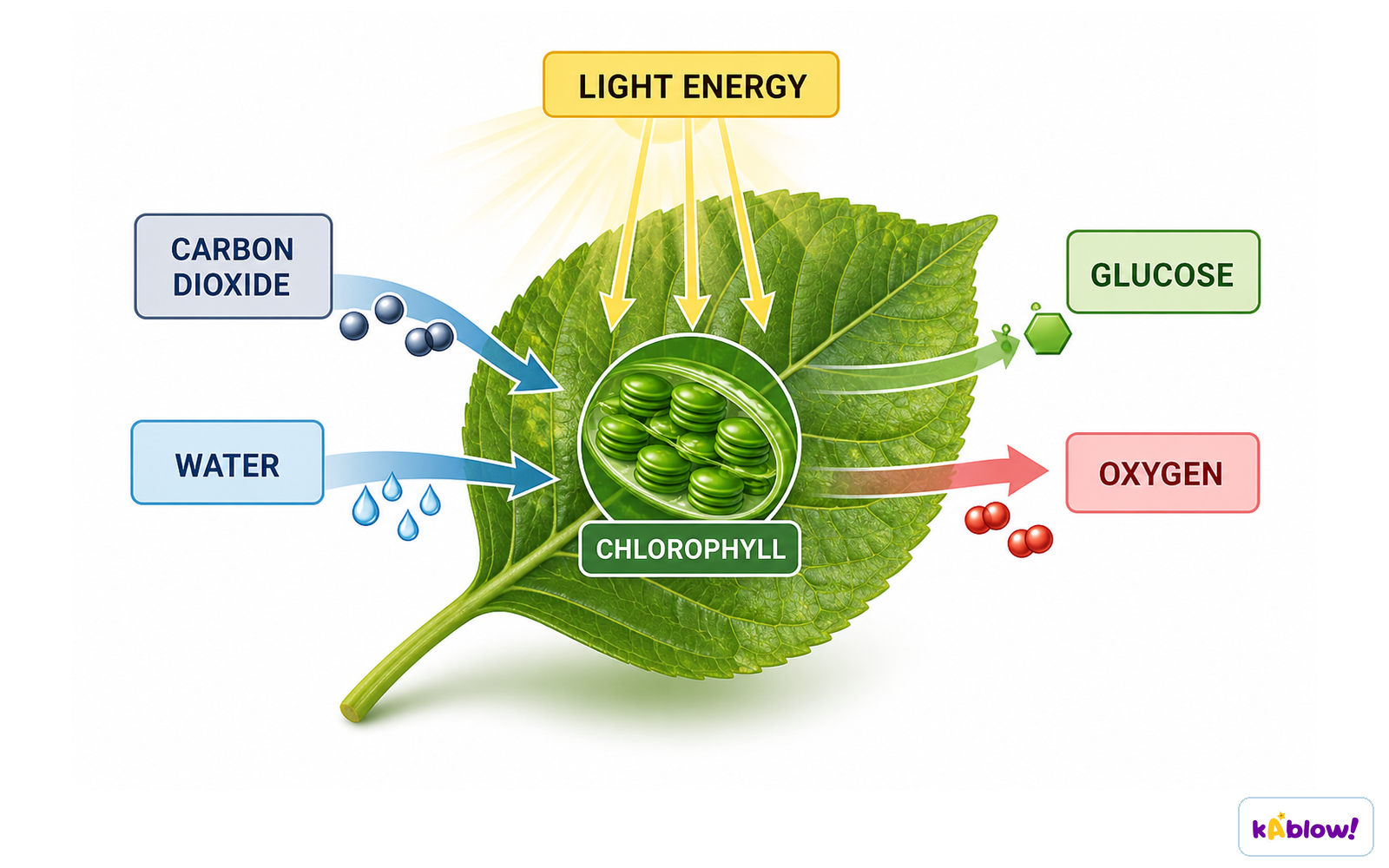
- Photosynthesis is the process by which plants manufacture carbohydrates from raw materials using energy from light.
- Raw materials: carbon dioxide and water.
- Energy is obtained when chlorophyll traps light energy from the Sun.
- Word equation: carbon dioxide + water → glucose + oxygen.
- Glucose stores chemical energy; oxygen is a waste product.
Photosynthesis word equation
Chlorophyll and Chloroplasts
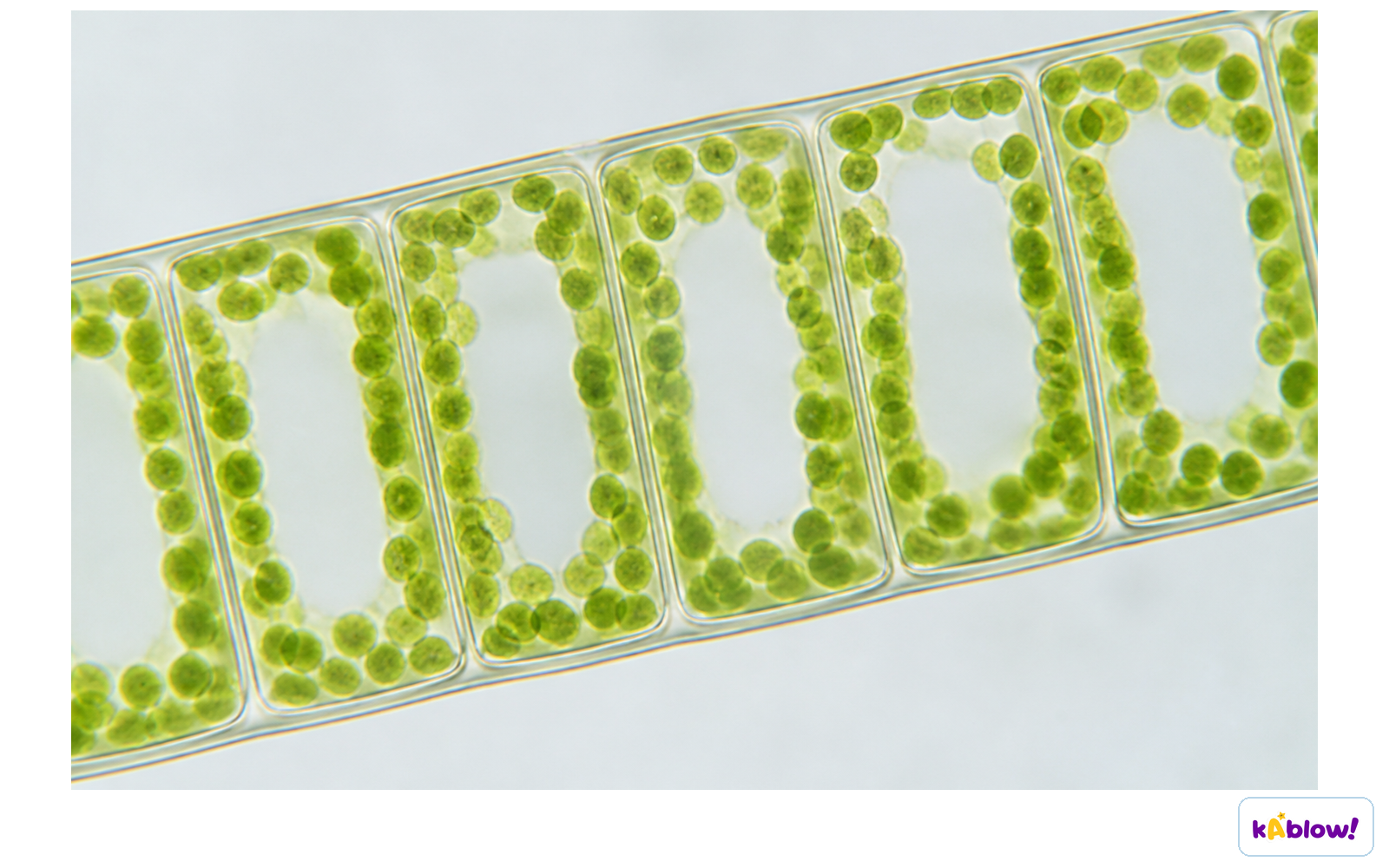
- Chlorophyll is a green pigment found in chloroplasts.
- It reflects green light, giving plants their green colour.
- Chlorophyll absorbs light energy and transfers it into chemical energy during carbohydrate synthesis.
- Chloroplasts are the site of photosynthesis.
Chlorophyll within chloroplasts
Use and Storage of Carbohydrates (Extended)
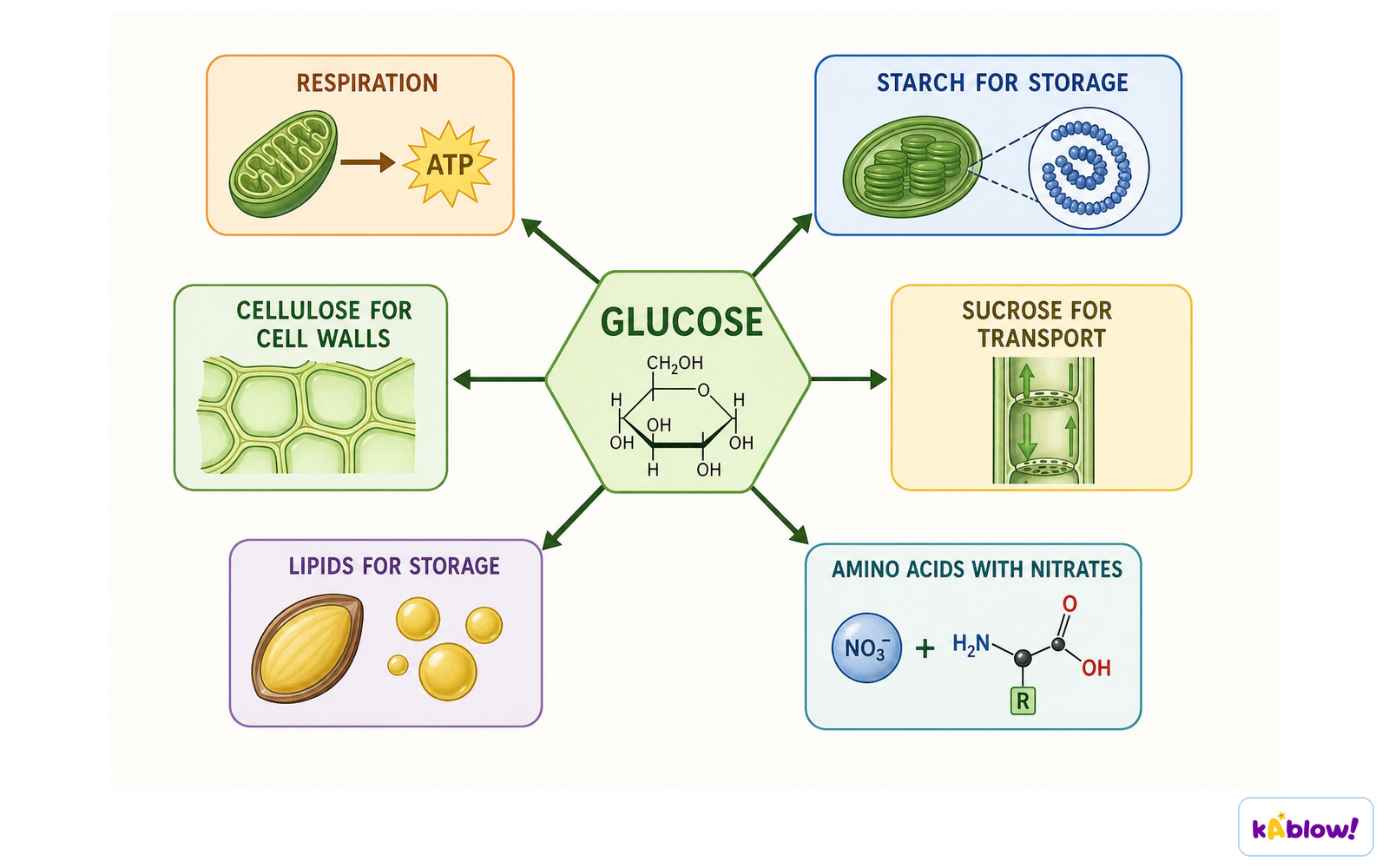
- Glucose is converted into starch for storage.
- Glucose is converted into cellulose for cell walls.
- Glucose is used in respiration to release energy.
- Glucose is converted to sucrose for transport in phloem.
- Carbohydrates can also be converted into lipids and amino acids.
Uses of glucose in plants
Mineral Requirements (Extended)
- Plants need nitrate ions to make amino acids (proteins).
- Plants need magnesium ions to make chlorophyll.
- Nitrate deficiency causes stunted growth.
- Magnesium deficiency causes yellow leaves (chlorosis).
Mineral ions plants need
Testing Leaves for Starch
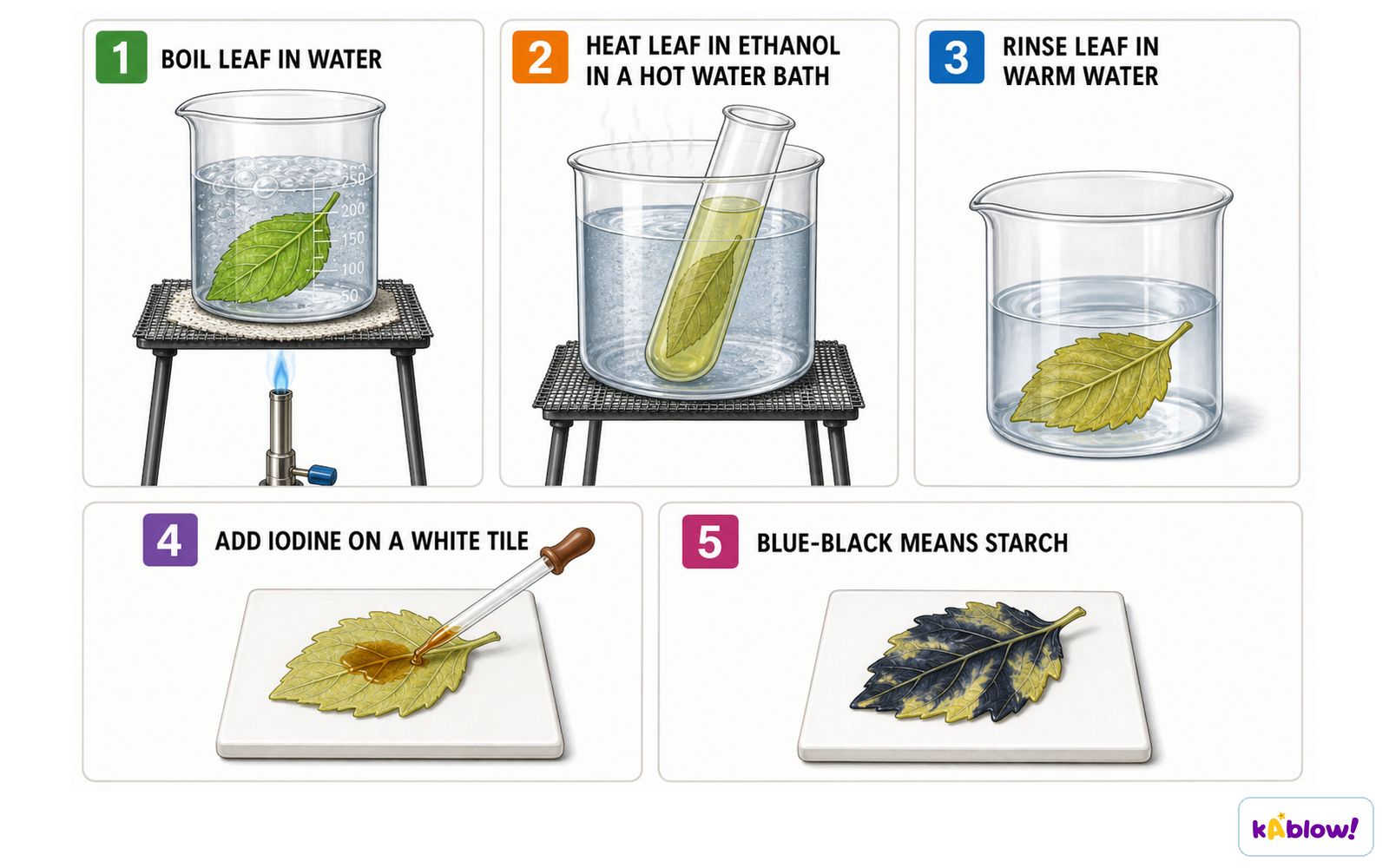
- Starch is stored in chloroplasts; testing for starch indicates photosynthesis.
- Procedure: kill leaf in boiling water → remove chlorophyll with hot ethanol → soften in water → add iodine solution.
- Starch turns iodine blue-black; no starch leaves orange-brown.
- Variegated leaves show that chlorophyll is needed: only green areas turn blue-black.
- Destarch a plant by placing in darkness for 24 hours before testing for light or CO₂ need.
Testing a leaf for starch
Investigating Requirements for Photosynthesis
- Light: partially cover a destarched leaf with foil; after sunlight, covered area stays orange-brown (no starch).
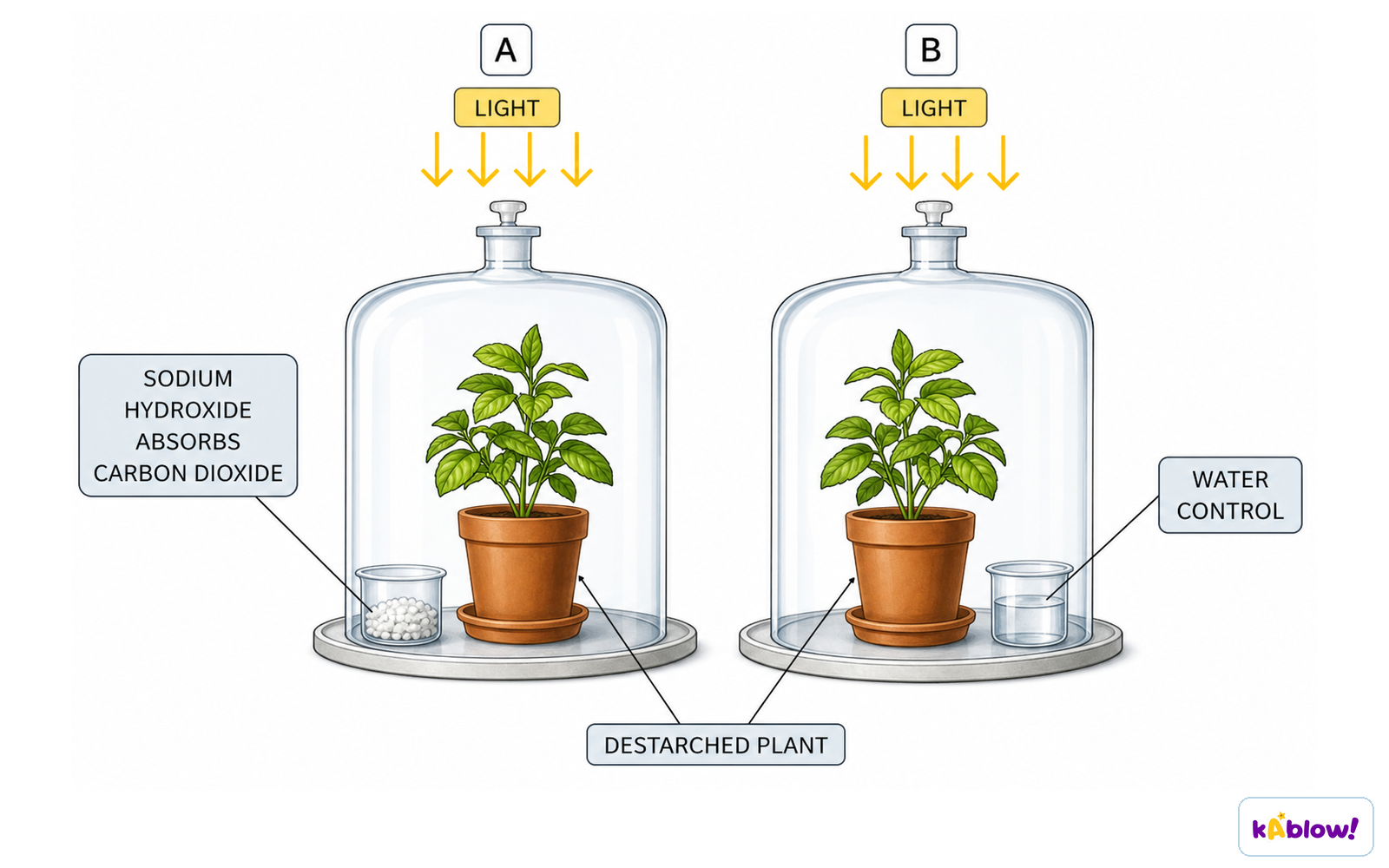
- Carbon dioxide: place destarched plant in bell jar with sodium hydroxide (absorbs CO₂); leaf stays orange-brown.
- Control plant with water in bell jar turns blue-black.
- Chlorophyll: variegated leaf test (see above).
Investigating the need for carbon dioxide
Environmental Factors Affecting Rate
- Light intensity: increases rate up to a point (limiting factor).
- Carbon dioxide concentration: increases rate up to a point.
- Temperature: increases rate up to optimum; above optimum, enzymes denature and rate falls.
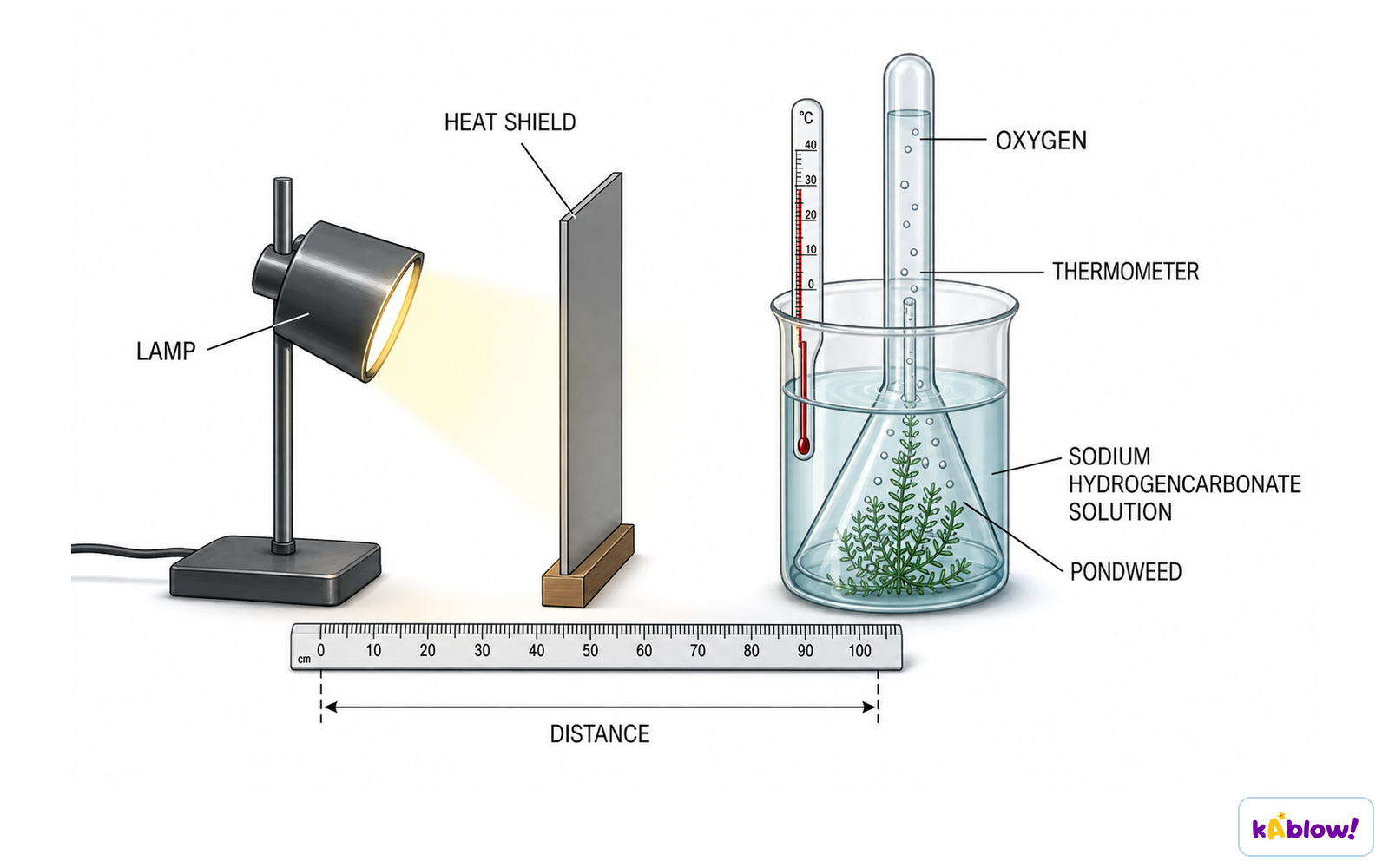
- Use aquatic plants (e.g.,×Elodea×) to measure oxygen bubbles per minute.
- Keep other variables constant for a fair test; use a water bath to control temperature.
Investigating light intensity and rate of photosynthesis
Gas Exchange in Plants (Extended)
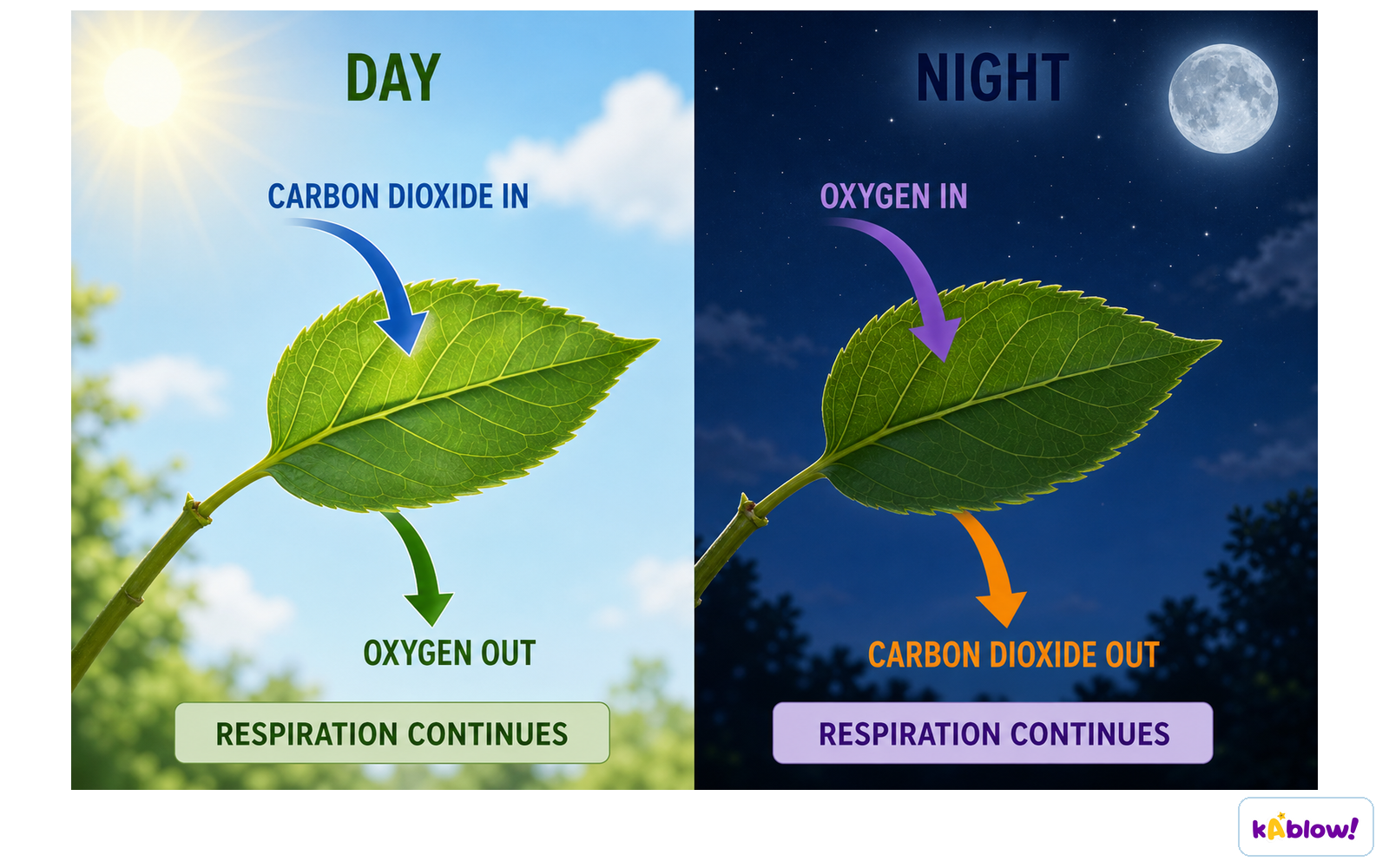
- Plants respire all the time (O₂ in, CO₂ out).
- During daylight, photosynthesis rate > respiration rate; net CO₂ in, O₂ out.
- At night, respiration > photosynthesis; net O₂ in, CO₂ out.
- Hydrogencarbonate indicator changes colour with CO₂ concentration: purple (low CO₂), red (medium), yellow (high).
Gas exchange in plants, day and night
Balanced Chemical Equation (Extended)
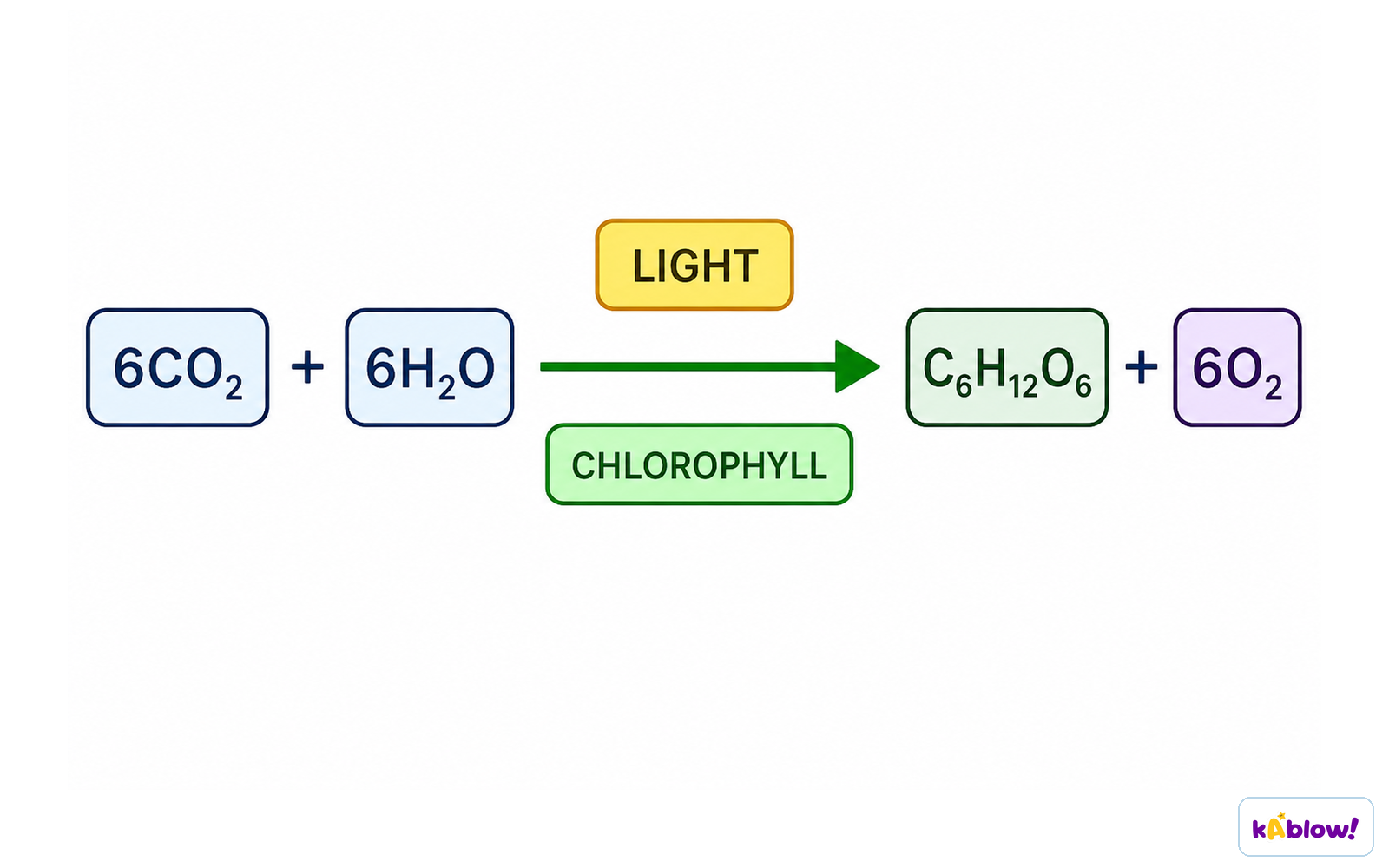
- 6CO₂ + 6H₂O → C₆H₁₂O₆ + 6O₂ (with light energy and chlorophyll).
- This is the reverse of aerobic respiration.
Balanced photosynthesis equation
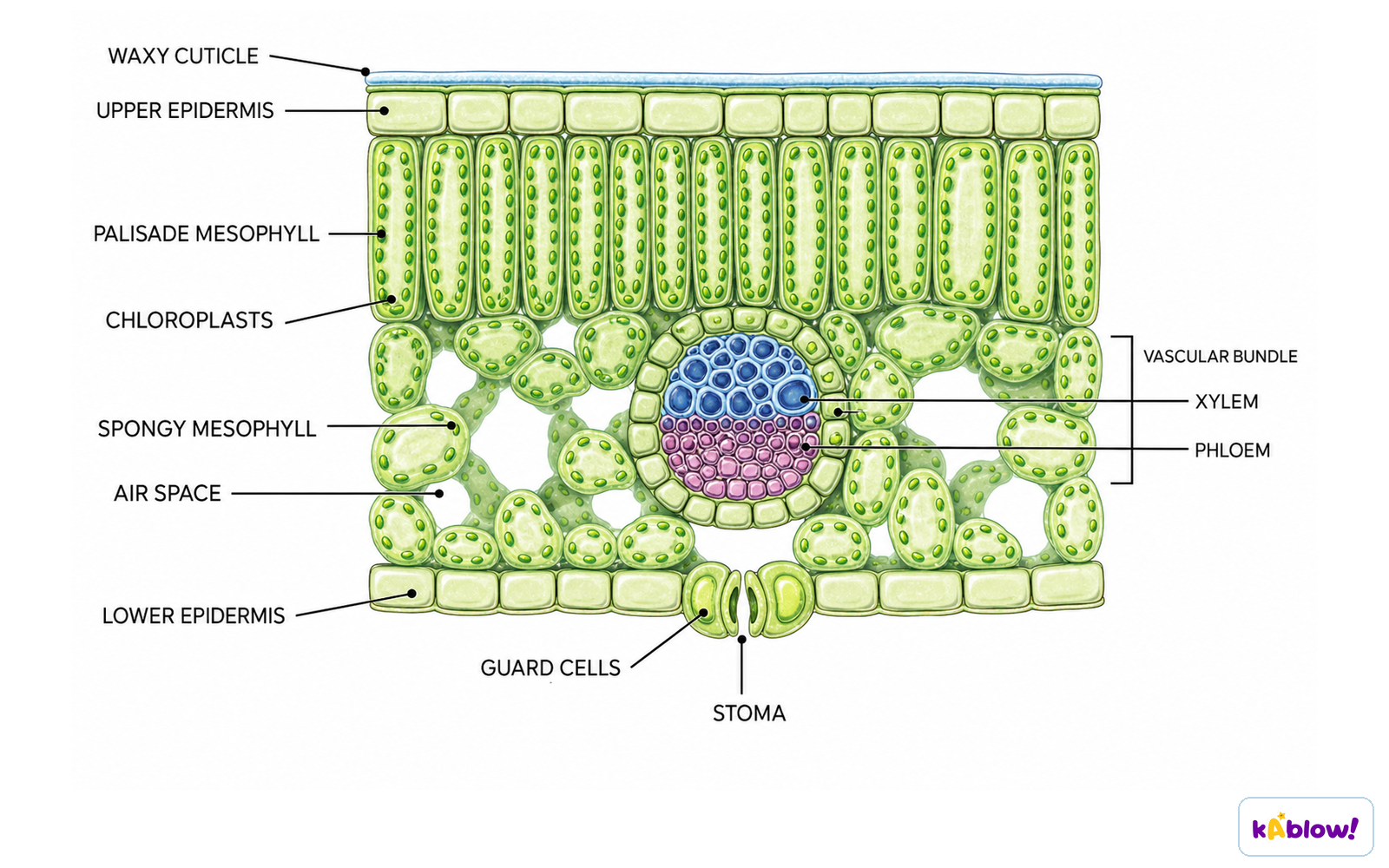
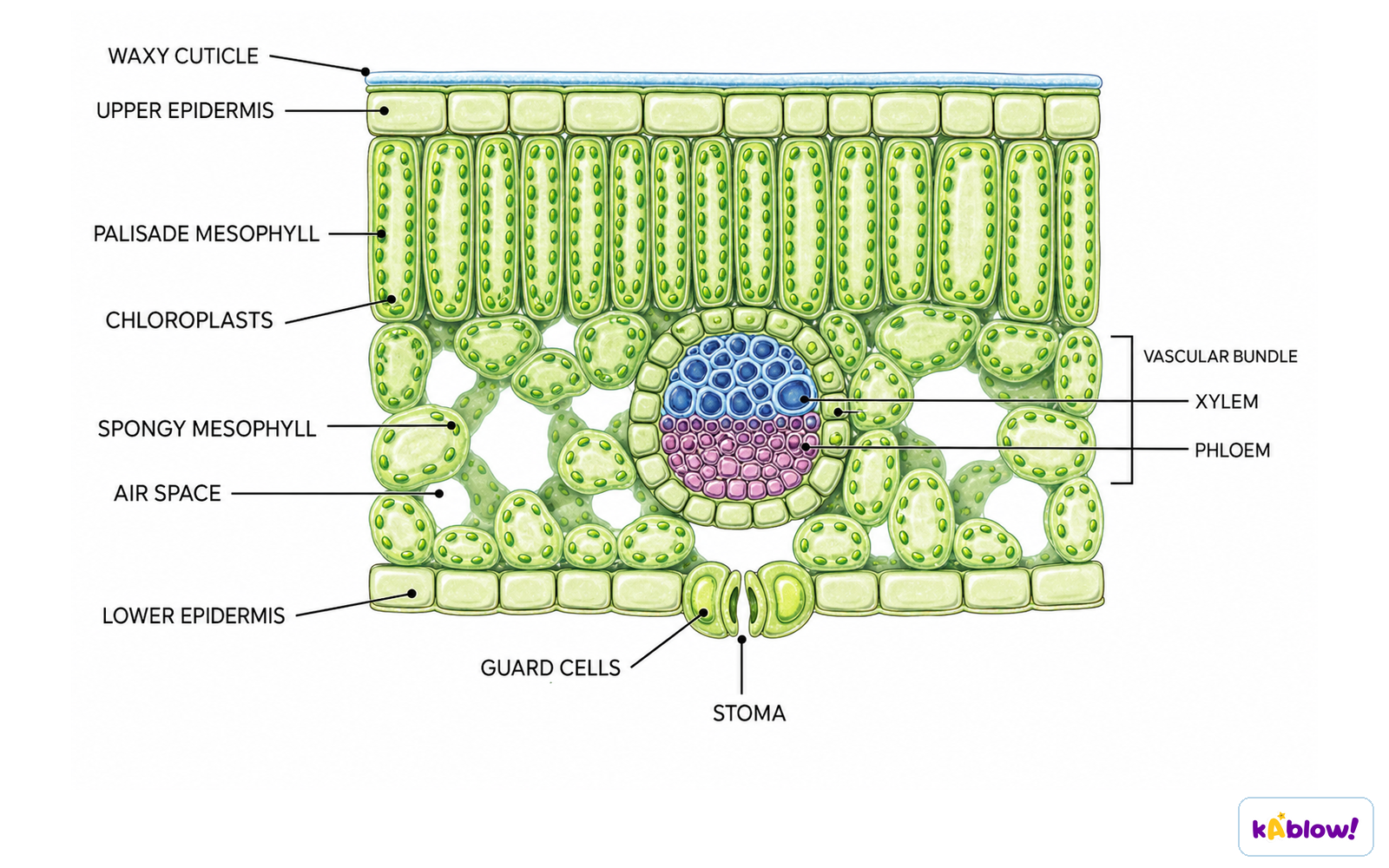
Leaf Structure and Adaptations
- Leaves have a large surface area to absorb light.
- Leaves are thin for efficient gas diffusion.
- Cuticle: waxy layer reduces water loss.
- Upper epidermis: transparent to let light through.
- Palisade mesophyll: packed with chloroplasts for photosynthesis.
- Spongy mesophyll: air spaces for gas circulation.
- Stomata (pores) allow gas exchange; guard cells control opening/closing.
- Vascular bundles (xylem and phloem) transport water, minerals, and sugars.
Leaf cross-section structure
Diapos
Sign up free to view the lesson slides
Step through every slide for this topic — plus flashcards and revision notes — with a free account.
Questions d'entraînement
Aperçu gratuit — 8 sur 54 questions. Inscris-toi pour toutes les voir.
1.What is the main pigment involved in photosynthesis?
Easy- AChlorophyll
- BCarotene
- CXanthophyll
- DAnthocyanin
2.Name the two raw materials needed for photosynthesis.
Easy3.Oxygen is a waste product of photosynthesis.
EasyTrue or false?
4.Complete the word equation for photosynthesis: carbon dioxide + water → glucose + ___
Easycarbon dioxide + water → glucose + ____
5.Which part of a leaf contains the most chloroplasts?
Easy- ASpongy mesophyll
- BPalisade mesophyll
- CLower epidermis
- DCuticle
6.Match the leaf structure to its function.
Medium- Cuticle
- Stomata
- Spongy mesophyll
- Reduces water loss
- Allows gas exchange
- Contains air spaces for gas diffusion
7.Arrange the following steps in the correct order to test a leaf for starch: (A) boil leaf in water, (B) add iodine, (C) boil leaf in ethanol, (D) rinse leaf.
Medium- A
- C
- D
- B
8.State two environmental factors that affect the rate of photosynthesis.
Medium
Unlock all 54 questions & more
Crée un compte gratuit pour voir toutes les questions, les diapos, les cartes mémo et les notes de révision de ce thème.