Effects Of Forces
Apprends en jouant
Réponds à ces questions pour gagner de l'énergie, puis pêche et explore. Sans compte.
Notes de leçon
Resultant Forces
- A force is a push or pull that acts on an object due to interaction with another object.
- Forces can change an object's size, shape, or motion (speed or direction).
- Resultant force is the single force that describes all forces acting on a body.
- Balanced forces are equal in magnitude and opposite in direction; they cancel out (resultant = 0).
- Unbalanced forces produce a non-zero resultant force, causing a change in motion.
- To calculate resultant force, assign positive/negative signs to directions and sum the forces.
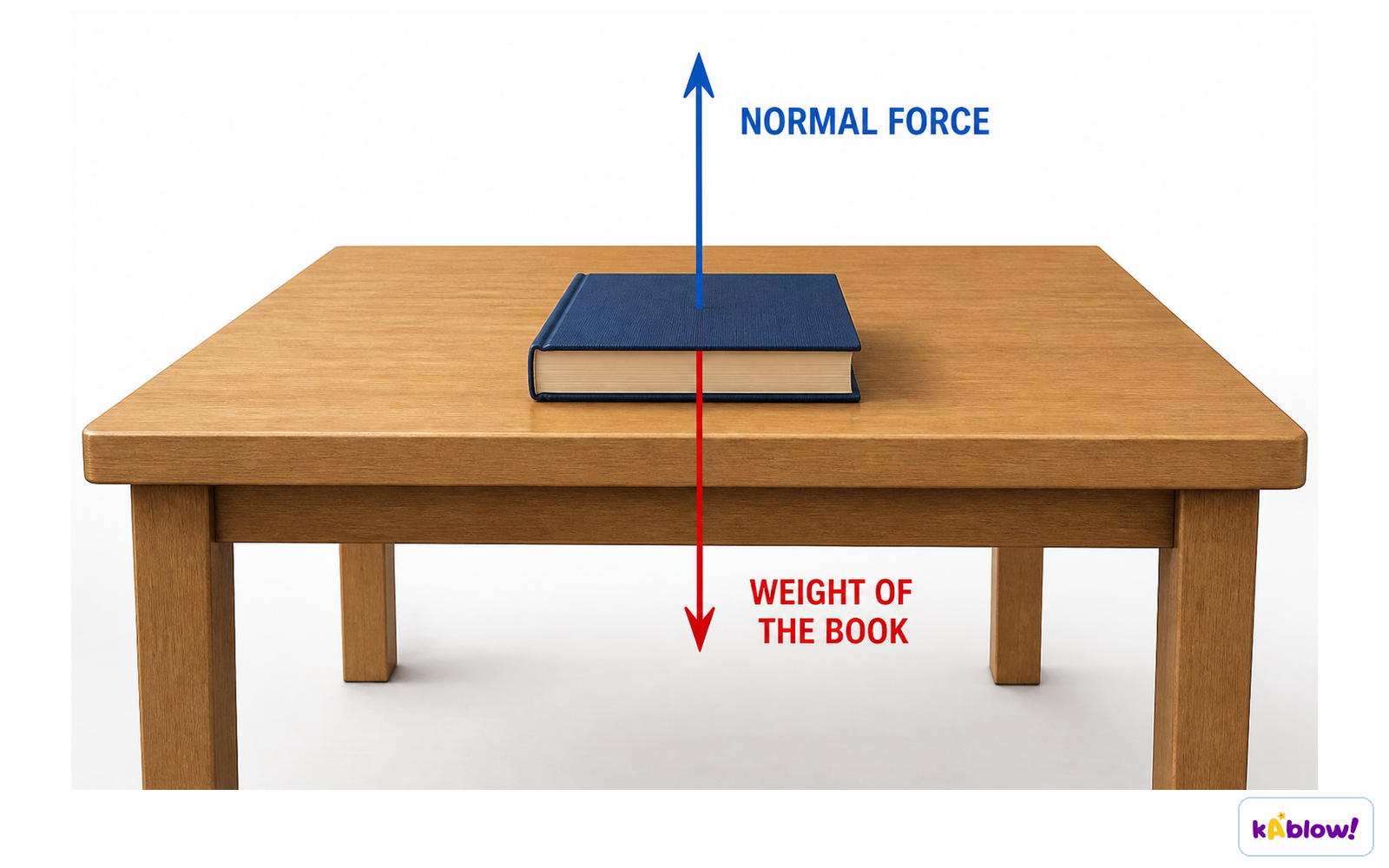
Forces on a book resting on a table
Newton's First Law
- Newton's first law: Objects remain at rest or move with constant velocity unless acted on by a resultant force.
- Constant velocity means no change in speed or direction.
- If resultant force is zero, the object is either stationary or moving at constant velocity.
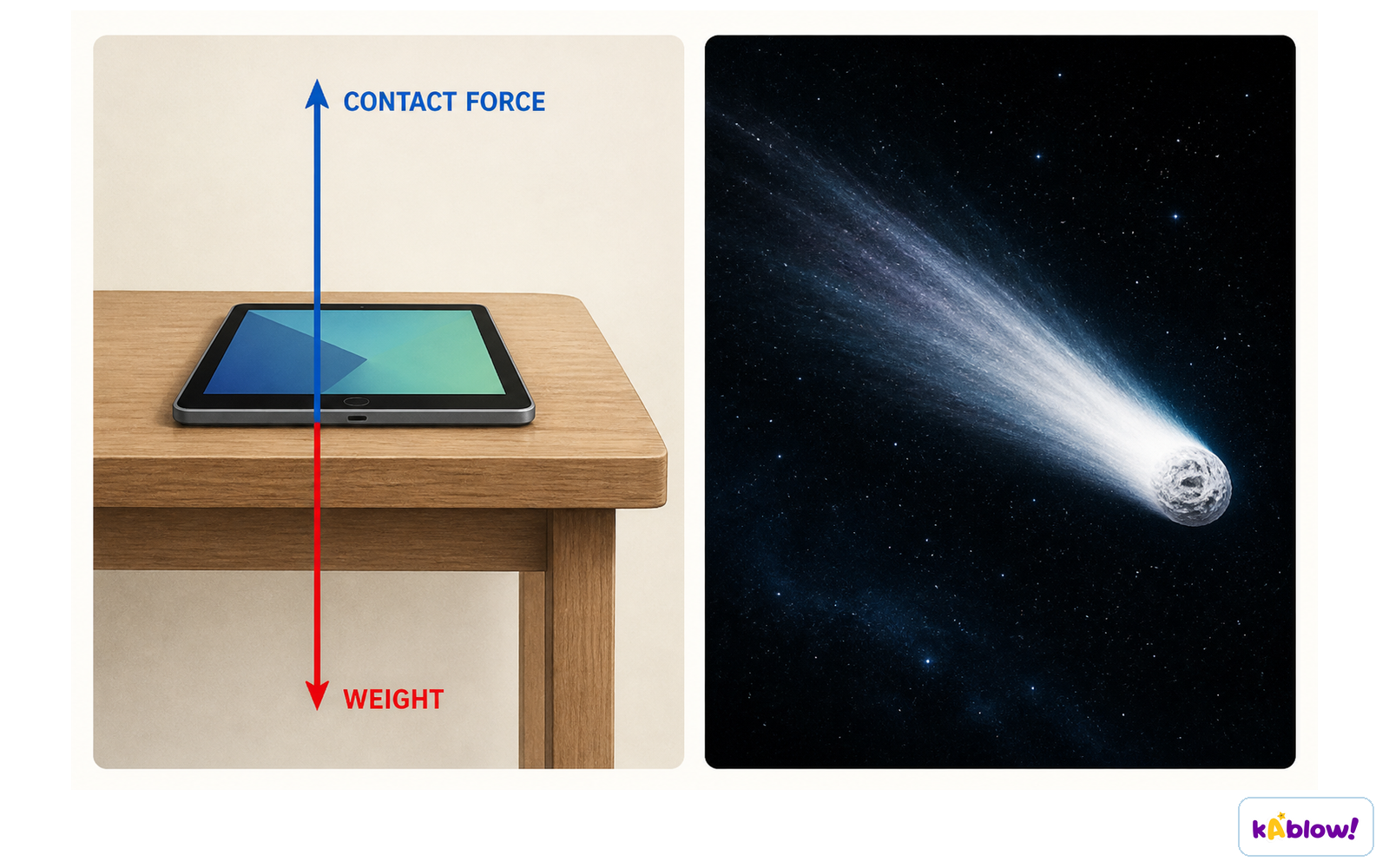
- Example: A mug on a table stays at rest unless a force acts on it.
- Example: A car moving at constant speed has balanced driving and frictional forces.
Examples of Newton's first law
Newton's Second Law (Extended)
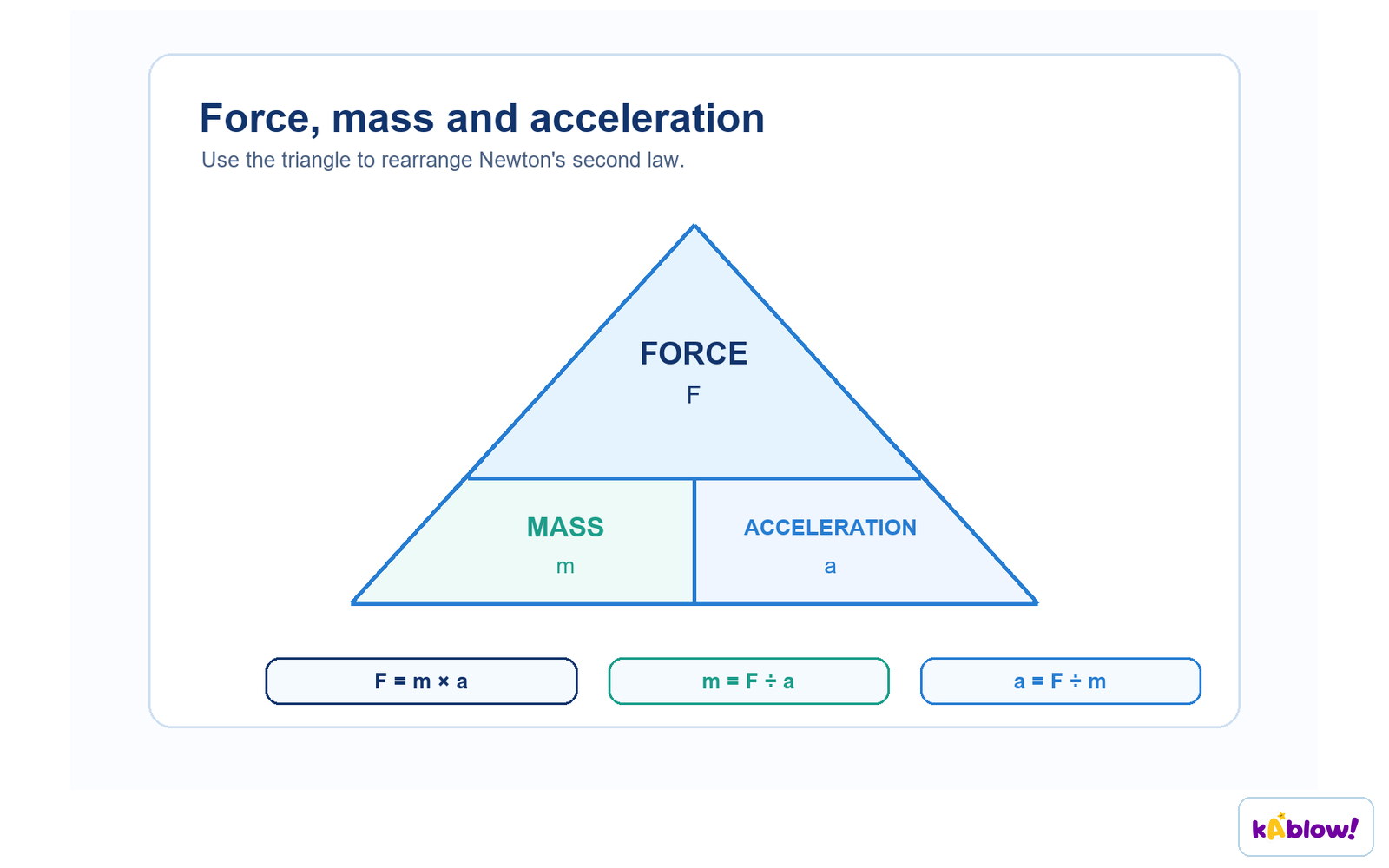
- Newton's second law: Acceleration is proportional to resultant force and inversely proportional to mass.
- Equation: F = ma, where F = resultant force (N), m = mass (kg), a = acceleration (m/s²).
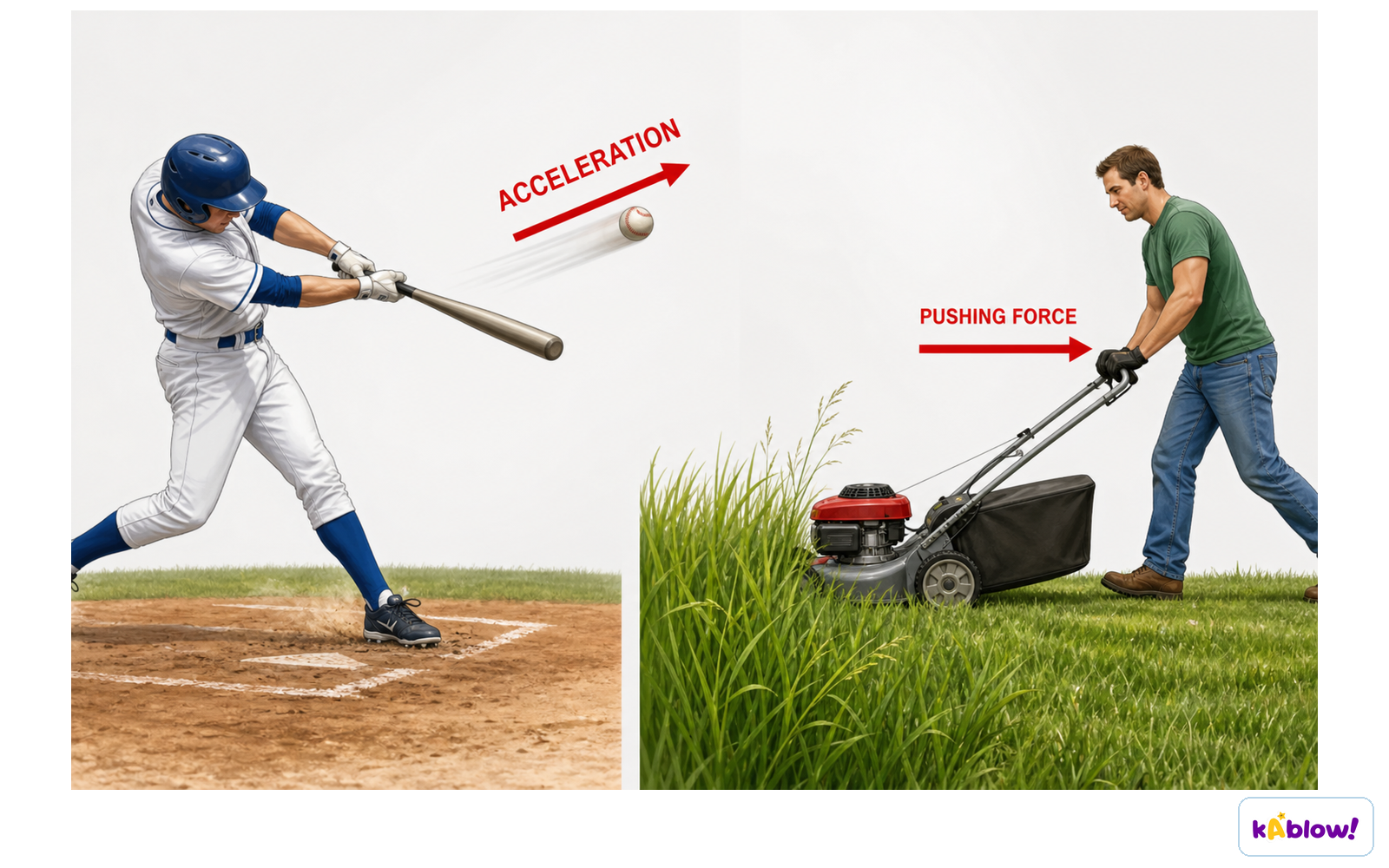
- Acceleration occurs in the same direction as the resultant force.
- For a given force, larger mass gives smaller acceleration.
Newton's second law in action
Investigating Force & Extension (Extended)
- Aim: Investigate relationship between force and extension of a spring.
- Independent variable: force (F); dependent variable: extension (x).
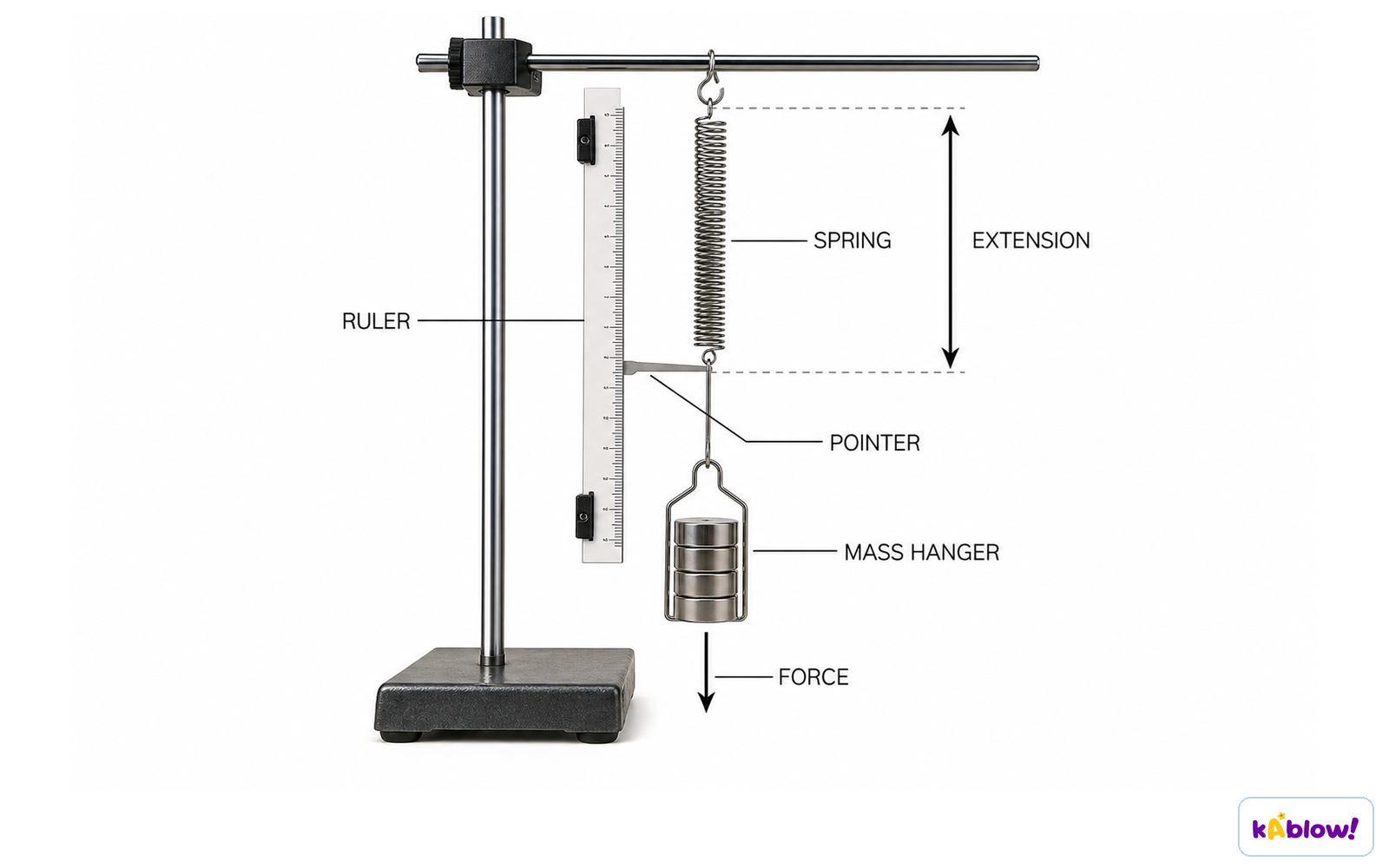
- Method: Hang masses on a spring, measure extension with a ruler, repeat for different masses.
- Calculate force as weight (W = mg) and extension as final length minus original length.
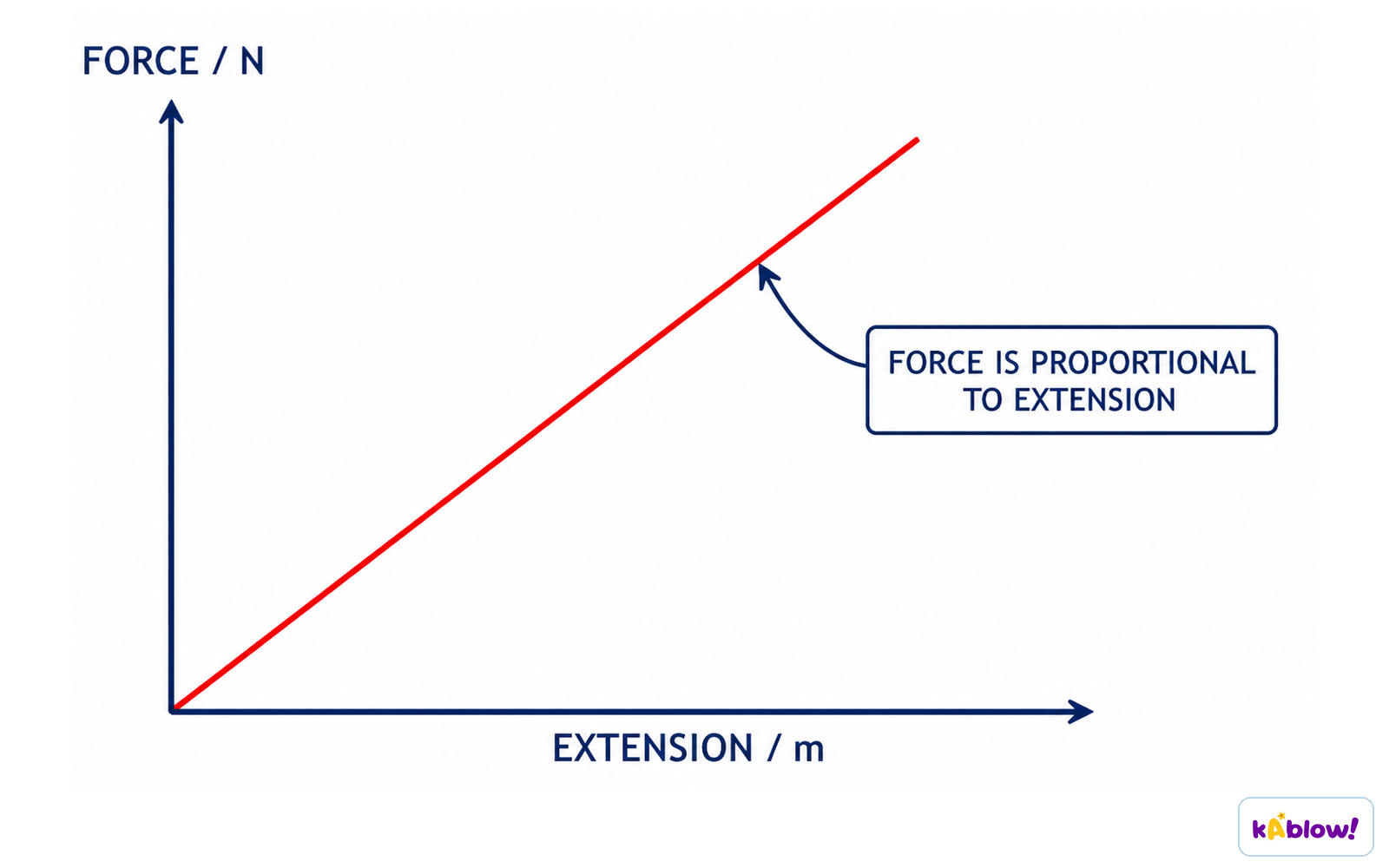
- Plot force against extension; a straight line through origin shows direct proportionality (Hooke's law).
Equipment for investigating the extension of a spring
Hooke's Law (Extended)
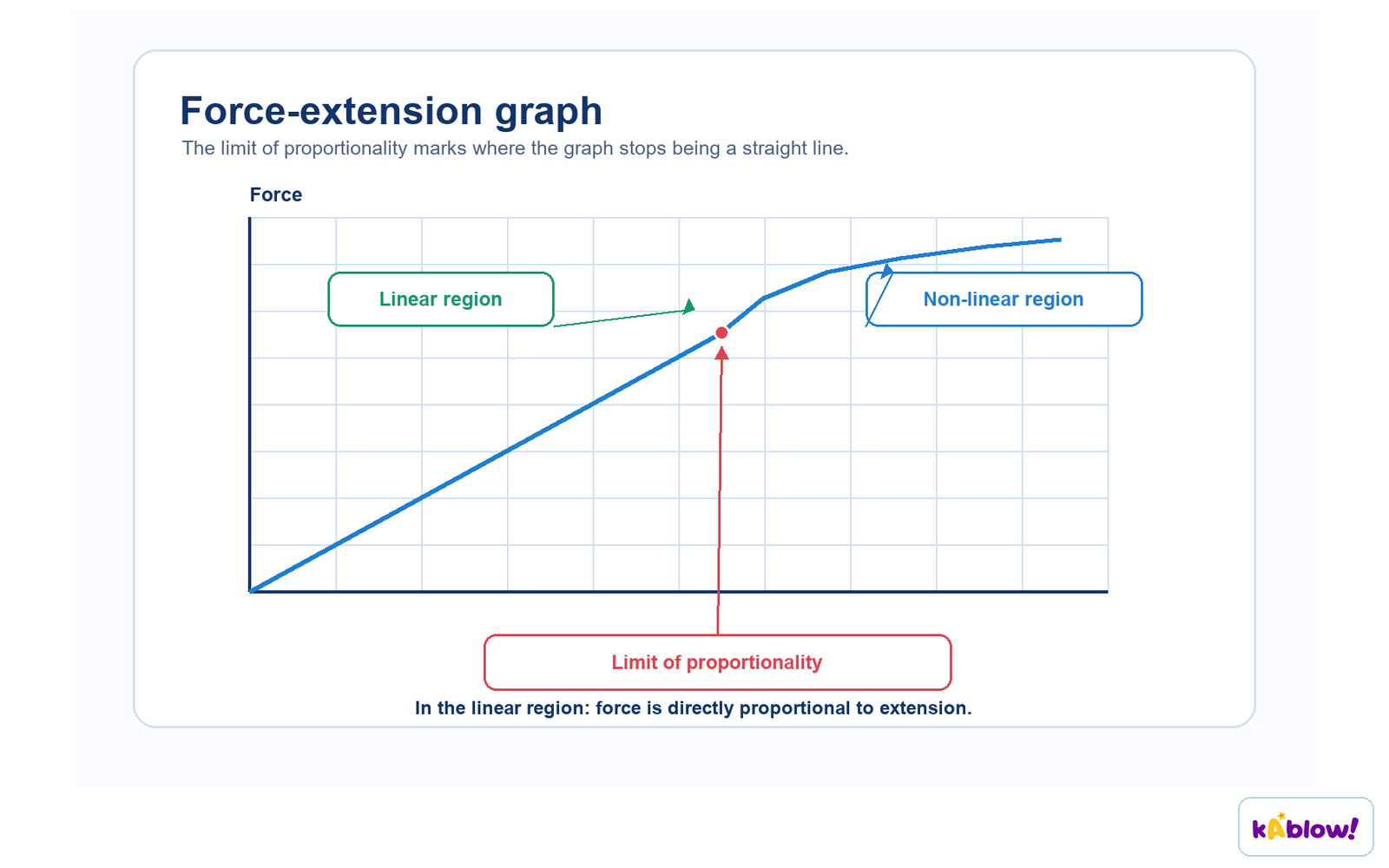
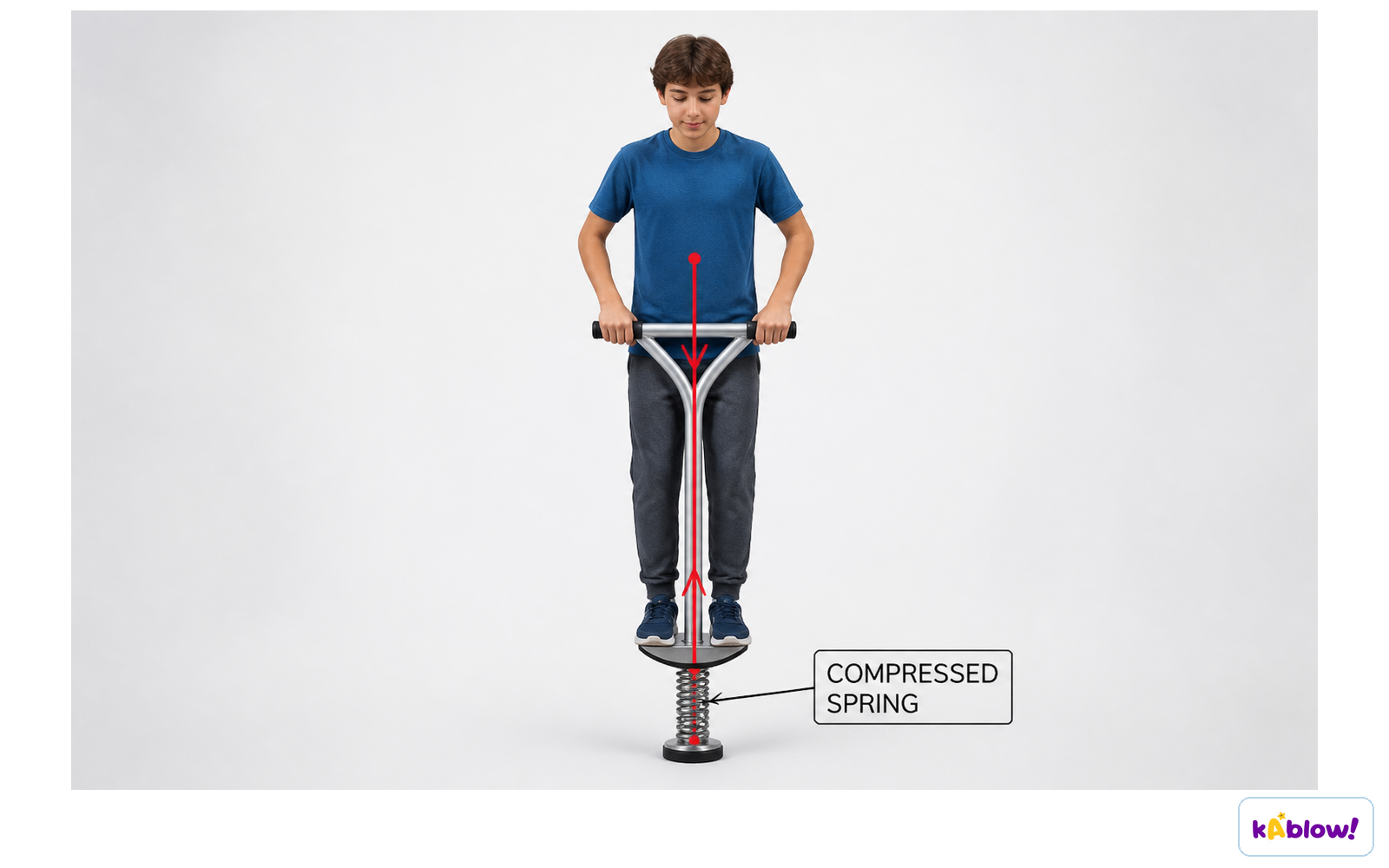
- Hooke's law: Extension of an elastic object is directly proportional to force applied, up to the limit of proportionality.
- Equation: F = kx, where k = spring constant (N/m), x = extension (m).
- Spring constant measures stiffness: high k = stiff spring, low k = stretchy spring.
- Force-extension graph: linear region obeys Hooke's law; gradient = spring constant.
- Beyond limit of proportionality, graph curves and Hooke's law no longer applies.
Force-extension graph for a spring
Friction
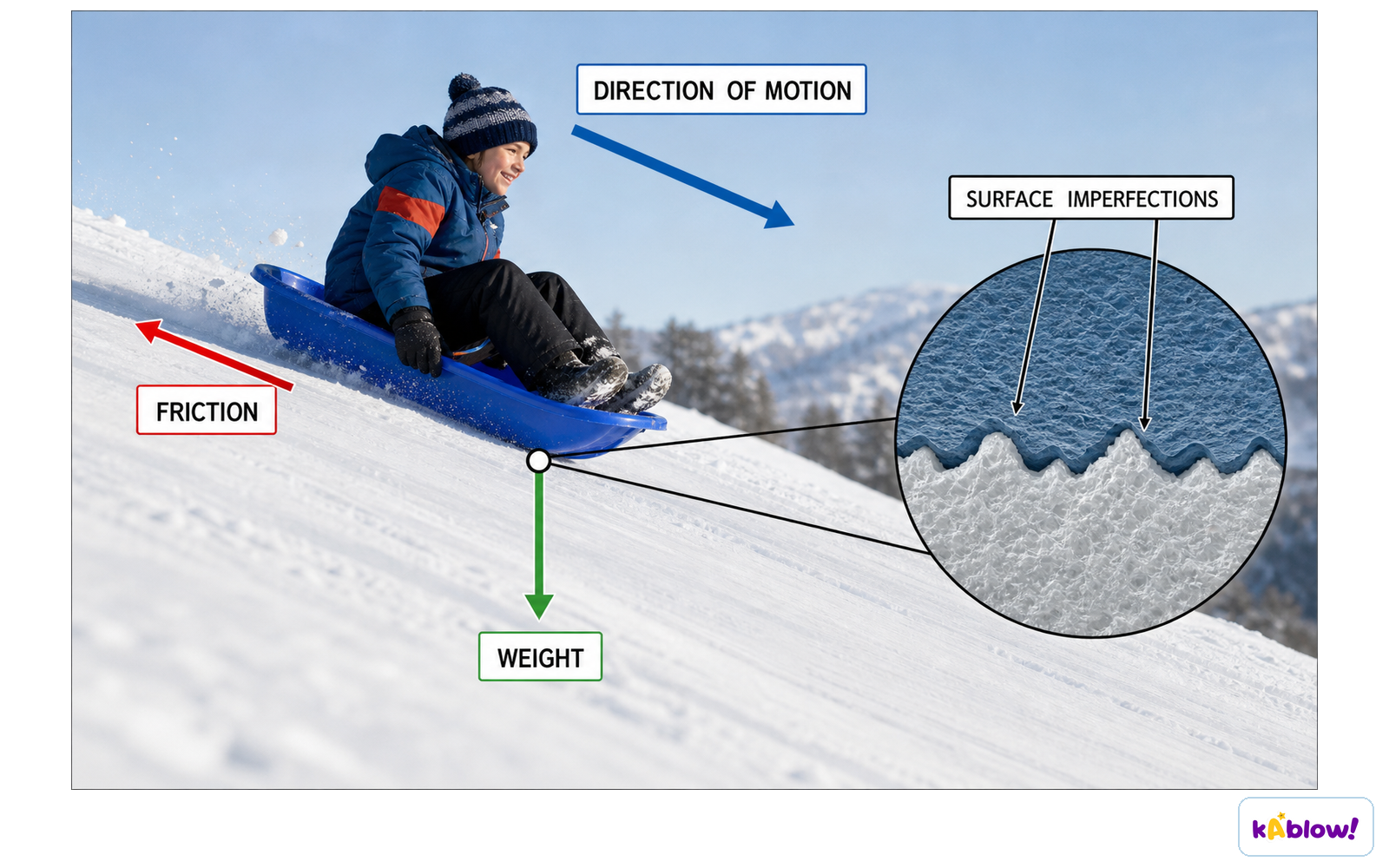
- Friction opposes motion and causes heating (energy transfer).
- Solid friction arises from surface imperfections; can be reduced by lubrication or smoothing.
- Fluid friction (drag) occurs when objects move through gases or liquids; particles collide with object.
- Air resistance is a type of drag that slows motion and heats the object and air.
- Streamlining reduces fluid friction.
Friction between solid surfaces
Moments
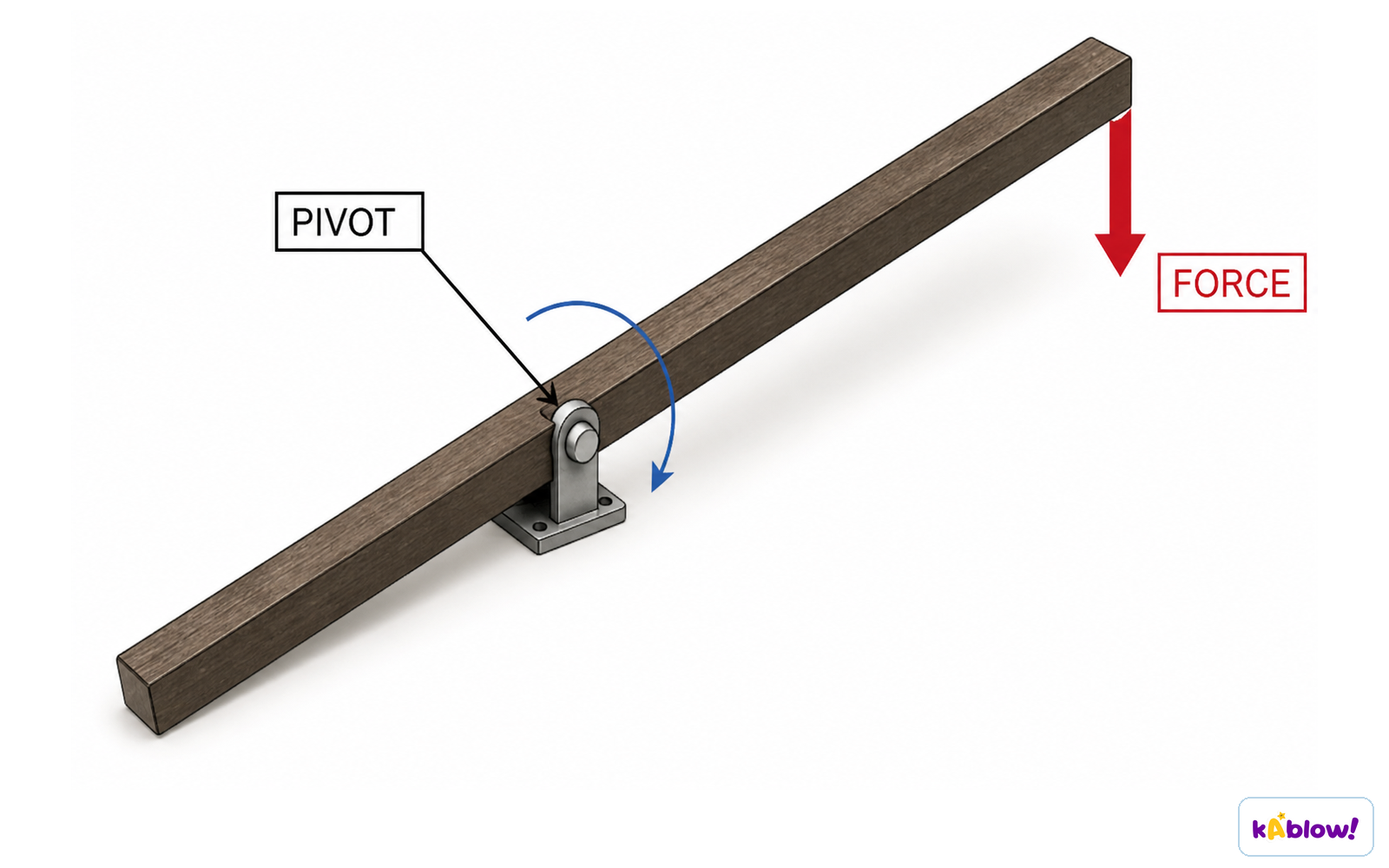
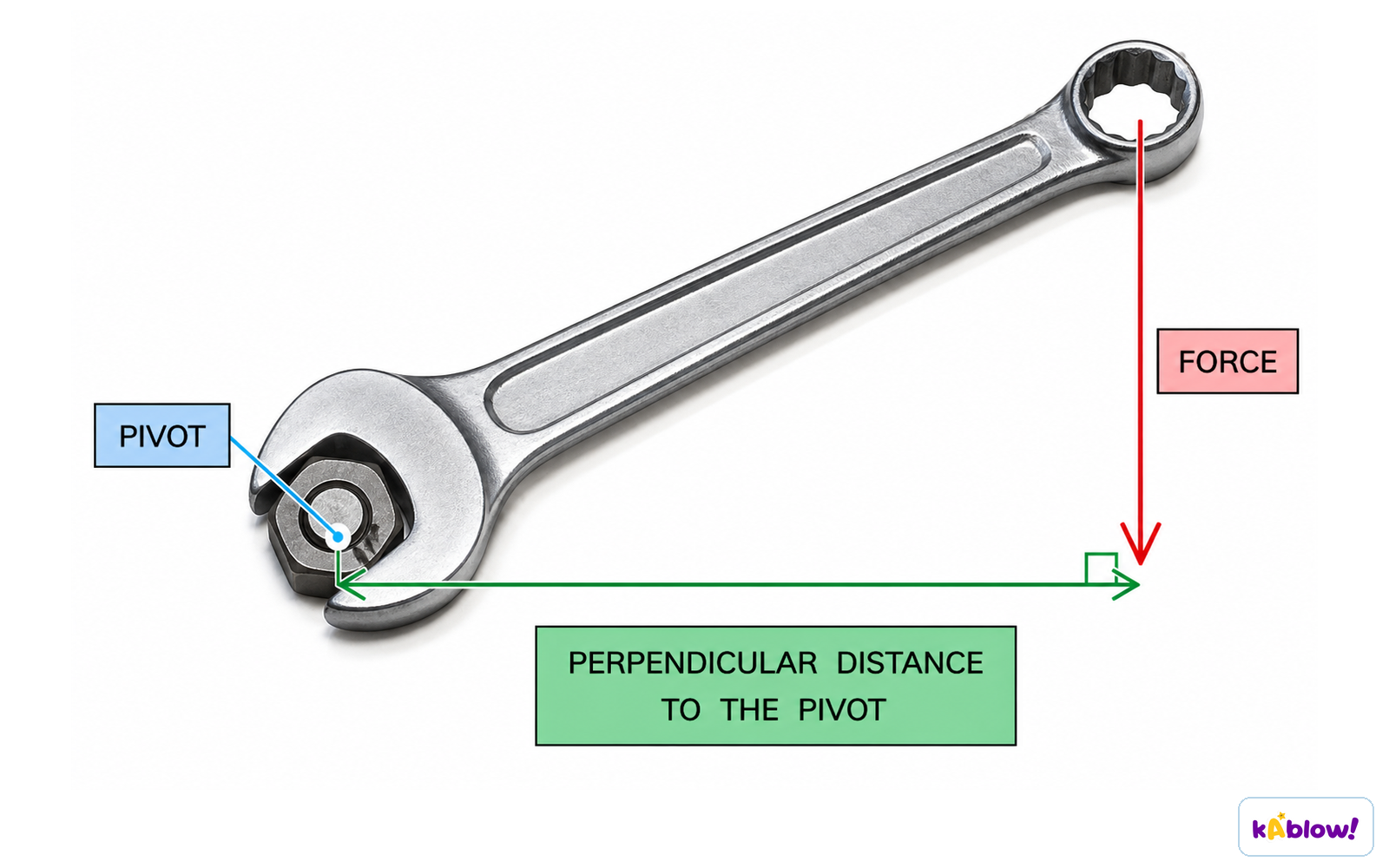
- A moment is the turning effect of a force about a pivot.
- Moment = force × perpendicular distance from pivot (unit: N m).
- Increasing distance from pivot reduces the force needed for the same moment.
- Principle of moments (extended): For a balanced object, total clockwise moment = total anticlockwise moment.
A force applied about a pivot
Equilibrium & Centre of Gravity
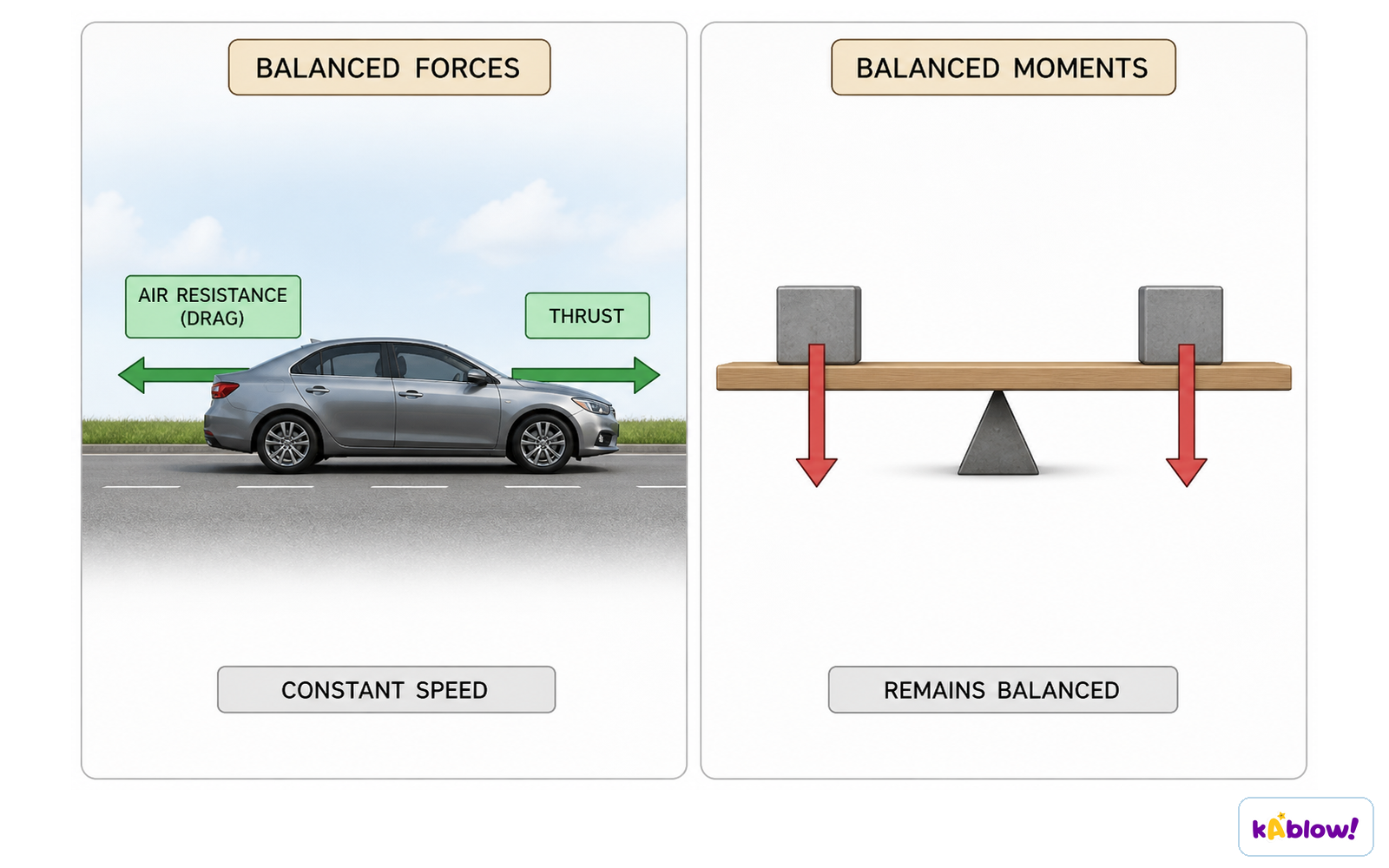
- Equilibrium: forces are balanced (no resultant force) and moments are balanced (no resultant moment).
- Centre of gravity is the point where the weight of an object acts.
- For symmetrical objects, centre of gravity is at the geometric centre.
- Stability depends on centre of gravity position: stable if it lies above the base; topples if outside base.
- Wide base and low centre of gravity increase stability.
Systems in equilibrium
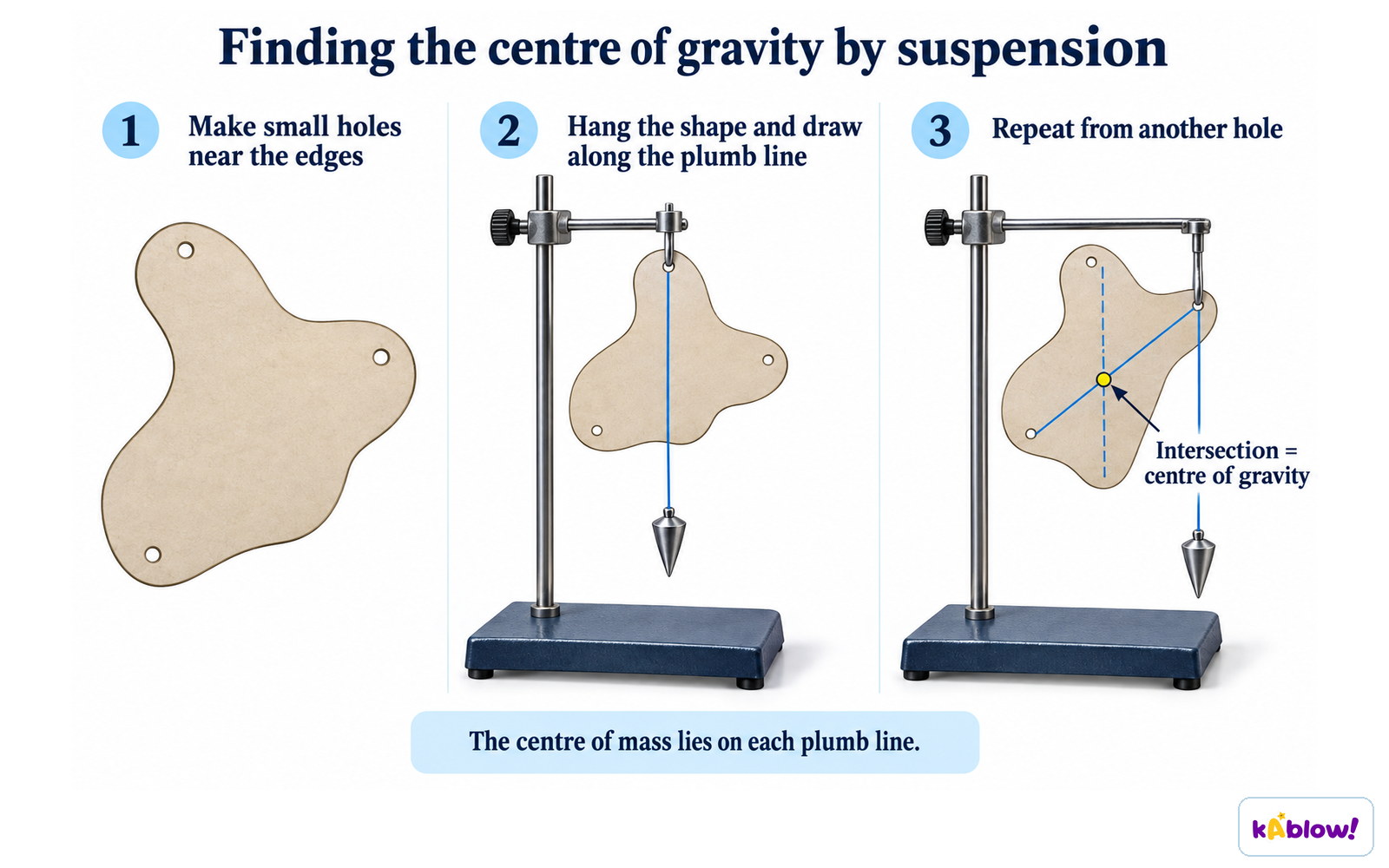
Investigating Centre of Gravity
- Aim: Find centre of gravity of an irregularly shaped plane lamina using suspension method.
- Method: Suspend lamina from a point, use plumb line to mark vertical line; repeat from two other points.
- Intersection of the three lines gives the centre of gravity.
- Allow lamina to settle before marking; punch holes before suspending to avoid shifting centre of gravity.
The suspension method for centre of gravity
Diapos
Sign up free to view the lesson slides
Step through every slide for this topic — plus flashcards and revision notes — with a free account.
Questions d'entraînement
Aperçu gratuit — 8 sur 55 questions. Inscris-toi pour toutes les voir.
1.What is a force?
Easy- AA push or a pull that acts on an object due to interaction with another object
- BA measure of the mass of an object
- CThe speed of an object in a given direction
- DThe energy stored in an object
2.Which of these are effects a force can have on an object? Select all that apply.
Easy- AChange its speed
- BChange its shape
- CChange its mass
- DChange its direction
- EChange its colour
3.Newton's first law states that an object will remain at rest or move with constant velocity unless acted on by a resultant force.
EasyTrue or false?
4.Complete the sentence using the correct word.
EasyHooke's law states that the extension of an elastic object is directly proportional to the force applied, up to the ____.
5.Match each term to its correct description.
Medium- Moment
- Centre of gravity
- Equilibrium
- The turning effect of a force
- The point through which weight acts
- State where forces and moments are balanced
6.Arrange the steps to find the centre of gravity of an irregular lamina in the correct order.
Medium- Hang the lamina from a clamp
- Draw a line along the plumb line
- Repeat with two other holes
- Punch three holes near the edges
- The intersection of lines is the centre of gravity
7.A spring has a spring constant of 4900 N/m. A weight compresses it from 40 cm to 33 cm. What is the weight?
Medium- A343 N
- B3430 N
- C34.3 N
- D0.343 N
8.What is the unit of moment of a force?
Easy
Unlock all 55 questions & more
Crée un compte gratuit pour voir toutes les questions, les diapos, les cartes mémo et les notes de révision de ce thème.