Online identity, privacy and your digital footprint
Apprends en jouant
Réponds à ces questions pour gagner de l'énergie, puis pêche et explore. Sans compte.
Notes de leçon
What is a Digital Footprint?
- A digital footprint (or digital shadow) is the unique set of traceable digital activities, actions, contributions, and communications you leave on the internet or digital devices.
- It can apply to individuals, businesses, organizations, or corporations.
- Digital footprints are created both passively (without you knowing) and actively (when you deliberately share).
- Your footprint grows every time you use the internet, even if you don't realise it.
Types of Digital Footprints
- Passive digital footprints are data trails you leave involuntarily, such as browsing history, cookies, and geolocation data from apps.
- Passive footprints can include your IP address, the time of visit, and where you came from, which can be analysed later.
- Active digital footprints are created deliberately when you post or share information, like social media posts, video uploads, or edits to websites.
- Examples of active footprints: logging into a site and making a post, uploading a photo, or commenting on a forum.
Why Your Digital Footprint Matters
- Your digital footprint has both positive and negative consequences.
- Negatively, it raises privacy issues – strangers can piece together information about you using search engines without your permission.
- Positively, a good digital footprint can help you, e.g., employers may prefer a candidate with a positive online presence.
- Even children generate digital footprints that can affect future opportunities like college admissions.
Privacy and Your Digital Footprint
- Digital footprints are not the same as your digital identity, but they affect your privacy, trust, security, and digital reputation.
- Privacy and openness compete: companies and others may collect and use your data.
- In 1999, Sun Microsystems CEO Scott McNealy said “Get over it” about internet privacy, a phrase still used in discussions about data collection.
- Your online activities can be tracked, allowing others to learn about your actions and interests.
Who Uses Your Digital Footprint?
- Cyber-vetting: employers may research applicants based on their online activities.
- Law enforcement can use digital footprints to gather information without probable cause.
- Marketers use your browsing history to show you customised ads based on your interests.
- Social media platforms collect data about your interests, social groups, behaviours, and location, often without you being fully aware.
The Risks of Sharing Personal Information
- Many users share personal details on social media without understanding the privacy settings or security consequences.
- Information like your number of friends can even predict whether you are an introvert or extrovert.
- A survey of social network users found: 87% shared work/education level, 84% full date of birth, 78% location, and 23% phone numbers.
- This data can be pieced together to build a detailed picture of your personality.
Managing Your Digital Footprint
- You can control your privacy settings on social media and other platforms to limit who sees your information.
- Think before you share – once something is online, it can be hard to remove.
- Be aware that even passive footprints (like cookies) can be tracked; you can clear cookies or use private browsing.
- Understanding how online behavior shapes public perception is key to protecting your digital reputation.
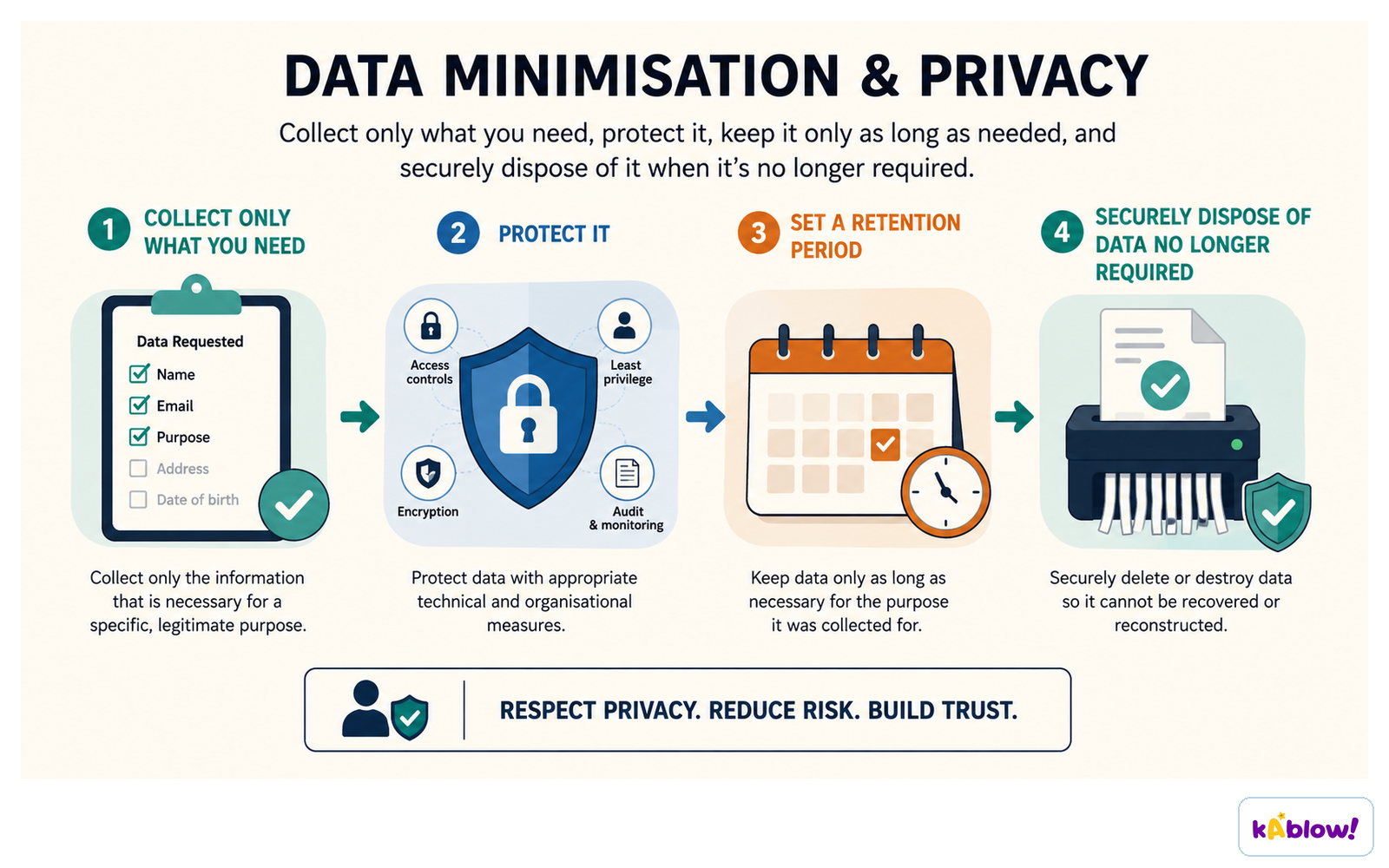
Collect only what you need, protect it, keep it only as long as it is needed, then dispose of it securely.
Digital Footprints and Society
- Digital footprints can exacerbate social inequalities because marginalized communities may have limited access or control over their data.
- Some people profit from their digital footprint by becoming social media influencers.
- Educational efforts and media literacy frameworks promote awareness of digital footprints as part of digital privacy.
- Since footprints are hard to avoid, it's important to learn how to manage them responsibly.
Diapos
Sign up free to view the lesson slides
Step through every slide for this topic — plus flashcards and revision notes — with a free account.
Questions d'entraînement
Aperçu gratuit — 8 sur 60 questions. Inscris-toi pour toutes les voir.
1.A digital footprint is the same as a digital identity or passport.
EasyTrue or false?
2.Which of the following is an example of a passive digital footprint?
Easy- APosting a photo on social media
- BBrowsing history stored by a web browser
- CCommenting on a news article
- DUploading a video to YouTube
3.Active digital footprints are created when a user deliberately shares information online, such as making a social media post.
EasyTrue or false?
4.Which of the following are examples of active digital footprints? (Select all that apply)
Easy- ASocial media posts
- BCookies stored by a website
- CVideo uploads
- DIP address logged when visiting a website
- EChanges made to a website
5.Employers may use a candidate's digital footprint for online vetting when deciding between two equal job applicants.
EasyTrue or false?
6.Which of the following is a privacy concern related to digital footprints?
Medium- AThey can be used to create customized ads based on browsing history.
- BThey always improve a person's online reputation.
- CThey are impossible to avoid entirely.
- DThey allow strangers to piece together information about a person without authorization.
7.Digital footprints can be difficult to avoid, so understanding online behavior is important because it can shape public perception and opportunities.
EasyTrue or false?
8.According to the source, what percentage of social networking site users listed their phone numbers?
Medium- A23%
- B78%
- C84%
- D87%
Unlock all 60 questions, flashcards & more
Crée un compte gratuit pour voir toutes les questions, les diapos, les cartes mémo et les notes de révision de ce thème.