Metals and non-metals
Apprends en jouant
Réponds à ces questions pour gagner de l'énergie, puis pêche et explore. Sans compte.
Notes de leçon
Organising Elements
- There are over 100 known elements.
- Elements are organised in the periodic table according to their properties and atomic number (number of protons).
- Elements are categorised as metals and non-metals based on their properties.
Electrical Conductivity
- Metals are good electrical conductors (low resistance).
- Non-metals are poor electrical conductors (electrical insulators, high resistance).
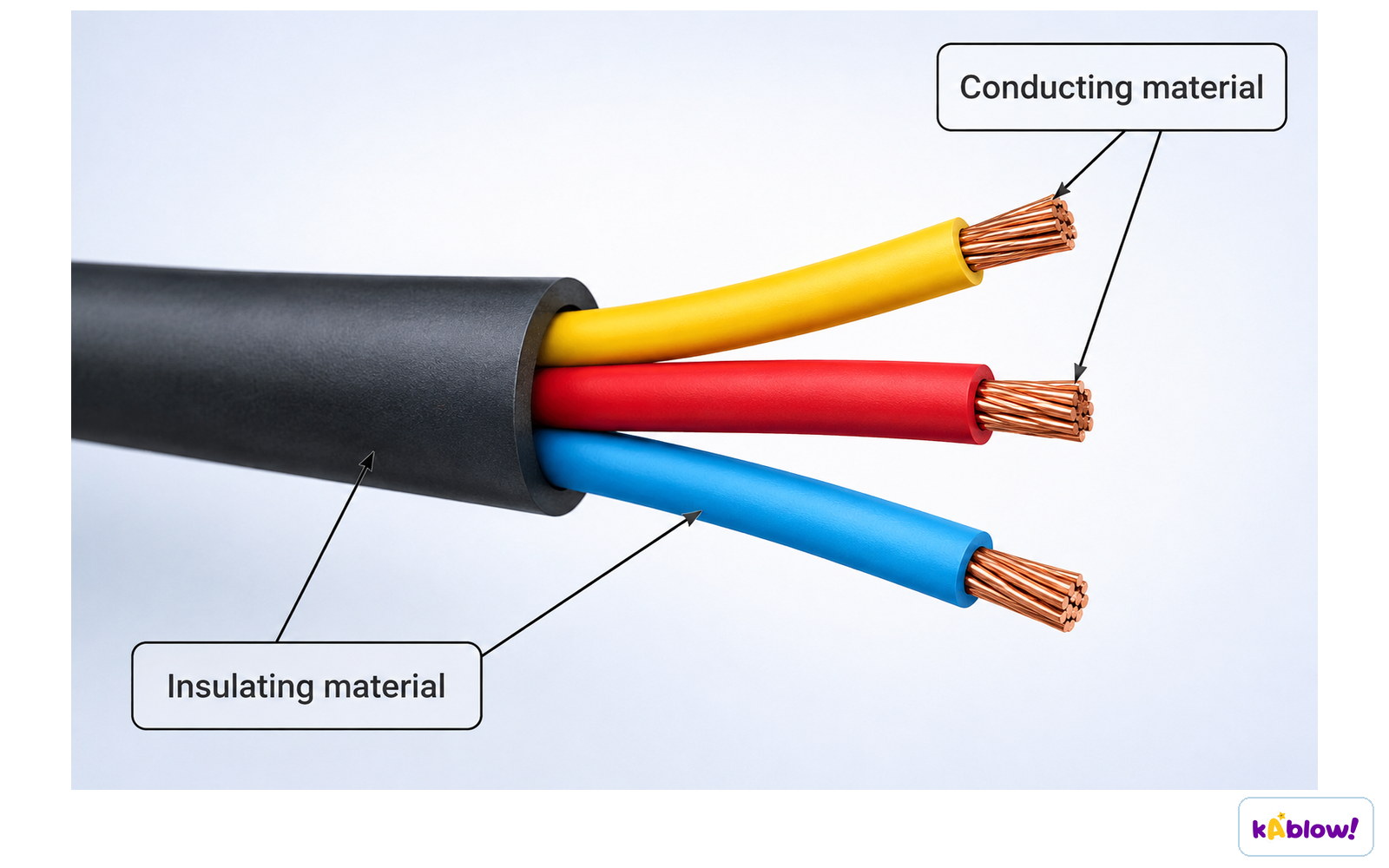
- Example: Copper is used for electrical wires because it is a good electrical conductor.
A cable's conducting wires (here, copper) carry the electric current; the surrounding insulating material stops the current escaping.
Thermal Conductivity
- Metals are good thermal conductors (conduct heat well).
- Non-metals are usually thermal insulators (poor conductors of heat).
- Example: Aluminium is used for cooking pans because it is a good thermal conductor.
Malleability, Ductility, and Strength
- Metals are generally malleable (can be shaped), ductile (drawn into wires), and strong.
- Non-metals are generally brittle (break easily).
- Example: Steel is used in construction for its strength; copper is used for wires because it is ductile.
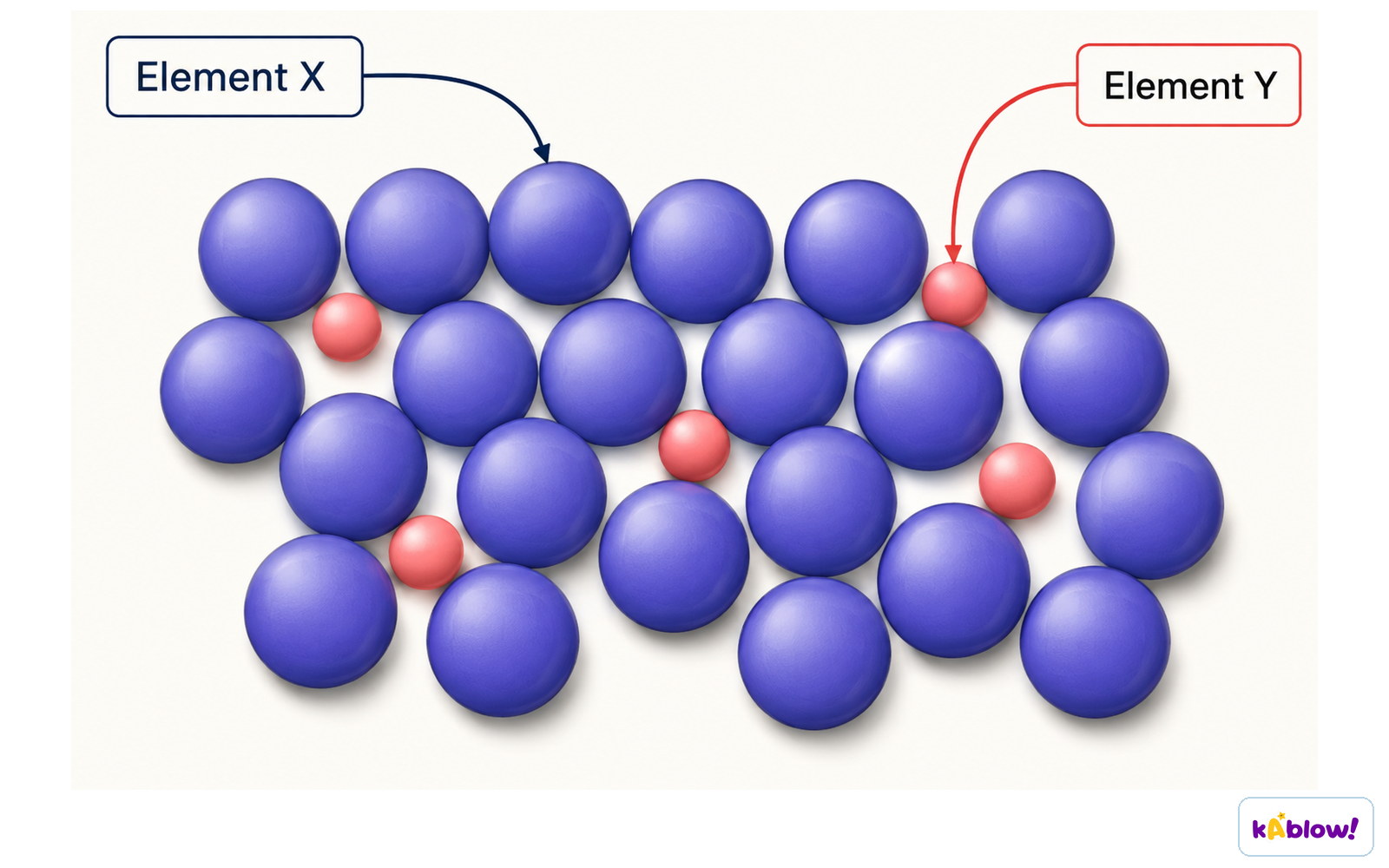
In an alloy, atoms of a different size (Element Y) sit among the host metal's atoms (Element X), disrupting the regular arrangement so the layers cannot slide over each other easily.
Melting and Boiling Points
- Metals usually have high melting and boiling points.
- Non-metals often have low melting and boiling points; many are gases at room temperature.
- Example: Iron melts at 1500 °C, oxygen melts at -220 °C.
Summary of Properties
- Metals: good electrical and thermal conductors, malleable, ductile, strong, high melting/boiling points.
- Non-metals: poor electrical and thermal conductors (insulators), brittle, low melting/boiling points, often gases.
Bohr model of iron (Fe), a typical metal, showing its electron configuration.
Particle arrangement in solids (metal), liquids, and gases (non-metal). Metals are usually solid at room temperature; many non-metals are gases.
Diapos
Sign up free to view the lesson slides
Step through every slide for this topic — plus flashcards and revision notes — with a free account.
Questions d'entraînement
Aperçu gratuit — 8 sur 53 questions. Inscris-toi pour toutes les voir.
1.Which of the following is a property of metals?
Easy- AGood electrical conductors
- BPoor thermal conductors
- CBrittle
- DLow melting points
2.Which statement about non-metals is correct?
Easy- ANon-metals are usually ductile.
- BNon-metals are often good electrical insulators.
- CNon-metals have high melting points.
- DNon-metals are generally strong.
3.What does the atomic number of an element represent?
Easy- ANumber of neutrons
- BNumber of protons
- CNumber of electrons and neutrons
- DNumber of nucleons
4.Copper is often used for electrical wires. Which two properties make it suitable?
Medium- AGood electrical conductor and ductile
- BGood thermal conductor and malleable
- CStrong and brittle
- DHigh melting point and low density
5.Why are cooking pans often made of aluminium?
Easy- AAluminium is a good electrical conductor.
- BAluminium is a good thermal conductor.
- CAluminium is brittle and light.
- DAluminium has a low melting point.
6.Which of the following is true about the melting points of metals compared to non-metals?
Easy- AMetals usually have lower melting points than non-metals.
- BMetals usually have higher melting points than non-metals.
- CMetals and non-metals have similar melting points.
- DNon-metals always have higher melting points than metals.
7.What does it mean if a material is malleable?
Easy- AIt can be drawn out into thin wires.
- BIt can be hammered or rolled into thin sheets.
- CIt is a good conductor of electricity.
- DIt breaks easily when hit.
8.Which of the following is a property of non-metals?
Easy- AGood electrical conductors
- BMalleable
- CBrittle
- DHigh melting points
Unlock all 53 questions, flashcards & more
Crée un compte gratuit pour voir toutes les questions, les diapos, les cartes mémo et les notes de révision de ce thème.