Electromagnetism
Apprends en jouant
Réponds à ces questions pour gagner de l'énergie, puis pêche et explore. Sans compte.
Notes de leçon
Electromagnetism Basics
- A current flowing through a wire creates a magnetic field around it – this is an electromagnet.
- The magnetic field is strongest near the wire and gets weaker further away.
- If the current stops, the magnetic field disappears.
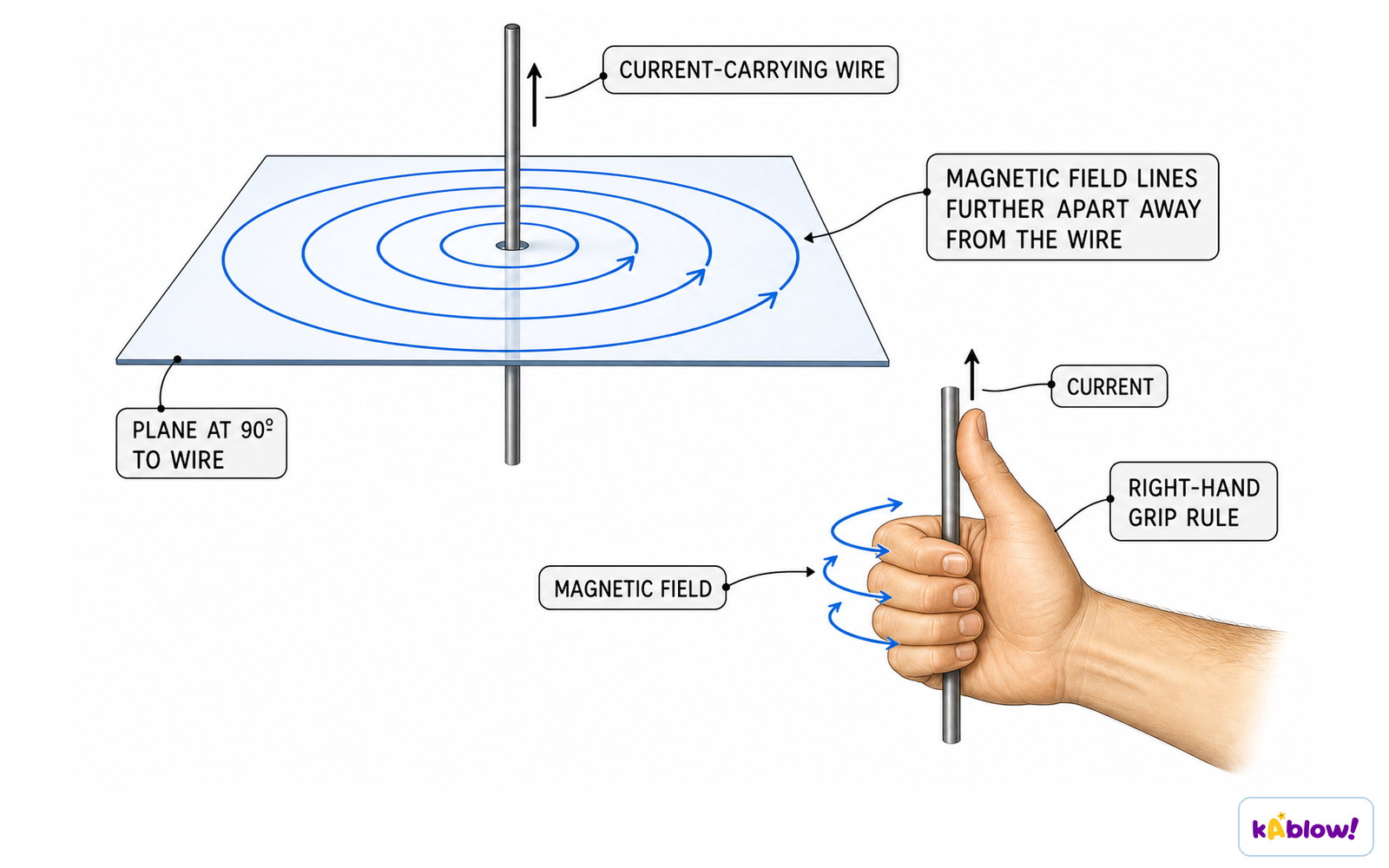
- The field lines are concentric circles around the wire, closer together near the wire.
Right Hand Rule
- The right hand rule gives the direction of the magnetic field: point your thumb along the current (I), and your fingers curl in the direction of the magnetic field (B).
- Alternatively, plotting compasses can show the field direction around a current-carrying wire.
The direction of the magnetic field around a current-carrying wire, found using the right-hand grip rule.
Solenoids
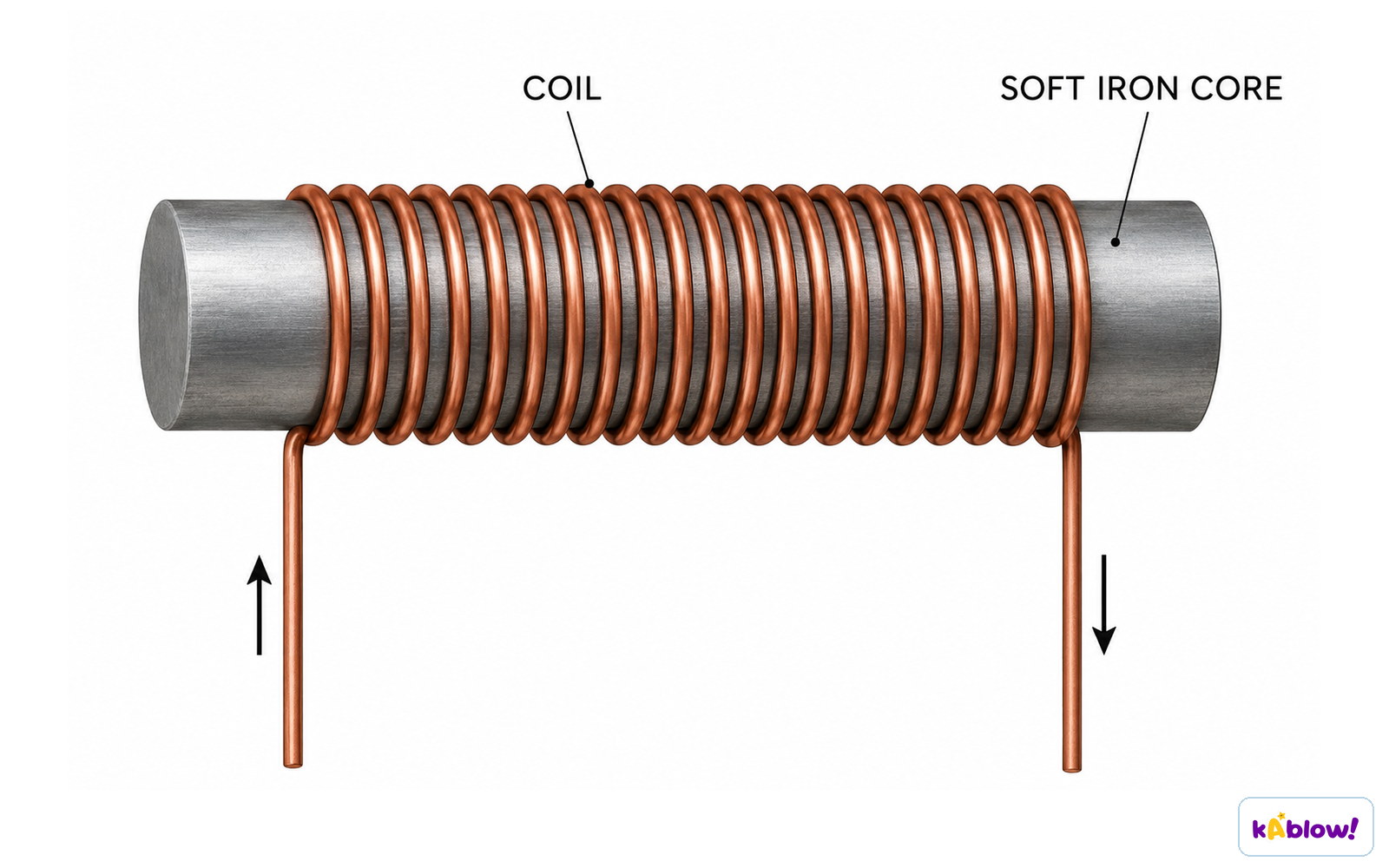
- A solenoid is a coil of wire that produces a magnetic field like a bar magnet.
- The magnetic field is strongest inside the solenoid.
- Three ways to increase the field strength: increase number of turns, increase current, add an iron core.
An electromagnet consists of coils of wire wrapped around a soft iron core.
Soft vs Hard Magnetic Materials
- A soft magnetic material (e.g., iron) is easily magnetised and demagnetised – ideal for electromagnets that switch on/off.
- A hard magnetic material is difficult to magnetise and demagnetise and would retain magnetism – not suitable for a solenoid core.
Simple circuit showing current flow (I) through a wire, creating a magnetic field around it.
Diapos
Sign up free to view the lesson slides
Step through every slide for this topic — plus flashcards and revision notes — with a free account.
Questions d'entraînement
Aperçu gratuit — 8 sur 40 questions. Inscris-toi pour toutes les voir.
1.What must flow through a wire to create an electromagnet?
Easy- AElectric current
- BVoltage
- CResistance
- DMagnetic field
2.What is a solenoid?
Easy- AA coil of wire
- BA straight wire
- CA bar magnet
- DAn iron core
3.Where is the magnetic field produced by a solenoid strongest?
Medium- AInside the solenoid
- BOutside the solenoid
- CAt the ends of the solenoid
- DFar away from the solenoid
4.Which of the following is NOT a way to increase the strength of the magnetic field produced by a solenoid?
Medium- AIncrease the voltage
- BIncrease the number of turns in the coil
- CIncrease the current
- DAdd an iron core
5.What is the difference between a soft magnetic material and a hard magnetic material?
Medium- ASoft magnetic materials can be easily magnetised and demagnetised, while hard magnetic materials are difficult to magnetise and demagnetise
- BSoft magnetic materials are difficult to magnetise and demagnetise, while hard magnetic materials are easy
- CSoft magnetic materials are always iron, while hard magnetic materials are always steel
- DSoft magnetic materials retain magnetism, while hard magnetic materials do not
6.Which of the following is an example of a soft magnetic material?
Easy- AIron
- BSteel
- CCobalt
- DNickel
7.Why should hard magnetic materials not be placed in a solenoid core?
Medium- AThey would retain some magnetism when the current is switched off
- BThey are too heavy
- CThey do not conduct electricity
- DThey would increase the resistance
8.What happens to the strength of the magnetic field as you go further from a current-carrying wire?
Easy- AIt gets weaker
- BIt gets stronger
- CIt stays the same
- DIt becomes zero immediately
Unlock all 40 questions, flashcards & more
Crée un compte gratuit pour voir toutes les questions, les diapos, les cartes mémo et les notes de révision de ce thème.