Cell structure and function
Apprends en jouant
Réponds à ces questions pour gagner de l'énergie, puis pêche et explore. Sans compte.
Notes de leçon
Cell Basics
- Cells are the basic unit of all living things – the smallest unit that can be considered living.
- Cells are a working system of parts, like a bicycle; breaking it down further means it no longer functions as a living thing.
- Cells are microscopic – they can only be seen under a microscope.
- There are two main types of organisms based on cell structure: eukaryotic (with a nucleus) and prokaryotic (without a nucleus). Plants and animals are eukaryotic; bacteria are prokaryotic.
- Cells are specialised to perform specific functions; they can differ in shape, size, and components.
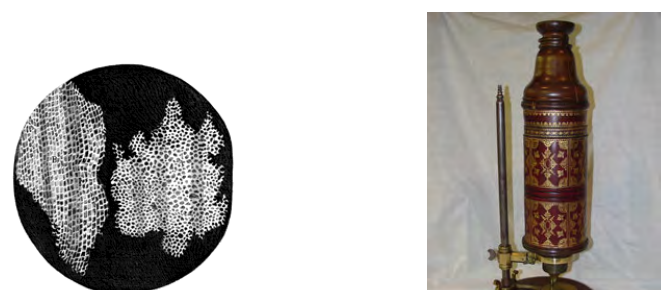
Robert Hooke's microscope and the cork cells he first saw through it.
Common Cell Structures
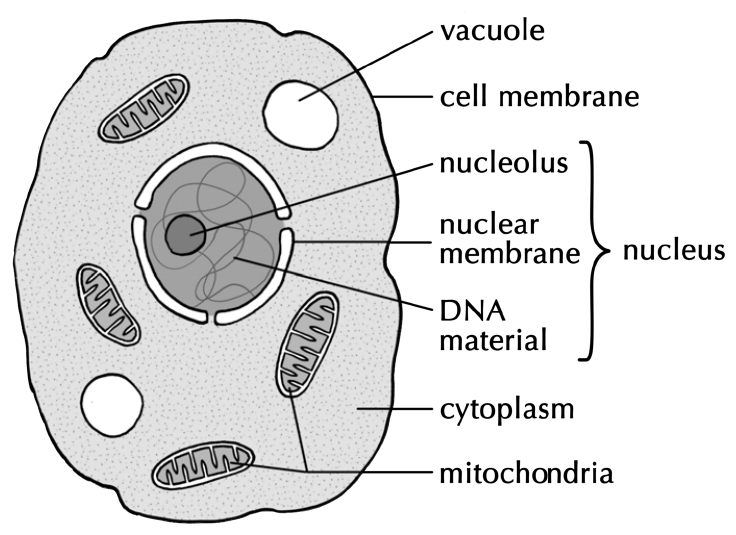
- All cells have a cell membrane, cytoplasm, and in most eukaryotic cells, a nucleus.
- The cell membrane is a thin layer that encloses the cell's contents and separates it from the environment.
- The cell membrane is selectively permeable (or semipermeable), controlling what enters and leaves the cell.
- The cytoplasm includes all living parts within the cell membrane except the nucleus; it consists of cytosol (a watery, jelly-like medium) and organelles.
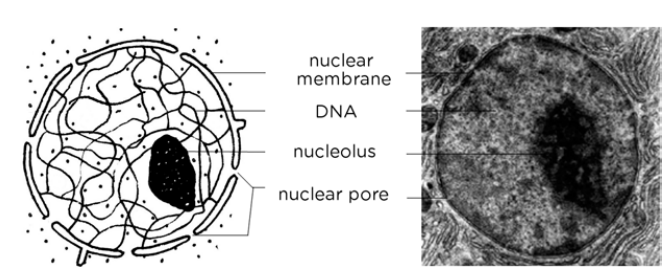
- The nucleus is the control center, containing DNA and controlling all cell activities.
- The nucleus is enclosed by a nuclear membrane with pores, and contains a nucleolus.
- DNA contains hereditary information and encodes inherited traits.
A drawing of a typical animal cell, with the nucleus, nuclear membrane, nucleolus, DNA, cell membrane, cytoplasm and mitochondria labelled.
Organelles and Their Functions
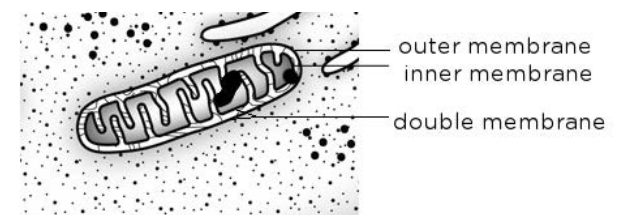
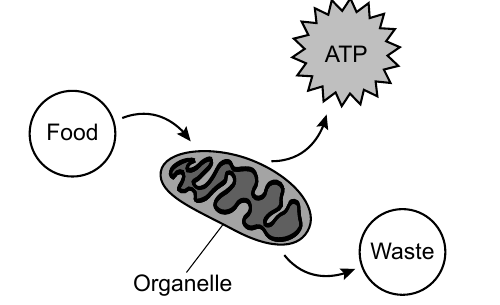
- Mitochondria are the 'powerhouse' of the cell; they break down food molecules to release energy via cellular respiration.
- Chloroplasts are found in plant cells (and some protists) and make food through photosynthesis, converting sunlight energy into sugar.
- Vacuoles are membrane-enclosed sacs containing water and other molecules; they are large in plant cells for support and small/short-lived in animal cells.
- Cell wall is a rigid outer layer in plant cells (and some others) that provides support and protection; it is made mainly of cellulose.
- Cytoplasm is the gel-like fluid containing organelles, where many chemical reactions occur.
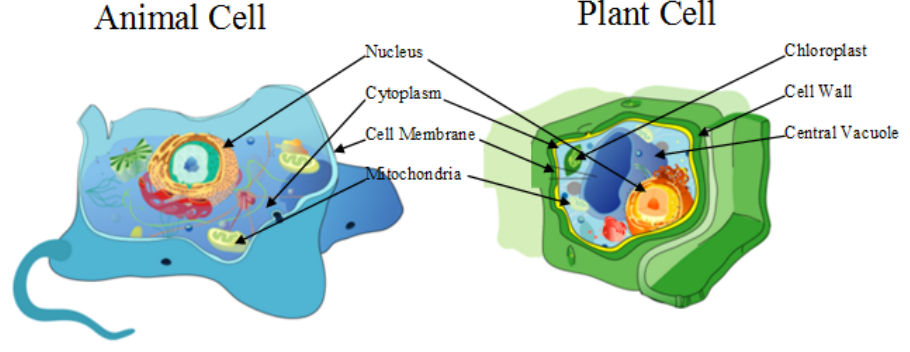
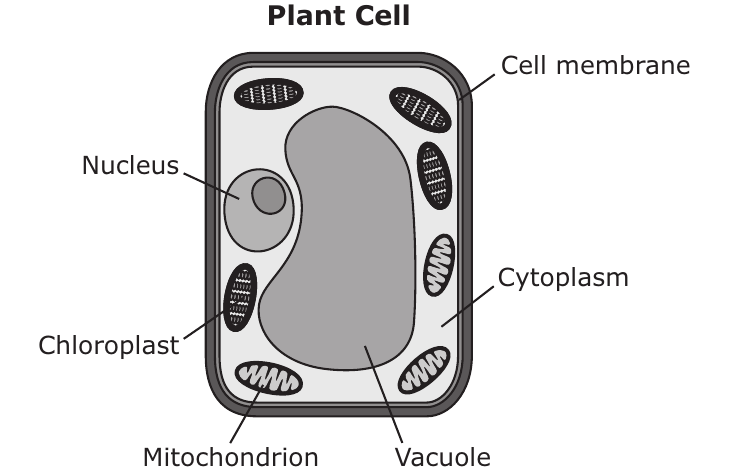
An animal cell and a plant cell, with the nucleus, cytoplasm, cell membrane and mitochondria of the animal cell and the chloroplast, cell wall and central vacuole of the plant cell labelled.
Plant vs. Animal Cells
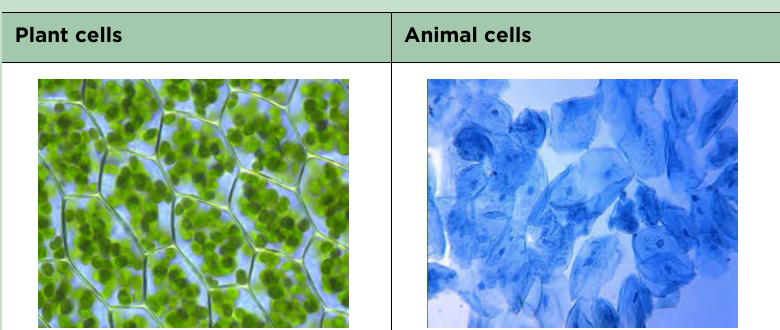
- Plant cells have a cell wall and chloroplasts; animal cells do not.
- Plant cells typically have a large central vacuole; animal cells have small, temporary vacuoles.
- Plant cells are more rigid and regular in shape due to the cell wall; animal cells are often irregular.
- Both plant and animal cells have a cell membrane, nucleus, mitochondria, and cytoplasm.
- Plant cells need a cell wall because they lack a skeleton; it provides strength to grow tall.
- Animal cells lack cell walls to allow flexibility and movement.
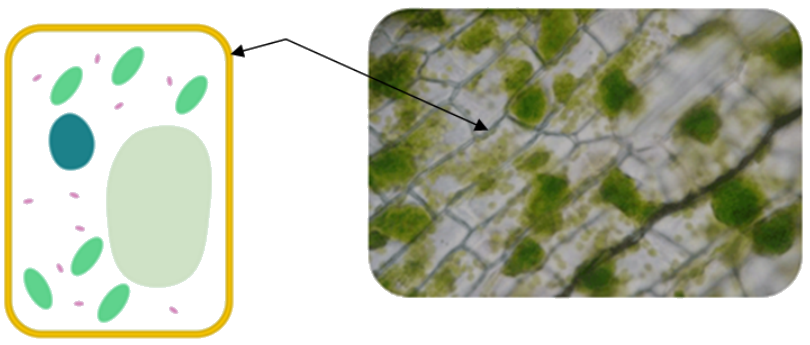
Plant cells (left), packed with green chloroplasts, next to animal cells (right), which have no chloroplasts or cell wall.
The Cell as a System
- Each organelle plays a key role in helping the cell survive; they work together as a system.
- The nucleus directs organelle activities; the cell membrane controls material entry/exit.
- In plants, chloroplasts produce food, and mitochondria break it down to release energy.
- The cell wall provides protection and support for the plant.
- The functions of organelles are similar to functions of other systems (e.g., a school, a city).
Energy Requirements in Cells
- All cells need energy to survive; mitochondria are present in both plant and animal cells to release energy from food.
- Chloroplasts are unique to plant cells and some protists; they make food via photosynthesis.
- Animals obtain food by eating plants or other animals; plants make their own food.
- Both plants and animals use mitochondria to break down sugars into usable energy.
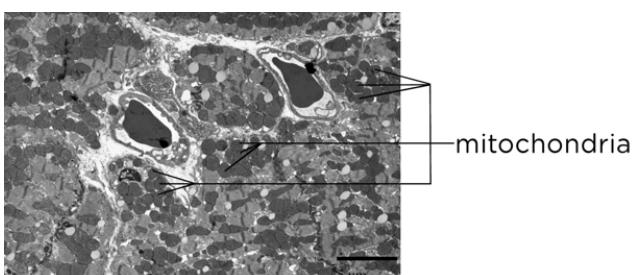
- Cells that are more active (e.g., muscle cells) have more mitochondria.
A diagram of a mitochondrion, showing its outer membrane, inner membrane and the double membrane that encloses it.
Support and Protection
- The cell membrane is present in all cells; it controls what enters/leaves and holds cell contents together.
- The cell wall is an additional rigid layer in plant cells (and some others) that provides support and protection.
- The cell wall is made of cellulose, which helps maintain plant cell shape and allows plants to stand upright.
- Animal cells only have a cell membrane, allowing flexibility and movement.
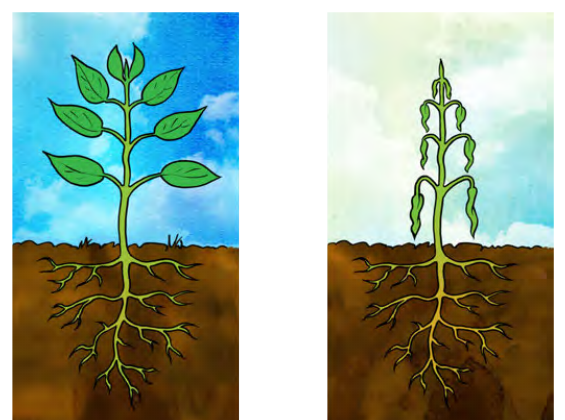
- Vacuoles in plant cells also contribute to support by being turgid (full of water) and pushing against the cell wall.
A plant with turgid vacuoles stands upright (left); a plant whose vacuoles have lost water is flaccid and wilts (right).
Diapos
Sign up free to view the lesson slides
Step through every slide for this topic — plus flashcards and revision notes — with a free account.
Questions d'entraînement
Aperçu gratuit — 8 sur 42 questions. Inscris-toi pour toutes les voir.
1.The cell membrane is a rigid structure that provides support and protection to the cell.
EasyTrue or false?
2.Which organelle is responsible for releasing energy from food molecules through cellular respiration?
Easy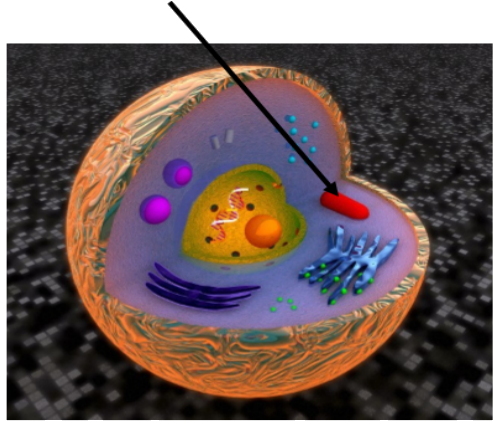
- AMitochondria
- BChloroplast
- CNucleus
- DRibosome
3.Which structure is found in plant cells but NOT in animal cells?
Easy- ACell wall
- BCell membrane
- CNucleus
- DMitochondria
4.Chloroplasts are found in both plant and animal cells.
EasyTrue or false?
5.What does 'selectively permeable' mean in relation to the cell membrane?
Medium- AIt allows some substances to pass through but not others.
- BIt allows all substances to pass through freely.
- CIt prevents any substances from entering the cell.
- DIt only allows water to pass through.
6.Which of the following is the main component of the plant cell wall?
Easy- ACellulose
- BProtein
- CLipid
- DStarch
7.Cells are the smallest unit that can be considered living.
EasyTrue or false?
8.Which organelle is responsible for photosynthesis?
Medium- AChloroplast
- BMitochondria
- CNucleus
- DVacuole
Unlock all 42 questions, flashcards & more
Crée un compte gratuit pour voir toutes les questions, les diapos, les cartes mémo et les notes de révision de ce thème.