Organelles & Compartmentalisation
खेलकर सीखें
इन सवालों के जवाब देकर एनर्जी कमाएं, फिर मछली पकड़ें और घूमें। कोई अकाउंट नहीं चाहिए।
लेसन नोट्स
Eukaryotic Cell Compartmentalisation
- Eukaryotic cells have a more complex ultrastructure than prokaryotic cells.
- The cytoplasm is divided into membrane-bound compartments called organelles.
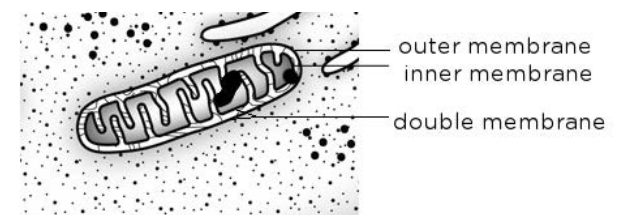
- Organelles are bound by either a single or double membrane.
- Structures without a membrane — cell wall, cytoskeleton and cytoplasm — are not considered organelles.
- Compartmentalised organelles include the nucleus, vesicles, ribosomes and the plasma membrane.
Advantages of Compartmentalisation
- Enzymes and substrates can be localised, so they are available at higher concentrations.
- Damaging substances can be kept separate — e.g. digestive enzymes are stored in lysosomes so they do not digest the cell.
- Optimal conditions can be maintained for certain processes, e.g. optimal pH for digestive enzymes.
- The number and location of organelles can be altered depending on the cell's requirements.
Organelle Adaptations
- In complex cells, organelles can become specialised for specific functions.
- Specialised organelles have specific adaptations that help them carry out their functions.
- The structure of an organelle is adapted to its function — this is why each organelle looks very different.
- Separation by a membrane (sometimes double) allows an organelle to carry out its own chemical reactions without interference from the rest of the cell.
Structure of a mitochondrion
Cell Fractionation
- Progress in science often follows the development of new techniques.
- Study of individual organelles became possible after the invention of ultracentrifuges and the development of cell fractionation methods.
- Cell fractionation separates out each compartment so it can be studied individually; a pure sample containing only the specific organelle is needed.
- The process involves breaking up a suitable tissue sample and then centrifuging the mixture at different speeds.
Stages of Cell Fractionation
- Homogenisation — the cell sample is broken up using a homogeniser (a blender-like machine).
- Filtration — the homogenate is filtered through a gauze.
- Ultracentrifugation — the filtrate is placed into a tube and spun in a centrifuge.
- A centrifuge separates materials by spinning; the speed can be altered to separate different components based on their molecular weight.
- Before the ultracentrifuge was invented, research into separate organelles was limited.
Separating the Nucleus and Cytoplasm
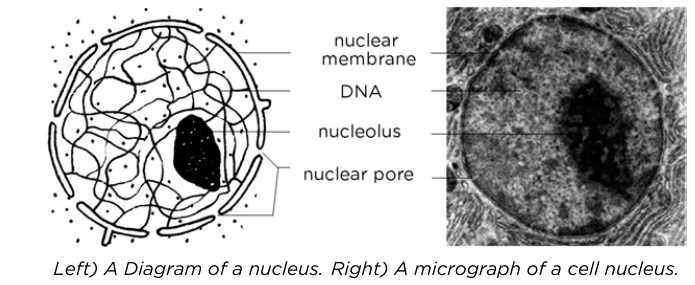
- The nucleus is a key organelle that distinguishes eukaryotic cells from prokaryotic cells.
- It allows many cell processes to take place more efficiently than in prokaryotes.
- Gene transcription and translation occur in both eukaryotes and prokaryotes.
- In prokaryotes these processes take place simultaneously, allowing rapid responses to environmental stimuli.
- In eukaryotes they occur separately due to the compartmentalisation of the nucleus.
- During transcription, mRNA is formed using a template strand of DNA; the mRNA needs modification before it can be used for translation.
- Modification takes place in isolation within the nucleus before the mRNA contacts a ribosome (where translation occurs), unlike in prokaryotes where mRNA immediately meets a ribosome.
- This reduces the chance of errors in the mRNA code and therefore in the resulting protein after translation.
The nucleus
Compartmentalisation in the Cytoplasm
- The cytoplasm is not considered an organelle, but its separation from organelles via their membranes is an advantage.
- Organisation into discrete membrane-bound organelles allows separation of incompatible biochemical processes.
- This ensures pathways requiring specific enzymes or metabolites run smoothly without interference from other cell structures or chemicals.
- Conflicting reactions can coexist within one organelle by being localised — e.g. in plant cells, nitrogenase (used for nitrogen fixation) is sensitive to oxygen and is positioned in an anaerobic part of the cytoplasm away from aerobic reactions.
- Lysosomes contain lytic enzymes that could be harmful to the cell if not contained by the lysosome membrane.
- During endocytosis, a phagocytic vacuole forms around potentially toxic and harmful substances (such as bacteria), keeping them separate from the cytoplasm until a lysosome can safely digest the material.
स्लाइड्स
Sign up free to view the lesson slides
Step through every slide for this topic — plus flashcards and revision notes — with a free account.
प्रैक्टिस सवाल
फ्री प्रीव्यू — 60 में से 8 सवाल। सभी देखने के लिए साइन अप करें।
1.Which of the following is true of ribosomes?
Easy- AProteins for transport are synthesised by free ribosomes.
- BRibosomes consist of a large and a small subunit composed of protein and transfer RNA (tRNA).
- CRibosomes exist in the cells of all living organisms.
- DRibosomes on the rough endoplasmic reticulum synthesise proteins for retention within the cell.
2.The chloroplast is adapted for photosynthesis. Which of the following is not an adaptation of the chloroplast for photosynthesis?
Medium- AA large surface area of thylakoid membranes with photosystems.
- BA large volume of fluid inside thylakoids.
- CCompartmentalisation of enzymes and substrates of the Calvin cycle in the stroma.
- DChloroplast DNA that contains genes which code for some of the proteins and enzymes used in photosynthesis.
3.Which of the following is not considered an organelle because it lacks a membrane?
Easy- ANucleus
- BMitochondrion
- CCell wall
- DLysosome
4.The cytoplasm is divided up into membrane-bound compartments called organelles in eukaryotic cells.
EasyTrue or false?
5.Which of the following are advantages of compartmentalisation in eukaryotic cells? (select all that apply)
Medium- AEnzymes and substrates can be localised at higher concentrations.
- BDamaging substances such as digestive enzymes can be kept separated from the rest of the cell.
- CAll chemical reactions in the cell occur simultaneously in the cytoplasm.
- DOptimal conditions such as pH can be maintained for specific processes.
- EThe number and location of organelles can be altered depending on the cell's requirements.
6.Match each organelle or structure with its correct description.
Medium- Nucleus
- Lysosome
- Ribosome
- Chloroplast
- Contains digestive enzymes kept separate from the cytoplasm
- Site of protein synthesis; not membrane-bound
- Double-membrane organelle containing thylakoids and stroma
- Double-membrane organelle containing DNA and site of transcription
7.Place the steps of cell fractionation in the correct order.
Medium- Homogenisation of tissue
- Filtration through gauze
- Ultracentrifugation at increasing speeds
- Collection of organelles by size
8.Match each structure to whether it is bound by a single membrane, a double membrane, or no membrane.
Medium- Nucleus
- Lysosome
- Ribosome
- Cell wall
- Double membrane
- Single membrane
- No membrane
Unlock all 60 questions & more
इस टॉपिक के हर सवाल, स्लाइड्स, फ्लैशकार्ड और रिवीज़न नोट्स देखने के लिए फ्री अकाउंट बनाएं।